Ashwagandha Dosage for Anxiety: Evidence-Based Guide
Practical, evidence-based ashwagandha dosage for anxiety, with dosing by extract type, safety, timing, and product selection tips you can use today.
·12 min read
This content is for informational purposes only and does not constitute medical advice. Always consult a qualified healthcare provider before starting, stopping, or changing any supplement or medication regimen.
If you’re looking up ashwagandha dosage for anxiety, you likely want clear, evidence-based ranges you can discuss with your clinician—without wading through dense studies or marketing hype. Below you’ll find quick starting doses, how different extracts compare, safety notes, and practical tips on timing and combinations that people commonly find helpful.
Quick answer: recommended ashwagandha doses for anxiety (summary)
Typical clinical range (standardized extracts): 240–600 mg per day, split once or twice daily, for 6–8 weeks. Evidence level: moderate for anxiety symptoms; stronger for stress reduction and sleep quality in adults.
Traditional root powder (churna): 3–6 g/day, usually in warm milk or water; modern trials use extracts more often because dosing is precise and lower.
Start low, go slow: consider 150–300 mg/day for 3–5 days, then increase toward a target if well tolerated.
How ashwagandha may help anxiety — what the research shows
Research suggests ashwagandha (Withania somnifera) can reduce stress and anxiety-related symptoms in adults, especially when taken consistently for 6–8 weeks. Multiple randomized controlled trials (RCTs) and several systematic reviews indicate improvements in perceived stress, anxiety ratings, sleep quality, and cortisol levels. While many trials enroll people with chronic stress rather than a formal anxiety disorder, anxiety symptoms often improve alongside stress markers.
Evidence classification for anxiety relief: moderate
Why moderate? There are multiple RCTs and meta-analyses showing benefit, but many are small, vary in quality, and focus on stress or subclinical anxiety. Evidence specifically for generalized anxiety disorder is more limited.
Potential mechanisms
HPA-axis modulation: Ashwagandha appears to help regulate the hypothalamic–pituitary–adrenal axis, with several trials showing reductions in morning cortisol.
GABAergic support: Preclinical research suggests ashwagandha may enhance GABAergic signaling, which is central to calming the nervous system.
Inflammation and oxidative stress: Withanolides (notably withanolide glycosides) may suppress NF-κB and reduce pro-inflammatory cytokines that can influence mood and stress reactivity.
Sleep quality: Better sleep can indirectly reduce daytime anxiety. Some extracts improve sleep onset and efficiency in clinical studies.
Not all ashwagandha is dosed the same. Labels vary by “withanolides,” “withanolide glycosides,” or “root-only” versus “root + leaf.” Here’s how to translate that into practical ranges.
Root powder (traditional churna)
Typical range: 3,000–6,000 mg/day, in 1–2 divided doses. Often taken with warm milk or water; food may reduce stomach upset.
Considerations: Powder has variable withanolide content, so effects may be less predictable than standardized extracts. Choose products tested for heavy metals and microbial quality.
KSM-66 (root-only extract, ~5% withanolides)
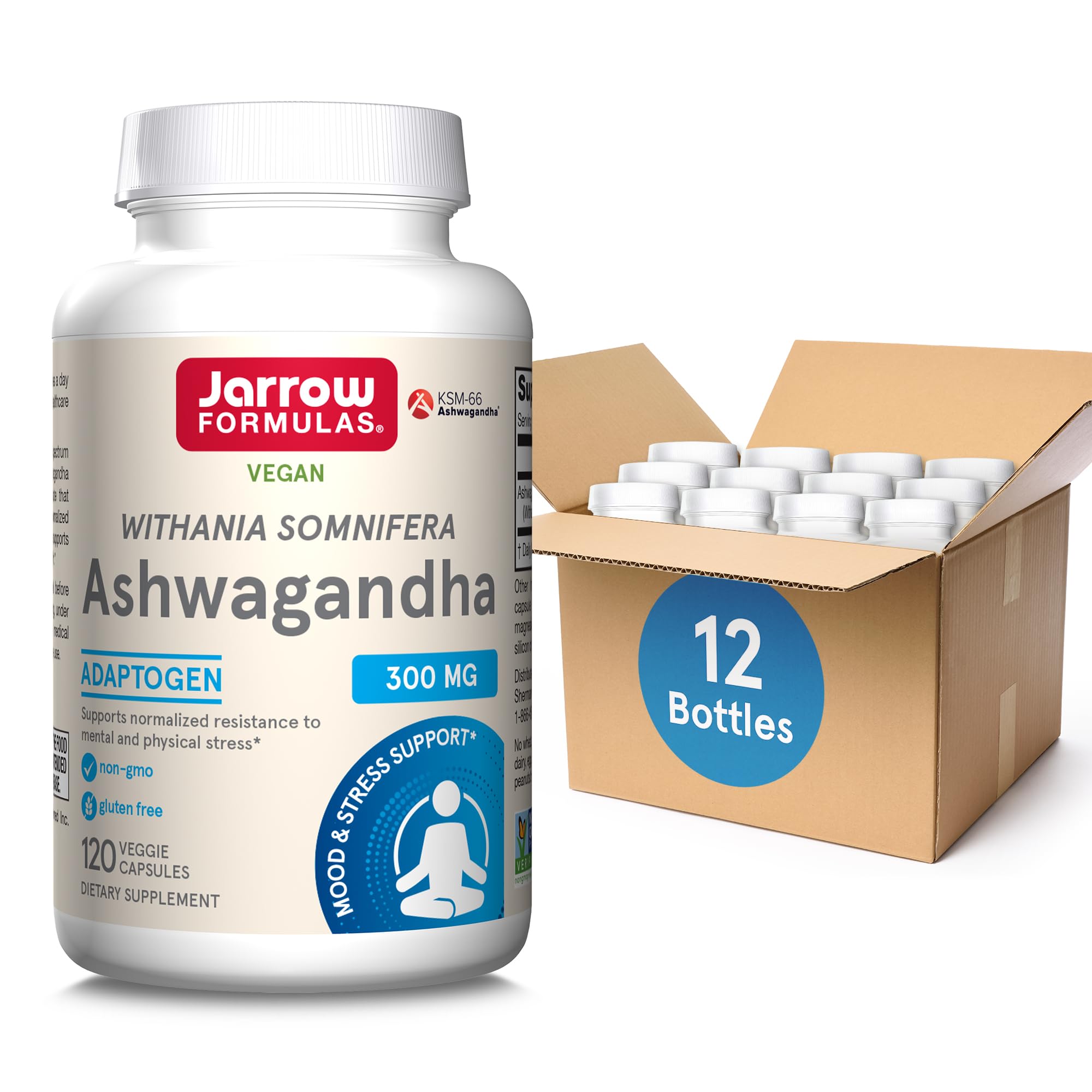
Most-studied range for stress/anxiety symptoms: 300–600 mg/day, often 300 mg twice daily with meals for 6–8 weeks.
Who might prefer this: Those seeking a root-only extract with robust stress and sleep data and relatively low withaferin A (a cytotoxic withanolide better kept low in general-use products).
Typical range: 125–250 mg/day, often split 125 mg twice daily.
Who might prefer this: People who respond to a lower total milligram dose due to a higher standardization of withanolide glycosides. Some find it a bit more “sedating,” which can be helpful if nighttime anxiety is prominent.
Typical range: 60–120 mg/day. Most published human data focus on sleep and stress; anxiety-specific data are emerging.
Who might prefer this: Those prioritizing sleep onset/maintenance, with the understanding that evidence for direct anxiety reduction is less established.
Practical range: 250–600 mg/day. If your label shows total withanolides, target a daily total that roughly matches the “active” dose range seen with KSM-66 (about 15–30 mg total withanolides/day), while staying within the manufacturer’s directions.
Teas and tinctures
Teas: Gentle and suitable for beginners, but with unpredictable dosing. Often used as an adjunct rather than a primary therapeutic approach for anxiety.
Tinctures: Follow the label; concentrations vary widely. Many clinicians aim for equivalence to ~300–600 mg/day of a 5% standardized extract when translating to tincture dosing, but this requires product-specific information.
Adults: The majority of evidence is in adults 18–65 years.
Older adults: Start low (e.g., 150–300 mg/day) and titrate, given potential sensitivity, polypharmacy, and comorbidities.
Adolescents/children: Insufficient high-quality data for anxiety; use only under clinician guidance.
Pregnancy and breastfeeding
Traditional Ayurvedic texts classify ashwagandha as a rasayana (rejuvenative), but modern safety guidance typically advises avoiding it during pregnancy due to uterine-stimulating effects seen in preclinical data and case reports. Avoid while breastfeeding unless a clinician recommends and monitors.
Chronic conditions and medications
Thyroid disease: Small studies show possible increases in T3/T4. Use caution in hyperthyroidism or if taking levothyroxine; monitor symptoms and labs with your clinician.
Autoimmune conditions or on immunosuppressants: Ashwagandha may modulate immune activity. Discuss with your specialist.
Liver disease: Rare cases of liver injury have been reported. Stop immediately if you develop jaundice, dark urine, severe fatigue, or upper-right abdominal pain.
Diabetes or hypoglycemia risk: May modestly reduce blood sugar; monitor if on glucose-lowering medications.
Sedatives and CNS agents: May increase drowsiness with benzodiazepines, sleep meds, antihistamines, or alcohol. Use caution and avoid driving until you know your response.
Timing and duration
With food: Taking with meals often reduces stomach upset and can smooth out energy/sedation effects.
Morning vs. evening: If it makes you calm-but-alert, try morning or midday. If it feels slightly sedating or you want sleep support, take the larger portion in the evening.
Split dosing: Many trials use twice-daily dosing (e.g., 300 mg AM, 300 mg PM for KSM-66; 125 mg AM/PM for Sensoril).
Duration: Most benefits emerge within 2–6 weeks. Reassess at 8 weeks. If helpful and well tolerated, many continue for 3–6 months, then consider a pause or step-down while monitoring symptoms.
Safety, side effects, and interactions — when to stop and who should consult a clinician
Common side effects
Mild GI upset, loose stools, nausea
Drowsiness or, less commonly, stimulation/jitteriness
Headache, vivid dreams
Less common but important
Allergic reactions (rash, itching)
Changes in thyroid labs
Rare hepatotoxicity (watch for yellowing of eyes/skin, dark urine, pale stools)
Stop and seek care if you experience: persistent vomiting/diarrhea, severe abdominal pain, yellowing eyes/skin, extreme fatigue, palpitations, or worsening anxiety/panic.
This information is educational and does not replace personalized medical advice. Always discuss new supplements with a qualified clinician, especially if you’re pregnant, breastfeeding, managing chronic conditions, or taking prescription medications.
How to choose a quality ashwagandha supplement (standardization, third-party testing, labels)
Look for the species and part: “Withania somnifera (root)” or “root and leaf.” Root-only is often preferred for everyday use; many brands intentionally keep withaferin A low.
Standardization matters: Labels may state “5% withanolides” (often total withanolides) or “withanolide glycosides.” These aren’t identical measurements; compare within the same standardization type.
Transparent dosing: Avoid proprietary blends that hide milligram amounts or withanolide content.
Third-party testing: Choose brands with independent testing (e.g., USP, NSF, Informed Choice) or a available Certificate of Analysis verifying identity, potency, and contaminants (heavy metals, microbes, pesticides, residual solvents).
Sensible excipients: Minimal fillers and no undisclosed stimulants. If you’re sensitive, avoid added caffeine-containing botanicals.
Start with single-ingredient products: This makes it easier to gauge your response before exploring blends.
Practical guidance & FAQs (how quickly it works, stacking with other supplements, tapering)
How quickly does it work?
Some people notice calmer mood or better sleep in 1–2 weeks, but most trials show clearer benefits by weeks 4–6. If you don’t notice any change by week 8 at a clinically supported dose, consider stopping or reassessing with your clinician.
What’s the best time to take it?
Try your first dose with breakfast. If you feel a little drowsy, shift to dinner or bedtime. If you feel more focused, keep it earlier in the day. Splitting the dose often smooths the effect.
Can I stack it with magnesium or other calming herbs?
There’s no established need to taper, but after 8–12 weeks many people reassess. If you’ve been on a higher dose (e.g., 600 mg/day), you can reduce by 50% for 1–2 weeks while monitoring symptoms. Restart or adjust if anxiety worsens.
What if I’m already on anxiety medication?
Do not change prescriptions without medical guidance. Ashwagandha can be complementary for some, but interactions (e.g., added sedation) are possible. Coordinate with your prescriber and consider starting at the low end of the range.
Is higher dose always better?
Not necessarily. Some experience optimal calm at 250–300 mg/day, while higher doses feel too sedating. Use the lowest dose that provides clear benefit with minimal side effects.
What if I feel wired or get GI upset?
Lower the dose, switch timing, or try a different extract (e.g., from Sensoril to KSM-66, or vice versa). Taking with food often helps the stomach.
How do I know it’s working?
Use simple trackers: the Perceived Stress Scale (PSS), brief anxiety scales, or a nightly 1–10 stress/sleep rating in a journal or app. Look for steady improvements over 2–6 weeks.
Randomized trials commonly use 240–600 mg/day of standardized extracts for 6–8 weeks, with improvements in perceived stress, anxiety scores (e.g., DASS-21, HAM-A), sleep, and cortisol.
Meta-analyses generally find small-to-moderate reductions in stress and anxiety symptoms versus placebo, with good short-term tolerability. Heterogeneity in extract type and dosing is common.
Anxiety-disorder–specific evidence exists but is less robust than stress-focused trials; more large, high-quality RCTs are needed.
References and further reading (key clinical trials and review articles)
Chandrasekhar K et al. A prospective, randomized double-blind, placebo-controlled study of safety and efficacy of a high-concentration full-spectrum ashwagandha root extract in reducing stress and anxiety in adults. Indian J Psychol Med. 2012.
Cooley K et al. Naturopathic care for anxiety: a randomized controlled trial (multicomponent, included ashwagandha). PLoS One. 2009.
Pratte MA et al. An alternative treatment for anxiety: a systematic review of human trials of ashwagandha. J Altern Complement Med. 2014.
Lopresti AL et al. A randomized, double-blind, placebo-controlled, crossover study examining safety, tolerability and efficacy of ashwagandha in adults with stress/anxiety. Medicines. 2019.
Langade D et al. Efficacy and safety of ashwagandha (KSM-66) root extract on sleep in adults with insomnia and anxiety. Cureus. 2019.
Deshpande A et al. Effects of standardized ashwagandha extract (Shoden) on sleep quality and mental alertness. Sleep Med. 2020.
Systematic review and meta-analysis: Withania somnifera for stress and anxiety in adults (various authors, 2021–2023). Findings generally support small-to-moderate symptom reductions and cortisol lowering versus placebo.
How to use this information (practical takeaways)
If you’re new to ashwagandha for anxiety, a reasonable starting plan is 300 mg/day of KSM-66 or 125 mg/day of Sensoril with an evening meal for 3–5 days. If well tolerated, increase to 300 mg twice daily (KSM-66) or 125 mg twice daily (Sensoril) and continue for 6–8 weeks.
Track your response weekly (mood, sleep, daytime calm). Adjust timing if you feel wired or too drowsy.
If you take prescription medications—or are pregnant, breastfeeding, or have thyroid, liver, autoimmune, blood pressure, or blood sugar concerns—talk with your clinician before starting.
Prioritize quality: standardized extract, transparent label, and third-party testing.
Disclaimer: This guide is for educational purposes and should not replace individualized medical advice. Discuss supplements with your healthcare professional, especially if you have medical conditions or take prescription medications.
This content is for informational purposes only and does not constitute medical advice. Always consult a qualified healthcare provider before starting, stopping, or changing any supplement or medication regimen.
Best Ashwagandha Supplements: Top Picks, Dosing & Safety. If you’re hunting for the best ashwagandha supplement, you’re probably comparing labels, wondering which extracts are legit, and how much you actually need. Below you’ll find our 2026 top picks, how we evaluated them, what the research says, and practical dosing and safety guidance so you can buy wi
How Long Does Ashwagandha Take to Work? Timelines, Evidence & Tips. If you’ve started (or are considering) ashwagandha and are wondering how long ashwagandha takes to work, you’re not alone. Research suggests many people notice early shifts in stress, sleep, or calm within 2–4 weeks, with fuller benefits building by 6–8 weeks. This guide blends clinical evidence wit
If you’re curious about ashwagandha benefits—especially for stress, sleep, and focus—you’re not alone. This adaptogenic herb from Ayurveda has surged in popularity, and research suggests it may help t
Does Ashwagandha Really Work? Evidence, Dosage & Safety Guide. If you’re wondering “does ashwagandha really work,” you’re not alone. This traditional Ayurvedic herb has exploded in popularity for stress, sleep, energy, and even testosterone support. Research suggests there’s real potential—especially for stress and sleep—though benefits vary by person, dose, an
Herbal Remedies for Anxiety: Evidence-Based Options & How to Choose. If you’re exploring herbal remedies for anxiety, you likely want something natural that can take the edge off without heavy side effects. This guide walks through what “herbal remedies” actually are, how they may work, and what the research says about specific options like kava, ashwagandha, lavende
Best Supplements for Anxiety Relief: Evidence‑Based Options, Dosage & Safety. If you’re searching for the best supplements for anxiety relief, you want what works, what’s safe, and how to use it alongside proven strategies like therapy, exercise, and good sleep. This guide reviews the most studied options—magnesium, L‑theanine, ashwagandha, GABA, valerian, CBD, B‑complex vita