If you’re wondering “does ashwagandha really work,” you’re not alone. This traditional Ayurvedic herb has exploded in popularity for stress, sleep, energy, and even testosterone support. Research suggests there’s real potential—especially for stress and sleep—though benefits vary by person, dose, and extract. This guide walks you through what it is, what the science shows, how it may work, how to take it, and how to stay safe.
What is ashwagandha?
Ashwagandha (Withania somnifera) is a small shrub native to India and parts of the Middle East and Africa. In Ayurveda, it’s considered a Rasayana—an herb traditionally used to promote vitality, resilience, and longevity. Common names include Indian ginseng and winter cherry.
- Plant parts used: Primarily the root; some modern extracts also use leaf material.
- Key active constituents: Withanolides (steroidal lactones), withaferin A, sitoindosides, alkaloids, and glycowithanolides. These molecules are thought to underlie its adaptogenic, anti-inflammatory, and calming effects.
For a broader overview of uses and history, see our evidence-first primer: Ashwagandha Benefits: Evidence-Based Guide for Stress, Sleep & More.
What people claim: common reasons for taking ashwagandha
People turn to ashwagandha for:
- Stress resilience and anxiety support
- Better sleep quality
- More energy and reduced fatigue
- Support for testosterone, fertility, and sexual function
- Cognitive support (memory, focus) and mood
- Exercise performance and recovery
These claims range from well-studied (stress and sleep) to promising but mixed (testosterone, cognition, endurance). The question “does ashwagandha really work” depends on which outcome you care about, and on using the right dose and extract.
Does Ashwagandha Really Work? What the Research Says
Overall evidence level: moderate
Below is a condition-by-condition snapshot from clinical trials. Where possible, we name the evidence strength based on the totality of randomized controlled trials (RCTs), systematic reviews, and meta-analyses.
Stress and anxiety
- Evidence: moderate to strong for reducing perceived stress and mild anxiety.
- What studies indicate: Multiple RCTs and meta-analyses report meaningful reductions in stress and anxiety scores (often measured by Perceived Stress Scale or Hamilton Anxiety Rating Scale) compared with placebo after 6–12 weeks. Benefits are more consistent with standardized extracts at 240–600 mg/day.
- Who benefits most: Adults with mild to moderate stress or subclinical anxiety. Not a replacement for therapy or medication in clinical anxiety disorders, but may be a useful adjunct.
Sleep quality
- Evidence: moderate.
- What studies indicate: RCTs show improvements in sleep quality and latency (how fast you fall asleep), particularly when taken in the evening. Effects tend to emerge within 2–8 weeks.
Cortisol and HPA axis balance
- Evidence: moderate to strong for lowering cortisol in stressed adults.
- What studies indicate: Trials commonly show reductions in morning cortisol alongside improved stress scores. These findings support ashwagandha’s adaptogenic role on the hypothalamic–pituitary–adrenal (HPA) axis.
Testosterone, fertility, and sexual function
- Evidence: mixed; stronger in men with fertility issues than in healthy men.
- What studies indicate: In men with stress-related infertility, several RCTs report improved semen parameters and modest increases in testosterone. In healthy, resistance-trained men, some trials show small testosterone and strength gains, while others find no significant difference.
Cognitive function and mood
- Evidence: emerging to moderate, depending on population.
- What studies indicate: Small RCTs suggest improvements in aspects of memory, executive function, and reaction time, particularly in individuals with stress or mild cognitive complaints. Larger, longer trials are needed.
Physical performance and endurance
- Evidence: emerging to moderate.
- What studies indicate: Some RCTs report small improvements in VO2 max, strength, or recovery—often in combination with training. Effects are variable and typically modest.
Thyroid and metabolism
- Evidence: emerging.
- What studies indicate: Limited trials suggest ashwagandha may nudge thyroid hormone levels upward in subclinical hypothyroidism. This may be helpful for some, but it also means people with hyperthyroidism or on thyroid medication should use caution and medical supervision.
In short: For stress, sleep, and cortisol, ashwagandha is one of the better-studied botanicals. For testosterone, cognition, and performance, benefits appear possible but are less predictable. The answer to “does ashwagandha really work” is most often “yes, for stress and sleep” and “maybe, depending on the person and goal” for other outcomes.
How might ashwagandha work?
Research suggests several complementary mechanisms:
- HPA axis modulation: Ashwagandha appears to attenuate stress signaling along the hypothalamic–pituitary–adrenal axis, which can translate to lower cortisol and improved stress resilience.
- GABAergic effects: Animal and cell studies indicate withanolides may influence GABAergic signaling—the brain’s primary calming system—helping explain anxiolytic and sleep-supportive effects. Human mechanistic confirmation is still emerging.
- Anti-inflammatory and antioxidant actions: Withanolides and withaferin A can inhibit NF-kB and reduce pro-inflammatory cytokines. Studies also show increases in antioxidant enzymes (e.g., superoxide dismutase, catalase, glutathione), potentially protecting neurons and supporting recovery from physical stress.
- Neuroplasticity and neurotransmitters: Early data (mostly preclinical) suggest effects on BDNF and monoamine systems, which could relate to mood and cognition.
- Endocrine modulation: Findings of lowered cortisol and occasional bumps in testosterone and thyroid hormones suggest broader endocrine effects, underscoring the need for caution in people with hormone-sensitive conditions.
Dosage, formulation, and timing
Dosing matters—both the extract and the amount.
- Standardized extracts (most research-based):
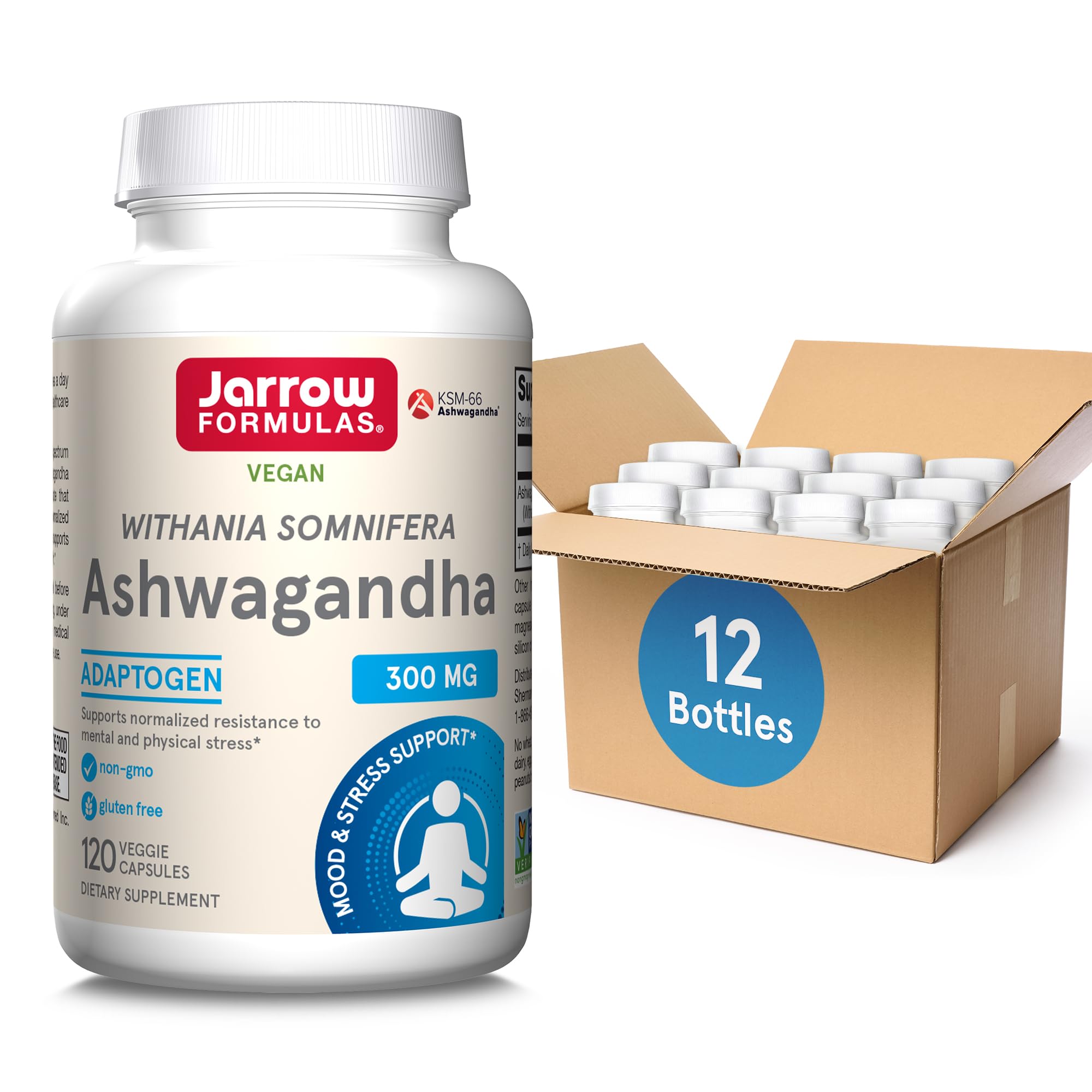
- KSM-66 (root-only, “full-spectrum”): Commonly 300–600 mg/day, often split as 300 mg twice daily. Standardized to withanolides (commonly ≥5% by HPLC).
- Sensoril (root + leaf): Typically 125–250 mg once or twice daily. Higher withanolide glycoside content (often ~10%), may feel more calming for some.
- Non-standardized root powder (traditional churna): Often 3–6 grams/day in divided doses. Bulkier dose, variable potency.
Practical tips:
- With food: Taking with meals may reduce GI upset.
- Timing: Morning plus evening split dosing is common for stress. If sleep is your main goal, consider the larger portion or full dose 1–2 hours before bedtime.
- Onset: Many people notice effects within 2–4 weeks; full evaluation typically at 6–12 weeks.
- Duration: Research commonly spans 8–12 weeks. If using longer, schedule periodic check-ins with a clinician. For a deep dive on duration and monitoring, see Is Ashwagandha Safe Long Term? Evidence, Risks & Dosage.
Combining with other basics:
Affiliate options to consider:
- Many people find KSM-66 Ashwagandha Extract a convenient standardized root-only option.
- If you prefer a root+leaf profile at smaller capsule sizes, Sensoril Ashwagandha is commonly used.
- For evening routines, some include Magnesium Glycinate alongside sleep hygiene practices. Always check for interactions and consult a clinician.
For anxiety-specific dosing nuances, see our evidence-based guide: Ashwagandha Dosage for Anxiety: Evidence-Based Guide.
Safety, side effects, and drug interactions
Overall, ashwagandha is generally well tolerated in short trials. Still, safety deserves careful attention.
Common side effects (usually mild):
- Gastrointestinal upset (nausea, diarrhea)
- Drowsiness or vivid dreams (more common with higher doses or Sensoril)
- Headache or dizziness in sensitive individuals
Less common but important:
- Liver concerns: Rare case reports of liver injury have been published. Symptoms typically resolve after stopping, but this underscores the value of reputable brands, avoiding excess dosing, and seeking care if you develop jaundice, dark urine, or severe fatigue.
- Thyroid shifts: Some studies show small increases in thyroid hormones; use caution if you have hyperthyroidism or take thyroid medication.
- Blood pressure and blood sugar: Mild lowering is possible; monitor if on related medications.
Drug and condition cautions:
- Sedatives/CNS depressants: Additive drowsiness possible (e.g., benzodiazepines, sleep meds, antihistamines, alcohol).
- Immunosuppressants/autoimmune disease: Ashwagandha may modulate immune activity; discuss with your specialist.
- Thyroid medication: Potential to alter hormone levels; require monitoring.
- Pregnancy and lactation: Traditionally avoided in pregnancy; modern safety data are insufficient. Best to avoid unless specifically directed by a clinician.
- Surgery: Stop at least 1–2 weeks before procedures due to potential sedation and blood pressure effects.
- Pre-existing liver disease or significant polypharmacy: Seek medical guidance and consider baseline labs.
For a full review of side effects and interactions, visit: Ashwagandha Side Effects: Risks, Interactions, and Safety Guide.
How to choose a quality ashwagandha supplement
Choosing well can make the difference between “did nothing” and “does ashwagandha really work.” Look for:
- Standardization and transparency: Products should list extract type (e.g., KSM-66 or Sensoril) and withanolide content with the testing method (HPLC preferred). Be cautious with vague “10% withanolides” claims without analytical detail.
- Third-party testing: USP, NSF, Informed Choice, or ConsumerLab verification adds confidence. At minimum, ask brands for a certificate of analysis (COA) confirming identity, potency, and purity.
- Heavy metals and contaminants: Especially important with botanicals. Look for products that test for arsenic, cadmium, lead, mercury, pesticides, and microbial contaminants.
- Root-only vs. root+leaf: Many clinical trials use root-only extracts (e.g., KSM-66). Leaf-containing extracts (e.g., Sensoril) are also studied but can feel stronger for some. Match the extract to your goal and tolerance.
- Reasonable dosing and excipients: Seek formulas that deliver evidence-aligned doses per capsule without unnecessary fillers or proprietary blends that obscure amounts.
- Brand reputation: Favor companies with published research, transparent sourcing, and responsive customer support.
Bottom line and practical guidance
Does ashwagandha really work? Research suggests it can meaningfully reduce stress, improve sleep quality, and lower cortisol for many adults. Benefits for testosterone, fertility, cognition, and exercise performance are possible but less consistent and may depend on baseline status, training, and dose.
Practical takeaways:
- If your main goals are stress and sleep, consider a standardized extract at evidence-supported doses for 8–12 weeks while tracking outcomes (e.g., stress scale, sleep diary).
- Start low, go slow: 150–300 mg/day for the first week, then increase toward 300–600 mg/day (root-only) or 125–250 mg/day (root+leaf) as needed and tolerated.
- Time your dose: Split AM/PM for stress; consider evening-weighted dosing for sleep.
- Monitor: Note mood, energy, sleep, GI tolerance, and any dizziness or daytime sedation. If on medications affecting thyroid, blood pressure, blood sugar, or mood, track vitals and labs with your clinician.
- Reassess at 8–12 weeks: If you didn’t notice clear benefits, consider a different extract, adjust the dose, or discontinue.
If you want a deeper background on benefits across systems and how ashwagandha compares with other adaptogens, see: Ashwagandha Benefits: Evidence-Based Guide for Stress, Sleep & More.
Disclaimer
This content is for educational purposes and is not a substitute for personalized medical advice. Always talk with a qualified healthcare professional before starting any new supplement, especially if you’re pregnant, nursing, have a medical condition, or take prescription medications.