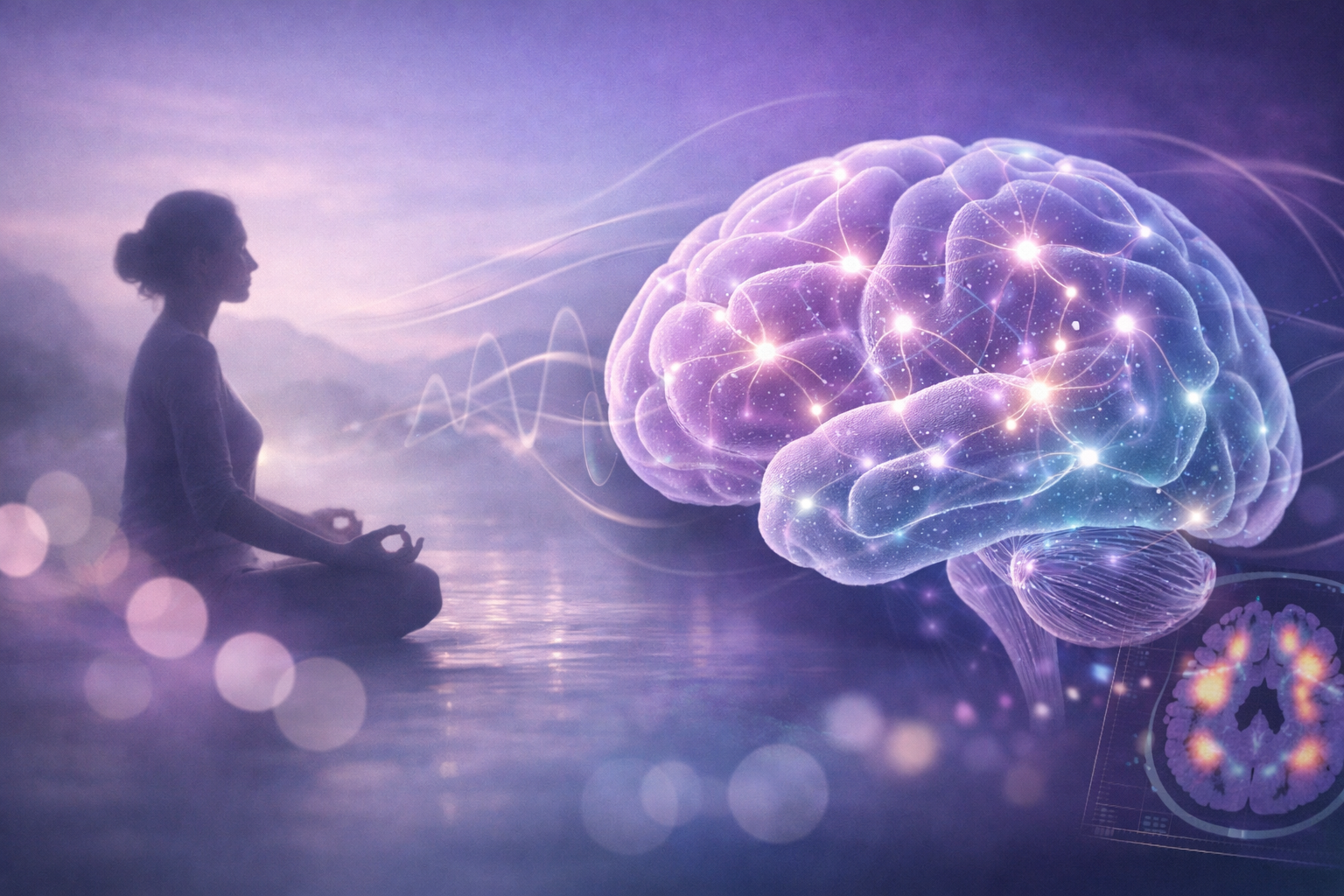
Meditation and the Brain: What Neuroimaging Reveals About Stress and Mood
Neuroimaging and clinical trials suggest meditation may reshape attention and emotion circuits—supporting reductions in anxiety/depressive symptoms and echoing 2,500+ years of contemplative tradition.
·10 min read
This content is for informational purposes only and does not constitute medical advice. Always consult a qualified healthcare provider before starting, stopping, or changing any supplement or medication regimen.
Meditation and Brain Structure: How Practice May Rewire Stress and Mood Circuits
Meditation has moved from monasteries to MRI scanners. Over the past two decades, neuroimaging studies have mapped how contemplative practices may reshape brain regions involved in attention, emotion, and memory. In parallel, randomized trials suggest meditation programs may help reduce anxiety and depressive symptoms for some people. Here’s what the science says—alongside how these findings echo 2,500+ years of contemplative traditions.
What Counts as “Meditation”? A Quick Map
Mindfulness (e.g., Mindfulness-Based Stress Reduction/MBCT): Usually trains focused attention and open monitoring—sustaining awareness of breath/body, noticing thoughts and feelings, and returning attention without judgment. Evidence level: strong for stress/anxiety reduction; moderate for depression relapse prevention.
Transcendental Meditation (TM) and other mantra-based practices: Repeating a sound or phrase to quiet mental activity. Evidence level: moderate for anxiety reduction, with variability across trials.
Loving-kindness/compassion practices (metta): Intentionally cultivating warmth and goodwill toward self and others. Evidence level: moderate for increasing positive emotions and compassion; emerging for depression/anxiety.
What Neuroimaging Studies Suggest About Structural Change
Research suggests regular meditation practice is associated with measurable changes in brain structure. While not all studies align and many are small, converging evidence highlights several key regions.
Cortical thickness in attention and control networks
Findings: Cross-sectional MRI studies report that experienced meditators show greater cortical thickness in the prefrontal cortex and anterior insula—regions linked to attention, interoception, and self-regulation (Lazar et al., 2005). Meta-analyses of morphometric studies echo these patterns, noting consistent differences in prefrontal cortex, insula, and anterior cingulate cortex (Fox et al., 2014; Fox et al., 2016).
Why this matters: These regions are central to focusing attention and monitoring internal experience—skills that mindfulness and focused-attention practices train.
Evidence level: moderate (consistent patterns but with heterogeneity and potential publication bias noted in meta-analyses).
Hippocampal volume and stress-memory regulation
Findings: Longitudinal studies of mindfulness-based programs report increased gray matter concentration in the hippocampus after training (Hölzel et al., 2011). Cross-sectional work has also associated long-term practice with larger hippocampal volumes (Luders et al., 2009).
Why this matters: The hippocampus is sensitive to chronic stress and participates in context, memory, and regulating the stress response.
Evidence level: moderate (replicated longitudinal and cross-sectional findings, though samples are modest and not uniform across all studies).
Amygdala structure and reactivity
Findings: An 8-week mindfulness program was associated with decreased gray matter density in the amygdala, and the magnitude of change correlated with reduced perceived stress (Hölzel et al., 2010). Functional MRI studies also report decreased amygdala reactivity to emotional stimuli and altered amygdala–prefrontal connectivity following mindfulness training (Goldin et al., 2013; Taren et al., 2015).
Evidence level: moderate (multiple studies show convergent structural and functional changes; more large-scale RCT imaging is needed).
White-matter integrity and network efficiency
Findings: Diffusion tensor imaging (DTI) studies suggest brief integrative mindfulness training may increase white-matter integrity near the anterior cingulate cortex, a hub for cognitive control (Tang et al., 2010; Tang et al., 2012).
Why this matters: Improved connectivity in control networks could support sustained attention and emotion regulation.
Evidence level: emerging (compelling early findings; replication across diverse samples is ongoing).
Default mode network (DMN) and rumination
Findings: Compared with novices, experienced meditators show reduced DMN activity and altered connectivity during meditation, especially in posterior cingulate and medial prefrontal regions associated with self-referential thinking (Brewer et al., 2011). Training studies also suggest mindfulness may modulate DMN dynamics.
Why this matters: The DMN is linked to mind-wandering and rumination; shifting DMN activity may help reduce repetitive negative thinking.
Evidence level: moderate (converging evidence from cross-sectional and task-based fMRI; more causal training studies needed).
Do Brain Changes Translate to Mental Health Benefits?
Randomized controlled trials (RCTs) and meta-analyses suggest meditation-based programs may help with stress-related symptoms and mood.
Anxiety and depression symptoms: A large systematic review and meta-analysis concluded that standardized meditation programs (primarily mindfulness-based) produced small to moderate improvements in anxiety and depressive symptoms compared with active controls (Goyal et al., 2014). More recent meta-analyses focusing on clinical populations also report small to moderate benefits (Goldberg et al., 2018). Evidence level: strong for short-term symptom reduction relative to active controls; effects vary by population and program.
Depression relapse prevention: Mindfulness-Based Cognitive Therapy (MBCT) may reduce risk of depressive relapse in people with recurrent depression, particularly those with more prior episodes (Kuyken et al., 2016). Evidence level: strong for relapse prevention in recurrent depression; benefits may be larger for those with higher baseline vulnerability.
Loving-kindness/compassion: Meta-analyses suggest loving-kindness and compassion training may increase positive emotions, compassion, and social connectedness, and may modestly reduce depressive symptoms (Galante et al., 2014; Zeng et al., 2015). Evidence level: moderate for well-being and compassion; emerging for anxiety/depression.
Mantra-based/Transcendental Meditation: A meta-analysis reports reduction in trait anxiety, with larger effects in individuals with higher baseline anxiety (Orme-Johnson & Barnes, 2013). Reviews note variability in study quality and control conditions (Goyal et al., 2014). Evidence level: moderate, with methodological caveats.
Is There a Dose–Response Relationship?
The field has begun to examine whether “more practice” relates to greater benefit.
Symptom change and home practice: Meta-analytic and observational data suggest a small but significant association between the amount of home practice and outcomes in mindfulness programs (Carmody & Baer, 2008; Parsons et al., 2017; Strohmaier, 2021). Evidence level: moderate (effects are reliable but modest; quality of practice may matter as much as quantity).
Neuroplasticity signals and practice exposure: Cross-sectional studies link years of practice with greater cortical thickness in attention-related regions (Lazar et al., 2005), while longitudinal trials report measurable structural or connectivity changes within weeks of training (Hölzel et al., 2011; Tang et al., 2010). Evidence level: moderate (consistent patterns, but not strictly linear and influenced by technique, intensity, and individual differences).
How Modern Findings Echo Ancient Traditions
Converging maps: Traditional Buddhist texts describe meditation as a training of attention and the mind’s responses to craving, aversion, and delusion. Neuroimaging aligns with this by highlighting plasticity in attention networks (prefrontal/insula), salience hubs (anterior cingulate/insula), and emotion circuits (amygdala–prefrontal pathways). Evidence level: traditional (longstanding contemplative reports) bridged with moderate neuroscientific evidence.
Compassion practices: Traditions emphasize cultivating loving-kindness to transform reactivity into care. Modern trials show compassion training may increase positive affect and prosocial behavior, with neural changes in empathy and regulation networks. Evidence level: moderate for behavioral outcomes; emerging for mechanistic imaging.
Nuances, Caveats, and What to Watch Next
Heterogeneity and bias: Meta-analyses of imaging studies note risks of small-sample bias and heterogeneous methods (Fox et al., 2014). Stronger preregistered, adequately powered RCTs with active controls and rigorous imaging pipelines are needed. Evidence level: strong (methodological consensus).
Not a panacea: Effects are typically small to moderate, similar to other behavioral interventions. Individuals vary in response based on baseline symptoms, preferences, and context. Evidence level: strong (consistent across meta-analyses).
Mechanisms are multifaceted: Improvements may arise from attentional training, exposure to internal experience, reappraisal, acceptance, social support in group programs, and expectancy. Imaging suggests multiple circuits contribute rather than a single “meditation center.” Evidence level: moderate.
Safety and fit: While generally considered low-risk, contemplative practice can bring challenging experiences for some. Tailoring approach and support may matter, especially in clinical contexts. Evidence level: emerging (growing qualitative and clinical literature).
Bottom Line
Neuroimaging research suggests meditation may reshape key brain circuits involved in attention (prefrontal/insula), stress-memory regulation (hippocampus), and threat responding (amygdala), with additional changes in connectivity and the default mode network. Evidence level: moderate.
RCTs and meta-analyses indicate mindfulness-based programs may reduce anxiety and depressive symptoms versus active controls and may help prevent depression relapse in recurrent depression. Evidence level: strong for symptom reduction and relapse prevention in specific groups.
Different practices show distinct profiles: mindfulness for attention and emotion regulation; loving-kindness for positive affect/compassion; mantra-based practices for anxiety reduction. Evidence level: moderate overall, varying by outcome.
More practice is modestly associated with greater benefits and measurable brain changes, though quality and individual fit likely matter. Evidence level: moderate.
These findings resonate with 2,500+ years of contemplative traditions that emphasize training attention, cultivating compassion, and transforming reactivity—now observed through the lens of neuroplasticity.
References (selected)
Brewer JA et al. Meditation experience is associated with differences in default mode network activity and connectivity. PNAS. 2011.
Carmody J, Baer RA. Relationships between mindfulness practice and levels of mindfulness, medical and psychological symptoms. J Clin Psychol. 2008.
Fox KCR et al. Is meditation associated with altered brain structure? A systematic review and meta-analysis. Neurosci Biobehav Rev. 2014; and meta-analysis of functional neuroimaging, 2016.
Galante J et al. A systematic review and meta-analysis of loving-kindness meditation. PLoS ONE. 2014.
Goldberg SB et al. Mindfulness-based interventions for psychiatric disorders: A systematic review and meta-analysis. Clin Psychol Rev. 2018.
Goldin PR et al. Randomized clinical trial of MBSR for social anxiety disorder: Effects on emotion regulation and neural responses. Soc Cogn Affect Neurosci. 2013.
Goyal M et al. Meditation programs for psychological stress and well-being: A systematic review and meta-analysis. JAMA Intern Med. 2014.
Hölzel BK et al. Stress reduction correlates with structural changes in the amygdala. Soc Cogn Affect Neurosci. 2010.
Hölzel BK et al. Mindfulness practice leads to increases in regional brain gray matter density. Psychiatry Res Neuroimaging. 2011.
Kuyken W et al. Efficacy of MBCT in prevention of depressive relapse: Systematic review and individual patient data meta-analysis. JAMA Psychiatry. 2016.
Lazar SW et al. Meditation experience is associated with increased cortical thickness. Neuroreport. 2005.
Luders E et al. The underlying anatomical correlates of long-term meditation. Brain Res. 2009.
Orme-Johnson DW, Barnes VA. Effects of the Transcendental Meditation technique on trait anxiety: A meta-analysis. J Altern Complement Med. 2013.
Parsons CE et al. Home practice in MBCT/MBSR and association with outcomes: Systematic review and meta-analysis. Behav Res Ther. 2017.
Strohmaier S. The relationship between mindfulness meditation practice and outcomes: A meta-analysis. Mindfulness. 2021.
Tang YY et al. Short-term meditation training improves attention and self-regulation; white matter changes near ACC. PNAS. 2010, 2012.
Taren AA et al. Mindfulness training alters amygdala functional connectivity to prefrontal regions during stress. Biol Psychiatry. 2015.
This content is for informational purposes only and does not constitute medical advice. Always consult a qualified healthcare provider before starting, stopping, or changing any supplement or medication regimen.
Meditation and Brain Structure: The Amygdala Focus
Summary: Research suggests that meditation may reduce how strongly the brain’s “threat detector” (the amygdala) is built and engaged, potentially he
Mindfulness-Based Stress Reduction. MBSR, Mindfulness Stress Reduction. ## Overview
**Mindfulness-Based Stress Reduction (MBSR)** is a structured mind-body program developed in the late 1970s by Jon Kabat-Zinn at the University of Massachusetts Medical Center. It typically combines **mindfulness meditation, body scanning, gentle yoga or mindful movement, and group-base
Guided Meditation for Mental Wellness: Evidence‑Based Techniques, How to Start, and Sample Scripts. If you’re curious whether guided meditation for mental wellness can actually help with stress, anxiety, mood, and sleep, you’re in the right place. Guided meditation pairs a soothing voice with step‑by‑step instructions, lowering the barrier to practice and making it easier to build a habit. Researc
Introduction
Psychobiotics are living microorganisms that may influence mood, stress, and cognitive function through the gut–brain axis. Interest has surged as research links certain Lactobacillus and
Meditation. Meditating, Medidation, Meditatiuon. ## Overview
**Meditation** is a broad family of mind-body practices that train attention, awareness, and emotional regulation. Although definitions vary across traditions, most forms involve intentionally directing attention—such as to the breath, bodily sensations, a sound, a phrase, or open aware
Eastern Approaches to Mental Wellness: TCM, Ayurveda, Mind‑Body Practices, and Evidence‑Based Strategies. If you’re exploring eastern approaches to mental wellness, you might be wondering how traditions like Traditional Chinese Medicine (TCM), Ayurveda, mindfulness, qigong, and yoga can help with stress, anxiety, mood, and clarity—especially alongside therapy or medication. Research suggests many of the