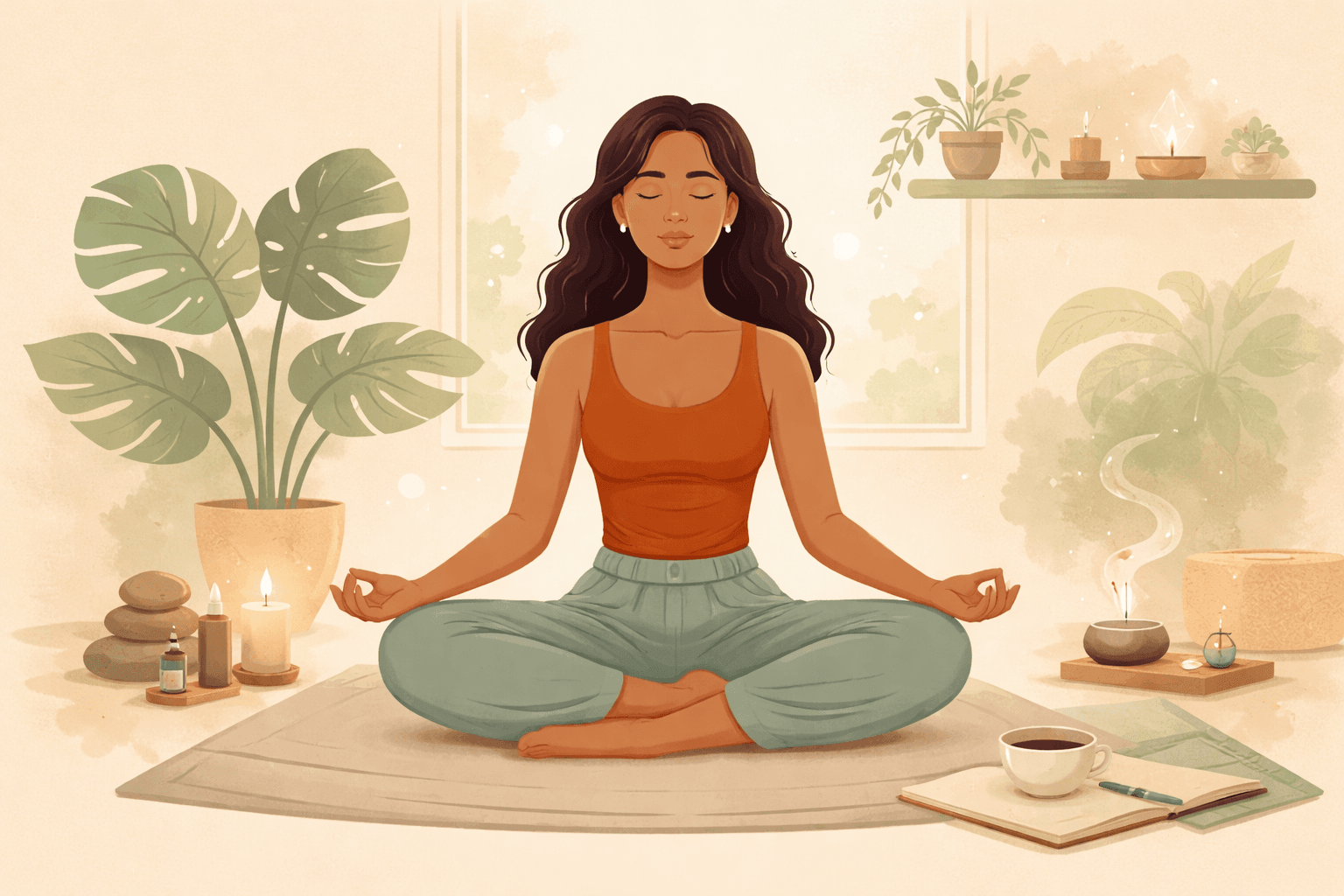
Guided Meditation for Mental Wellness: Evidence‑Based Techniques, How to Start, and Sample Scripts
Learn guided meditation for mental wellness: practical scripts, benefits, safety tips, and how to start—grounded in research and accessible to all.
·12 min read
This content is for informational purposes only and does not constitute medical advice. Always consult a qualified healthcare provider before starting, stopping, or changing any supplement or medication regimen.
If you’re curious whether guided meditation for mental wellness can actually help with stress, anxiety, mood, and sleep, you’re in the right place. Guided meditation pairs a soothing voice with step‑by‑step instructions, lowering the barrier to practice and making it easier to build a habit. Research suggests these practices can improve anxiety and depressive symptoms, reduce perceived stress, and support sleep and attention—though effects are generally small to moderate and depend on consistency and the specific technique.
What Is Guided Meditation and How Does It Work?
Guided meditation is an audio‑ or instructor‑led practice that walks you through focusing your attention, relaxing the body, and relating differently to thoughts and emotions. Rather than sitting in silence, you follow verbal cues that help you sustain attention and reduce mental wandering.
Core mechanisms thought to support mental health benefits include:
Relaxation response: Slow, steady breathing and muscle relaxation activate the parasympathetic (rest‑and‑digest) nervous system, which can counter stress physiology (e.g., elevated heart rate, cortisol).
Attention training: Repeatedly returning attention to a chosen anchor (like the breath) strengthens focus and meta‑awareness—skills linked to reduced rumination and better emotion regulation.
Emotion regulation: Practices like loving‑kindness and mindful acceptance may reduce reactivity to difficult thoughts and feelings by training nonjudgmental awareness and compassion.
What the Research Says About Guided Meditation for Mental Wellness
Overall, evidence for guided meditation is promising but mixed across outcomes. Effects are typically small to moderate, similar to other low‑intensity behavioral approaches. Here’s a concise evidence snapshot:
Anxiety: Multiple randomized controlled trials (RCTs) and meta‑analyses of mindfulness‑based and guided formats suggest small‑to‑moderate reductions in anxiety symptoms (evidence level: moderate). Effects tend to be stronger with regular home practice (e.g., 10–20 minutes most days).
Depression and mood: Studies indicate guided mindfulness and loving‑kindness practices can reduce depressive symptoms, especially rumination and negative affect, with small‑to‑moderate average effects (evidence level: moderate). Benefits often build over 6–8 weeks.
Perceived stress: Systematic reviews find consistent reductions in perceived stress across various guided protocols (evidence level: moderate). Physiological stress markers (e.g., cortisol) show mixed results.
Sleep: Mindfulness‑based and body‑scan/yoga nidra‑style guided practices can modestly improve sleep quality and insomnia severity in some studies (evidence level: moderate). Effects may be comparable to other behavioral sleep strategies for mild insomnia.
Attention and cognitive control: Mindfulness‑based attention training shows small‑to‑moderate improvements in sustained attention and working memory in healthy adults and students (evidence level: emerging‑to‑moderate), with larger gains in those who practice consistently.
Common limitations in this research:
Heterogeneous interventions: "Guided meditation" ranges from brief app sessions to 8‑week courses; protocols differ in content and dose.
Control groups: Some studies use wait‑list controls, making placebo and expectancy effects harder to rule out.
Short follow‑up: Long‑term maintenance of benefits is less studied.
Sample bias: Many participants are motivated volunteers; results may differ in general populations or in severe mental illness.
Guided Meditation Formats and Techniques: Which to Use and When
There are many guided styles. Choosing one that matches your goal makes practice more effective and more enjoyable.
Body scan: A slow tour of bodily sensations from head to toe. Good for stress, anxiety, and sleep. Typical length: 10–30 minutes (5 minutes for a mini scan). Best done lying down for sleep; seated for daytime grounding.
Breath awareness: Focus on natural breathing or gentle paced breathing (e.g., 4–6 breathing—in for 4, out for 6). Useful for acute anxiety and focus. Typical length: 5–15 minutes. Avoid aggressive breath holds if prone to panic.
Guided imagery: Using mental pictures (e.g., a safe beach or forest) to evoke calm. Helpful for stress relief and gentle mood support. Typical length: 10–20 minutes. Particularly helpful for visual thinkers.
Loving‑kindness (metta): Phrases of goodwill for self and others (e.g., “May I be safe; may you be peaceful”). Helpful for depression, social stress, and self‑criticism. Typical length: 10–20 minutes.
Progressive muscle relaxation (PMR): Systematically tensing and releasing muscle groups. Strong for somatic tension and pre‑sleep wind‑down. Typical length: 10–20 minutes.
Yoga nidra (non‑sleep deep rest): A structured lying‑down practice blending body scan, breath, and imagery. Supports relaxation and sleep onset. Typical length: 20–45 minutes.
Mindfulness of sound or open monitoring: Noticing sounds and thoughts as passing events. Useful for acceptance and cognitive flexibility. Typical length: 10–20 minutes.
Walking meditation: Slow, mindful walking—ideal for restlessness or ADHD. Typical length: 5–15 minutes outdoors or in a quiet hallway.
Live vs recorded options:
Live (classes, 1:1): Real‑time feedback and personalization; potentially more accountability. Consider if you have trauma history, complex anxiety, or prefer human connection.
Recorded (apps, podcasts): Flexible, scalable, and easy to start. Quality varies—sample a few voices and styles. Consistency often improves with a familiar guide.
Matching goals to formats:
Fast anxiety relief: Breath awareness with lengthened exhale, brief body scan, or grounding through the senses.
Low mood/self‑criticism: Loving‑kindness, acceptance‑based scripts, or gratitude reflections.
Sleep: Body scan, yoga nidra, or gentle imagery—done in bed or just before.
Focus/ADHD: Short, engaging practices—walking meditation, breath counting, or sound awareness in 3–8 minute blocks.
How to Practice: Setup, Scripts, and Personalization
A few setup pointers boost the odds you’ll actually do this—and feel better doing it.
Choose a comfortable posture: seated with back supported, feet on the floor; lying down for sleep practices.
Reduce friction: keep headphones nearby; set a 10‑minute timer; pick a regular time (e.g., after coffee or before bed).
Voice and pace: If self‑guiding, speak softly and slowly, with natural pauses. Think one sentence every 10–20 seconds during quiet phases.
Props and tools: Many people find a simple bolster or pillow supports the lower back. For sleep meditations, a Weighted Eye Mask can create comforting darkness; personal preference varies.
Tech support: A reliable app with offline tracks, like an ad‑free subscription such as Meditation App Premium, can remove distractions. Quality of guidance matters more than brand.
Accessibility and personalization tips
Eyes open vs closed: Keep eyes softly open if closing them feels unsafe or dizzying. Gaze at a neutral spot.
Trauma‑sensitive options: Prefer external anchors (sounds, sights) over intense body focus. Shorten sessions and keep choice at the center.
Breath sensitivity: If breath focus triggers anxiety, use touch (hand on chest), sound, or visual anchors instead.
Neurodivergent‑friendly: Try brief, structured intervals (3–5 minutes), walking or fidget‑friendly practices, or captions/transcripts if audio processing is challenging.
Language fit: Swap spiritual phrasing for plain language if that’s more comfortable.
At each spot: notice sensations; on the exhale, imagine softening by 5%. No need to change anything. [pause 6–8 minutes]
Cozy imagery [1–2 minutes]
Picture a place that feels safe—dim lighting, quiet, comfortable temperature. Sense the details: gentle sounds, supportive surface, easy breathing. [pause 60–90s]
Offramp to sleep [1–2 minutes]
Let attention expand and blur. If thoughts appear, imagine them as faint clouds drifting by. Nothing to do. The practice can fade into sleep on its own.
Variation notes:
Restless legs/pain: Try progressive muscle relaxation first (tense/release legs for 5–10 seconds each, then relax) before the body scan.
Insomnia pattern: If still awake after ~20–30 minutes, get out of bed briefly (dim light) and do a quiet activity; return when sleepy. Repeat as needed.
Optional loving‑kindness add‑on (3–5 minutes; any time of day)
Silently offer to yourself: “May I be safe. May I be peaceful. May I meet this moment with kindness.” Then extend to someone you care about, then to a neutral person, and finally back to yourself. Keep it gentle; adjust wording to fit your beliefs.
Adjuncts some people consider
Some individuals explore evening magnesium, such as Softgel Magnesium Glycinate. Evidence for sleep and anxiety is mixed; discuss with a clinician, especially if you take other medications.
For those seeking a non‑sedating focus or calm support during the day, learn about mechanisms and cautions on our page for L‑Theanine. If you choose to try a supplement, select a reputable brand and monitor how you feel.
Safety, Contraindications, and What to Do If You Feel Worse
While guided meditation is generally low risk, it is not risk‑free. A trauma‑sensitive, flexible approach is essential.
Who should proceed with extra care or consult a clinician first:
Trauma/PTSD, dissociation, or a history of panic: Body‑focused practices or breath manipulation can sometimes intensify symptoms. Start with very short, choice‑rich sessions (1–3 minutes) and consider working with a trauma‑informed teacher or therapist.
Bipolar spectrum: Rarely, intensive meditation may precede hypomanic or manic symptoms. Practice gently during stable periods and coordinate with your mental health provider.
Psychosis or active severe depression: Work closely with a clinician; consider structured, clinician‑guided programs rather than self‑directed practice.
Respiratory concerns (asthma, recent illness): Avoid restrictive breath‑holds or vigorous breathing; keep breath natural and comfortable.
Recognizing adverse reactions
Signs: Rising panic, lightheadedness, depersonalization/derealization, intrusive memories, overwhelming sadness, or physical discomfort you can’t settle.
Immediate steps:
Open your eyes; orient to the room—name five things you see.
Switch to external anchors (sounds, sights) or move the body—stand, press feet into the floor, or walk slowly.
Use brief grounding—cool water on wrists, name colors in the room, or hold a textured object. Our Grounding Exercises article has options.
If distress persists, stop the session. Consider contacting a trusted professional.
When to modify or stop
If symptoms reliably worsen despite modifications, pause the practice and consult a clinician.
If you feel numb or detached, keep sessions brief and use open‑eyes, external‑focus practices.
If breath focus triggers anxiety, avoid counting; anchor to touch or sound.
Creating a safe container
Time‑bound sessions (e.g., 5–10 minutes) with a gentle alarm.
Clear intention (“I’m here to practice noticing and softening, not to fix everything”).
Post‑practice transition: a sip of water, a short stretch, a note in your journal about how you feel.
Building a Sustainable Practice and Tracking Progress
Consistency matters more than intensity. Aim for “little and often.”
Frequency and dose: Start with 5–10 minutes, 4–6 days per week, for 4–8 weeks. Short “micro‑practices” (60–120 seconds) sprinkled through the day can be surprisingly effective.
Habit design: Pair practice with an existing routine (after brushing teeth, after lunch). Reduce friction (headphones ready, one saved track).
Tracking: Use a simple log—date, minutes practiced, mood (0–10), stress (0–10), and sleep quality. Weekly, scan for patterns.
Objective markers: If you track heart rate variability (HRV) or sleep with a wearable, look for gentle trends rather than day‑to‑day perfection.
Progress mindset: Expect plateaus. The skill is returning kindly after distraction.
Community and guidance: Consider local mindfulness classes or evidence‑based programs (e.g., MBSR). Apps with structured curricula can help; free options exist.
Many people also find small supportive tools helpful—a comfortable cushion, soft lighting, or noise‑masking headphones. If you prefer a ready‑made kit, a simple bundle like a cushion and blanket set such as Meditation Starter Set can make practice inviting, though it’s not required.
Practical Takeaways
Guided meditation for mental wellness is accessible and typically low risk. Benefits for anxiety, mood, stress, sleep, and attention are supported by RCTs and meta‑analyses, with small‑to‑moderate average effects that grow with consistency.
Match the technique to the goal: lengthened‑exhale breathing and brief grounding for anxiety; loving‑kindness for self‑criticism; body scan or yoga nidra for sleep; short, focused sessions for attention.
Personalize for safety and fit: eyes open if needed, external anchors for trauma sensitivity, natural breathing if counts feel edgy, and shorter sessions for restlessness.
Build a routine: 5–10 minutes most days for 4–8 weeks. Track basic outcomes (mood, stress, sleep) to see what works.
If distress increases, stop or modify and consider guidance from a trauma‑informed clinician or teacher.
This information is for educational purposes and shouldn’t replace personalized care. If you’re experiencing significant anxiety, depression, or sleep problems, consult your clinician. If you’re curious about how different contemplative practices affect the brain and stress circuits, explore our pieces on Meditation and the Brain and Meditation and the Amygdala. For broader integrative strategies, see Holistic Approaches to Stress Relief.
This content is for informational purposes only and does not constitute medical advice. Always consult a qualified healthcare provider before starting, stopping, or changing any supplement or medication regimen.
Grounding Exercises for Mental Health: Evidence‑Based Techniques to Reduce Anxiety and Improve Mood. If your mind races, your chest tightens, or the world starts to feel unreal, simple grounding exercises for mental health can help you come back to the present moment. Grounding aims to reduce dissociation, manage panic, and interrupt rumination by engaging your senses, breath, movement, and attenti
Eastern Wellness Practices for Relaxation: An Evidence‑Based Guide to Yoga, Meditation, Acupuncture, Ayurveda, Tai Chi & Qigong. If stress is running the show, you may be wondering which eastern wellness practices for relaxation are worth your time. Yoga, meditation, acupuncture, Ayurveda, tai chi, and qigong offer time‑tested ways to calm the nervous system. Research suggests many of these practices can reduce perceived stre
Eastern Approaches to Mental Wellness: TCM, Ayurveda, Mind‑Body Practices, and Evidence‑Based Strategies. If you’re exploring eastern approaches to mental wellness, you might be wondering how traditions like Traditional Chinese Medicine (TCM), Ayurveda, mindfulness, qigong, and yoga can help with stress, anxiety, mood, and clarity—especially alongside therapy or medication. Research suggests many of the
Meditation and Brain Structure: How Practice May Rewire Stress and Mood Circuits
Meditation has moved from monasteries to MRI scanners. Over the past two decades, neuroimaging studies have mapped how
Holistic Approaches to Stress Relief: Evidence‑Based Mind‑Body Practices, Herbs, and Lifestyle Strategies. If you’re feeling wired, tired, and overwhelmed, you’re not alone. Many people look for holistic approaches to stress relief that work with the whole person—mind, body, and daily environment. Research suggests integrated strategies can calm the stress response, improve mood and sleep, and support lo
Meditation and Brain Structure: The Amygdala Focus
Summary: Research suggests that meditation may reduce how strongly the brain’s “threat detector” (the amygdala) is built and engaged, potentially he