Psychobiotics and Mood: How Specific Probiotic Strains May Calm the Mind via the Gut–Brain Axis
Psychobiotics—specific Lactobacillus and Bifidobacterium strains—may modestly improve mood and stress via the gut–brain axis. Learn what the evidence says, how the vagus nerve and fermented foods fit in, and where traditional ferments like kimchi, kefir, and miso meet modern science.
·9 min read
This content is for informational purposes only and does not constitute medical advice. Always consult a qualified healthcare provider before starting, stopping, or changing any supplement or medication regimen.
Introduction
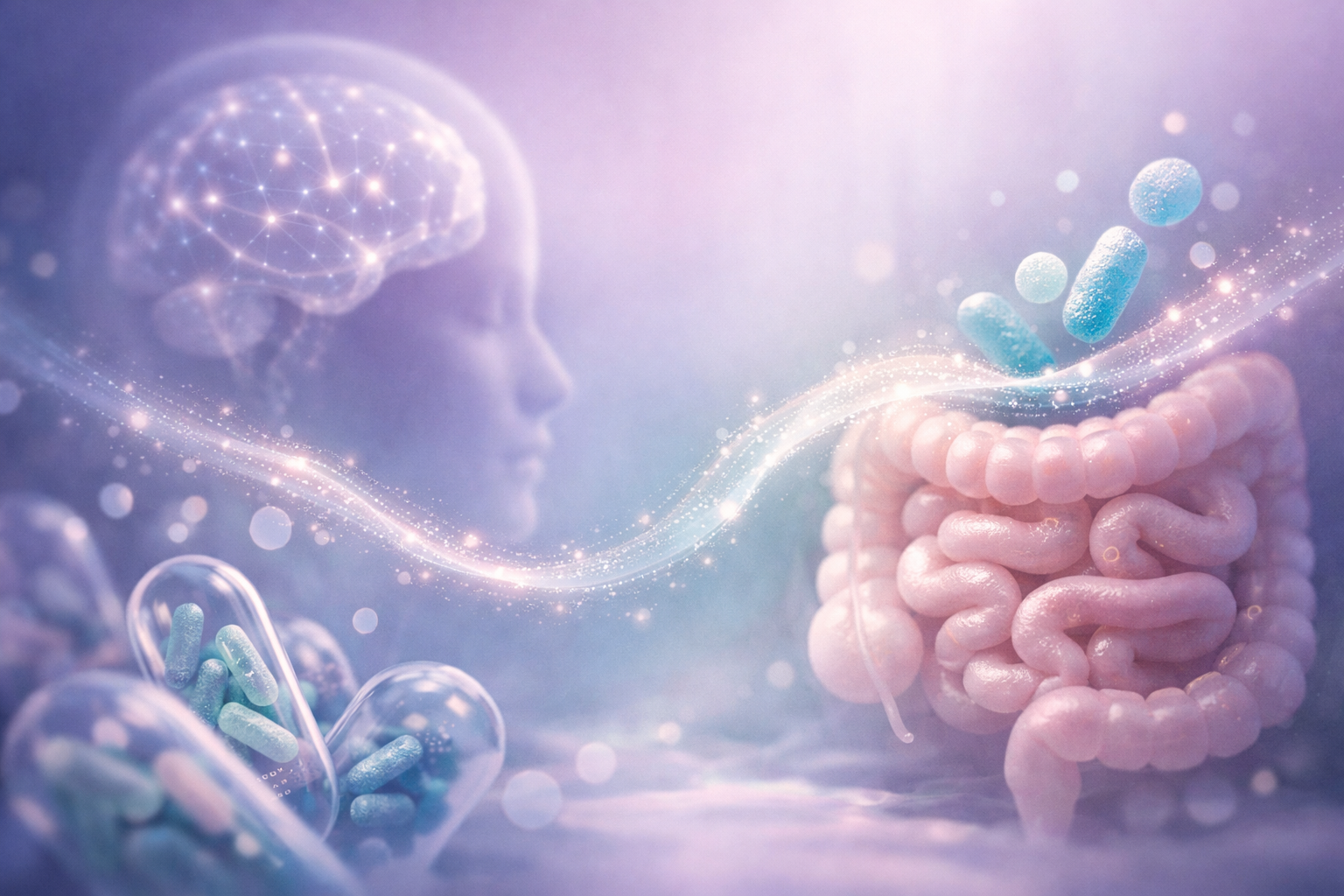
Psychobiotics are living microorganisms that may influence mood, stress, and cognitive function through the gut–brain axis. Interest has surged as research links certain Lactobacillus and Bifidobacterium strains to changes in anxiety and depressive symptoms, stress physiology, and even brain activity patterns. While the science is still developing, a growing body of randomized trials, imaging studies, and meta-analyses suggests a modest but meaningful signal—especially for depressive symptoms. This article reviews what is known, what remains uncertain, and how traditional fermented foods may act as “proto-psychobiotics.”
Key Takeaway at a Glance
Specific strains—not all probiotics—appear to influence mental health outcomes. Effects are modest and vary by strain, population, and outcome. [Evidence: moderate]
The vagus nerve, immune modulation, and microbial metabolites (like short-chain fatty acids and neurotransmitter precursors) may mediate gut–brain effects. [Evidence: moderate]
Fermented foods and psychobiotic-style dietary patterns may reduce perceived stress and systemic inflammation, with early signals for mood. [Evidence: emerging]
What Are Psychobiotics?
Psychobiotics are defined as live organisms that, when ingested in adequate amounts, may confer mental health benefits via interactions among the gut microbiome, immune system, and nervous system. The term is typically applied to specific strains of Lactobacillus and Bifidobacterium that have shown effects on anxiety, depression, stress reactivity, or related biomarkers in clinical or translational studies. [Evidence: moderate]
How Might Psychobiotics Work?
Vagus nerve signaling: Animal work first showed that Lactobacillus rhamnosus JB-1 altered GABA receptor expression and reduced stress behaviors—an effect abolished when the vagus nerve was severed (Bravo et al., 2011, PNAS). Human studies now show probiotic ingestion can alter brain activity during emotion tasks (Tillisch et al., 2013, Gastroenterology). [Evidence: moderate]
Immune and inflammatory pathways: Probiotics may lower pro-inflammatory cytokines that are often elevated in stress-related conditions (systematic reviews suggest small-to-moderate effects on inflammatory markers in some contexts). [Evidence: moderate]
Metabolites and neurotransmitters: Gut bacteria can produce or modulate precursors to GABA, serotonin, dopamine, and short-chain fatty acids that may influence mood circuits and the hypothalamic–pituitary–adrenal (HPA) axis. Human evidence is indirect but consistent with animal and mechanistic studies. [Evidence: emerging]
What Does Clinical Evidence Say? Key Lactobacillus and Bifidobacterium Strains
Lactobacillus helveticus R0052 + Bifidobacterium longum R0175: In double-blind RCTs, this combination reduced anxiety and depressive symptom scores and cortisol in healthy adults and those with mild stress (Messaoudi et al., 2011, Br J Nutr). Effects were modest but statistically significant. [Evidence: moderate]
Bifidobacterium longum NCC3001: In a randomized trial of patients with irritable bowel syndrome (IBS), supplementation improved depression scores and altered limbic brain activity on fMRI compared with placebo (Pinto-Sanchez et al., 2017, Gastroenterology). [Evidence: moderate]
Bifidobacterium longum 1714: Small human studies report reduced stress and changes in brain activity and cognitive performance during stress tasks (Allen et al., 2016, Transl Psychiatry). Findings need replication in larger, diverse cohorts. [Evidence: emerging]
Lactobacillus casei Shirota: In healthy volunteers, a fermented milk drink containing this strain improved mood in those with higher baseline depressive symptoms (Benton et al., 2007, Eur J Clin Nutr) and has shown signals for stress attenuation in student populations. Effects appear subgroup-specific. [Evidence: emerging]
Lactobacillus rhamnosus HN001: In a randomized trial of perinatal women, this strain reduced postpartum depression and anxiety scores compared with placebo (Slykerman et al., 2017, EBioMedicine/related publications). Findings highlight population context and timing. [Evidence: moderate]
What Do Meta-Analyses Conclude?
Depression: Systematic reviews and meta-analyses of randomized trials suggest probiotics—often Lactobacillus and Bifidobacterium strains—may reduce depressive symptoms by a small but significant margin compared with placebo, particularly in individuals with elevated baseline symptoms (Ng et al., 2018, Nutrients; Firth et al., 2020–2021 updates). Heterogeneity is high, and strain specificity matters. [Evidence: moderate]
Anxiety: Results are more mixed. Some meta-analyses report small improvements; others find no significant overall effect. Benefits may emerge in subgroups or with specific strains/combos. [Evidence: emerging]
The Vagus Nerve Connection: From Bench to Brain Imaging
The vagus nerve provides a bidirectional superhighway between gut and brain. Classic animal work demonstrated that psychobiotic effects could be vagus-dependent (Bravo et al., 2011, PNAS). Translational human studies have used neuroimaging to show brain changes after probiotic intake: women consuming a fermented milk product with probiotics displayed altered activity in the insula and somatosensory regions during emotion recognition tasks (Tillisch et al., 2013, Gastroenterology). Such findings support a neural pathway, though they do not establish causation for mood outcomes. [Evidence: moderate]
Fermented Foods and Mood: What Does the Research Say?
Observational links: In young adults, higher habitual fermented food intake was associated with fewer social anxiety symptoms, particularly among individuals high in neuroticism (Hilimire et al., 2015, Psychiatry Res). Association is not causation but suggests a potential relationship. [Evidence: emerging]
Randomized dietary interventions: A “psychobiotic diet” emphasizing prebiotic fibers and fermented foods reduced perceived stress and showed microbiome shifts in a small RCT of healthy adults (O’Sullivan et al., 2020–2022 publications, incl. Mol Psychiatry/Gut Microbes). [Evidence: emerging]
Immune modulation: In a Stanford-led RCT, a high–fermented foods diet increased gut microbial diversity and decreased multiple inflammatory markers (Wastyk et al., 2021, Cell). Mood changes were not the primary endpoint, but inflammation is implicated in stress and depression pathways. [Evidence: emerging]
Traditional Ferments as Proto‑Psychobiotics
Long before the term “psychobiotic,” cultures worldwide cultivated live ferments:
Kimchi: Korean lactic acid fermentation (often Lactobacillus plantarum, Leuconostoc species) produces tangy vegetables rich in bioactive compounds. Small trials suggest metabolic and gut benefits; mood outcomes remain exploratory. [Evidence: emerging]
Kefir: A fermented milk drink containing a consortium of Lactobacillus, Lactococcus, Leuconostoc, Acetobacter, and yeasts. Early human data point to digestive and immune effects; mood findings are preliminary. [Evidence: emerging]
Miso: Japanese soybean paste fermented with koji (Aspergillus oryzae); some varieties contain live lactic acid bacteria and Tetragenococcus. Population studies in Japan have linked traditional dietary patterns, including miso, with mental well-being, though miso-specific mood effects are not established. [Evidence: traditional/emerging]
From an Eastern perspective, many culinary traditions view the gut as central to vitality and emotional balance—paralleling modern concepts of the gut–brain axis. The Japanese notion of the “hara” (center) and East Asian dietary practices that emphasize warm, fermented, and easily digested foods resonate with psychobiotic hypotheses, even as controlled clinical evidence accumulates. [Evidence: traditional]
Strain Specificity and Study Quality Matter
Not all probiotics are psychobiotics. Benefits appear to be strain- and context-specific, with defined products like L. helveticus R0052/B. longum R0175 or B. longum NCC3001 leading the evidence base. [Evidence: moderate]
Outcomes vary by population (healthy vs. symptomatic), baseline diet, stress level, and coexisting conditions (e.g., IBS). [Evidence: moderate]
Trials are often small, of short duration, and differ in endpoints, limiting firm conclusions. Publication bias and variability in product quality remain concerns. [Evidence: moderate]
Practical, Food-First Considerations
A diversified dietary pattern that includes fiber-rich plant foods (the “fuel” for gut microbes) and traditionally fermented foods may support a microbiome environment conducive to mental well-being. [Evidence: emerging]
Fermented foods vary: Some are pasteurized or heat-treated, reducing live microbes; others are raw and rich in live cultures. Product labels and preparation methods influence microbial content. [Evidence: emerging]
Clinical trials typically use single-strain or defined multi-strain products over weeks to months; results cannot be generalized to all probiotic supplements or fermented foods. [Evidence: moderate]
What to Watch Next
Larger, longer RCTs targeting diagnosed anxiety and depressive disorders, with careful strain selection and biomarker/imaging endpoints. [Evidence: emerging]
Personalized psychobiotics based on baseline microbiome profiles and stress physiology. [Evidence: emerging]
Integrative dietary trials combining fermented foods and prebiotic fibers, with mental health as primary outcomes. [Evidence: emerging]
Bottom Line
The science: Meta-analyses and RCTs suggest certain Lactobacillus and Bifidobacterium strains may modestly improve depressive symptoms and, to a lesser extent, anxiety. Neuroimaging and translational studies support a gut–brain link that may involve the vagus nerve and immune signaling. [Evidence: moderate]
The food connection: Diets rich in fermented foods and prebiotic fibers may reduce perceived stress and systemic inflammation, providing a plausible, food-first route to support the gut–brain axis. Mood benefits from fermented foods alone remain early-stage. [Evidence: emerging]
Tradition meets science: Longstanding fermentation practices—kimchi, kefir, miso—align with modern psychobiotic concepts. While not a substitute for mental health care, they offer culturally rooted, potentially supportive options as research evolves. [Evidence: traditional/emerging]
This content is for informational purposes only and does not constitute medical advice. Always consult a qualified healthcare provider before starting, stopping, or changing any supplement or medication regimen.
[Psychobiotics](/articles/psychobiotics-gut-brain-axis-mental-health) are [probiotics](/supplements/probiotics) researched for their potential to influence mood and stress via the gut–brain axis. Amon
Probiotic Strains and Weight Management. Probiotic strains are specific, named microbes that, when consumed in adequate amounts, may confer health benefits. Interest in their role in weight management has grown as science clarifies how the gut microbiome influences appetite, metabolism, inflammation, and energy harvest. Understanding which
Probiotics. . ## Overview
**Probiotics** are live microorganisms—most commonly certain strains of *Lactobacillus*, *Bifidobacterium*, and the yeast *Saccharomyces boulardii*—that are studied for their potential to support human health when consumed in adequate amounts. They are found in dietary supplements and i
Prebiotics and Probiotics. Prebiotics and probiotics both support a healthy gut, but they are not the same thing. Probiotics are live microorganisms that, when consumed in adequate amounts, confer a health benefit on the host. Common supplemental strains include Lactobacillus rhamnosus GG, Bifidobacterium animalis subsp. lact
Postbiotics. . ## Overview
**Postbiotics** are bioactive compounds produced by beneficial microorganisms during fermentation or released when those microbes break down. Unlike **probiotics** (live microbes) and **prebiotics** (substrates that feed them), postbiotics are typically **non-living microbial products o
Meditation and Brain Structure: How Practice May Rewire Stress and Mood Circuits
Meditation has moved from monasteries to MRI scanners. Over the past two decades, neuroimaging studies have mapped how