Best Minerals for Bone Strength: An Evidence‑Based Guide to Calcium, Magnesium, Zinc, Boron & More
Which minerals truly strengthen bones? Evidence‑based guide to calcium, magnesium, zinc, boron, silicon—plus D/K2 synergies, food sources, dosing & safety.
·12 min read
This content is for informational purposes only and does not constitute medical advice. Always consult a qualified healthcare provider before starting, stopping, or changing any supplement or medication regimen.
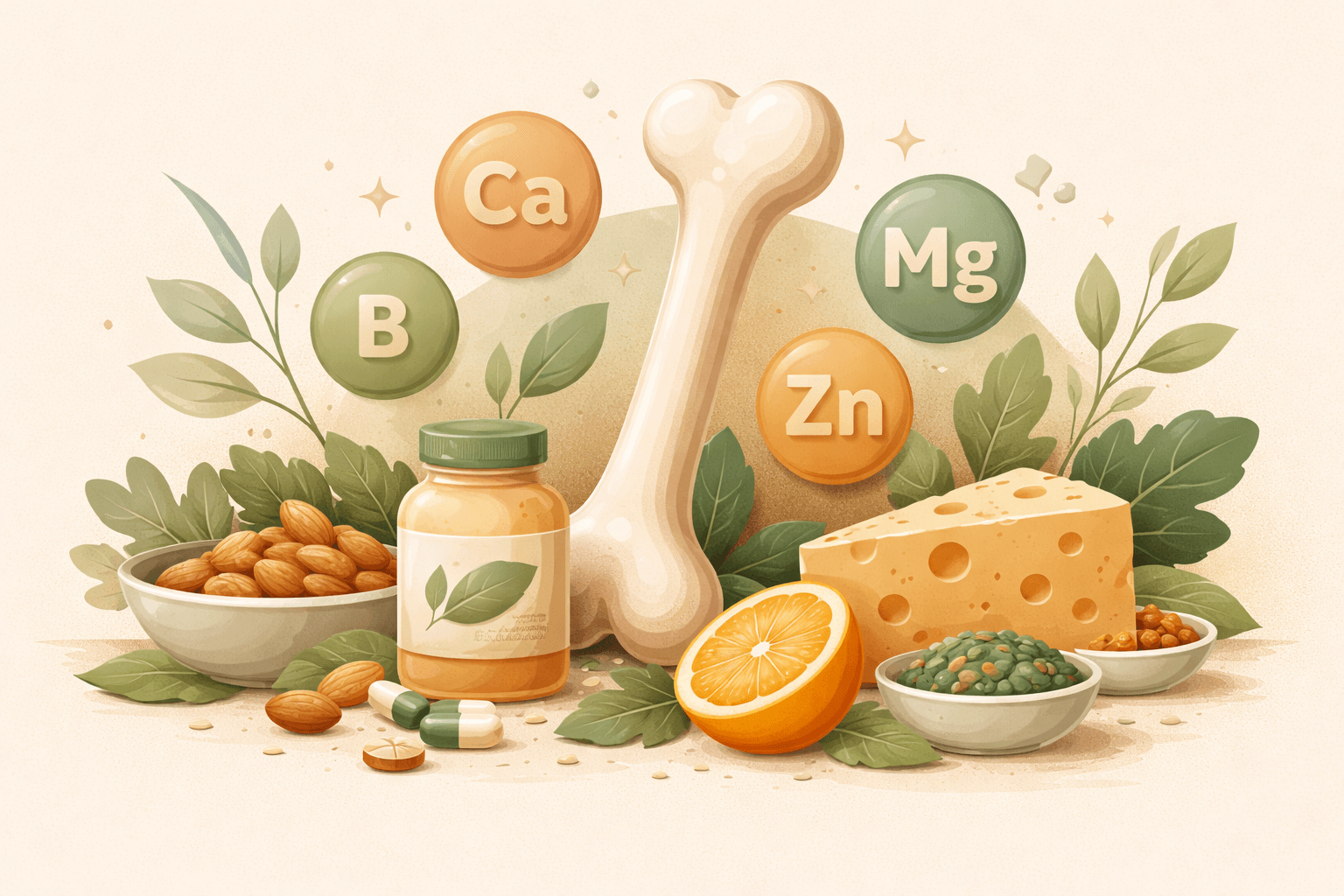
If you’re asking which nutrients truly move the needle for stronger bones, you’re not alone. The best minerals for bone strength go beyond calcium—magnesium, phosphorus, zinc, copper, manganese, boron, and silicon all contribute to bone formation, remodeling, and structural integrity. Research suggests these minerals work in concert with vitamin D, vitamin K2, protein, and weight‑bearing exercise to build and maintain resilient bones over a lifetime.
Below, we break down what each mineral does, how strong the evidence is, who’s most at risk for low intake, and practical ways to get what you need from food and supplements.
The best minerals for bone strength: roles at a glance
Calcium (Ca): The primary mineral in hydroxyapatite crystals that harden bone; vital for mineralization and bone strength.
Magnesium (Mg): Cofactor for hundreds of enzymes, supports vitamin D activation and parathyroid hormone (PTH) signaling; affects bone formation and turnover.
Phosphorus (P): Partners with calcium in hydroxyapatite; essential for mineralization and energy metabolism within bone cells.
Zinc (Zn): Supports osteoblast function, collagen synthesis, and alkaline phosphatase activity; influences bone growth and remodeling.
Copper (Cu): Required for lysyl oxidase, an enzyme that cross‑links collagen and elastin, contributing to bone’s tensile strength.
Manganese (Mn): Cofactor for enzymes involved in cartilage and bone matrix formation and antioxidant defense (e.g., Mn‑SOD).
Boron (B): Modulates vitamin D and estrogen metabolism and may influence bone turnover markers; potentially supportive for mineral utilization.
Silicon (Si): In its bioavailable form (orthosilicic acid), may aid collagen formation and early bone mineralization, supporting bone quality.
What the Research Says about the best minerals for bone strength
Evidence strength is summarized as: strong (multiple RCTs/meta‑analyses), moderate (limited RCTs/observational), emerging (preliminary human/animal or biomarker studies), traditional (historical use without robust modern trials).
Highlights: Numerous trials and meta‑analyses show calcium—especially from diet—supports bone mineral density (BMD). Calcium plus vitamin D reduces fracture risk modestly in some groups (e.g., institutionalized or low‑intake older adults). Calcium alone has more mixed effects on fracture outcomes but consistently supports BMD.
Typical deficiency signs: Not obvious in blood tests; chronic low intake may present as osteopenia/osteoporosis over time.
Intake targets: 1000 mg/day (men 19–70, women 19–50); 1200 mg/day (women 51+, men 71+). Prefer food first; supplement only to fill gaps.
Higher‑risk groups: Postmenopausal women, older adults, people with lactose intolerance or dairy‑free diets, malabsorption (celiac, IBD), long‑term steroid users.
Highlights: Observational studies link higher magnesium intake with better BMD and lower fracture risk. Small RCTs in postmenopausal women suggest magnesium can improve bone turnover markers and possibly BMD when intake is low. Mechanistically, magnesium is required for vitamin D activation and PTH balance.
Typical deficiency signs: Muscle cramps, fatigue, arrhythmias in severe cases; suboptimal intakes are common.
Intake targets: 400–420 mg/day (men), 310–320 mg/day (women). Many adults fall short.
Higher‑risk groups: Older adults, people with diabetes, high alcohol intake, diuretic or PPI use, GI disorders.
Phosphorus — Evidence: strong (with caveats)
Highlights: Essential partner to calcium in bone crystal formation. True dietary deficiency is rare. Excessive phosphate additives (processed foods/colas) can disrupt calcium balance and elevate PTH, potentially harming bone if calcium intake is low.
Typical deficiency signs: Rare; weakness, bone pain in severe deficiency.
Intake targets: 700 mg/day (adults). Emphasize whole foods over phosphate‑additive heavy diets.
Higher‑risk groups: Those with very low protein/energy intakes; people with kidney disease must carefully manage phosphorus under medical guidance.
Zinc — Evidence: moderate
Highlights: Zinc supports osteoblast activity and collagen formation. Observational data link low zinc status with lower BMD; small trials suggest zinc (often with other nutrients) may support BMD or bone markers in older adults.
Typical deficiency signs: Poor wound healing, reduced taste/smell, hair loss; marginal deficiency can be subtle.
Higher‑risk groups: Older adults, strict vegans (phytate‑rich diets reduce absorption), GI disorders, those using high‑dose iron or zinc‑depleting meds.
Copper — Evidence: emerging to moderate
Highlights: Copper’s role in collagen cross‑linking suggests importance for bone quality. Limited trials show changes in bone markers with copper (often combined with zinc/manganese/calcium). Observational links exist between low copper and reduced BMD.
Typical deficiency signs: Anemia not responsive to iron, neutropenia, neurological changes; subtle bone effects over time.
Intake targets: 900 mcg/day (adults). Balance with zinc to reduce deficiency risk.
Highlights: Required for enzymes forming bone matrix and antioxidant defenses. Human trials are limited; some combination supplements (with calcium, zinc, copper) show benefits on bone markers or BMD, making manganese’s independent effect hard to isolate.
Typical deficiency signs: Rare; impaired growth/bone/cartilage in severe deficiency (uncommon in humans).
Highlights: Small human studies indicate boron can influence bone turnover markers and vitamin D/estrogen metabolism, suggesting supportive effects on bone maintenance, particularly when intake is low.
Typical deficiency signs: No established clinical deficiency syndrome; inadequate intake may subtly affect bone and cognition per preliminary data.
Intake targets: No RDA; research often uses 1–3 mg/day.
Higher‑risk groups: Diets low in fruits, nuts, legumes, and leafy vegetables.
Silicon — Evidence: emerging to moderate
Highlights: Observational studies link higher dietary silicon (especially bioavailable orthosilicic acid) with greater BMD, particularly in premenopausal women. Small RCTs of choline‑stabilized orthosilicic acid (ch‑OSA) with calcium/vitamin D show improvements in bone formation markers and sometimes site‑specific BMD.
Typical deficiency signs: No established clinical deficiency; potential impacts on connective tissue quality theorized.
Intake targets: No RDA; typical diets provide 20–50 mg/day (low bioavailability). Supplemental orthosilicic acid trials commonly use 6–12 mg/day of Si.
Higher‑risk groups: Low intake of whole grains, beer in moderation, and certain vegetables; GI disorders reducing absorption.
Natural food sources, bioavailability, and synergistic nutrients
Where to find these minerals in foods
Calcium: Dairy (yogurt, kefir, cheese), calcium‑set tofu, canned fish with bones (sardines, salmon), calcium‑fortified plant milks, low‑oxalate greens (kale, bok choy), sesame/tahini, almonds.
Magnesium: Pumpkin seeds, almonds, cashews, peanuts, black beans, edamame, quinoa, leafy greens, dark chocolate. See forms and considerations in our guide to Magnesium Forms: Which One Is Right for You?.
Phosphorus: Dairy, meats, fish, poultry, legumes, nuts, whole grains. Limit processed foods high in phosphate additives.
Zinc: Oysters and shellfish, beef, lamb, pumpkin seeds, chickpeas, lentils, fortified cereals. Learn more on our Zinc page.
Silicon: Whole grains (oats, barley), beer in moderation, green beans, bananas; horsetail tea is a traditional source but varies widely in bioavailability.
What affects absorption (and what helps)
Phytates and oxalates: Phytate‑rich foods (unsoaked grains/legumes, bran) reduce absorption of calcium, magnesium, and zinc; oxalates (spinach, beet greens) hinder calcium uptake. Traditional methods—soaking, sprouting, fermenting—can improve bioavailability.
Stomach acid: Calcium carbonate absorbs best with meals and adequate stomach acid; calcium citrate absorbs better in those using PPIs or with low acid.
Gut health: Inflammation, celiac disease, IBD, or SIBO can reduce mineral uptake; addressing gut issues may improve status.
Vitamin K2 helps guide calcium into bone and away from soft tissues by activating osteocalcin and matrix Gla protein; learn about forms and dosing on Vitamin K2.
Magnesium is required for vitamin D activation and PTH regulation—low magnesium can blunt benefits of vitamin D and calcium.
Protein (including collagen) provides the scaffold for mineralization; aim for 1.0–1.2 g/kg/day of protein in older adults unless contraindicated.
From an integrative perspective, traditional systems emphasize mineral‑rich whole foods: sesame/tahini and black sesame in East Asian and Ayurvedic cuisines, sea vegetables in Japanese diets, and bone broths in many cultures. These practices are traditionally used to “nourish bones,” though modern clinical evidence specifically linking them to fracture reduction is limited.
Smart supplementation strategies and dosing considerations
Food first remains a sound strategy. Supplements can help close gaps—especially for those at higher risk. Prioritize based on personal diet, lab data, and medical context.
Calcium: If supplementing, use the smallest dose needed to reach ~1000–1200 mg total per day from all sources. Calcium citrate (200–300 mg elemental per dose) is well‑tolerated and absorbs without meals; calcium carbonate (500 mg per dose) is best with meals. Divide doses ≤500 mg for better absorption. Many people find a balanced cal‑mag product like [Cal‑Mag Citrate] (product-url) convenient—take with meals and plenty of water.
Magnesium: Common bone‑support forms include magnesium glycinate (gentle on GI) or magnesium citrate (also supports regularity). Typical supplemental ranges: 100–300 mg/day, adjusted to tolerance and total intake. Our guide on Magnesium Forms: Which One Is Right for You? can help you choose.
Phosphorus: Generally not needed as a supplement; most diets supply enough. Avoid chronic high intake from phosphate additives.
Zinc: If diet is low or lab data support it, 8–15 mg/day is a conservative supplemental range for maintenance. If using higher intakes (e.g., 25–30 mg/day), ensure 1–2 mg/day of copper to maintain balance; see our Zinc resource.
Copper: Often taken only when there’s a demonstrated need or to balance higher zinc; 1–2 mg/day short term under guidance.
Manganese: Typically obtained from diet; supplements (1–3 mg/day) appear safe for repletion, but evidence for bone outcomes alone is limited.
Boron: Research doses commonly 1–3 mg/day; consider as part of a bone‑support multi if diet is low in fruits/nuts/legumes.
Silicon: Look for choline‑stabilized orthosilicic acid (ch‑OSA), often 5–10 mg/day of silicon; take with calcium/vitamin D if advised. Many people find a dedicated silicon formula like [Orthosilicic Acid Complex] (product-url) easy to add.
When to test and what to check
Bone density: DXA scanning for at‑risk adults (postmenopausal women, men 70+, or earlier with risk factors). See related context in Osteoporosis and Menopause.
Labs: 25‑OH vitamin D; PTH if calcium balance issues suspected; basic metabolic panel (including calcium, creatinine). Serum calcium is tightly regulated and not a good gauge of dietary intake. Consider RBC magnesium for a closer look at magnesium status; zinc, copper, and ceruloplasmin if supplementing higher zinc or with symptoms. 24‑hour urine calcium if kidney stone risk or unexplained bone loss.
Medication and supplement interactions to know
Separate calcium, magnesium, zinc, and iron by 2–6 hours from levothyroxine, tetracycline/quinolone antibiotics, and bisphosphonates to avoid binding and reduced absorption.
Thiazide diuretics can raise blood calcium; use calcium supplements cautiously and monitor with your clinician.
PPIs reduce calcium carbonate absorption—calcium citrate is preferred.
High‑dose zinc can induce copper deficiency; balance both under supervision.
Many people also find a combined D3+K2 drop like [Micro D3 + K2 Drops] (product-url) helpful for hitting daily targets that support calcium handling. While such products are widely used, the choice should fit your clinician’s guidance and your lab values.
Safety considerations, ratios, and whole‑person bone support
Don’t megadose calcium: Total calcium intake above the UL (2000–2500 mg/day depending on age) may raise kidney stone risk and, per some studies, could be linked to cardiovascular concerns when taken as large bolus doses. Taking calcium with meals and prioritizing food sources may mitigate risks.
Magnesium: The UL of 350 mg/day applies to supplemental magnesium due to potential GI effects; higher intakes are often used clinically with monitoring. Those with kidney disease need medical guidance for all mineral supplements.
Phosphorus: UL is 4000 mg/day (ages 19–70) and 3000 mg/day (71+); high phosphate additives can be problematic, especially with low calcium.
Zinc: UL 40 mg/day; long‑term high doses can trigger copper deficiency and anemia.
Copper: UL 10 mg/day; excess may be harmful, especially in liver disease.
Manganese: UL 11 mg/day; neurotoxicity can occur with very high exposure, particularly in impaired liver function.
Boron: UL 20 mg/day; stay within conservative ranges (1–3 mg/day) unless guided otherwise.
Silicon: No established UL for dietary silicon; stick to studied doses of orthosilicic acid (commonly 6–12 mg/day of Si) and choose reputable brands.
Balancing minerals: Aim for a balanced calcium‑to‑magnesium intake (roughly 2:1 to 1.5:1 from total diet + supplements) and avoid high zinc without copper.
Lifestyle actions that amplify mineral benefits
Do regular weight‑bearing and resistance exercise (e.g., brisk walking, stair climbing, lifting) 3–5 days/week.
Get adequate protein (about 1.0–1.2 g/kg/day for older adults, individualized).
Limit smoking and keep alcohol to moderate levels.
Support gut health to optimize mineral absorption (fiber, fermented foods if tolerated, individualized care for GI conditions).
Practical takeaways
Think “mineral team,” not just calcium. Magnesium, zinc, copper, manganese, boron, and silicon help build and maintain quality bone matrix alongside calcium and phosphorus.
Prioritize food first, then supplement to fill gaps. Calcium citrate and magnesium glycinate/citrate are well‑tolerated options; zinc should be balanced with copper.
Pair minerals with vitamin D, vitamin K2, protein, and strength‑bearing movement for better outcomes.
Consider targeted testing (vitamin D, RBC magnesium, zinc/copper balance, DXA) if you’re at higher risk or using long‑term medications that affect mineral status.
Keep safety in view: respect ULs, separate minerals from sensitive medications, and consult a clinician if you have kidney, liver, parathyroid, or GI conditions.
Disclaimer
This article is for educational purposes and is not a substitute for personalized medical advice. Always work with a qualified healthcare professional to evaluate your individual risks, labs, medications, and supplement plan.
This content is for informational purposes only and does not constitute medical advice. Always consult a qualified healthcare provider before starting, stopping, or changing any supplement or medication regimen.
Healing Minerals for Joint Pain: Evidence‑Based Guide to Magnesium, Zinc, Boron & More. If joint aches are slowing you down, you may be wondering whether healing minerals for joint pain can truly help. Research suggests that several minerals support cartilage building, calm inflammatory pathways, protect joints from oxidative stress, and strengthen the bone beneath your joints. This gu
Essential Minerals for Optimal Health: Roles, Recommended Intake, Food Sources, Deficiency Signs, and Safe Supplementation. If you’re wondering which minerals actually matter, how much you need, and whether supplements are worth it, you’re not alone. Essential minerals for optimal health underpin everything from bone strength and energy production to thyroid balance and immune defense. This guide clarifies what each mine
Calcium. Calcium Citrate, Calcium Carbonate, Hydroxyapatite Calcium. ## Overview
**Calcium** is an essential mineral involved in far more than bone health. It is a structural component of bones and teeth, and it also plays a central role in **muscle contraction, nerve transmission, blood clotting, vascular function, and cellular signaling**. Because the body tightly
Supplements for Healthy Aging: An Evidence‑Based Guide to What Works, Dosage & Safety. Aging well is about staying strong, sharp, and active—not chasing immortality. If you’re wondering which supplements for healthy aging are actually worth considering, research suggests a focused, evidence‑based plan can support bones, heart, brain, mitochondria, skin, and stress resilience. Suppleme
Boron. Boron Glycinate, Boron Citrate. ## Overview
**Boron** is a naturally occurring **trace mineral** found in soil, water, and many plant foods, including fruits, nuts, legumes, and vegetables. Although it is not universally classified as an *essential* nutrient in the same way as calcium, iron, or zinc, it has drawn significant scie
[Zinc is often called the immune mineral](/supplements/zinc), and for good reason. It participates in hundreds of enzymatic reactions, shapes how immune cells develop and communicate, and may [shorten