Supported by multiple clinical trials and meta-analyses
Magnesium Forms: Which One Is Right for You?
Glycinate, threonate, citrate, oxide — not all magnesium is created equal. A comprehensive breakdown of forms, absorption, and what each one does best.
·8 min read
This content is for informational purposes only and does not constitute medical advice. Always consult a qualified healthcare provider before starting, stopping, or changing any supplement or medication regimen.
Why Magnesium Matters
Magnesium is a cofactor in more than 300 enzymatic reactions in the human body. It's required for ATP production, protein synthesis, blood sugar regulation, blood pressure management, nerve transmission, and muscle contraction. It's essential for the structural development of bone. It plays a direct role in the active transport of calcium and potassium across cell membranes — a process critical to nerve impulse conduction, muscle contraction, and normal heart rhythm.
And yet, roughly 50 percent of Americans don't meet the recommended daily intake. Some researchers estimate that subclinical magnesium deficiency — levels low enough to impair function but not low enough to trigger obvious symptoms — affects up to 60 percent of the population. Modern agriculture, water treatment, and food processing have steadily reduced the magnesium content of the typical diet. Soil depletion alone has reduced the magnesium content of vegetables by an estimated 20 to 30 percent over the past century.
The Journal of the American Osteopathic Association published a 2018 review estimating that up to 50% of Americans are magnesium deficient, calling it "a public health crisis hiding in plain sight."
This makes magnesium supplementation one of the most broadly applicable interventions in nutrition. The challenge isn't whether to supplement — it's which form to choose.
The Forms Breakdown
Not all magnesium is created equal. The mineral must be bound to a carrier molecule for stability and absorption, and the choice of carrier determines everything: how well it's absorbed, where it works best, and what side effects to expect.
Magnesium Glycinate (Bisglycinate)
Magnesium bound to glycine, an inhibitory amino acid. This is the gold standard for sleep support and relaxation. Glycine itself has calming properties — it lowers core body temperature and modulates NMDA receptors involved in sleep regulation. When combined with magnesium's own muscle-relaxing and nervous system-calming effects, the result is a form purpose-built for evening use.
Absorption is excellent. GI tolerance is among the best of any magnesium form. The trade-off: glycinate supplements tend to be physically large (each capsule contains relatively less elemental magnesium by weight due to the glycine molecules), so you may need multiple capsules to reach a meaningful dose.
Best for: Sleep quality, anxiety, muscle tension, evening relaxation.
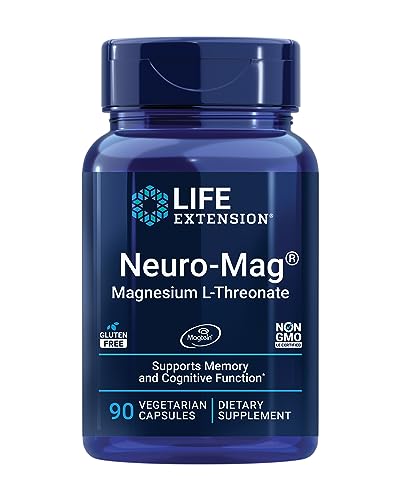
Magnesium L-Threonate (Magtein)
The brain specialist. Developed by MIT researchers, magnesium threonate is the only form demonstrated to effectively cross the blood-brain barrier and increase magnesium concentrations in the brain. A 2010 study in Neuron showed that magnesium threonate enhanced synaptic density, improved learning, and boosted both short-term and long-term memory in animal models.
Magnesium L-threonate, branded as Magtein, is the only supplemental form with published evidence of increasing cerebrospinal fluid magnesium levels, making it uniquely positioned for cognitive applications.
Human research is more limited but encouraging. A 2016 clinical trial in older adults with subjective cognitive complaints found that magnesium threonate supplementation reversed brain age by approximately nine years as measured by cognitive testing.
The downsides: threonate provides very little elemental magnesium per dose. If you're trying to address a systemic deficiency, threonate alone won't get you there. It's a targeted brain supplement, not a general magnesium replacement.
Best for: Cognitive function, memory, focus, neuroprotection.
Magnesium Citrate
The general-purpose option. Citrate is well-absorbed, widely available, and inexpensive. It's a solid choice for correcting general deficiency and a common recommendation from physicians who are aware of magnesium's importance but not particularly focused on form optimization.
The caveat: citrate has a dose-dependent laxative effect. At lower doses (200 to 300 mg elemental magnesium) this is typically mild or absent. At higher doses, expect loose stools. Some people consider this a feature rather than a bug — magnesium citrate is the form used in bowel preparation for colonoscopies, and gentler doses can address chronic constipation.
Best for: General supplementation, constipation relief, cost-conscious users.
Magnesium Oxide
The most common form in drugstore supplements and the worst value for your money. Magnesium oxide has the highest elemental magnesium per capsule — a 400 mg oxide capsule contains about 240 mg of elemental magnesium — but absorption is estimated at only 4 percent. That 240 mg on the label delivers roughly 10 mg to your bloodstream.
Oxide does have one use case: its poor absorption makes it an effective osmotic laxative at higher doses. Beyond that, there are better options.
Best for: Avoiding. Choose almost any other form.
Magnesium Taurate
Magnesium bound to taurine, an amino acid with cardiovascular and neural benefits of its own. Taurine supports heart rhythm, blood pressure regulation, and bile acid conjugation. The combination is particularly relevant for cardiovascular health.
Research has shown magnesium taurate may improve endothelial function and reduce blood pressure more effectively than other magnesium forms. Animal studies suggest protective effects against arrhythmias. Human data is limited but mechanistically promising.
Best for: Heart health, blood pressure support, cardiovascular risk reduction.
Magnesium Malate
Magnesium bound to malic acid, a compound involved in the Krebs cycle — the energy-producing pathway in your mitochondria. This form is often recommended for fatigue and energy production, as well as for fibromyalgia, where impaired mitochondrial energy metabolism may play a role.
A small clinical trial found that magnesium malate reduced pain and tenderness in fibromyalgia patients, though the study was not placebo-controlled. Absorption is good and GI tolerance is excellent.
Best for: Energy production, fatigue, fibromyalgia, exercise recovery.
How to Choose: The Decision Matrix
Rather than trying to find one form that does everything, match the form to your primary goal:
Sleep problems, anxiety, muscle tension — Glycinate. Take 200 to 400 mg elemental magnesium in the evening.
Cognitive support, memory, brain health — Threonate. Follow the Magtein dosing protocol (typically 3 capsules providing about 144 mg elemental magnesium).
General deficiency, digestive regularity — Citrate. 200 to 400 mg elemental magnesium, adjust for bowel tolerance.
Many informed users stack two forms: glycinate in the evening for sleep and one other form during the day for their specific needs.
Testing Your Levels
Standard serum magnesium tests are nearly useless for detecting suboptimal status. Only about 1 percent of total body magnesium circulates in the blood — the rest is stored in bones, muscles, and soft tissues. Your serum level can appear normal while your cells are depleted.
RBC magnesium (red blood cell magnesium) is a far better marker. It measures intracellular magnesium, which more accurately reflects tissue stores. An optimal RBC magnesium level is 5.0 to 6.5 mg/dL. Many functional medicine practitioners consider levels below 5.0 mg/dL as evidence of deficiency warranting supplementation.
If your physician orders only a serum magnesium test, specifically request RBC magnesium as well. The difference in clinical utility is substantial.
Dosing
The RDA for magnesium is 400 to 420 mg for adult men and 310 to 320 mg for adult women. Most researchers in the field consider these numbers adequate to prevent frank deficiency but insufficient for optimal function.
Therapeutic dosing typically ranges from 200 to 600 mg of elemental magnesium daily, depending on the form, the individual's baseline status, and their goals. A few practical notes:
Split your doses. Magnesium absorption is dose-dependent — smaller doses are absorbed proportionally better than large single doses. Taking 200 mg twice daily is more effective than 400 mg once daily.
Vitamin B6 enhances magnesium absorption. The active form (pyridoxal-5-phosphate, or P5P) facilitates magnesium transport into cells. Many quality magnesium supplements include B6 for this reason.
Magnesium competes with calcium for absorption. If you supplement both, take them at different times of day for optimal uptake.
Food sources still matter. Dark chocolate, avocados, nuts, legumes, and leafy greens are meaningful dietary sources. Supplementation fills the gap; it doesn't replace a nutrient-dense diet.
Signs of Deficiency
Magnesium deficiency is both common and underrecognized because the symptoms are nonspecific — they mimic a dozen other conditions. Watch for:
Muscle cramps and spasms — especially nocturnal leg cramps
Poor sleep quality — difficulty falling asleep or staying asleep
Anxiety and irritability — magnesium modulates GABA receptors
Heart palpitations — magnesium is required for normal cardiac rhythm
Fatigue — ATP production requires magnesium at every step
Headaches and migraines — magnesium deficiency is a recognized migraine trigger
Constipation — smooth muscle in the GI tract requires magnesium for proper motility
If you experience several of these concurrently and they improve with magnesium supplementation, that's meaningful diagnostic information regardless of what a standard blood test shows.
Magnesium also plays a critical role in vitamin D metabolism — your body requires adequate magnesium to convert vitamin D into its active form. Supplementing vitamin D without addressing a magnesium deficit can actually worsen the deficiency by increasing magnesium demand. The two nutrients should be considered together.
The Bottom Line
Magnesium is one of the highest-impact, lowest-risk supplements available. Most people don't get enough from diet alone, the symptoms of insufficiency are widespread and quality-of-life-degrading, and the solution is inexpensive and well-tolerated.
The form you choose matters. Glycinate for sleep. Threonate for the brain. Citrate for general use. Taurate for the heart. Malate for energy. Oxide for the trash can.
Start with 200 mg of elemental magnesium in a well-absorbed form, split if possible, and adjust based on symptoms and tolerance. Get an RBC magnesium test if you want objective confirmation. This is foundational nutrition — the kind of intervention that should be addressed before spending money on more exotic supplements.
This article is for informational purposes only and does not constitute medical advice. Consult a qualified healthcare provider before starting any supplement regimen.
This content is for informational purposes only and does not constitute medical advice. Always consult a qualified healthcare provider before starting, stopping, or changing any supplement or medication regimen.
Magnesium. . ## Overview
**Magnesium** is an essential mineral involved in hundreds of biochemical processes in the human body. It plays a central role in **energy production, nerve signaling, muscle contraction, blood pressure regulation, blood glucose metabolism, and bone structure**. Although magnesium is na
Best Magnesium Supplements 2026: Top Picks for Sleep, Cramps & Absorption. If you’re searching for the best magnesium supplement, you’re likely wondering which form absorbs well, what dose actually helps, and which option fits goals like sleep, cramps, or overall wellness. Magnesium plays roles in energy production, nerve transmission, muscle relaxation, and mood regulatio
Magnesium Glycinate. . ## Overview
**Magnesium glycinate** is a supplemental form of magnesium in which elemental magnesium is bound to **glycine**, an amino acid involved in protein synthesis and neurotransmitter regulation. It is commonly discussed among magnesium supplements because it is generally considered **well t
Best Magnesium Supplements for Sleep: Top Picks & How to Choose. If you’re comparing options for the best magnesium supplement for sleep, you’re not alone. Many adults fall short on daily magnesium, and research suggests magnesium may support more restful nights—especially if stress, muscle tension, or nighttime restlessness are part of the picture. This guide br
Manganese. Manganese Chelate, Manganese Gluconate. ## Overview
**Manganese** is an essential **trace mineral** required in very small amounts for normal human physiology. It participates in a wide range of biological processes, including **connective tissue and bone formation, carbohydrate and lipid metabolism, amino acid metabolism, and antioxidan
Essential Minerals for Optimal Health: Roles, Recommended Intake, Food Sources, Deficiency Signs, and Safe Supplementation. If you’re wondering which minerals actually matter, how much you need, and whether supplements are worth it, you’re not alone. Essential minerals for optimal health underpin everything from bone strength and energy production to thyroid balance and immune defense. This guide clarifies what each mine