Tongkat Ali Benefits: Evidence-Based Uses, Dosage, Safety & Buying Guide
What tongkat ali benefits are real? Evidence-based guide to libido, testosterone, stress, dosage, safety, and how to buy a quality extract.
·12 min read
This content is for informational purposes only and does not constitute medical advice. Always consult a qualified healthcare provider before starting, stopping, or changing any supplement or medication regimen.
If you’re curious about tongkat ali benefits—especially for libido, testosterone, stress, and performance—you’re not alone. This evergreen Southeast Asian root (Eurycoma longifolia), also called longjack or Malaysian ginseng, has been traditionally used for vitality and male reproductive health for centuries. Modern research is starting to test those claims, with some promising, though not definitive, results.
Below, we review what tongkat ali is, how it’s standardized, what the human and animal studies suggest, how it may work, practical dosing tips, and how to choose a quality product—along with safety, side effects, and who should avoid it.
What is Tongkat Ali? Origins, plant profile, and traditional uses
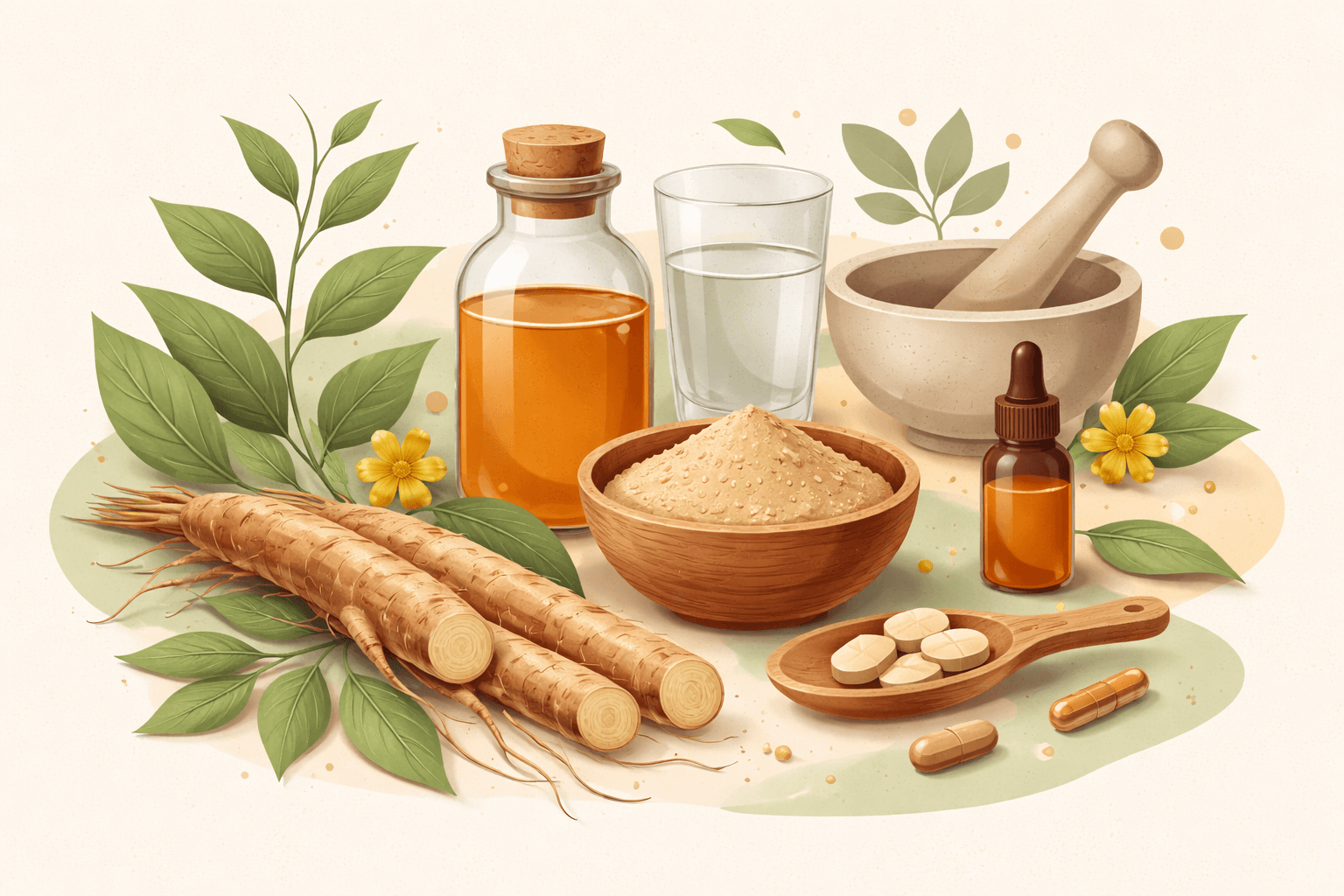
Tongkat ali (Eurycoma longifolia Jack) is a bitter-rooted tree native to Malaysia, Indonesia, and surrounding regions. In traditional Malay and Indonesian medicine, decoctions of the root were used for vitality, sexual health, fever, and general “strength.” It’s sometimes called “Malaysian ginseng,” though it’s unrelated to Panax ginseng. The part most studied and used is the root, often prepared as a water extract, tea, or powdered capsule.
Traditionally used for:
Enhancing male virility and libido (traditional)
Supporting energy and recovery after illness (traditional)
General vitality and stress resilience (traditional)
Active compounds and how Tongkat Ali is standardized
Tongkat ali contains a family of bitter compounds called quassinoids, with eurycomanone considered a key marker. Other components include canthin-6-one alkaloids, triterpenes, and various saponins and polysaccharides. Some products reference “eurypeptides,” a marketing term for peptide-rich fractions; this isn’t a formally defined chemical class in pharmacology, so most scientists use eurycomanone and total quassinoids as quality markers.
Standardization in supplements typically targets:
Eurycomanone (about 0.8%–2% in many modern water-extract products)
Total quassinoids (ranges vary by manufacturer)
Why standardization matters: It helps ensure consistent potency across batches. Most published human studies use a standardized hot-water extract of the root—often described as a 1:100 or “100:1” extract—so choosing a product aligned with that profile can make your experience more comparable to the research.
Tongkat Ali Benefits: What the Research Says
Overall, research on tongkat ali benefits is promising but not conclusive. Findings are strongest for libido and perceived stress, with mixed results for testosterone and athletic performance. Fertility data exist but are limited to small or open-label studies. Evidence in women is preliminary.
Evidence ratings below reflect the balance of human trials, study size, and consistency.
Libido and sexual function (evidence: moderate)
Studies indicate that standardized tongkat ali extracts can improve sexual desire and certain aspects of sexual performance in men with low libido or mild erectile concerns. Improvements are typically modest and more apparent in individuals with lower baseline function. Some trials are small or open-label, though a few randomized studies report benefits on validated questionnaires.
Data in women are limited but suggest potential improvements in desire and well-being in small studies. More research is needed.
What this means: If low libido is related to stress or suboptimal androgen status, tongkat ali may help some people. Effects tend to build over several weeks.
Testosterone and hormones (evidence: emerging to moderate)
In men with low or borderline testosterone—or in those under significant stress—some studies show small increases in total or free testosterone with 200–400 mg/day of standardized extract over 4–12 weeks. In healthy young men with normal hormone levels, changes are often minimal or absent.
Research suggests tongkat ali may also reduce cortisol in stressed individuals, creating a more favorable testosterone-to-cortisol profile.
What this means: Tongkat ali is not a pharmaceutical hormone therapy. It may support a healthier hormone balance in people with stress-related or age-related declines, but large, high-quality trials are still limited.
Male fertility (evidence: emerging)
Small human studies (often open-label) report improvements in sperm concentration, motility, and morphology after 1–3 months of standardized tongkat ali extract. Some studies also report increased rates of spontaneous pregnancy in couples, though these findings require confirmation in rigorously controlled trials.
What this means: There’s encouraging preliminary evidence for male fertility parameters, but more robust randomized trials are needed.
Athletic performance and body composition (evidence: emerging)
Research is mixed. A few small studies suggest possible gains in lean body mass and strength when tongkat ali is combined with resistance training, while others show no significant advantage over placebo. Endurance and anaerobic performance data are limited and inconsistent.
Where benefits are seen, they may relate to improved training tolerance, recovery, or hormone balance under stress, rather than direct ergogenic effects.
What this means: Athletic benefits are not guaranteed. If performance is your main goal, complementary options with stronger evidence—like tailored training and nutrition—remain foundational. Some readers exploring natural stamina aids also consider cordyceps; see Cordyceps Benefits: Evidence, Uses, Dosage & Safety (/articles/cordyceps-benefits-evidence-uses-dosage-safety).
Mood, stress, and well-being (evidence: moderate)
Randomized and open-label studies in moderately stressed adults report reductions in salivary cortisol and improvements in tension, anger, or confusion with 200–300 mg/day for several weeks. Participants often subjectively report better energy and well-being.
These effects align with tongkat ali’s traditional use for vitality and suggest mild adaptogenic properties.
Related reading: Many people compare tongkat ali with other adaptogens. For a broader look at stress support, see Ashwagandha Benefits: Evidence-Based Guide for Stress, Sleep & More (/articles/ashwagandha-benefits-evidence-based-guide).
How Tongkat Ali may work (proposed mechanisms)
Mechanisms are not fully established, but several hypotheses are supported by preclinical and limited human data:
HPG axis signaling: Compounds in tongkat ali may influence the hypothalamic–pituitary–gonadal axis, modestly supporting luteinizing hormone (LH) signaling and downstream testosterone synthesis in testes, particularly when baseline function is suboptimal.
Lowering cortisol and improving stress physiology: Studies indicate reductions in salivary cortisol with standardized extracts, potentially improving the testosterone-to-cortisol balance and perceived stress.
Effects on SHBG and free testosterone: Some research suggests tongkat ali could modestly affect sex hormone-binding globulin (SHBG), potentially increasing the proportion of free (bioavailable) testosterone, though findings are inconsistent.
Sperm support: Antioxidant and mitochondrial-supportive effects in preclinical work may help sperm motility and quality.
Phosphodiesterase and endothelial effects: Preliminary lab data hint at vasodilatory pathways relevant to erectile function, but human confirmation is limited.
These mechanisms are plausible but should be considered hypotheses until larger, well-controlled human trials verify them.
Dosage, forms, and timing—what studies used and practical recommendations
What research has used:
Standardized water extract of Eurycoma longifolia root, often described as 100:1 (meaning 100 g of root yields 1 g extract).
Common human-study doses: 200–400 mg/day, typically for 4–12 weeks.
Practical guidelines (based on study patterns and expert consensus):
Start low: 100–200 mg/day of a standardized root water extract for 1–2 weeks, then consider 200–400 mg/day if well tolerated.
Timing: Morning or early afternoon is common. Some people find tongkat ali mildly stimulating; avoid late evening dosing if it affects sleep.
With or without food: Either is generally fine. Taking with food may reduce any mild GI upset.
Cycling: Some users follow schedules like 5 days on/2 days off or 8 weeks on/2–4 weeks off. Research hasn’t established an optimal cycle, but periodic breaks are a reasonable precaution.
Duration: Reassess goals and tolerance every 8–12 weeks. Consider basic labs (e.g., lipids, liver enzymes) if using long term, especially with other supplements or medications.
Forms you’ll see:
Capsules/tablets of standardized water extract (most research-aligned)
Powders (taste is very bitter; check standardized potency)
Traditional decoctions/teas (require much higher crude-root amounts; standardization is harder)
Many people find a standardized 200–300 mg tongkat ali root extract convenient; if you prefer simple dosing, Standardized Tongkat Ali Root Extract 200 mg is a format some choose. If you’re an athlete concerned about contamination, an NSF Certified Supplement Brand can help lower risk, though always verify the specific product’s certification.
Safety, side effects, interactions, and who should avoid it
Overall safety: Standardized tongkat ali extracts at 200–400 mg/day for up to 3 months are generally well tolerated in studies. Long-term safety data are limited.
Possible side effects (usually mild and dose-related):
Restlessness, irritability, or insomnia (consider morning dosing)
Fast heartbeat or jitteriness in sensitive individuals
Liver and kidney: Rare case reports of liver injury have surfaced with products marketed for sexual enhancement; these may involve adulterants or contamination rather than tongkat ali itself. Still, choose reputable brands with third-party testing, especially if you have liver or kidney concerns.
Blood pressure and blood sugar: Preclinical data suggest possible effects on glucose and blood pressure; monitor if you have diabetes, hypertension, or take related medications.
Hormone-sensitive conditions: Because tongkat ali may influence androgen pathways, avoid use with prostate cancer, breast cancer, or other hormone-sensitive conditions unless your oncology team approves.
Medications and interactions: Use caution and consult your clinician if you take:
Antihypertensives, diabetes medications, or thyroid medications (possible additive or unpredictable effects)
Pregnancy and breastfeeding: Avoid. Safety is not established.
Teens and young adults: Not recommended for individuals under 18 given hormonal considerations.
Athlete testing: Tongkat ali itself is not a banned substance, but supplement contamination is a real risk. Competitive athletes should choose products certified by programs such as NSF Certified for Sport or Informed Choice.
For a broader look at supplement risk management, see Are Herbal Supplements Safe? Risks, Benefits, and How to Use Them Wisely (/articles/are-herbal-supplements-safe).
How to choose a quality Tongkat Ali supplement (standardization, testing, trusted brands) and buying tips
What to look for on the label:
Plant identity: Eurycoma longifolia (root). Avoid products that don’t specify the plant part.
Extraction method: Water extract (often aligns with clinical studies). Alcohol-only extracts may have different profiles.
Standardization: Look for a defined eurycomanone percentage (commonly ~1%) or total quassinoids. Consistency is key.
Dose transparency: Clear mg per serving of extract—not just “equivalent to” raw root. Be wary of proprietary blends that hide dosages.
Third-party testing: Prefer brands that publish certificates of analysis (COA) or carry independent certifications (USP, NSF, Informed Choice).
Vague claims like “enhances testosterone instantly” or “pharmaceutical-like effects.”
Sexual enhancement blends—these are more likely to be adulterated with undeclared drugs.
Unusually low pricing relative to market norms for standardized extracts.
Practical buying tips:
Start with a single-ingredient tongkat ali product so you can evaluate effects before stacking.
If you track wellness metrics, some people use an At-Home Hormone Test Kit periodically to inform conversations with their clinician. Results can vary day-to-day; interpret with professional guidance.
Store in a cool, dry place; potency can degrade with heat and humidity.
Considering adjacent options: If your primary goal is libido or energy and you want alternatives with a longer modern research track record, you might also read about Ginseng (Panax) (/supplements/ginseng-panax) or Herbs That Boost Stamina: An Evidence‑Based Guide to Natural Energy and Endurance (/articles/herbs-that-boost-stamina-evidence-based-guide).
Summary and practical takeaways
What it is: Tongkat ali (Eurycoma longifolia) is a Southeast Asian root traditionally used for vitality and sexual health. Modern supplements use standardized water extracts of the root.
What the research suggests:
Libido/sexual function: Moderate evidence of benefit, especially in men with low baseline libido or mild dysfunction.
Testosterone/cortisol: Emerging-to-moderate evidence of small improvements, particularly in stressed or older men; minimal changes in young, healthy men.
Male fertility: Emerging evidence for sperm quality; larger, controlled trials needed.
Athletic performance: Emerging and mixed; best viewed as a possible adjunct to training and recovery, not a standalone ergogenic.
Mood/stress: Moderate evidence of reduced perceived stress and cortisol with standardized extracts.
Dosage used in studies: 200–400 mg/day of standardized root water extract for 4–12 weeks. Start at the low end and monitor tolerance.
Safety: Generally well tolerated short term; avoid in pregnancy, breastfeeding, hormone-sensitive cancers, and use caution with cardiometabolic conditions or medications. Choose third-party tested products.
Buying guide: Prioritize standardized water extracts with clear eurycomanone levels, root-only sourcing, dose transparency, and independent testing.
How to use this information:
Define your goal (libido, stress resilience, training support).
Trial a standardized product at 100–200 mg/day for 1–2 weeks, then 200–300 mg/day if needed and tolerated.
Track subjective changes in mood, sleep, libido, and training tolerance for 4–8 weeks.
Reassess and consider a break; consult a clinician if you have medical conditions or take medications.
Disclaimer
This article is for educational purposes and does not replace personalized medical advice. Always consult a qualified healthcare professional before starting any new supplement, especially if you have health conditions, take medications, are pregnant, or are breastfeeding.
This content is for informational purposes only and does not constitute medical advice. Always consult a qualified healthcare provider before starting, stopping, or changing any supplement or medication regimen.
If you’re curious about ashwagandha benefits—especially for stress, sleep, and focus—you’re not alone. This adaptogenic herb from Ayurveda has surged in popularity, and research suggests it may help t
Does Ashwagandha Really Work? Evidence, Dosage & Safety Guide. If you’re wondering “does ashwagandha really work,” you’re not alone. This traditional Ayurvedic herb has exploded in popularity for stress, sleep, energy, and even testosterone support. Research suggests there’s real potential—especially for stress and sleep—though benefits vary by person, dose, an
Reishi Mushroom Benefits: Evidence-Based Uses, Dosage & Safety. If you’re curious about reishi mushroom benefits, you’re not alone. Reishi (Ganoderma lucidum) has been revered in East Asian medicine for centuries as a “mushroom of immortality.” Modern research suggests it may support immune balance, stress resilience, sleep quality, and more—but the strength of
Cordyceps Benefits: Evidence, Uses, Dosage & Safety. If you’ve heard about cordyceps benefits for energy, immunity, and lung health, you may be wondering what’s real, what’s hype, and how to use it safely. This guide blends Western research with Eastern tradition, outlines the quality of evidence behind each claim, and offers practical advice on choos
Herbs That Boost Stamina: An Evidence‑Based Guide to Natural Energy and Endurance. If you’re looking for herbs that boost stamina, you’re probably juggling long days, tough workouts, or simply wanting steadier energy without a crash. The right plants can support endurance, but they work best when paired with training, sleep, and smart nutrition. Below, we explain what “stamina” re