Curious about reishi mushroom benefits? Evidence-based uses, dosage, safety, and how to pick quality extracts—clear guidance with levels of evidence.
·12 min read
This content is for informational purposes only and does not constitute medical advice. Always consult a qualified healthcare provider before starting, stopping, or changing any supplement or medication regimen.
If you’re curious about reishi mushroom benefits, you’re not alone. Reishi (Ganoderma lucidum) has been revered in East Asian medicine for centuries as a “mushroom of immortality.” Modern research suggests it may support immune balance, stress resilience, sleep quality, and more—but the strength of evidence varies by outcome. This guide breaks down what’s known, how it might work, how to take it, and how to choose a quality product.
What is reishi (Ganoderma lucidum)?
Reishi is a bracket fungus in the Ganoderma genus. The most commonly referenced species is Ganoderma lucidum, though related species like Ganoderma lingzhi and Ganoderma sinense appear in the literature and the herbal marketplace. In Chinese it’s called lingzhi; in Japanese, reishi or mannentake. Historically, it has been used as a Shen (spirit) tonic in Traditional Chinese Medicine (TCM) to “nourish the heart,” calm the mind, and support longevity.
Traditional use: Promoting vitality, calming the spirit, easing cough and wheeze, and supporting sleep.
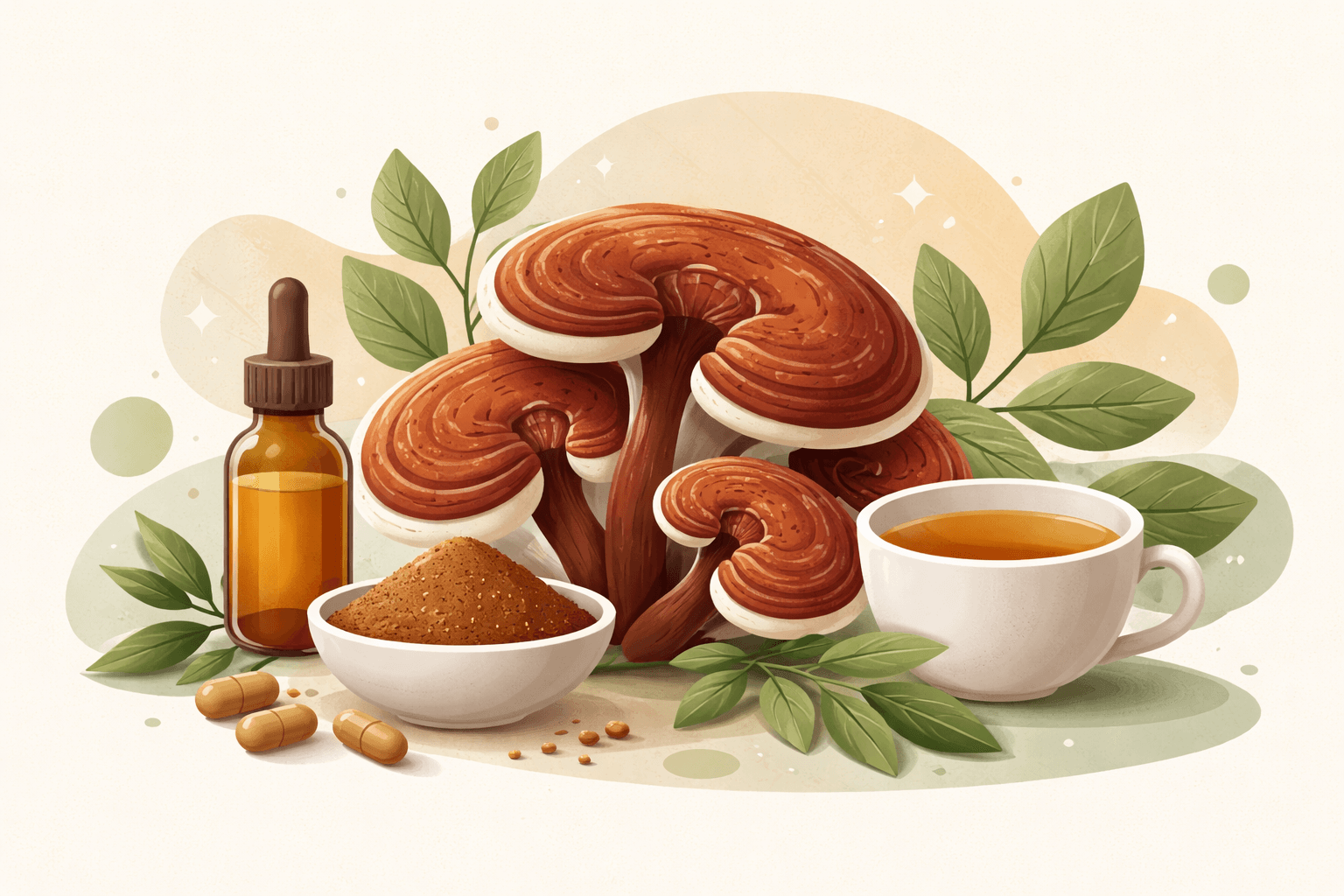
Modern forms: Whole dried slices for decoction (tea), hot-water and alcohol extracts, tinctures, capsules, and spore preparations.
For a deeper botanical profile, see our overview of Reishi Mushroom.
Key active compounds and how they may work
Reishi contains several bioactive groups that may act together:
Beta-glucans (1,3/1,6-linked polysaccharides): These complex fibers interact with pattern-recognition receptors on immune cells, especially Dectin-1 and complement receptor 3 (CR3). Research suggests they “train” innate immunity—priming macrophages, neutrophils, and dendritic cells—while often promoting balanced, not overstimulated, responses (evidence level: moderate; mechanistic and early-clinical) (Brown & Gordon 2003; Goodridge et al. 2009; Wachtel-Galor et al. 2011).
Triterpenes (ganoderic acids, lucidenic acids): Alcohol-soluble compounds that, in preclinical studies, modulate inflammatory signaling pathways (e.g., NF‑κB, COX‑2) and may influence histamine release and GABAergic tone—possible mechanisms for calming effects (evidence level: emerging; preclinical) (Boh et al. 2007; Wachtel-Galor et al. 2011).
Polysaccharide-peptides and other polysaccharides: Additional immune-modulating and antioxidant activity in vitro and in animal models (evidence level: emerging; preclinical) (Boh et al. 2007; Wachtel-Galor et al. 2011).
Other constituents: Sterols, adenosine, peptides, and phenolics may contribute to vascular, platelet, or nervous system effects (evidence level: emerging; mixed mechanistic) (Wachtel-Galor et al. 2011).
Immune support (moderate evidence): Human trials show changes in immune markers; some benefits as an adjunct in people with certain conditions. Clinical endpoints are mixed (Wachtel-Galor et al. 2011; Gao et al. 2003).
Stress, fatigue, and sleep (emerging to moderate): Small randomized and observational studies suggest improvements in fatigue and perceived well-being; limited but promising data for sleep quality (Wachtel-Galor et al. 2011).
Inflammation and antioxidant status (emerging): Preclinical studies are robust; human biomarker changes reported, but consistent symptom-level outcomes are sparse (Boh et al. 2007; Wachtel-Galor et al. 2011).
Liver health (emerging): Small, mixed-quality studies suggest possible enzyme improvements; rare case reports of liver injury highlight the need for caution and quality control (Teschke et al. 2014; Wachtel-Galor et al. 2011).
Potential anti-cancer adjunct (emerging to moderate): Evidence of immune parameter improvements and quality of life when used with standard care; not a replacement for conventional oncology (Cochrane Review: Jin et al. 2016).
Below we rate each benefit using the following scale: strong (multiple RCTs/meta-analyses), moderate (limited RCTs or consistent observational data), emerging (early human data or mostly preclinical), or traditional (historical use without modern trials).
Immune support and balance — Evidence: moderate
What’s studied: Standardized reishi extracts have been tested in healthy adults and in people with conditions affecting immunity. Findings often include increased activity of natural killer (NK) cells, changes in T-cell subsets, or shifts in cytokines (Wachtel-Galor et al. 2011; Gao et al. 2003).
Takeaway: Studies indicate reishi can modulate immune function, especially innate immunity. Translating these changes into fewer infections or faster recovery remains less consistent across trials (Wachtel-Galor et al. 2011).
Mechanism: Beta-glucans engaging Dectin-1/CR3, plus triterpenes influencing inflammatory transcription factors (Brown & Gordon 2003; Boh et al. 2007).
Practical note: Extracts standardized to beta‑glucans and triterpenes are commonly used; many users informally track how they feel over 4–8 weeks.
Stress resilience, fatigue, and sleep — Evidence: emerging to moderate
What’s studied: Small RCTs and open-label trials in “neurasthenia,” chronic fatigue–like presentations, or high-stress populations report reduced fatigue and improved well-being. Limited studies suggest better sleep quality scores, though results are not universal (Wachtel-Galor et al. 2011).
Mechanism: Triterpenes may support GABAergic signaling and downshift stress-related inflammatory pathways; polysaccharides could influence the gut–immune–brain axis (emerging; preclinical and early human) (Boh et al. 2007; Wachtel-Galor et al. 2011).
Practical note: Many people take reishi in the evening for its calming reputation, though daytime use is also common.
Inflammation and antioxidant effects — Evidence: emerging
What’s studied: Human data show shifts in inflammatory biomarkers (e.g., hs‑CRP, cytokines) and antioxidant status in some cohorts; symptom-level outcomes are inconsistent (Wachtel-Galor et al. 2011).
Mechanism: Curbs NF‑κB and COX‑2 signaling in preclinical work; scavenges reactive oxygen species; may modulate histamine release (Boh et al. 2007).
Practical note: Expect subtle changes over weeks, not overnight results.
Liver health — Evidence: emerging (with safety caveats)
What’s studied: Small studies suggest possible improvements in liver enzymes or fatty liver markers with certain extracts; quality varies, and not all findings replicate (Wachtel-Galor et al. 2011).
Safety signal: Rare case reports describe elevated liver enzymes with powdered reishi products, often of uncertain quality or dose (Teschke et al. 2014). If you develop jaundice, dark urine, or right‑upper‑quadrant pain, seek medical advice and consider stopping the product until you speak with a clinician.
Potential anti-cancer adjunct — Evidence: emerging to moderate
What’s studied: Systematic reviews indicate reishi, as an adjunct to standard oncology care, may improve immune parameters and quality of life measures. Clear evidence for tumor shrinkage or survival benefit is lacking (Jin et al. 2016 Cochrane Review).
Clinical note: Reishi should never replace conventional cancer treatment. Discuss any use with your oncology team to avoid interactions.
Dosage, forms, and how to take reishi
There’s no single “official” dose. Trials use different preparations and strengths. Ranges below reflect amounts commonly reported in studies and by manufacturers; product labels vary.
Hot-water extract capsules/tablets: 500–1500 mg daily of concentrated extract (often equivalent to several grams of dried mushroom). Some clinical products used ~1.5–1.8 g extract/day divided (Wachtel-Galor et al. 2011).
Dual extract (water + alcohol): 500–1500 mg/day, typically standardized for both beta‑glucans and triterpenes.
Tincture (1:1 or 1:2): 1–3 mL, up to 2–3 times daily (check label; strengths vary widely).
Tea/decoction: 5–10 g of sliced dried fruiting body simmered 30–60 minutes; 1–2 cups/day.
Dried powder (whole mushroom): 1.5–9 g/day in divided doses, though extracts are generally preferred for consistency and absorption (Wachtel-Galor et al. 2011).
Timing and duration
For calming or sleep support: Evening dosing may be preferable.
For immune support: Daily use for 4–8 weeks is commonly reported before reassessing.
Cycling: Some practitioners suggest periodic breaks (e.g., 5 days on, 2 off, or 8–12 weeks on, 2–4 weeks off), though this is tradition-based rather than evidence-based.
Most healthy adults tolerate reishi well, but side effects and interactions can occur.
Common, usually mild
Digestive upset, dry mouth, skin itch or rash, dizziness, or rare headache.
Calming effects are common, but a few people report stimulation or vivid dreams.
Interactions and cautions
Anticoagulants/antiplatelets: Reishi may influence platelet function; some clinicians advise pausing supplements 1–2 weeks before surgery—discuss this with your surgical team (Wachtel-Galor et al. 2011).
Antihypertensives: Possible additive blood-pressure-lowering effects (Wachtel-Galor et al. 2011).
Hypoglycemics/diabetes drugs: May modestly affect glucose; when combined with glucose-lowering therapies, glucose monitoring may be warranted (Wachtel-Galor et al. 2011).
Immunosuppressants (e.g., post-transplant): Because reishi modulates immune activity, use is generally discouraged unless specifically cleared by the treating specialist (Wachtel-Galor et al. 2011).
Allergy: Those with known mushroom allergies—or prior reactions to Ganoderma species—typically avoid reishi.
Special populations
Pregnancy and lactation: Insufficient safety data; many clinicians advise avoiding use during pregnancy and lactation (Wachtel-Galor et al. 2011).
Autoimmune conditions: Because reishi can modulate immune responses, a clinician familiar with your case can help assess risks and benefits.
Liver concerns: Given rare hepatotoxicity reports with some products, product quality and dose may matter. If symptoms of liver stress arise, seek medical advice and consider pausing use until evaluated (Teschke et al. 2014).
This information is for educational purposes and should not replace personalized medical advice.
How to choose a quality reishi supplement
Quality varies widely. Here’s how to shop smarter.
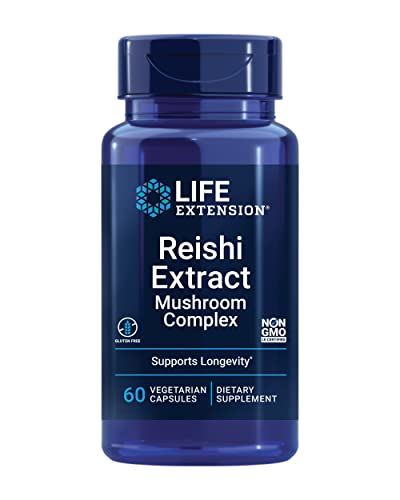
Fruiting body vs. mycelium: Products from 100% fruiting body (the actual mushroom) tend to be richer in beta‑glucans. Mycelium grown on grain can contain more starch; some products label total “polysaccharides,” which may overstate active beta‑glucans (independent lab analyses and reviews discuss these differences).
Standardization: Labels that quantify beta‑glucan content (e.g., ≥20%) using methods specific to 1,3/1,6‑beta‑glucans—and, for dual extracts, list triterpenes (ganoderic acids)—can be informative. Relying only on “polysaccharide percent” can be misleading.
Identity and purity testing: Third‑party testing (e.g., USP, NSF, or ISO‑accredited labs) for identity, potency, heavy metals, pesticides, and microbial contaminants is a useful marker of quality.
Transparent sourcing: Clear disclosure of species (e.g., G. lucidum), plant part, extraction ratios, cultivation method, and certificates of analysis supports informed choices.
What’s the best time to take reishi? Many take it in the evening for its calming reputation, but morning is also common for immune-support goals. Consistency tends to matter more than timing.
How long until I notice effects? Stress or sleep-related effects may appear within 1–2 weeks in some users; immune balance can take 4–8 weeks. Many people track sleep, energy, or stress changes to gauge response.
Can I combine reishi with other adaptogens? Often, yes; it’s frequently paired with ashwagandha or rhodiola for stress goals. People commonly begin with one product at a time and at the lower end of published dosing ranges to gauge tolerance and interactions.
Tea vs. capsules—what’s better? Tea is traditional and cost-effective for beta‑glucans; standardized capsules are more consistent and convenient. Dual extracts capture both beta‑glucans and triterpenes.
Is reishi safe long term? Many people use it for months. Given rare liver events in case reports, quality matters, excessive dosing may raise risk, and some users take periodic breaks when using continuously. Long-term use can be reviewed with a clinician if you have medical conditions or take medications.
What should I look for on the label? Helpful details include species and part (G. lucidum, fruiting body), extraction method (hot water or dual), quantified beta‑glucans and triterpenes, and third‑party testing.
Practical next steps
Clarify your goal (e.g., immune balance, stress/sleep, general wellness).
Consider a high-quality extract with verified beta‑glucans (and triterpenes if desired).
Many people begin near the lower end of dosing ranges for 1–2 weeks, then adjust based on response; discussing an approach with a clinician can add safety context.
Keeping a simple log of sleep, energy, and mood can be useful; some people share observations with a clinician when managing a condition.
This article is for educational purposes only and is not a substitute for professional medical advice, diagnosis, or treatment. Always talk with a qualified healthcare provider before starting any new supplement, especially if you have a medical condition, take prescription medications, are pregnant, or are planning surgery.
References (selected, accessible overviews and reviews)
Boh B, Berovic M, Zhang J, Zhi-Bin L. Ganoderma lucidum and its pharmaceutically active compounds. Biotech Annual Rev. 2007.
Brown GD, Gordon S. Fungal beta-glucans and innate immunity. Immunity. 2003.
Goodridge HS, Wolf AJ, Underhill DM. Beta-glucan recognition by the innate immune system. Immunol Rev. 2009.
Jin X, Ruiz Beguerie J, Sze DMY, Chan GC-F. Ganoderma lucidum (Reishi mushroom) for cancer treatment. Cochrane Database Syst Rev. 2016.
Gao Y, et al. A randomized, double-blind study of Ganoderma lucidum polysaccharides (Ganopoly) in patients with advanced cancer: immunomodulating effects. J Med Food. 2003.
Teschke R, et al. Hepatotoxicity by medicinal mushrooms including Ganoderma lucidum: a critical review. Br J Clin Pharmacol. 2014.
This content is for informational purposes only and does not constitute medical advice. Always consult a qualified healthcare provider before starting, stopping, or changing any supplement or medication regimen.
Best Mushroom Supplements 2026 — Top Lion’s Mane, Reishi & Cordyceps. If you’re shopping for the best mushroom supplements, you’ve likely noticed big differences in extraction methods, “fruiting body” vs. “mycelium,” and claims about beta‑glucans. This guide cuts through the noise with evidence‑aware picks, clear label criteria, and practical dosing and safety tips.
Cordyceps Benefits: Evidence, Uses, Dosage & Safety. If you’ve heard about cordyceps benefits for energy, immunity, and lung health, you may be wondering what’s real, what’s hype, and how to use it safely. This guide blends Western research with Eastern tradition, outlines the quality of evidence behind each claim, and offers practical advice on choos
Mushroom Immunology: Beta‑Glucans and the Innate Immune System
Medicinal mushrooms are often described as “immune-supportive,” but the most studied reason why comes down to one family of complex suga
Introduction
Medicinal mushrooms have occupied a unique space in traditional medicine, especially in East Asia, for centuries. Today, modern immunology is catching up with aspects of that wisdom. Rese
If you’re curious about ashwagandha benefits—especially for stress, sleep, and focus—you’re not alone. This adaptogenic herb from Ayurveda has surged in popularity, and research suggests it may help t