Coenzyme Q10 and Cellular Energy: What Longevity Research Gets Right (and What Still Needs Proof)
A research-grounded review of CoQ10’s role in mitochondrial energy, aging, statin-related depletion, heart failure, migraines, fertility, and the ubiquinone vs ubiquinol debate—plus how PQQ may complement CoQ10.
·11 min read
This content is for informational purposes only and does not constitute medical advice. Always consult a qualified healthcare provider before starting, stopping, or changing any supplement or medication regimen.
Introduction
Coenzyme Q10 (CoQ10)—also known as ubiquinone in its oxidized form and ubiquinol in its reduced form—is a lipid-soluble molecule found in virtually every cell. It shuttles electrons within mitochondria to power ATP production and also acts as an antioxidant within membranes. Because cellular energy and redox balance are foundational to healthy aging, CoQ10 has become a focal point in longevity research. Below, we examine what the science says about CoQ10’s role in energy metabolism, how levels change with age and statin use, and what clinical trials suggest for heart failure, migraine prevention, fertility, and formulation choices. We also explore pyrroloquinoline quinone (PQQ) as a complementary compound, and we offer context from traditional perspectives.
How CoQ10 Powers Cellular Energy
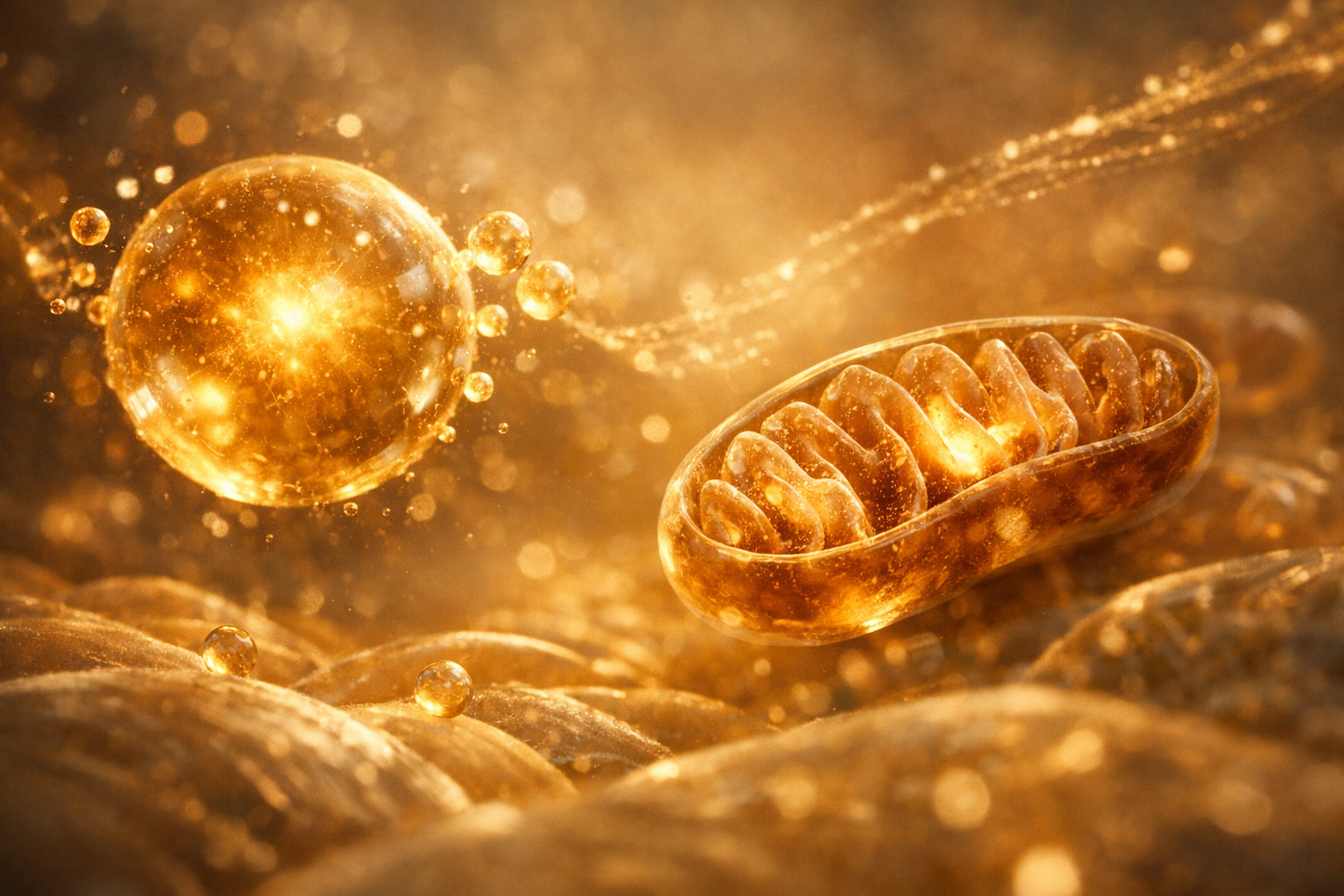
Core mitochondrial role: CoQ10 ferries electrons from complexes I and II to complex III in the electron transport chain, enabling proton pumping and ATP synthesis. Ubiquinol/ubiquinone cycling maintains electron flow and supports membrane antioxidant defenses. Evidence level: strong (textbook biochemistry; [Crane 2001, J Am Coll Nutr; Lenaz & Fato 2004, Biochim Biophys Acta]).
Antioxidant and membrane support: Ubiquinol helps regenerate vitamin E and stabilizes lipid membranes, potentially buffering oxidative stress. Evidence level: strong (mechanistic and human biomarker studies; [Crane 2001]).
Age-Related Changes and Longevity Context
Decline with age: Research suggests endogenous CoQ10 biosynthesis and tissue concentrations decrease with age, with reported reductions in heart, skeletal muscle, and other tissues. Evidence level: moderate-to-strong (cross-sectional tissue studies; [Kalén et al. 1989, Lipids; Miles 2004, Biofactors]).
Clinical implications: Lower CoQ10 status may contribute to age-related declines in mitochondrial efficiency and resilience to oxidative stress. Evidence level: emerging-to-moderate (associative human data; mechanistic plausibility).
Cardiovascular aging signal: In older adults, a 4-year randomized, placebo-controlled trial combining selenium plus CoQ10 (KiSel-10) reported reduced cardiovascular mortality and improved cardiac function markers versus placebo, with benefits persisting on long-term follow-up. Because selenium was co-administered, attribution to CoQ10 alone is not possible. Evidence level: moderate (single-country RCT with co-nutrient; [Alehagen et al. 2013/2015, Int J Cardiol]).
Traditional lens: In East Asian medical philosophies, vitality (“qi”) reflects balanced energy flow. Mitochondrial bioenergetics research parallels this concept: robust cellular energy generation and efficient redox cycling often correlate with vigor. Notably, CoQ10 has been used clinically in Japan for cardiovascular conditions for decades. Evidence level: traditional (historical and cultural practice).
Statins and CoQ10: What’s Established and What’s Not
Depletion mechanism: Statins inhibit HMG-CoA reductase in the mevalonate pathway, which supplies precursors for both cholesterol and CoQ10. Multiple trials report reduced circulating CoQ10 in statin users. Evidence level: strong for reduction in blood CoQ10 (systematic reviews/RCTs; e.g., [Marcoff & Thompson 2007, Pharmacotherapy; subsequent meta-analyses]).
Muscle symptoms: Whether CoQ10 supplementation improves statin-associated muscle symptoms remains unsettled. Some randomized trials and meta-analyses suggest modest symptom relief, while others show no significant benefit. Evidence level: emerging-to-moderate (heterogeneous RCTs; [Qu et al. 2018, Sci Rep; conflicting reviews]).
Heart Failure: From Bench to Bedside Signals
Q-SYMBIO trial: In a multicenter, randomized, double-blind trial in chronic heart failure, adjunctive CoQ10 improved the primary endpoint (major adverse cardiovascular events) and reduced all-cause mortality versus placebo over 2 years. Functional class and biomarker trends also favored CoQ10. Evidence level: moderate (single large RCT; [Mortensen et al. 2014, JACC Heart Fail]).
Meta-analyses: Systematic reviews report modest improvements in left ventricular ejection fraction and functional capacity, though heterogeneity and varying study quality warrant caution. Evidence level: moderate (meta-analyses; [Madmani et al. 2014, BMC Cardiovasc Disord; more recent pooled analyses]).
Clinical perspective: Research suggests CoQ10 may help support myocardial bioenergetics and redox balance in heart failure as an adjunct to standard care. Confirmation in contemporary, guideline-driven cohorts remains an active need.
Migraine Prevention: Bioenergetic Hypothesis in Action
Efficacy signals: Randomized controlled trials and meta-analyses report that CoQ10 may reduce migraine attack frequency and headache days compared with placebo, with some improvements in duration and severity. Evidence level: moderate (pooled RCT data; [Parohan et al. 2019, Nutr Neurosci; Chen et al. 2021, Front Neurol]).
Mechanism: The “mitochondrial hypothesis” of migraine proposes that impaired oxidative phosphorylation lowers neuronal energy thresholds, predisposing to cortical spreading depression and trigeminovascular activation. By supporting mitochondrial electron transport and reducing oxidative stress, CoQ10 may help normalize this threshold. Evidence level: moderate (mechanistic plausibility plus clinical signals).
Fertility Applications: Early but Promising Lines of Evidence
Female fertility: In women with reduced ovarian reserve or poor response, trials suggest CoQ10 pretreatment may improve oocyte/embryo quality and ovarian response markers during assisted reproduction. Effects on clinical pregnancy appear favorable in some studies; live birth data remain limited. Evidence level: emerging-to-moderate (small-to-midsize RCTs/meta-analyses; [Xiao et al. 2018, J Assist Reprod Genet]).
Male fertility: Meta-analyses indicate improvements in semen parameters (especially motility) in men with idiopathic infertility. Evidence for pregnancy or live birth outcomes is less certain. Evidence level: moderate for semen parameters; emerging for reproductive outcomes (systematic reviews; [Lafuente et al. 2013, J Assist Reprod Genet; subsequent updates]).
Ubiquinone vs. Ubiquinol: Bioavailability and Clinical Relevance
Interconversion: Ubiquinone and ubiquinol interconvert in vivo. Both forms can raise blood CoQ10, especially when formulated in lipid carriers. Evidence level: strong for biochemical interconversion (basic physiology).
Absorption differences: Some human pharmacokinetic studies report higher or faster increases in plasma CoQ10 with ubiquinol compared with ubiquinone, though results vary by formulation, food intake, and individual status. Evidence level: moderate (PK studies; [Evans et al. 2009, Curr Ther Res; other comparative trials]).
Clinical outcomes: Direct head-to-head clinical trials linking a specific form to superior health outcomes are limited. Evidence level: emerging (few comparative outcome studies).
PQQ: A Complementary Mitochondrial Nutrient
What it is: Pyrroloquinoline quinone (PQQ) is a redox-active compound found in small amounts in foods such as natto, green tea, and fermented products. Preclinical studies suggest PQQ influences pathways (e.g., PGC-1α/NRF1) involved in mitochondrial biogenesis and cellular stress responses. Evidence level: emerging-to-moderate (robust animal/cell data; translational relevance under study).
Human data: Early clinical studies report improvements in biomarkers of mitochondrial function, inflammation, and perceived fatigue/sleep quality with PQQ, and small trials combining CoQ10 with PQQ suggest additive benefits for subjective energy or cognitive measures. Evidence level: emerging (small RCTs/biomarker studies; [Harris et al. 2013, J Nutr Biochem; additional small trials]).
Traditional bridge: The presence of PQQ in fermented foods common to East Asian diets provides an intriguing cultural link between traditional eating patterns and modern mitochondrial research.
Safety and Practical Context
Tolerability: CoQ10 is generally well tolerated in clinical trials. Reported side effects are usually mild and gastrointestinal. Evidence level: strong (numerous RCTs across conditions).
Interactions and personalization: Because CoQ10 participates in redox and lipid pathways and some individuals take medications that affect these pathways, personalized guidance may help align use with health status and goals. Evidence level: moderate (pharmacology principles and clinical practice reports).
Quality and form: Research suggests that well-formulated lipid-based preparations taken with meals enhance absorption. Differences among delivery systems (oils, emulsions, crystal dispersion) may influence bioavailability. Evidence level: moderate (PK/formulation studies).
What This Means for Longevity
Energy and resilience: By supporting electron transport and antioxidant defenses, CoQ10 may help maintain mitochondrial efficiency—an element often associated with healthy aging trajectories. Evidence level: moderate (mechanistic foundation plus condition-specific trials).
Targeted applications: The strongest clinical signals to date involve adjunctive use in heart failure and prevention of migraines, with encouraging but still developing evidence in fertility and age-related cardiovascular support (especially alongside selenium in some populations). Evidence level: moderate overall, emerging in specific niches.
Bottom Line
CoQ10 is a central electron carrier in mitochondrial energy production and an important membrane antioxidant (strong evidence).
Levels of CoQ10 tend to decline with age; this may contribute to reduced bioenergetic capacity and resilience (moderate evidence).
Statin therapy reduces circulating CoQ10 via mevalonate pathway inhibition; whether supplementation improves muscle symptoms remains uncertain (strong for depletion; emerging-to-moderate for symptom relief).
In heart failure, the Q-SYMBIO RCT and meta-analyses suggest adjunctive CoQ10 may improve clinical outcomes and function, though larger contemporary trials are needed (moderate evidence).
For migraine prevention, pooled RCTs indicate fewer attacks and headache days with CoQ10 compared with placebo (moderate evidence).
In fertility, CoQ10 may improve semen parameters in men and oocyte/embryo quality in some women undergoing ART; effects on live birth require more study (moderate for intermediate markers; emerging for hard outcomes).
Ubiquinone and ubiquinol interconvert; some data favor higher plasma levels with ubiquinol or specific formulations, but clear clinical superiority remains unproven (moderate for PK; emerging for outcomes).
PQQ may complement CoQ10 by supporting mitochondrial biogenesis and redox balance, with early human studies showing promising biomarker and subjective benefits (emerging evidence).
As with any nutraceutical, individual needs vary. Research suggests CoQ10 may help support cellular energy and healthy aging, particularly in contexts of increased oxidative demand or mitochondrial stress. Discussing personal context and medication use with a qualified clinician may help determine the best approach for you.
Key References (selected)
Crane FL. Biochemical functions of coenzyme Q10. J Am Coll Nutr. 2001.
Lenaz G, Fato R. Coenzyme Q in mitochondrial electron transport. Biochim Biophys Acta. 2004.
Kalén A et al. Human tissue levels of ubiquinone: age-related changes. Lipids. 1989.
Miles MV. The uptake and distribution of coenzyme Q10. Biofactors. 2004.
Alehagen U et al. Reduced cardiovascular mortality with selenium and CoQ10 in elderly Swedes (KiSel-10). Int J Cardiol. 2013; 2015 follow-up.
Mortensen SA et al. CoQ10 in chronic heart failure (Q-SYMBIO). JACC Heart Fail. 2014.
Madmani ME et al. CoQ10 for heart failure: systematic review. BMC Cardiovasc Disord. 2014.
Parohan M et al. CoQ10 supplementation and migraine: meta-analysis. Nutr Neurosci. 2019.
Chen J et al. Efficacy of CoQ10 for migraine: systematic review/meta-analysis. Front Neurol. 2021.
Lafuente R et al. CoQ10 and male infertility: meta-analysis. J Assist Reprod Genet. 2013.
Xiao J et al. CoQ10 pretreatment in poor ovarian responders. J Assist Reprod Genet. 2018.
Evans M et al. Comparative bioavailability of ubiquinone vs ubiquinol. Curr Ther Res Clin Exp. 2009.
Harris CB et al. PQQ and mitochondrial-related biomarkers in humans. J Nutr Biochem. 2013.
This content is for informational purposes only and does not constitute medical advice. Always consult a qualified healthcare provider before starting, stopping, or changing any supplement or medication regimen.
[CoQ10](/supplements/coq10) at a Glance
- What it is: A fat-soluble molecule present in virtually every cell, essential for mitochondrial energy production and antioxidant defense (Evidence: strong)
-
Overview
[Coenzyme Q10 (CoQ10)](/articles/coenzyme-q10-cellular-energy-healthy-aging) sits at the heart of how cells make energy. This lipid-soluble molecule ferries electrons along the mitochondrial
Coenzyme Q10. CoQ10, Ubiquinone. ## Overview
**Coenzyme Q10 (CoQ10)** is a naturally occurring, vitamin-like compound found in nearly every cell of the body. It plays a central role in **mitochondrial energy production** and also functions as an **antioxidant**, helping protect cell membranes and lipids from oxidative damage. CoQ10
Coenzyme Q10 (CoQ10) and Statin myopathy (statin‑associated muscle symptoms, SAMS). Coenzyme Q10 (CoQ10) is a vitamin‑like compound central to mitochondrial energy production and cellular antioxidant defenses. Statin myopathy—often described as statin‑associated muscle symptoms (SAMS)—includes muscle aches, weakness, cramps, and, rarely, severe injury. Understanding how CoQ10 and S
Pyrroloquinoline Quinone. PQQ, Pyrroloquinoline Quinone. ## Overview
**PQQ (pyrroloquinoline quinone)** is a small redox-active compound often discussed in the supplement world for its potential role in **cellular energy metabolism, mitochondrial function, and cognitive health**. It was first studied in bacteria as a cofactor involved in enzymatic reactio