Early-stage research, mostly preclinical or preliminary human studies
NAD+ and NMN: The Cellular Energy Revolution
Inside the science of nicotinamide mononucleotide, NAD+ precursors, and why researchers believe they may slow biological aging.
·14 min read
This content is for informational purposes only and does not constitute medical advice. Always consult a qualified healthcare provider before starting, stopping, or changing any supplement or medication regimen.
What Is NAD+?
Nicotinamide adenine dinucleotide — NAD+ — is a coenzyme found in every living cell. That description undersells it dramatically. NAD+ sits at the crossroads of cellular energy production, DNA repair, gene expression, and the activity of proteins that regulate aging itself. If ATP is the currency your cells spend, NAD+ is the central bank that keeps the entire economy functioning.
The molecule participates in over 500 enzymatic reactions. It shuttles electrons in the mitochondrial electron transport chain — the process that generates the vast majority of your cellular energy. It activates sirtuins, a family of seven proteins often called "longevity regulators" because of their roles in DNA repair, inflammation control, and metabolic homeostasis. It's required by PARP enzymes, which patrol your genome and fix broken DNA strands.
Without adequate NAD+, these systems degrade. Mitochondria produce less energy and more oxidative waste. DNA damage accumulates unrepaired. Sirtuins go quiet. The cell begins to behave like an aging cell — because, mechanistically, that's exactly what's happening.
The NAD+ Decline
Here's the problem: NAD+ levels drop substantially with age. By middle age, tissue NAD+ concentrations may be half of what they were at twenty. By seventy, the decline is steeper still.
This isn't a minor biochemical footnote. Researchers at Harvard, Washington University, and the University of New South Wales have independently documented that falling NAD+ levels correlate with — and may causally contribute to — hallmarks of aging including mitochondrial dysfunction, genomic instability, cellular senescence, and chronic inflammation.
A 2016 study published in Cell Metabolism demonstrated that NAD+ decline is a central feature of mammalian aging, with restoration of NAD+ levels reversing age-related dysfunction in multiple tissues in mouse models.
The question that launched a billion-dollar supplement category: can you put NAD+ back?
NMN: The Leading Precursor
You can't simply swallow NAD+ and expect it to reach your cells. The molecule is large and doesn't survive digestion intact in meaningful quantities. Instead, researchers focused on NAD+ precursors — smaller molecules that cells can convert into NAD+ through established biosynthetic pathways.
Nicotinamide mononucleotide (NMN) emerged as the most promising candidate. NMN is one enzymatic step away from NAD+ in the salvage pathway — the primary route through which cells recycle and produce NAD+. An enzyme called NMNAT converts NMN directly into NAD+.
The NMN story gained enormous public attention through Harvard geneticist David Sinclair, whose lab published influential studies showing that NMN supplementation in aged mice restored NAD+ levels and reversed markers of aging in muscle, blood vessels, and the brain. His 2013 paper in Cell demonstrated that raising NAD+ levels in old mice improved mitochondrial function to levels resembling young mice within just one week of treatment.
Animal research has been remarkably consistent. NMN supplementation in mice has shown improvements in energy metabolism, insulin sensitivity, blood vessel elasticity, immune function, cognitive performance, and even fertility in aged females. The breadth of effects makes sense when you understand how central NAD+ is to cellular function — you're not fixing one pathway, you're restoring a master regulator.
NR vs NMN: The Precursor Debate
Nicotinamide riboside (NR) is NMN's chief competitor. NR sits one additional enzymatic step away from NAD+ — it must first be converted to NMN (by the enzyme NRK), which is then converted to NAD+.
Both compounds raise NAD+ levels in humans. The debate centers on which does so more efficiently.
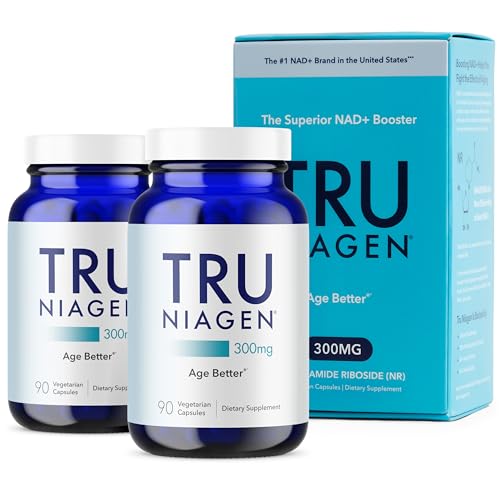
NR advocates point to earlier human clinical data. ChromaDex's Niagen (NR) was the first NAD+ precursor with published human pharmacokinetic studies, and their research showed reliable NAD+ increases of 40 to 90 percent in blood cells.
NMN proponents argue that skipping the NRK step makes NMN more direct. A 2022 study by the Imai lab at Washington University found that NMN is transported directly into cells via a specific transporter protein called Slc12a8, which is upregulated when NAD+ levels are low — suggesting the body has a dedicated mechanism for NMN uptake.
The discovery of the Slc12a8 transporter in 2019 resolved a long-standing debate about whether NMN could enter cells intact, providing a mechanistic explanation for its bioavailability that some researchers had questioned.
Practically speaking, both precursors work. The "NR vs NMN" debate generates far more heat online than the actual scientific differences warrant. Either compound, at adequate doses, reliably raises NAD+ levels in human tissue.
The Human Evidence
This is where intellectual honesty matters. The animal data for NMN is extensive and impressive. The human data is real but early.
The Washington University study (2021) — 25 postmenopausal women with prediabetes received 250 mg NMN daily for 10 weeks. The NMN group showed improved insulin sensitivity in skeletal muscle, with effects comparable to what you'd expect from losing roughly 5 to 7 percent of body weight. Published in Science.
The Keio University study (2022) — 30 healthy older men received 250 mg NMN daily for 12 weeks. The study found improved gait speed and grip strength compared to placebo, along with improvements in hearing function.
The University of Tokyo study (2024) — Larger trial with 120 participants showing NMN supplementation increased NAD+ metabolites in blood and improved fatigue scores, though the clinical significance of subjective improvements warrants caution.
These are encouraging results, but the trials are small. We don't yet have large, multi-year randomized controlled trials — the gold standard that would move NMN from "promising" to "proven." The Sinclair lab's METRO trial and several other larger studies are underway. Until those results land, NMN remains in the "exciting but unproven" category for human aging.
Dosing and Forms
Most human trials have used 250 to 500 mg of NMN daily. Anecdotal use in the longevity community ranges from 250 mg to 1,000 mg, though higher doses lack corresponding safety data.
Delivery method matters more than you might expect:
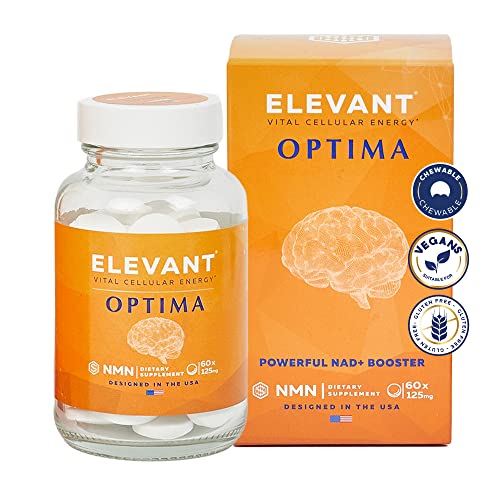
Standard capsules — The simplest form. Stomach acid and first-pass liver metabolism may reduce the amount reaching systemic circulation, though the Washington University trial used standard oral capsules and achieved measurable results.
Sublingual powders and tablets — Absorbed through the mucous membranes under the tongue, bypassing gastrointestinal degradation. Some pharmacokinetic data suggests faster absorption, though head-to-head comparisons with oral forms are limited.
Enteric-coated capsules — Designed to survive stomach acid and release in the small intestine. Theoretically improves absorption for compounds sensitive to acidic pH.
Liposomal formulations — NMN encapsulated in lipid vesicles. Claims of superior bioavailability are plausible but largely supported by manufacturer-funded research rather than independent studies.
The honest recommendation: standard capsules at 250 to 500 mg daily are sufficient based on current evidence. Fancier delivery systems may help, but the proven human results came from plain oral supplementation.
The Longevity Promise vs Reality
NMN occupies a peculiar position in supplement science. The mechanistic rationale is excellent. The animal data is robust. The early human trials are encouraging. And yet we cannot honestly say it's a proven anti-aging intervention in humans.
This gap between promise and proof is important to acknowledge. The longevity supplement market is worth billions, and marketing has raced far ahead of the evidence. You'll find brands claiming NMN "reverses aging" — a statement no responsible scientist would make based on current human data.
What we can say: NAD+ decline is real, it's linked to aging, NMN reliably raises NAD+ levels in humans, and early trials show functional improvements. Whether those improvements translate to longer healthspan or lifespan in humans is the billion-dollar question that remains unanswered.
As longevity researcher Dr. Charles Brenner has noted, "The idea that NAD+ metabolism is important in aging is well-supported. The idea that any particular supplement is an anti-aging pill is not yet established by human data."
Complementary Strategies
NMN isn't the only way to support NAD+ levels. Several lifestyle interventions activate the same pathways:
Exercise — Perhaps the most potent NAD+ booster available. Both aerobic and resistance exercise upregulate NAMPT, the rate-limiting enzyme in NAD+ biosynthesis. Regular exercisers maintain higher NAD+ levels than sedentary individuals of the same age.
Caloric restriction and fasting — Fasting activates AMPK and sirtuins through metabolic stress, with downstream effects on NAD+ metabolism. Time-restricted eating and periodic fasting both show NAD+-related benefits in human studies.
Resveratrol — The polyphenol found in red grapes and wine activates SIRT1, one of the NAD+-dependent sirtuins. Sinclair has long advocated combining NMN with resveratrol, arguing they work synergistically — NMN provides the fuel (NAD+), resveratrol steps on the accelerator (SIRT1 activation). The synergy data comes primarily from mouse models.
Sleep — NAD+ metabolism follows circadian rhythms, with levels peaking during the active phase. Disrupted sleep patterns impair NAD+ biosynthesis. This is one more reason adequate sleep is foundational to every health strategy.
For those interested in the broader longevity picture, omega-3 fatty acids and creatine complement different aspects of cellular health — omega-3s for membrane integrity and inflammation, creatine for the phosphocreatine energy system that works alongside NAD+-dependent pathways.
The Bottom Line
NAD+ is genuinely central to cellular health and aging. NMN is a legitimate way to raise NAD+ levels. The science is real, not hype. But the jump from "raises a biomarker" to "slows human aging" requires evidence we don't yet have.
If you're interested in NMN, 250 to 500 mg daily from a reputable manufacturer is a reasonable approach based on current data. Combine it with the interventions we know work — exercise, sleep, a nutrient-dense diet — and you're covering the fundamentals while the research catches up to the enthusiasm.
The next five years of human trials will determine whether NMN fulfills its extraordinary promise or settles into a more modest role. Either way, the science of NAD+ has already transformed our understanding of why cells age.
This article is for informational purposes only and does not constitute medical advice. Consult a qualified healthcare provider before starting any supplement regimen.
This content is for informational purposes only and does not constitute medical advice. Always consult a qualified healthcare provider before starting, stopping, or changing any supplement or medication regimen.
Nicotinamide Adenine Dinucleotide. NAD+, NMN, NAD+/NMN. ## Overview
**NAD+ (nicotinamide adenine dinucleotide)** is a coenzyme found in every living cell and is central to how the body produces energy, repairs DNA, and regulates cellular signaling. **NMN (nicotinamide mononucleotide)** is a precursor molecule that the body can use to help synthesize NAD
Nicotinamide mononucleotide (NMN) is a direct precursor to NAD+ (nicotinamide adenine dinucleotide), a coenzyme found in every living cell that participates in over 500 enzymatic reactions. NAD+ is es
NAD+ IV Therapy. NAD therapy, nicotinamide adenine dinucleotide IV. # NAD+ IV Therapy Overview
**NAD+ IV therapy** refers to the intravenous delivery of **nicotinamide adenine dinucleotide (NAD+)**, a coenzyme present in all living cells and central to energy metabolism, mitochondrial function, DNA repair, and cellular signaling. NAD+ levels naturally decline with
Vitamin B3. Niacin, Vit B3, Nicotinic Acid. ## Overview
**Vitamin B3** refers primarily to **niacin (nicotinic acid)** and **niacinamide (nicotinamide)**, two forms of an essential water-soluble B vitamin involved in hundreds of metabolic reactions. In the body, vitamin B3 is a precursor to the coenzymes **NAD** and **NADP**, which are centr
Cellular Energy. Cell Energy, ATP Production. ## Cellular Energy: Foundation of Human Function
**Cellular energy** refers to the biochemical processes that allow cells to perform work, maintain structure, communicate, repair damage, and sustain life. In human biology, this energy is captured and transferred primarily in the form of **adenosine
Introduction
[Coenzyme Q10 (CoQ10)](/supplements/coq10)—also known as ubiquinone in its oxidized form and ubiquinol in its reduced form—is a lipid-soluble molecule found in virtually every cell. It sh