

supplements
Omega-3 Fish Oil
Omega-3 fatty acids — specifically EPA (eicosapentaenoic acid) and DHA (docosahexaenoic acid) — are polyunsaturated fats that the human body cannot synthesize de novo. They must be obtained from dieta
Supported by multiple clinical trials and meta-analyses
EPA vs. DHA ratios, oxidation concerns, triglyceride vs. ethyl ester forms — the definitive guide to choosing the right omega-3.

This content is for informational purposes only and does not constitute medical advice. Always consult a qualified healthcare provider before starting, stopping, or changing any supplement or medication regimen.
Omega-3 fatty acids are polyunsaturated fats that your body cannot manufacture. You must obtain them from food or supplements. The two that matter most for human health are EPA (eicosapentaenoic acid) and DHA (docosahexaenoic acid), found primarily in fatty fish, shellfish, and marine algae.

James M. Sears ... We all want to live as healthfully as possible. In The Omega-3 Effect, Dr. William Sears <strong>turns his attention to the critical role that omega-3s play in the body</strong>. Dr
Check Price on AmazonA third omega-3, ALA (alpha-linolenic acid), is abundant in flaxseed, chia, and walnuts — but the conversion rate from ALA to EPA and DHA in the human body is dismally low, typically under 5 percent. Plant sources of omega-3 are valuable for other reasons, but they're not a reliable substitute for EPA and DHA.
The modern Western diet delivers an omega-6 to omega-3 ratio somewhere between 15:1 and 20:1. Our evolutionary diet was closer to 2:1 or 3:1. This imbalance matters because omega-6 fats (from seed oils, processed foods, and grain-fed animal products) are precursors to pro-inflammatory signaling molecules, while omega-3s produce anti-inflammatory and pro-resolving mediators. The ratio doesn't tell the whole story — total intake of EPA and DHA matters more than the ratio alone — but it illustrates how far modern nutrition has drifted from the conditions under which human physiology evolved.
Cardiovascular protection put omega-3s on the map. The observation that Greenland Inuit populations eating fish-heavy diets had dramatically lower rates of heart disease launched decades of research.
The landmark evidence came from the REDUCE-IT trial, published in the New England Journal of Medicine in 2019. Over 8,000 patients with elevated triglycerides received either 4 grams of icosapent ethyl (a purified EPA supplement) or placebo daily. The EPA group experienced a 25 percent relative reduction in cardiovascular events — heart attacks, strokes, cardiovascular death — compared to placebo.
The REDUCE-IT trial demonstrated a 25% relative risk reduction in major cardiovascular events with high-dose EPA supplementation, one of the largest effect sizes seen in modern cardiovascular supplementation research.
This was not a marginal finding. The FDA subsequently approved Vascepa (icosapent ethyl) as an adjunct therapy for cardiovascular risk reduction — one of the rare instances where a supplement-derived compound earned pharmaceutical-grade regulatory approval.
The mechanism extends beyond triglyceride lowering. EPA stabilizes arterial plaques, reduces vascular inflammation, improves endothelial function, and has modest antiarrhythmic effects. DHA, while sharing some of these benefits, also raises LDL cholesterol slightly in some individuals — which is why REDUCE-IT used EPA alone.
DHA constitutes roughly 40 percent of polyunsaturated fatty acids in the brain. It's a structural component of neuronal membranes and plays essential roles in synaptic transmission, neuroplasticity, and neuroprotection.
Observational studies consistently link higher omega-3 intake with reduced risk of cognitive decline and dementia. The interventional data is less clear-cut — supplementation trials in people who already have Alzheimer's disease show minimal benefit, but trials in healthy older adults or those with mild cognitive impairment are more encouraging. The likely explanation: omega-3s support brain maintenance, not brain repair.
EPA and DHA reduce the production of inflammatory cytokines and prostaglandins that drive joint pain and stiffness. A 2017 meta-analysis in the Annals of the Rheumatic Diseases found that omega-3 supplementation modestly but significantly reduced joint pain in rheumatoid arthritis patients, with some participants able to reduce their NSAID use.
The relationship between omega-3s and depression has generated substantial research. A meta-analysis of 26 randomized controlled trials found that EPA-dominant formulations (at least 60% EPA) had a statistically significant antidepressant effect, while DHA-dominant formulations did not. This specificity is telling — it suggests the anti-inflammatory properties of EPA, rather than DHA's structural role, drive the mood benefits.
A 2019 meta-analysis in Translational Psychiatry analyzing 26 RCTs found that omega-3 supplements with EPA concentrations of 60% or greater showed significant antidepressant effects, supporting the inflammation-depression link.
The workhorse. Fish oil is extracted from fatty fish like anchovies, sardines, and mackerel. It delivers EPA and DHA in concentrations ranging from 30 percent (standard) to 90 percent (concentrated forms). It's inexpensive, widely available, and backed by the majority of clinical research.
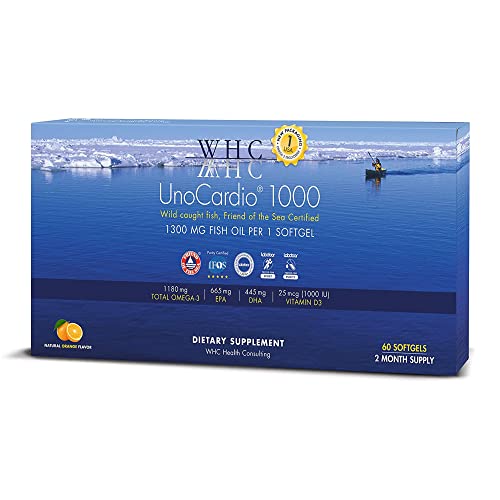
WHC, UnoCardio 1000 Fish Oil, 1300 mg of Pure Triglyceride Fish Oil with Omega-3 (1180 mg), 665 mg EPA and 445 mg DHA and 25 mcg (1000 IU) Vitamin D3 per softgel, Natural Orange, 60 softgels
View on AmazonThe downsides: quality varies enormously. Cheaper fish oils may be oxidized (rancid), poorly concentrated, or contaminated with heavy metals. The molecular form matters too — more on that below.
Extracted from Antarctic krill, a tiny crustacean. Krill oil delivers omega-3s bound to phospholipids rather than triglycerides, which may improve absorption. It also contains astaxanthin, a potent antioxidant that gives krill oil its red color and helps protect the fatty acids from oxidation.
The trade-off: krill oil capsules typically contain far less EPA and DHA per capsule than concentrated fish oil. You're paying more per milligram of omega-3. If you need therapeutic doses (2+ grams of EPA+DHA), krill oil becomes impractical and expensive.
The original source. Fish don't synthesize EPA and DHA — they accumulate it from the algae they eat. Algae-derived omega-3 supplements skip the middlefish entirely.
Algae oil is the only viable option for vegans and the most environmentally sustainable choice. Modern algae oils provide meaningful amounts of both DHA and EPA, though historically they were DHA-dominant. Quality brands now achieve EPA+DHA concentrations comparable to fish oil.
For most people, a high-quality concentrated fish oil offers the best combination of dose, evidence, and value. Algae oil is excellent for those who don't consume fish. Krill oil is a reasonable option at lower doses where its phospholipid form and built-in antioxidant protection add value.
The omega-3 supplement market has a quality problem. Independent testing by organizations like Labdoor and the International Fish Oil Standards (IFOS) program has consistently found products that are oxidized, under-dosed, or mislabeled.
Oxidation is the primary concern. Omega-3 fatty acids are chemically fragile — their multiple double bonds make them susceptible to oxidative degradation. Rancid fish oil doesn't just taste bad; oxidized lipids may actually increase inflammation rather than reduce it. A 2015 study testing retail fish oil products in New Zealand, South Africa, and Norway found that 20 to 50 percent exceeded recommended oxidation limits.
Molecular form affects absorption. Omega-3s come in three forms: triglyceride (natural), ethyl ester (synthetic, used in most concentrates), and re-esterified triglyceride (rTG — concentrated and converted back to triglyceride form). Research shows triglyceride and rTG forms have approximately 70 percent greater bioavailability than ethyl esters when taken without a fatty meal. Many premium brands now use the rTG form.
Third-party testing is non-negotiable. Look for IFOS 5-star certification, USP verification, or NSF International certification. These programs test for oxidation, potency, and contaminants including mercury, PCBs, and dioxins.
General health maintenance: 1,000 mg combined EPA+DHA daily. This is roughly what you'd get from two to three servings of fatty fish per week.
Cardiovascular support: 2,000 to 4,000 mg EPA+DHA daily, with emphasis on EPA. The REDUCE-IT trial used 4,000 mg of pure EPA.
Mood support: 1,000 to 2,000 mg EPA daily, based on meta-analytic evidence favoring EPA-dominant formulations.
Joint health: 2,000 to 3,000 mg combined EPA+DHA daily, based on rheumatology research.
Note that these are EPA+DHA amounts, not total fish oil. A standard 1,000 mg fish oil capsule typically contains only 300 mg of EPA+DHA. Read labels carefully.
The Omega-3 Index measures the percentage of EPA and DHA in red blood cell membranes, reflecting your omega-3 status over the previous 2 to 3 months — similar to how HbA1c reflects blood sugar.

Omega Quant Omega-3 Index Complete - Complete Fatty Acid Profile Blood Test Kit | Includes - Omega-3s, Omega-6s, Saturated Fats, Monounsaturated fats, Trans Fats | 1 Complete Home Kit
Check Price on AmazonAn Omega-3 Index above 8 percent is associated with the lowest cardiovascular risk. Below 4 percent is considered high-risk. The average American scores around 4 to 5 percent.
Testing is available through companies like OmegaQuant (founded by the researcher who developed the index, Dr. William Harris). It's a simple at-home finger prick test. If you're supplementing omega-3s and want to verify they're actually working, this is the most objective way to know.
Blood thinning — Omega-3s have mild antiplatelet effects. At typical supplemental doses, this is rarely clinically significant, but people on anticoagulant medications (warfarin, Eliquis) should inform their physician. The American Heart Association states that doses up to 3,000 mg daily are generally considered safe without medical supervision.
Fish burps — The most common complaint. Solutions: take capsules with a meal containing fat, use enteric-coated capsules, freeze your capsules before taking them, or switch to a higher-quality product (rancid oil causes more burps).
Heavy metals — A legitimate concern with whole fish but largely addressed in quality supplements. Molecular distillation and other purification processes reduce mercury, lead, and PCB levels to negligible amounts. Third-party tested brands consistently show levels far below safety thresholds.
Sustainability — The marine ecosystem impact of fish oil production is real. Look for products certified by Friend of the Sea or Marine Stewardship Council. Algae oil sidesteps this concern entirely.
Omega-3 supplementation has one of the strongest evidence bases in all of nutritional science, particularly for cardiovascular health. The REDUCE-IT trial moved EPA from "probably helpful" to "clinically proven." The brain, joint, and mood research adds further reasons to ensure adequate intake.
Choose a high-quality, third-party tested product in triglyceride or rTG form. Aim for at least 1,000 mg combined EPA+DHA daily for general health, more for specific therapeutic goals. Consider testing your Omega-3 Index to see where you stand.
Paired with magnesium for foundational mineral support and creatine for cellular energy, omega-3s form part of a core supplement stack that's backed by genuine, reproducible science rather than marketing optimism.
This article is for informational purposes only and does not constitute medical advice. Consult a qualified healthcare provider before starting any supplement regimen.
James M. Sears ... We all want to live as healthfully as possible. In The Omega-3 Effect, Dr. William Sears <strong>turns his attention to the critical role that omega-3s play in the body</strong>. Dr
Buy WHC, UnoCardio 1000 Fish Oil, <strong>1300 mg of Pure Triglyceride Fish Oil with Omega-3 (1180 mg), 665 mg EPA and 445 mg DHA and 25 mcg (1000 IU) Vitamin D3 per softgel, Natural Orange, 60 softge
Omega Quant Omega-3 Index Complete - Complete Fatty Acid Profile Blood Test Kit | Includes - Omega-3s, Omega-6s, Saturated Fats, Monounsaturated fats, Trans Fats | 1 Complete Home Kit
Health Disclaimer
This content is for informational purposes only and does not constitute medical advice. Always consult a qualified healthcare provider before starting, stopping, or changing any supplement or medication regimen.
Omega-3 fatty acids — specifically EPA (eicosapentaenoic acid) and DHA (docosahexaenoic acid) — are polyunsaturated fats that the human body cannot synthesize de novo. They must be obtained from dieta
Fish Oil. Omega-3, Fish Oil (Omega-3). ## Overview **Fish oil** refers to oils derived from fatty fish or marine sources that contain the omega-3 fatty acids **eicosapentaenoic acid (EPA)** and **docosahexaenoic acid (DHA)**. These fats are considered biologically important because they are incorporated into cell membranes and influence
Algal Oil. Algae Oil, Vegan DHA, Vegan Omega-3. ## Overview **Algal oil** is a dietary supplement made from marine microalgae, the original source of many long-chain omega-3 fats found in the food chain. It is best known for providing **docosahexaenoic acid (DHA)** and, in some formulations, **eicosapentaenoic acid (EPA)**. Because fish accumula
Krill Oil. . ## Overview **Krill oil** is a marine-derived supplement made from small crustaceans, most commonly Antarctic krill (*Euphausia superba*). It is primarily valued as a source of the omega-3 fatty acids **EPA (eicosapentaenoic acid)** and **DHA (docosahexaenoic acid)**, along with the carotenoid anti
Omega-3 Index. Fatty Acid Profile, Omega-3 Test. ## Overview The **Omega-3 Index** is a laboratory measure that reflects the percentage of two long-chain omega-3 fatty acids—**EPA (eicosapentaenoic acid)** and **DHA (docosahexaenoic acid)**—present in red blood cell membranes. Because red blood cells circulate for roughly 120 days, the index is g
A rich source of EPA and DHA omega-3 fatty acids, commonly used to support cardiovascular health and reduce inflammation.