Acupuncture Clinics in Asheville: Top Local Practices, What to Expect, and How to Choose
A local guide to acupuncture clinics in Asheville: modalities, evidence, safety, costs, and how to choose—plus what to expect and tips for affordable care.
·10 min read
This content is for informational purposes only and does not constitute medical advice. Always consult a qualified healthcare provider before starting, stopping, or changing any supplement or medication regimen.
If you’re searching for acupuncture clinics in Asheville, you’re likely wondering which practices are reputable, what styles of acupuncture they use, what conditions respond well, and how much you should expect to pay. This guide brings together western research, eastern tradition, and practical local insight to help you choose well and feel confident about your care.
What Is Offered in Asheville: Modalities and Practice Styles
Asheville’s acupuncture landscape is diverse. You’ll find solo practitioners, integrative health centers, and community clinics that make care more affordable. Common modalities include:
Traditional Chinese Medicine (TCM) acupuncture: The most common style, based on pulse and tongue assessment, meridians, and pattern diagnosis.
Auricular (ear) acupuncture: Often used for stress, cravings, and adjunct pain support; can be delivered in group settings and is sometimes used in detox and community health programs.
Electroacupuncture: Low-level electrical stimulation is applied between needles to enhance pain relief or stimulate neuromuscular function.
Scalp acupuncture: Targets functional brain maps; sometimes used for neurological concerns such as stroke recovery or chronic pain.
Cupping and gua sha: Suction cups or instrument-assisted scraping to improve local circulation and relieve muscle tension; often combined with needling.
Moxibustion (moxa): Warming of points with dried mugwort to support circulation and certain TCM patterns.
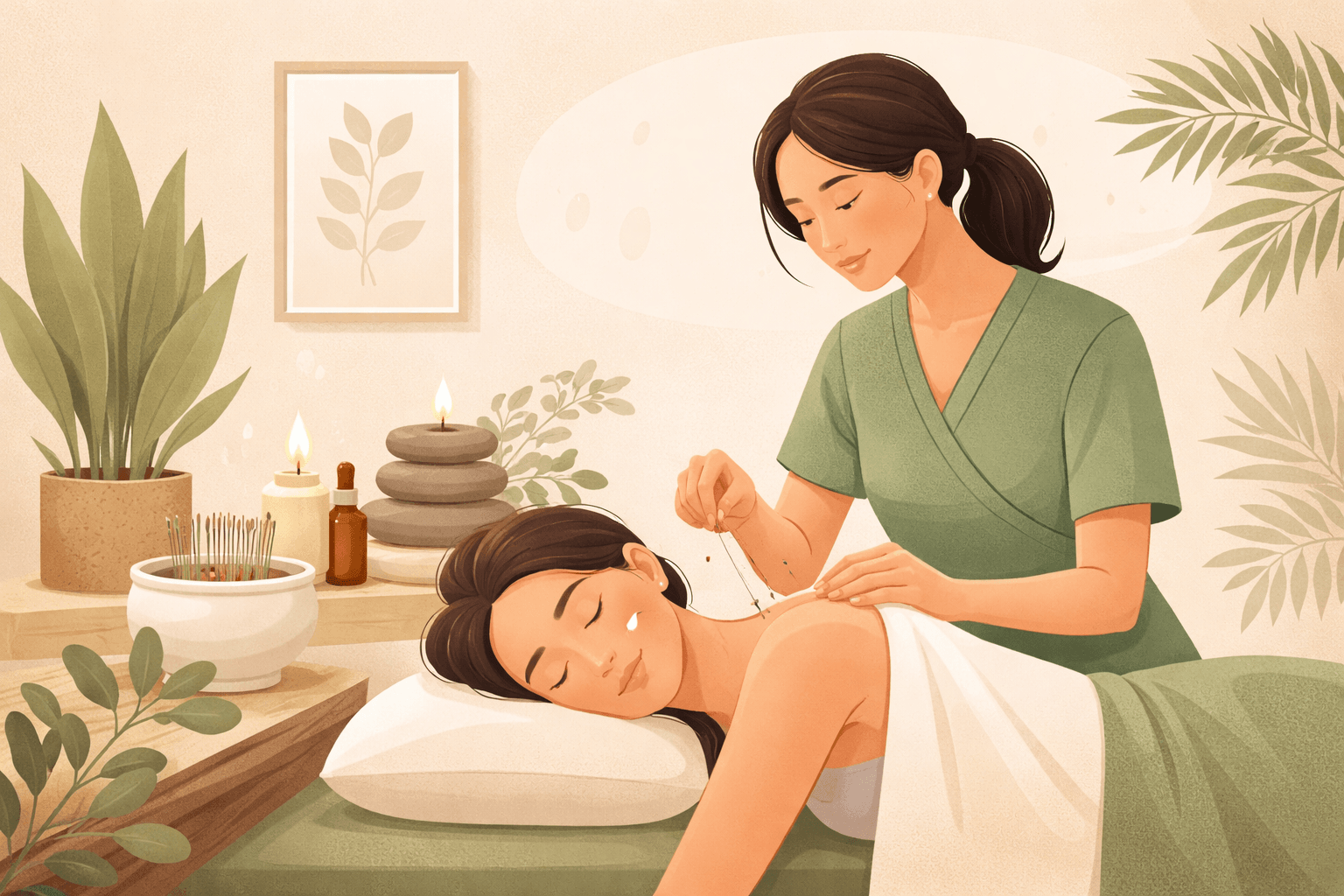
What to expect: Most initial visits in Asheville include a detailed intake (15–30 minutes), followed by 20–40 minutes of needle retention. Many clinics integrate cupping, gua sha, moxa, or electroacupuncture as needed.
What the Research Says
Acupuncture blends a traditional framework with increasing scientific study. While not a cure-all, research suggests it can be a helpful component of care for several conditions commonly treated at acupuncture clinics in Asheville.
Chronic pain (back, neck, osteoarthritis, shoulder): Evidence level: strong-to-moderate. Multiple large meta-analyses indicate acupuncture outperforms usual care and sham for chronic musculoskeletal pain, with small-to-moderate effect sizes. Benefits often persist beyond treatment. See our overview on Chronic Pain and Acupuncture.
Headaches and migraines: Evidence level: moderate. Studies indicate acupuncture can reduce migraine frequency and tension-type headache days compared with usual care; magnitude is comparable to some preventive medications with fewer side effects. Best outcomes typically require a series of treatments.
Anxiety and stress: Evidence level: emerging-to-moderate. Trials and systematic reviews suggest reductions in perceived stress and anxiety symptoms, though methodologies vary. Ear acupuncture (including NADA protocols) may support relaxation. Learn more at Stress and Acupuncture.
Fertility and reproductive health: Evidence level: mixed. Some research suggests acupuncture may improve IVF-related outcomes in specific protocols, but results are inconsistent. More consistently, acupuncture appears to help reduce stress and improve quality of life in fertility journeys. See Acupuncture and Infertility.
Digestive concerns (IBS, functional dyspepsia): Evidence level: emerging-to-moderate. Small RCTs and meta-analyses show symptom improvements for some patients, likely via modulation of gut–brain signaling and autonomic tone. Explore Digestive issues and Acupuncture.
Nausea (postoperative, chemotherapy-related): Evidence level: strong for P6 (Neiguan) stimulation via acupuncture or acupressure; widely recognized in perioperative guidelines.
Mechanisms of action: Research suggests acupuncture can modulate pain signaling via endogenous opioids, serotonin and norepinephrine pathways, and downregulation of inflammatory mediators. Functional MRI studies indicate changes in brain regions associated with pain and emotion regulation. From a TCM perspective, treatments restore the flow of Qi and rebalance organ systems, addressing root patterns rather than isolated symptoms.
Expected outcomes and timelines:
Acute issues (e.g., recent strain): noticeable change in 1–3 sessions for many patients.
Chronic conditions: trial of 6–8 sessions over 4–8 weeks to evaluate response; maintenance may be monthly or as needed.
Stress/sleep support: gradual improvements over several weeks, often enhanced by adjunct mind–body practices.
Acupuncture Clinics in Asheville: Local Snapshot
Asheville hosts a mix of private and community practices. Details can change—always confirm hours, services, and accessibility with the clinic directly. The following are representative examples of local options to explore:
Some wellness centers in surrounding towns (e.g., Hendersonville) offer acupuncture alongside chiropractic, functional medicine, or massage for one-stop integrative care.
Accessibility and language: Many Asheville clinics are ground-floor or have elevator access; policies vary. If you need wheelchair access, scent-free environments, or specific language support, confirm ahead of time. Evening or weekend appointments are available at select clinics; community clinics may offer the most flexible schedules.
Safety, Credentials, and North Carolina Regulations
Licensing: In North Carolina, Licensed Acupuncturists (L.Ac.) are regulated by the North Carolina Acupuncture Licensing Board (NCALB). Most hold a master’s or doctoral degree from an ACAOM-accredited program, have passed NCCAOM board exams, and maintain Clean Needle Technique certification.
What to verify: Active NC license, NCCAOM certification, liability insurance, and up-to-date CPR/First Aid. If receiving Chinese herbal formulas, ask about formal herbal training.
Infection control: Needles must be single-use, sterile, and disposed of in sharps containers. Practitioners should sanitize hands, clean skin prior to needling, and follow OSHA bloodborne pathogen standards.
Common contraindications and cautions:
Bleeding disorders or use of anticoagulants (needling depth and technique may be modified).
Pregnancy: Certain points and strong stimulation are avoided; tell your practitioner if pregnant or trying to conceive.
Pacemakers: Avoid or modify electroacupuncture.
Local skin infections, open wounds, or severe lymphedema: Often avoided.
Severe needle phobia: Discuss alternatives (acupressure, laser, or non-insertive tools).
Red flags: Reused needles, unsanitary environment, guarantees of cure, lack of intake or informed consent, unwillingness to coordinate with your other healthcare providers.
Cost, Insurance, and Access Options in Asheville
Typical fees (may vary by clinic):
Initial visit: $90–$150 (60–90 minutes)
Follow-ups: $60–$100 (30–60 minutes)
Community/sliding-scale clinics: Approximately $30–$60 per visit, often in a group setting; initial may be similar or slightly higher.
Packages: Prepaid series can lower per-visit cost by 10–20%.
Insurance: Some NC plans reimburse acupuncture for specific diagnoses (e.g., chronic low back pain, migraine prevention, chemotherapy-induced nausea). Pre-authorization and documentation are often required. Medicare covers acupuncture for chronic low back pain but typically only when provided within certain medical settings; many independent L.Ac. clinics cannot bill Medicare directly. HSAs/FSAs commonly reimburse acupuncture; keep itemized receipts and, if needed, a letter of medical necessity.
Workers’ comp and VA: Work-related injuries may be eligible through workers’ compensation. Veterans may access acupuncture via VA Community Care when authorized—ask your VA provider.
Telehealth and consults: While needling is in-person, many Asheville clinicians offer telehealth for intake, lifestyle guidance, acupressure instruction, and herbal/supplement consults. Ear seeds can be mailed for at-home acupressure on recommended points.
Real Patient Experience: What to Expect
Before your first session: Wear comfortable clothing, eat a light snack ahead of time, and bring your medication list. Your practitioner will review health history, goals, and any imaging or labs you wish to share.
During treatment: You may feel a dull ache, warmth, or tingling as points activate. Most people relax deeply and may even nap. Typical retention is 20–35 minutes; some sessions include cupping or gua sha.
After treatment: It’s common to feel relaxed or mildly fatigued for a few hours. Minor bruising or soreness can occur. Hydrate, avoid strenuous workouts immediately after if you feel lightheaded, and note changes in sleep, pain, or mood for your next visit.
Course of care: Many practitioners suggest assessing response after 4–6 sessions. If improvement is minimal, they may adjust point selection, try electroacupuncture, add cupping, or collaborate with your other providers.
Representative patient stories (aggregated from common reports):
Chronic back pain: A patient doing weekly sessions for 6 weeks reports a gradual reduction in morning stiffness and uses fewer NSAIDs, with maintenance visits every 3–4 weeks thereafter.
Migraine frequency: Over 8 weeks, a patient notes fewer monthly migraine days and less intensity when attacks occur; they continue preventive care monthly during high-stress periods.
Stress and sleep: After 4 sessions plus ear seeds for home use, a patient reports calmer evenings and improved sleep continuity.
How to Choose Among Acupuncture Clinics in Asheville
Key questions to ask during a discovery call or first visit:
Credentials: Are you licensed in NC and board-certified (NCCAOM)? What additional trainings have you completed?
Experience: How often do you treat my specific condition? What approaches have worked well in similar cases?
Plan: How many sessions do you recommend before reassessing? Will you use electroacupuncture, cupping, or herbs?
Safety: How do you handle infection control? Any precautions given my medications or health conditions?
Integration: Can you collaborate with my MD, PT, or therapist if needed? Will you provide visit summaries?
Cost and logistics: What are your fees, package options, insurance billing, cancellation policy, and accessibility?
At-home acupressure and ear seeds: A simple Ear Seeds Kit can help extend treatment effects between visits. Evidence for ear acupressure is emerging; it’s generally considered low-risk when used as instructed.
Relaxation and muscle comfort: An Acupressure Mat is a non-needle option some people use for 10–20 minutes to unwind before bed; research is limited but user reports are positive.
Foundational nutrition: Some clinicians suggest magnesium for sleep and muscle tension; if appropriate for you, a gentle Magnesium Glycinate is commonly chosen. Evidence for sleep support is mixed; consult your clinician, especially if you have kidney disease or take medications.
Practical Takeaways
For most musculoskeletal pain and headache concerns, research supports trying a series of acupuncture treatments. Expect assessment after 4–6 visits.
Community clinics can make regular care more affordable; one-on-one clinics allow more individualized adjunct therapies.
Verify NC licensure, NCCAOM certification, and clean-needle practices. Share your full medication list and pregnancy status.
Consider insurance or HSA/FSA reimbursement if you meet plan criteria; ask clinics about superbills, referrals, and documentation.
Combine acupuncture with evidence-informed self-care: movement, stress-reduction, sleep hygiene, and nutrition changes consistent with your clinician’s guidance.
This guide is for educational purposes and does not replace professional medical advice, diagnosis, or treatment. Acupuncture may complement but should not delay urgent medical care. Always consult your licensed healthcare providers about your specific health needs and before starting new therapies or supplements.
This content is for informational purposes only and does not constitute medical advice. Always consult a qualified healthcare provider before starting, stopping, or changing any supplement or medication regimen.
Top-Rated Acupuncturists in Asheville: Best Clinics, What to Expect, and How to Choose. If you’re searching for top-rated acupuncturists in Asheville, you probably want two things: practitioners with excellent track records and clear guidance on which clinic fits your needs—pain relief, fertility support, stress reduction, sports rehab, and more. This guide explains how to identify the
Best Massage Therapy in Asheville: Top Clinics, Modalities, and How to Choose. If you’re searching for the best massage therapy in Asheville, you’re in good company. From cozy mountain day spas to results-focused clinical practices, Asheville’s wellness scene is unusually rich for a mid-sized city. This guide breaks down local modalities, how to choose the right therapist, nei
How to Find Holistic Health Practitioners in Asheville: Naturopaths, Acupuncturists, Integrative Clinics & What to Expect. If you’re searching for holistic health practitioners in Asheville, you’re not alone. This mountain city blends a vibrant wellness culture with evidence-informed care, from community acupuncture and herbal apothecaries to functional medicine consults and trauma‑informed bodywork. This guide explains
Yoga & Meditation Retreats in Asheville: The Best Centers, Styles, Costs, and What to Expect. If you’re searching for yoga and meditation retreats in Asheville, you’re likely looking for a reset—space to breathe, stretch, and settle your mind in the Blue Ridge Mountains. Asheville’s retreat scene is diverse, from silent mindfulness immersions to Ayurveda-informed yoga weekends with farm-to-t
Holistic Acupuncture Clinics in San Diego: A Local Guide to Integrative Care. If you’re searching for holistic acupuncture clinics in San Diego, you’re likely looking for whole-person care that blends Eastern and Western approaches—help for pain, stress, fertility, digestion, or sleep that respects the body’s interconnected systems. This local guide explains what “holistic” a
Best Chiropractic Care in San Diego: Top Clinics, How to Choose, and What to Expect. If you’re searching for the best chiropractic care in San Diego, you’re likely dealing with back or neck pain, sciatica, headaches, or a sports tweak that just won’t quit. This guide pulls together what the research says, how to evaluate quality, how care typically works in San Diego, and practical