

Chronic Pain and Acupuncture
Chronic pain affects quality of life, sleep, mood, and function, and it is commonly managed with a blend of self-care, medications, rehabilitation, and in some cases procedures. Acupuncture—an East Asian medical practice involving the insertion of very fine needles at specific points—has been studied as a complementary approach for a range of chronic pain conditions. Understanding how acupuncture relates to chronic pain care can help patients and clinicians make coordinated, evidence-informed choices. Clinical research, including large randomized trials and meta-analyses, suggests acupuncture provides modest but clinically meaningful pain relief and functional improvement for conditions such as chronic low back pain, knee osteoarthritis, neck pain, and migraine prevention. A prominent individual patient data meta-analysis pooling high-quality trials found true acupuncture superior to sham and to usual care, with effects that persisted months after treatment. Evidence for fibromyalgia shows smaller, more variable benefits. Professional guidelines reflect this mixed but generally supportive evidence: the American College of Physicians recommends acupuncture for chronic low back pain, NICE (UK) allows a course of acupuncture for chronic primary pain, and OARSI provides conditional recommendations for knee osteoarthritis. Some societies (e.g., American College of Rheumatology) are more cautious or conditionally against its use in osteoarthritis, reflecting heterogeneity of trials and modest effect sizes. Proposed mechanisms include activation of endogenous pain-modulating systems (endorphins, enkephalins), modulation of neurotransmitters (serotonin, norepinephrine), and engagement of descending inhibitory pathways in the brain and spinal cord. Local tissue effects, such as increased adenosine and anti-inflammatory signaling, may further dampen pain. While neurophysiological models are increasingly supported by imaging and biochemical studies, uncertainties remain—sham
Updated September 8, 2026This content is for informational purposes only and does not constitute medical advice. Always consult a qualified healthcare provider before starting, stopping, or changing any supplement or medication regimen.
Medical Perspectives
Two Ways of Seeing Health

Western
scientific · clinical
Western medicine applies science, technology, and clinical experience to treat symptoms through testing, diagnosis, and targeted intervention.
Surgeons · Pharmaceuticals · Clinical trials · Diagnostics 
Eastern
traditional · alternative
Eastern medicine focuses on treating the body naturally by applying traditional knowledge practiced for thousands of years, emphasizing balance and whole-person wellness.
Acupuncture · Herbal medicine · Yoga · Meditation
Gold Bamboo presents both perspectives side-by-side so you can make informed decisions. We don't advocate for one over the other — your health choices are yours.
Two Ways of Seeing Health
Western
scientific · clinical
Western medicine applies science, technology, and clinical experience to treat symptoms through testing, diagnosis, and targeted intervention.
Eastern
traditional · alternative
Eastern medicine focuses on treating the body naturally by applying traditional knowledge practiced for thousands of years, emphasizing balance and whole-person wellness.
Gold Bamboo presents both perspectives side-by-side so you can make informed decisions. We don't advocate for one over the other — your health choices are yours.
Western Perspective
Western medicine views acupuncture as a nonpharmacologic modality that can modestly reduce pain and improve function for several chronic pain conditions, with a safety profile generally favorable compared with long-term pharmacotherapy. Evidence is strongest for chronic low back pain, osteoarthritis (knee), neck pain, and migraine prophylaxis; benefits for fibromyalgia are smaller and less consistent. Effect sizes are typically modest but can be clinically meaningful when combined with exercise and behavioral strategies. Limitations include heterogeneity across trials, blinding challenges with sham controls, and variability in treatment protocols and practitioner expertise.
Key Insights
- Individual patient data meta-analyses show true acupuncture outperforms sham and usual care for chronic musculoskeletal pain, with benefits persisting months after treatment (small-to-moderate effect).
- Guidelines (ACP, NICE, VA/DoD) endorse acupuncture as an option for selected chronic pain conditions; other groups (e.g., ACR for OA) are more cautious, citing inconsistent evidence.
- Mechanistic studies support activation of endogenous opioids, monoaminergic descending inhibition, and local anti-inflammatory effects (e.g., adenosine signaling).
- Safety profile is favorable: most adverse events are mild and transient; serious events are rare with trained practitioners using sterile technique.
- Real-world integration emphasizes opioid-sparing, functional outcomes, and coordination with exercise therapy, CBT, and self-management.
Treatments
- Exercise therapy/physical therapy
- Cognitive behavioral therapy and pain education
- NSAIDs and acetaminophen (as appropriate)
- SNRIs, TCAs, or gabapentinoids for selected neuropathic/centralized pain
- Interventional procedures (e.g., injections) when indicated
Deep Dive
From a western clinical perspective, acupuncture sits within a broader shift toward nonpharmacologic, multidisciplinary chronic pain care. Large... From a western clinical perspective, acupuncture sits within a broader shift toward nonpharmacologic, multidisciplinary chronic pain care. Large randomized trials and meta-analyses, including pooled individual patient data, find that acupuncture provides statistically significant and clinically meaningful reductions in pain and improvements in function compared with sham and usual care for several conditions, most notably chronic low back pain, knee osteoarthritis, neck pain, and migraine prevention. For fibromyalgia, benefits are smaller and less consistent. The American College of Physicians recommends acupuncture as an initial option for chronic low back pain, and NICE (UK) includes a course of acupuncture among options for chronic primary pain, reflecting a consensus that benefits often outweigh risks when delivered by trained practitioners. Mechanistic studies complement the clinical data. Experimental work demonstrates activation of endogenous opioid pathways—an effect attenuated by naloxone—along with modulation of serotonin and norepinephrine signaling in descending inhibitory circuits. Imaging studies suggest changes in pain-processing networks, while local tissue research indicates anti-inflammatory effects and purinergic signaling (adenosine A1 receptor activation) at needling sites. Yet, methodological challenges persist: sham controls are imperfect, blinding is difficult, and protocols vary across trials. As a result, effect sizes are modest and heterogeneity remains. In practice, acupuncture is often integrated with exercise therapy, cognitive-behavioral approaches, and self-management education. Evidence from health technology assessments and some real-world programs suggests potential for opioid-sparing and improved function, though high-quality trials specifically measuring medication reduction are limited. Safety is a key strength: adverse effects are usually minor (transient soreness, bruising), and serious complications are rare when sterile, single-use needles and appropriate technique are employed. For clinicians, appropriate referral involves selecting patients with conditions supported by evidence, aligning expectations toward functional gains, and coordinating care so that acupuncture complements rather than replaces necessary medical evaluation or rehabilitation.
Sources
- Vickers AJ et al. Acupuncture for Chronic Pain: Individual Patient Data Meta-analysis. Arch Intern Med. 2012; updated J Pain. 2018.
- Qaseem A et al. American College of Physicians Guideline for Low Back Pain. Ann Intern Med. 2017.
- NICE Guideline NG193. Chronic pain (primary and secondary). 2021.
- AHRQ Comparative Effectiveness Review No. 227. Noninvasive Nonpharmacological Treatment for Chronic Pain. 2020.
- Linde K et al. Cochrane Review: Acupuncture for migraine prophylaxis. 2016.
- Trinh K et al. Cochrane Review: Acupuncture for neck disorders. 2016.
- Bannuru RR et al. OARSI guidelines for knee, hip OA. 2019.
- Haake M et al. GERAC trial for low back pain. N Engl J Med. 2007.
Eastern Perspective
Traditional East Asian medicine understands chronic pain largely as stagnation or blockage in the flow of qi and blood through meridians, often compounded by patterns such as wind-cold-damp invasion, liver qi constraint, or kidney deficiency. Acupuncture aims to restore harmony and movement, relieving pain and improving function. Treatment is individualized to the patient’s pattern and may combine body acupuncture with adjunctive techniques such as moxibustion and cupping, plus lifestyle practices (tai chi, qigong) to sustain balance.
Key Insights
- Pain is a manifestation of impaired flow (bi syndrome); point selection targets local and distal channels to free stagnation and tonify deficiencies.
- Adjunctive methods (moxibustion, cupping, gua sha) are traditionally used to warm, move, and dispel pathogenic factors that perpetuate pain.
- Regular practice of tai chi/qigong is believed to maintain smooth qi flow, reduce stress, and support joint and muscle health.
- Individualized diagnosis (pattern differentiation) guides needling technique, depth, and stimulation; this personalization aligns with the variability seen in trial outcomes.
- Modern integrative frameworks map traditional concepts to neuroimmune mechanisms (e.g., modulation of autonomic tone and inflammation).
Treatments
- Body acupuncture and electroacupuncture
- Moxibustion
- Cupping and gua sha (scraping)
- Tai chi and qigong
- Herbal formulas selected to move blood/qi or tonify as indicated
Deep Dive
Within traditional East Asian medicine, chronic pain is understood through the lens of disrupted flow—qi and blood stagnation causing obstructio... Within traditional East Asian medicine, chronic pain is understood through the lens of disrupted flow—qi and blood stagnation causing obstruction and discomfort along specific meridians. External factors (wind, cold, damp) or internal imbalances (liver qi constraint from stress, kidney deficiency from chronic depletion) can anchor the pattern. Acupuncture seeks to restore harmony by freeing stagnation, warming and moving where cold-damp lingers, and tonifying depleted systems. Point selection is individualized, often combining local points for symptomatic relief with distal points that regulate channel flow and address root patterns. Techniques such as moxibustion add gentle heat to dispel cold and support circulation; cupping and gua sha move stagnation in muscle and fascia; and practices like tai chi and qigong cultivate smooth, resilient qi over time. This traditional view aligns with modern observations in several ways. The felt experience of ‘deqi’—the characteristic dull ache or heaviness with therapeutic needling—maps onto neuromodulatory responses documented in imaging and biochemical studies. Regulation of autonomic tone and reductions in inflammatory mediators echo the TCM goals of balancing yin and yang and clearing pathogenic factors. Because patterns differ among individuals even when diagnoses match (e.g., two people with knee osteoarthritis), responses vary; personalization of point selection and frequency of sessions is emphasized, which may contribute to heterogeneity in clinical trials that use fixed protocols. In integrative practice, the eastern and western perspectives can be synergistic. A patient may receive acupuncture to decrease pain and muscle guarding while engaging in targeted exercise and mindfulness to reinforce healthy movement and stress regulation. Communication among practitioners supports safe, coordinated care, especially when patients are on anticoagulants, are pregnant (point selection precautions), or have complex comorbidities. From this vantage, acupuncture is not a stand-alone cure but a tool to help restore balance and function—its value strongest when embedded in a comprehensive, person-centered plan.
Sources
- Huangdi Neijing (Yellow Emperor’s Inner Classic).
- WHO. Benchmarks for Training in Acupuncture. 2010.
- Evidence-Based Complementary and Alternative Medicine reviews on acupuncture mechanisms and adjunctive therapies.
- Langevin HM et al. Integrative models linking connective tissue and acupuncture effects.
Evidence Ratings
Acupuncture provides small-to-moderate reductions in chronic musculoskeletal pain versus sham and usual care.
Vickers AJ et al. Arch Intern Med. 2012; J Pain. 2018 (individual patient data meta-analyses).
Acupuncture is effective for prevention of migraine headaches compared with no treatment and similar to prophylactic drugs with fewer adverse effects.
Linde K et al. Cochrane Database Syst Rev. 2016.
Acupuncture improves pain and function in chronic low back pain and is recommended as a first-line nonpharmacologic option.
Qaseem A et al. ACP Guideline. Ann Intern Med. 2017; AHRQ Review 2020.
For knee osteoarthritis, acupuncture yields modest benefits; guideline positions vary (conditional for/against).
Bannuru RR et al. OARSI 2019; ACR 2019 OA guideline.
Neurophysiological mechanisms include endogenous opioid release and engagement of descending inhibitory pathways.
Levine JD et al. Lancet. 1978 (naloxone reversibility); Han JS. Neurosci Lett/Reviews.
Local anti-inflammatory and purinergic (adenosine A1) mechanisms contribute to analgesia.
Goldman N et al. Nature Neuroscience. 2010.
Acupuncture is generally safe with mostly minor, transient adverse events; serious complications are rare with trained practitioners.
MacPherson H et al. BMJ. 2001/2011; Witt CM et al. BMJ. 2009.
Adding acupuncture may reduce reliance on opioids for chronic pain in some settings.
VA/DoD 2022 Chronic Pain CPG; AHRQ 2020 notes limited but suggestive data.
Sources
- Vickers AJ et al. Acupuncture for Chronic Pain: A Patient-Level Meta-analysis. Arch Intern Med. 2012; and update: J Pain. 2018.
- Cherkin DC et al. A randomized trial of acupuncture for chronic low back pain. Arch Intern Med. 2009.
- Haake M et al. German Acupuncture Trials (GERAC) for chronic low back pain. N Engl J Med. 2007.
- Scharf HP et al. Acupuncture and knee osteoarthritis. Ann Intern Med. 2006.
- Linde K et al. Acupuncture for migraine prophylaxis. Cochrane Database Syst Rev. 2016.
- Trinh K et al. Acupuncture for neck disorders. Cochrane Database Syst Rev. 2016.
- Deare JC et al. Acupuncture for fibromyalgia. Cochrane Database Syst Rev. 2013.
- AHRQ Comparative Effectiveness Review No. 227. Noninvasive Nonpharmacological Treatment for Chronic Pain. 2020.
- Qaseem A et al. ACP Guideline on Noninvasive Treatments for Low Back Pain. Ann Intern Med. 2017.
- NICE Guideline NG193: Chronic pain in over 16s. 2021.
- Bannuru RR et al. OARSI guidelines for nonsurgical management of knee, hip OA. 2019.
- American College of Rheumatology Guideline for OA Management. 2019.
- Levine JD et al. Acupuncture analgesia is blocked by naloxone. Lancet. 1978.
- Goldman N et al. Adenosine A1 receptors mediate local anti-nociception of acupuncture. Nat Neurosci. 2010.
- MacPherson H et al. Adverse events following acupuncture. BMJ. 2001; 2011.
- Witt CM et al. Safety of acupuncture in routine care: German cohort. BMJ. 2009.
- VA/DoD Clinical Practice Guideline for the Management of Chronic Pain. 2022.
- Herman PM et al. Cost-effectiveness of acupuncture for chronic pain: systematic review. Pain. 2012.
Related Topics
Recommended Products
The Acupuncture Handbook: How Acupuncture Works and How It Can Help You: Hicks, Angela
Acupuncture For Complete Beginners: Your Comprehensive Patient's Guide to Unlocking Healing Wisdom | Discover Everything You Need to Know About the Art and Science of Acupuncture · Amelia M. Gome

ProsourceFit Acupressure Mat and Pillow Set for Back/ ...
Amazon.com: ProsourceFit Acupressure Pillow Relief Relaxation
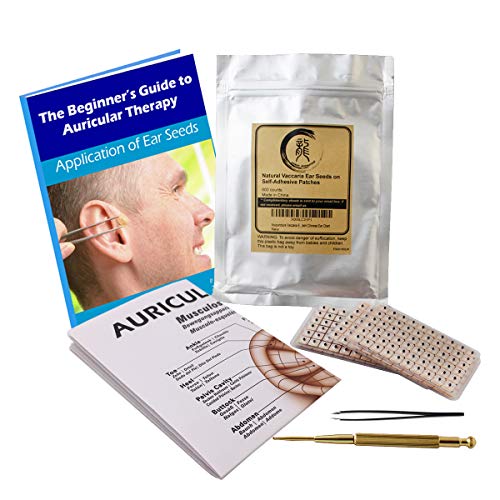
Multi-Condition Ear Seeds Acupuncture Kit 600 Counts, eBook Placement Chart, Probe, Acupressure Ear Chart, Tweezers
<strong>Ear Seeds Acupuncture Kit - 100 Pieces - Acupressure with Ears Seed, with Bonus Free Chart and Brass Acupressure Probe - for Balance & Wellness (Gold-100pcs)</strong> ROSENICE 600 Counts A
Health Disclaimer
This content is for informational purposes only and does not constitute medical advice. Always consult a qualified healthcare provider before starting, stopping, or changing any supplement or medication regimen.