

Rhodiola Rosea
Overview
Rhodiola rosea is a botanical supplement derived from a flowering plant that grows in cold, mountainous regions of Europe and Asia. Its root has a long history of traditional use in regions such as Scandinavia, Russia, and parts of Central Asia, where it has been used to support stamina, resilience, and adaptation to physical and mental stress. In modern supplement terminology, Rhodiola is often grouped with so-called adaptogens—plants traditionally used to help the body maintain balance during periods of stress.
Interest in Rhodiola rosea has expanded in integrative and conventional health discussions because of its potential effects on fatigue, stress response, mood, cognitive performance, and exercise endurance. Research has focused particularly on standardized extracts containing compounds such as rosavins and salidroside, which are considered major bioactive constituents. However, product quality can vary significantly across the supplement market, and differences in extraction methods and plant standardization complicate comparisons between studies.
From a public health perspective, Rhodiola occupies an important middle ground between traditional herbal practice and modern clinical investigation. It is widely marketed for stress and energy support, yet the scientific literature remains mixed: some studies suggest benefits for stress-related fatigue and mild mood symptoms, while others are limited by small sample size, short duration, or inconsistent formulations. As with many herbal supplements, Rhodiola is best understood as an area of active but still developing research, rather than a fully settled topic.
Safety discussions generally describe Rhodiola as relatively well tolerated in short-term use in studied populations, though side effects such as dizziness, dry mouth, irritability, or sleep disturbance have been reported. Because supplements may interact with medications or may not be appropriate for certain health conditions, consultation with a qualified healthcare professional remains important when considering its use.
Medical Perspectives
Two Ways of Seeing Health

Western
scientific · clinical
Western medicine applies science, technology, and clinical experience to treat symptoms through testing, diagnosis, and targeted intervention.

Eastern
traditional · alternative
Eastern medicine focuses on treating the body naturally by applying traditional knowledge practiced for thousands of years, emphasizing balance and whole-person wellness.
Gold Bamboo presents both perspectives side-by-side so you can make informed decisions. We don't advocate for one over the other — your health choices are yours.
Western Medicine Perspective
Western Medicine Perspective
In conventional and integrative medicine, Rhodiola rosea is primarily examined for its possible role in stress physiology, fatigue, mood regulation, and cognitive function. Laboratory and early clinical research suggests Rhodiola may influence neurochemical signaling and the hypothalamic-pituitary-adrenal (HPA) axis, a major system involved in stress adaptation. Some studies also explore effects on neurotransmitters such as serotonin, dopamine, and norepinephrine, as well as potential antioxidant and anti-inflammatory activity. These mechanisms remain under investigation rather than definitively established in humans.
Clinical studies have most often evaluated Rhodiola for stress-related fatigue, burnout-like symptoms, mental performance under stress, and mild depressive symptoms. Some randomized trials and systematic reviews indicate modest improvements in fatigue, subjective well-being, and certain cognitive measures, particularly in people experiencing stress or exhaustion. There is also limited research in sports medicine examining exercise performance and recovery, though findings are inconsistent. Conventional medicine generally views the evidence as promising but not conclusive, with a need for larger, better-standardized trials.
From a safety and regulatory standpoint, Rhodiola is typically sold as a dietary supplement, not as an approved drug for any disease indication. Clinicians may note concerns about variability in commercial products, potential adulteration, and differences in active compound content. There is also interest in possible interactions with antidepressants, stimulants, blood pressure medications, or other agents that affect the central nervous system, although the clinical significance is not fully defined. As a result, western medicine tends to approach Rhodiola as a supplement with potential supportive benefits but with important limitations in evidence quality and product consistency.
Eastern & Traditional Perspective
Eastern/Traditional Medicine Perspective
Although Rhodiola rosea is not one of the most central herbs in classical Traditional Chinese Medicine compared with herbs such as ginseng or astragalus, traditional systems across Eurasia have long regarded Rhodiola and related alpine botanicals as tonic herbs that support endurance, vitality, and resilience in harsh environments. In traditional Russian and Central Asian herbal practice, Rhodiola was used to help the body adapt to cold, altitude, physical strain, and mental fatigue. This traditional framing strongly influenced the modern concept of the adaptogen.
In broader eastern and traditional herbal perspectives, Rhodiola is often understood less as a targeted remedy for a single disease and more as a system-balancing plant. It is commonly associated with supporting what many traditions would describe as energy, reserve capacity, and recovery after depletion. In this sense, it is conceptually similar to tonic herbs used in TCM, Ayurveda, and naturopathy for individuals experiencing exhaustion, overwork, reduced resilience, or diminished stress tolerance, even though the exact diagnostic frameworks differ.
From a Traditional Chinese Medicine lens, practitioners may loosely compare Rhodiola’s traditional use to herbs that help support qi, endurance, and resistance to environmental stress, while noting that it is not a canonical substitute for established TCM materia medica. In naturopathic and integrative herbalism, Rhodiola is frequently categorized among adaptogenic and restorative botanicals used within a broader constitutional approach. Across these traditions, emphasis is typically placed on individual pattern assessment, formulation synergy, and long-term balance rather than isolated symptom suppression. As with all traditional herbal approaches, interpretations vary by lineage, region, and practitioner training.
Supplements & Products
Recommended Products
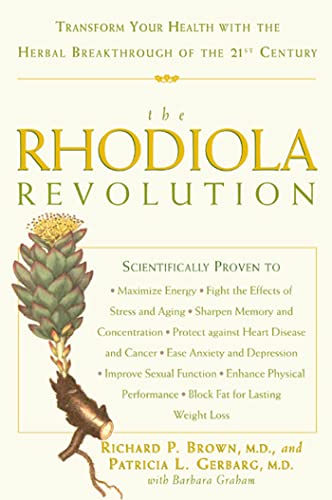
The Rhodiola Revolution: Transform Your Health with the Herbal Breakthrough of the 21st Century: Brown, Richard P., Gerbarg, Patricia L., Graham, Barbara
Previously classified studies from the former Soviet Union reveal the emergence of an herbal superstar, Rhodiola rosea. From two respected physicians comes <strong>an authoritative new book that explo
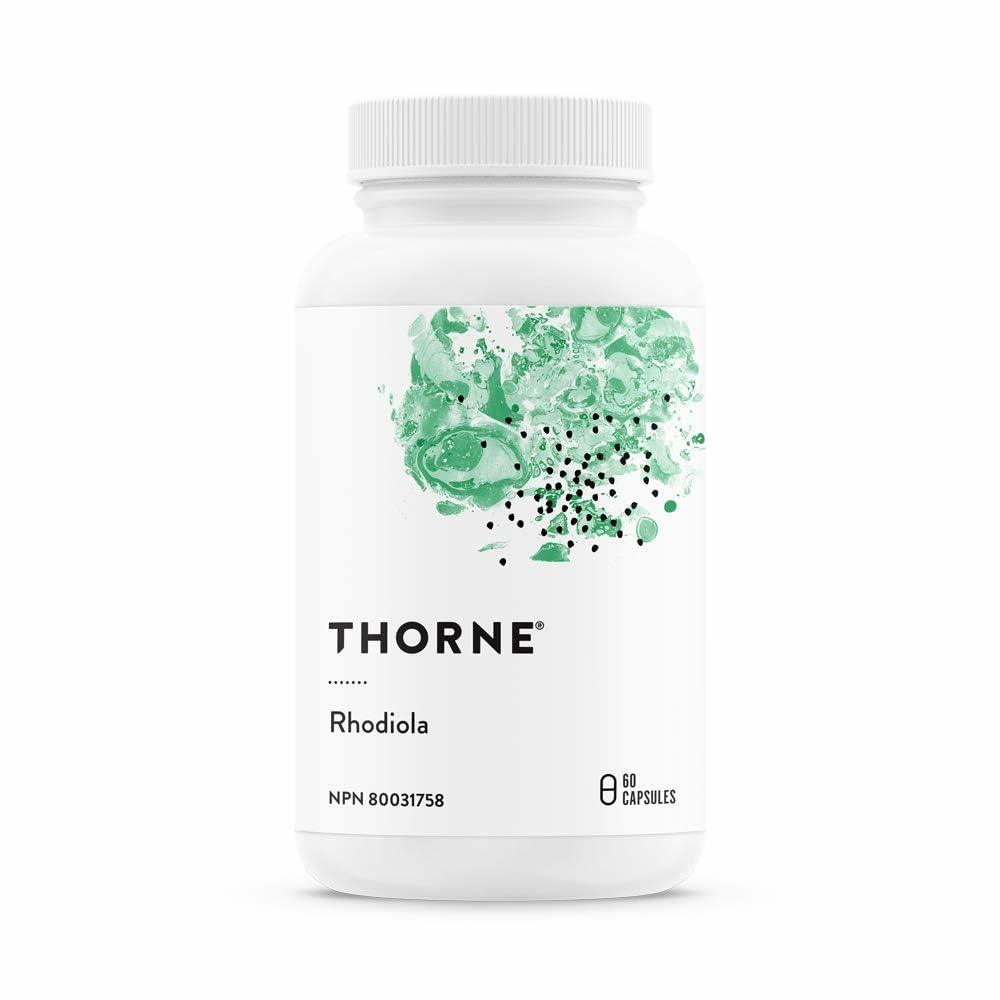
THORNE - Rhodiola - Botanical Supplement for Stress Relief - Enhances Sleep and Mental Focus* - 60 Capsules
Rhodiola Rosea Supplement 500mg, 120 Vegan Capsules (Third Party Test, Gluten Free, 3% Salidrosides, 1% Rosavins Extract) for Performance, Calming, Motivation by Double Wood

NOW FOODS Rhodiola 500MG 3PCT Extract60 VCAP, 60 CT
3% STANDARDIZED EXTRACT: NOW Rhodiola is <strong>standardized to 3% total rosavins and 1% salidroside</strong>
Evidence & Sources
Promising research with growing clinical support from multiple studies
- National Center for Complementary and Integrative Health (NCCIH)
- European Medicines Agency (EMA) Herbal Monograph on Rhodiola rosea
- Phytomedicine
- BMC Complementary Medicine and Therapies
- Frontiers in Pharmacology
- Planta Medica
- Molecules
- Journal of Ethnopharmacology
This content is for informational purposes only and does not constitute medical advice. Always consult a qualified healthcare provider before starting, stopping, or changing any supplement or medication regimen.