

Infertility
Overview
Infertility generally refers to difficulty achieving pregnancy after a sustained period of regular, unprotected intercourse, or an inability to carry a pregnancy to live birth. In clinical practice, it is commonly defined as failure to conceive after 12 months for women under 35, and after 6 months for women 35 and older, reflecting the age-related decline in fertility. Infertility can affect people of all genders and may involve female factors, male factors, combined factors, or remain unexplained despite evaluation. It is a common global health issue with medical, emotional, social, and economic dimensions.
From a public health perspective, infertility is more prevalent than many people realize. The World Health Organization has described infertility as a disease of the male or female reproductive system, and global estimates suggest that a substantial proportion of couples experience infertility at some point during their reproductive years. Causes are diverse and can include ovulatory disorders, diminished ovarian reserve, endometriosis, tubal disease, uterine abnormalities, sperm abnormalities, hormonal conditions, genetic factors, age-related changes, environmental exposures, and certain chronic illnesses. In some cases, no clear cause is identified, leading to a diagnosis of unexplained infertility.
The significance of infertility extends beyond reproduction itself. Research consistently shows that infertility may be associated with significant psychological distress, relationship strain, stigma, and reduced quality of life. Cultural expectations around family building can intensify this burden. At the same time, infertility may sometimes serve as a marker of broader health concerns, such as polycystic ovary syndrome (PCOS), thyroid disease, metabolic dysfunction, sexually transmitted infections affecting the reproductive tract, or testicular and endocrine disorders.
Because infertility has many possible contributors, evaluation is typically multifactorial and may involve assessment of ovulation, ovarian reserve, menstrual history, pelvic anatomy, semen parameters, endocrine function, and relevant medical history. Both conventional and traditional systems of medicine often frame infertility as a whole-person condition influenced by reproductive function, systemic health, stress, sleep, nutrition, and environment. Across models of care, balanced counseling and individualized evaluation are considered important, and consultation with qualified healthcare professionals is appropriate when fertility concerns arise.
Compare Treatment Options
Infertility is not a single disease but a clinical situation in which pregnancy does not occur after a sustained period of trying, or pregnancy does not continue to live birth. In conventional medicine, infertility is often defined as failure to conceive after 12 months of regular unprotected intercourse for women under 35, or after 6 months for women 35 and older. Causes may involve ovulatory dysfunction, diminished ovarian reserve, tubal disease, endometriosis, uterine factors, male-factor issues such as low sperm count or azoospermia, sexual dysfunction, metabolic disease, thyroid problems, or combinations of several contributors. In some couples or individuals, evaluation is labeled unexplained infertility when standard testing does not identify a clear cause. Treatment options vary because infertility is deeply cause-dependent, time-sensitive, and personal. Western care often focuses on diagnostic workup, ovulation support, hormonal management, surgical correction when relevant, and assisted reproductive technologies such as intrauterine insemination (IUI) or in vitro fertilization (IVF). Eastern approaches, including acupuncture, traditional herbal medicine, and mind-body regulation, are often explored to address stress, cycle regularity, pain, sleep, and overall reproductive health. Research suggests some integrative strategies may support symptom management or treatment experience, but evidence quality differs widely by intervention and by the underlying diagnosis. Age, duration of infertility, sperm factors, menstrual patterns, prior pregnancy losses, and urgency around conception all influence which options may fit best.
View treatment comparison (6 options)Medical Perspectives
Two Ways of Seeing Health

Western
scientific · clinical
Western medicine applies science, technology, and clinical experience to treat symptoms through testing, diagnosis, and targeted intervention.

Eastern
traditional · alternative
Eastern medicine focuses on treating the body naturally by applying traditional knowledge practiced for thousands of years, emphasizing balance and whole-person wellness.
Gold Bamboo presents both perspectives side-by-side so you can make informed decisions. We don't advocate for one over the other — your health choices are yours.
Western Medicine Perspective
Western Medicine Perspective
In conventional medicine, infertility is understood as a reproductive disorder with identifiable biological, anatomical, endocrine, genetic, and environmental contributors. Evaluation generally considers both partners, since male-factor infertility accounts for a meaningful share of cases and combined-factor infertility is also common. A standard workup may include menstrual and ovulatory history, hormone testing, ovarian reserve assessment, pelvic imaging, tubal patency testing, uterine evaluation, and semen analysis. Depending on the clinical picture, additional testing may assess thyroid function, prolactin levels, genetic factors, infectious history, or underlying systemic disease.
Common female-associated causes include ovulatory dysfunction (such as in PCOS), endometriosis, tubal obstruction, uterine cavity abnormalities, and age-related decline in egg quantity and quality. Male-associated causes may include low sperm count, poor motility, abnormal morphology, varicocele, hormonal disorders, obstruction, genetic abnormalities, or testicular injury. Lifestyle and environmental factors—including smoking, heavy alcohol use, obesity, undernutrition, heat exposure, some medications, and certain occupational toxins—are also studied as fertility influences, although their impact varies across individuals.
Conventional management depends on the underlying cause and may range from expectant monitoring to treatment of hormonal disorders, surgical correction of structural issues, ovulation induction, intrauterine insemination (IUI), or assisted reproductive technologies such as in vitro fertilization (IVF). Research indicates that outcomes depend heavily on age, diagnosis, sperm factors, embryo quality, and treatment access. Western medicine also recognizes the importance of mental health support during fertility evaluation and treatment, as infertility care can be emotionally demanding. Because infertility may signal broader health conditions, clinicians often view it not only as a reproductive issue but also as a window into endocrine, metabolic, and overall health.
Eastern & Traditional Perspective
Eastern and Traditional Medicine Perspective
In Traditional Chinese Medicine (TCM), infertility has historically been interpreted through patterns such as Kidney deficiency, Liver qi stagnation, Blood deficiency, phlegm-damp accumulation, or blood stasis affecting the uterus and reproductive channels. Rather than focusing only on a single organ or diagnosis, TCM traditionally evaluates menstrual regularity, cycle characteristics, emotional stress, digestion, sleep, constitutional strength, and tongue/pulse patterns. Traditional approaches may aim to support the body's internal balance, regulate menstruation, and harmonize systemic patterns believed to affect fertility.
In Ayurveda, infertility may be viewed through the lens of imbalance in the doshas, disturbances in reproductive tissue (shukra/artava dhatu), impaired digestion and metabolism (agni), toxin accumulation (ama), and stress-related disruption of systemic balance. Classical frameworks often emphasize the interdependence of nutrition, mental state, reproductive vitality, and overall tissue nourishment. Naturopathic and integrative traditions similarly tend to frame infertility as a multifactorial condition influenced by hormonal balance, inflammation, metabolic health, stress physiology, and environmental exposures.
Evidence for traditional and integrative approaches is mixed and often methodologically limited. Acupuncture, herbal medicine, mind-body therapies, and lifestyle-based traditional practices have been studied for infertility and fertility-treatment support, but findings are inconsistent across trials and reviews. Some studies suggest possible benefits for stress reduction, symptom management, or selected reproductive outcomes, while others show uncertain or no clear advantage when rigorous controls are used. For this reason, traditional approaches are often discussed as complementary frameworks rather than stand-alone solutions, and safety is an important consideration—especially with herbal products that may interact with fertility medications or may not be appropriate in pregnancy. Coordination with licensed practitioners and reproductive specialists is commonly emphasized in integrative care models.
Related Topics
Endometriosis
Endometriosis — condition topic in the Gold Bamboo health ontology.
Hypothyroidism
Hypothyroidism — condition topic in the Gold Bamboo health ontology.
Acupuncture
Acupuncture — modality topic in the Gold Bamboo health ontology.
How They Relate
Endometriosis & Infertility
Endometriosis is an estrogen-dependent, inflammatory condition in which endometrium-like tissue grows outside the uterus, affecting roughly 10% of reproductive-age women. Infertility, defined as fa...
Hypothyroidism & Infertility
Hypothyroidism—underactive thyroid function—can meaningfully influence fertility in women and men. Thyroid hormones (T4/T3), regulated by TSH from the pituitary, help coordinate the hypothalamic‑pi...
Acupuncture & Infertility
This page explores acupuncture for fertility support—how the modality may relate to reproductive outcomes and how to integrate it thoughtfully with medical care. Scope includes women with irregular...
Polycystic Ovary Syndrome (PCOS) & Infertility
Polycystic ovary syndrome (PCOS) is a common endocrine condition affecting roughly 8–13% of reproductive-aged people with ovaries. It is the leading identifiable cause of anovulatory infertility. U...
Supplements & Products
Recommended Products
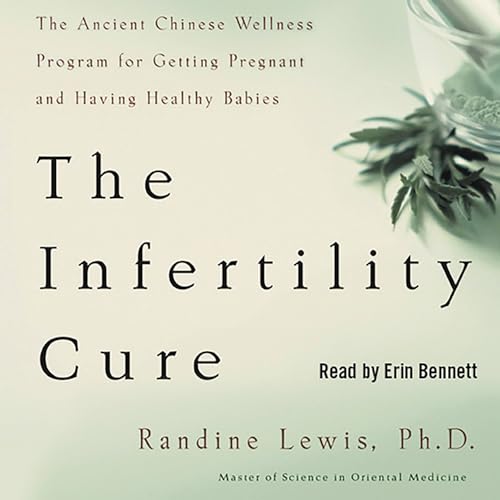
The Infertility Cure: The Ancient Chinese Wellness Program for Getting Pregnant and Having Healthy Babies: Lewis PhD, Randine
Randine A. Lewis, <strong>author of The Infertility Cure (2004), The Way of the Fertile Soul (2007), The Spirit of the Blood (2022), and Birthing The Tao (2023),</strong> has become a leading expert i

THORNE - Basic Prenatal - Well-Researched Folate Multi for Pregnant and Nursing Women Includes 18 Vitamins and Minerals, Plus Choline - Gluten, Dairy & Soy-Free - 90 Capsules - 30 Servings
Three Capsules Contain: Vitamin A (450 mcg from Beta Carotene and 600 mcg as Palmitate) 1.05 mg, Vitamin C (as Ascorbic Acid) 150 mg, Vitamin D (as Vitamin D3) (1,000 IU) 25 mcg, Vitamin E (as d-Alpha

Clearblue Advanced Digital Ovulation Test Kit, 32 Count
DETECTS FERTILITY HORMONES: the ... Digital Ovulation Tests feature <strong>an Adaptive Algorithm that adjusts to your unique LH levels, designed to detect LOW LH surges (even below 25 mIU/ml)</strong
Evidence & Sources
Promising research with growing clinical support from multiple studies
- World Health Organization (WHO)
- American Society for Reproductive Medicine (ASRM)
- American College of Obstetricians and Gynecologists (ACOG)
- National Institute for Health and Care Excellence (NICE)
- National Center for Complementary and Integrative Health (NCCIH)
- Fertility and Sterility
- Human Reproduction
- Cochrane Database of Systematic Reviews
This content is for informational purposes only and does not constitute medical advice. Always consult a qualified healthcare provider before starting, stopping, or changing any supplement or medication regimen.