Yoga vs Tai Chi: Comparative Benefits, Evidence, and How to Choose
Trying to choose between yoga vs tai chi? Compare benefits, evidence, safety, and how to pick or combine them for mood, balance, pain, and sleep.
·12 min read
This content is for informational purposes only and does not constitute medical advice. Always consult a qualified healthcare provider before starting, stopping, or changing any supplement or medication regimen.
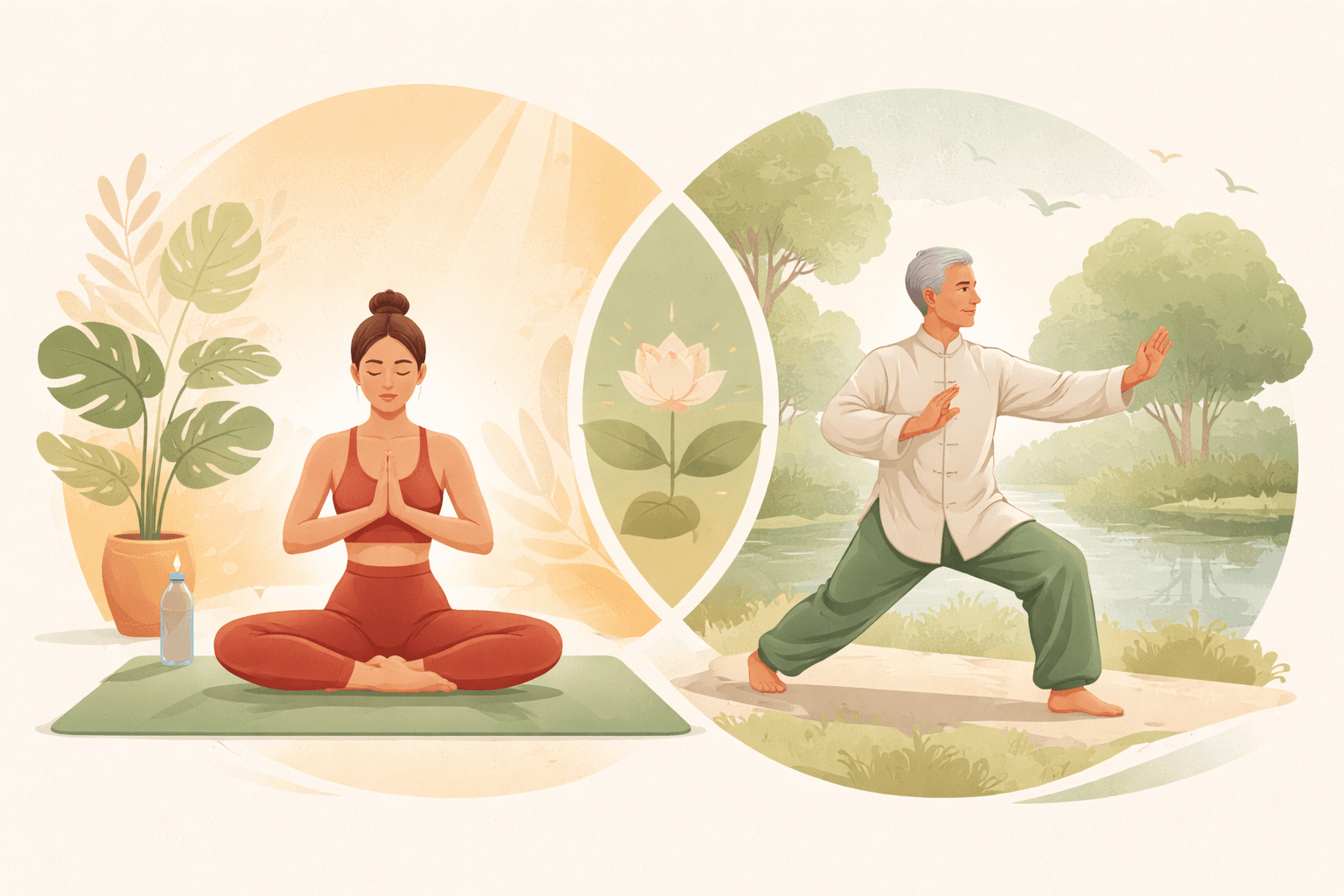
If you’re weighing yoga vs tai chi, you’re likely asking: Which practice better fits my goals—flexibility and strength, balance and fall prevention, or stress relief and sleep? Research suggests both are effective mind–body exercises with overlapping benefits and distinct strengths. Below, we compare yoga and tai chi side by side—origins, evidence for physical and mental outcomes, safety, and practical tips for choosing or combining them.
What Are Yoga and Tai Chi?
Yoga and tai chi are both mind–body traditions that integrate movement, breath, and attention—yet they arose in different cultural and philosophical contexts and look and feel quite different in practice.
Yoga (India): Rooted in ancient Indian philosophy, yoga’s broader goal is union of body–mind–spirit. Modern yoga emphasizes postures (asanas), breathing (pranayama), and often meditation. Common styles include Hatha (foundational), Vinyasa (flowing, often moderate intensity), Iyengar (alignment and props), Yin/Restorative (long, gentle holds), and Kundalini (breath and mantra). Movements often alternate between static holds and dynamic transitions.
Tai chi (China): Emerging from Chinese martial traditions and influenced by Daoist concepts of yin–yang and qi (vital energy), tai chi is a sequence of slow, continuous movements coordinated with relaxed, natural breathing and focused attention. Styles include Yang (most commonly taught for health), Chen (spiral power, some explosive elements), and Wu. Qigong, a related practice, often includes simpler, repetitive movements for cultivating qi.
Philosophical and movement differences that influence outcomes:
Movement quality: Yoga often uses isometric holds leading to notable flexibility and strength gains. Tai chi is primarily a continuous, low-impact, weight-shifting flow that excels in balance, coordination, and fall prevention.
Breath and nervous system: Both slow breathing and attention increase parasympathetic (rest-and-digest) tone; yoga sometimes includes specific breath techniques (e.g., ujjayi), while tai chi typically emphasizes smooth, diaphragmatic breathing without breath holds.
Cognitive load: Tai chi continuously challenges proprioception, dual-tasking, and sequencing—factors relevant for cognitive and balance benefits. Yoga includes mindful attention to alignment, interoception, and sometimes meditation.
For cultural context around tai chi’s roots in Chinese medicine, see What Is Traditional Chinese Medicine? An Evidence-Based Overview (/articles/what-is-traditional-chinese-medicine-evidence-based-overview).
Yoga vs Tai Chi: Physical Benefits
Flexibility and Mobility
What the Research Says
Yoga: Multiple randomized controlled trials (RCTs) and meta-analyses report moderate-to-large improvements in joint range of motion (e.g., hamstrings, shoulder) compared with control or light activity. Evidence level: strong.
Tai chi: Studies indicate small-to-moderate improvements in lower-limb and trunk flexibility, especially in older adults, though gains are generally smaller than with yoga. Evidence level: moderate.
Why it matters: Yoga’s longer-held stretches and end-range work target connective tissue adaptability. Tai chi’s gentle, repeated ranges of motion maintain mobility with very low joint strain.
Strength
What the Research Says
Yoga: RCTs show moderate increases in upper- and lower-body strength and muscular endurance, particularly in Hatha/Vinyasa styles that include weight-bearing postures (e.g., planks, chair pose). Evidence level: moderate to strong.
Tai chi: Improves lower-extremity strength (e.g., knee extensors, ankle stabilizers) through repeated semi-squat positions and slow transitions; effect sizes are typically small-to-moderate. Evidence level: moderate.
Mechanisms: Yoga’s isometric holds stimulate muscular adaptations; tai chi’s continuous, low-load repetitions promote neuromuscular endurance and joint control.
Balance, Posture, and Fall Prevention
What the Research Says
Tai chi: Multiple meta-analyses and public health recommendations indicate tai chi reduces fall risk in older adults by roughly 20–30% and improves standardized balance measures (e.g., single-leg stance, sway). Evidence level: strong.
Yoga: Improves balance and postural control (e.g., timed single-leg stance) with small-to-moderate effects; fall-prevention evidence exists but is less consistent than for tai chi. Evidence level: moderate.
Why it matters: Tai chi’s constant weight shifting, ankle–hip strategies, and proprioceptive challenge make it particularly effective for dynamic balance.
Aerobic/Cardiovascular Effects and Metabolic Health
What the Research Says
Tai chi: Typically light-to-moderate intensity; studies indicate small improvements in VO2 peak and modest reductions in resting blood pressure and fasting glucose in deconditioned or older adults. Evidence level: moderate.
Yoga: Intensity varies by style. Vinyasa/Power can reach moderate intensity; Hatha and Restorative are lighter. Meta-analyses suggest small improvements in VO2 and favorable changes in resting blood pressure and heart rate—often comparable to other low-to-moderate activities. Evidence level: moderate.
Practical point: For targeted aerobic conditioning, supplement either practice with brisk walking, cycling, or swimming.
Chronic Pain and Joint Health
What the Research Says
Yoga: Strong evidence supports yoga for chronic low back pain (small-to-moderate reductions in pain and disability versus usual care). Evidence level: strong. See Chronic Pain and Yoga (/relates/chronic-pain-and-yoga).
Tai chi: Moderate evidence supports tai chi for knee osteoarthritis (pain and function), fibromyalgia (global well-being), and chronic neck pain (small-to-moderate effects). Evidence level: moderate.
Mechanisms: Improved motor control, gentle loading of tissues, anti-inflammatory signaling via downregulated stress pathways, and enhanced body awareness may all contribute.
Mental and Cognitive Benefits
Stress Reduction, Anxiety, and Depressive Symptoms
What the Research Says
Both yoga and tai chi: Meta-analyses show small-to-moderate improvements in perceived stress, anxiety, and depressive symptoms compared with waitlist/usual care. In some trials, yoga with breathwork/meditation elements yields larger mood benefits; tai chi shows notable effects in older adults and those with chronic conditions. Evidence level: moderate.
Mechanisms: Slow diaphragmatic breathing increases vagal tone and heart rate variability (HRV); mindful attention reduces rumination; regular practice can blunt hypothalamic–pituitary–adrenal (HPA) axis overactivation and lower cortisol.
Sleep Quality
What the Research Says
Yoga: Studies indicate small-to-moderate improvements in subjective sleep quality and sleep efficiency, especially in insomnia and midlife adults. Evidence level: moderate.
Tai chi: RCTs show small-to-moderate improvements in sleep quality among older adults and those with chronic pain. Evidence level: moderate.
Practical point: Evening sessions emphasizing gentle sequences and slow breathwork are commonly reported as most sleep-supportive.
Cognitive Function and Brain Health
What the Research Says
Tai chi: Emerging to moderate evidence for improvements in executive function, attention, and global cognition in older adults, including those with mild cognitive impairment. Evidence level: moderate.
Yoga: Emerging evidence from small RCTs and imaging studies suggests improvements in working memory, processing speed, and hippocampal volume among experienced practitioners. Evidence level: emerging to moderate.
Mechanisms: Coordinated movement plus attention challenges neuroplasticity; breath-centered practices may enhance prefrontal regulation and GABAergic signaling; both may improve cerebral blood flow.
For a broader look at mind–body relaxational practices, see Eastern Wellness Practices for Relaxation: An Evidence‑Based Guide to Yoga, Meditation, Acupuncture, Ayurveda, Tai Chi & Qigong (/articles/eastern-wellness-practices-for-relaxation).
What the Research Says: Evidence Snapshot
Flexibility: Yoga strong; tai chi moderate
Strength: Yoga moderate–strong; tai chi moderate (lower body)
Balance/falls: Tai chi strong; yoga moderate
Cardio/metabolic: Both moderate (light–moderate intensity); best when combined with aerobic exercise
Chronic pain: Yoga strong for low back pain; tai chi moderate for knee osteoarthritis, fibromyalgia
Stress/anxiety/depression: Both moderate
Sleep: Both moderate
Cognition (older adults): Tai chi moderate; yoga emerging–moderate
Overall evidence level for this comparison: moderate.
Safety, Contraindications, and Adaptations
General safety
Injury rates in observational studies are low for both practices. Tai chi tends to be very low (roughly 0.05–0.6 injuries per 1,000 hours) and yoga low (about 0.8–2 per 1,000 hours), though estimates vary by study and style. Most issues are minor strains/sprains.
Avoid pushing into pain; use props or supports as needed; communicate existing conditions to the instructor.
Typical injury profiles
Yoga: Overuse or alignment-related strains in wrists, shoulders, hamstrings, or low back—often from deep forward bends, inversions, or repetitive chaturangas. Mitigation: props, gradual load, proper technique, focus on spine-neutral variations.
Tai chi: Occasional knee or ankle discomfort due to prolonged semi-squat stances or weight shifts. Mitigation: reduce stance depth, maintain knee alignment over toes, use supportive footwear.
Adaptations by population
Older adults: Tai chi is especially well-suited for balance and fall prevention; short-form Yang styles and beginner classes are ideal. Gentle yoga (chair, restorative, Iyengar with props) can improve flexibility and posture; focus on stable transitions.
Pregnant people: Prenatal yoga is commonly recommended with modifications (avoid hot yoga, deep twists/compressions, prolonged supine positions after the first trimester, and strong breath retentions). Tai chi is generally safe; emphasize smaller ranges and stable stances. Always consult a prenatal-trained instructor and healthcare provider.
Chronic conditions:
Hypertension or cardiovascular disease: Favor gentle flows; avoid intense breath retentions or straining. Tai chi’s low intensity can be a good starting point.
Knee osteoarthritis: Both practices can help; in tai chi, shallow the stance; in yoga, avoid deep knee flexion beyond comfort and use chair support.
Low back pain: Evidence supports yoga with spine-neutral emphasis, hip mobility work, and gradual core strengthening. See Chronic Pain and Yoga (/relates/chronic-pain-and-yoga).
Beginners: Start with 2–3 sessions/week, 20–45 minutes, for 8–12 weeks. Prioritize instruction that emphasizes safety, alignment, and appropriate intensity.
How to Choose: Practical Decision Guide
Key decision factors
Primary goal
Flexibility/strength/body recomposition: Lean toward yoga (Hatha/Vinyasa) with progressive load using body weight and props.
Balance/fall prevention or gentle reconditioning: Tai chi first-line; consider adding qigong for simpler patterns.
Stress relief and sleep: Either works; choose the format you’re most likely to practice consistently. Restorative/Yin yoga or evening tai chi can be especially calming.
Time and access
Yoga classes are widely available in studios and online. Tai chi classes are common at community centers, senior centers, and some martial arts schools; quality varies by instructor.
Instructor considerations
Yoga: Look for teachers with RYT-200/500 and, if relevant, prenatal, therapeutic, or senior-specific training.
Tai chi: Seek instructors experienced in health-focused Yang style or medical tai chi/qigong; ask about teaching older adults or those with joint issues.
Expected timelines
Flexibility: 4–8 weeks (yoga), 8–12 weeks (tai chi modest gains)
Balance: 8–12 weeks (notable with tai chi)
Mood/stress: Acute benefits after a single session; more durable change in 6–8 weeks
Pain/function: 6–12 weeks, with ongoing gains thereafter
When to choose one over the other
Choose yoga if you want: noticeable flexibility and strength improvements, a workout feel, and options ranging from gentle to athletic.
Choose tai chi if you want: superior balance training, very low-impact movement, and a meditative flow that feels accessible at any age.
Combining both for complementary effects
Many people alternate tai chi (balance, calm, coordination) and yoga (mobility, strength, breathwork). A sample week:
Mon: Tai chi 30–40 min (balance focus)
Wed: Hatha or Vinyasa yoga 45–60 min (mobility/strength)
Fri: Gentle tai chi or qigong 20–30 min (relaxation)
Sun: Restorative or Yin yoga 30–45 min (recovery and sleep)
Integrative mindset
Consider blending these practices with evidence-based medical care and aerobic conditioning. For ideas, see Combining Eastern and Western Health Practices: An Evidence‑Based Guide to Integrative Care (/articles/combining-eastern-and-western-health-practices).
Helpful Tools and Products (Optional)
Many people find a non-slip yoga mat Premium Grip Yoga Mat improves stability and confidence in standing poses.
Lightweight tai chi shoes Flexible Tai Chi Shoes can enhance traction while allowing natural foot mechanics.
For stress tracking, some use an HRV biofeedback device Wearable HRV Trainer to support paced breathing alongside practice. These tools can aid consistency, but individual responses vary.
If your priority is balance and fall prevention, tai chi has the strongest evidence. If you want flexibility and functional strength, yoga has the edge.
Both support mood, stress, and sleep with moderate evidence; choose the style and teacher you’ll stick with.
Consistency beats intensity. Aim for 2–3 sessions per week for 8–12 weeks before judging results.
Adapt movements to your body. Use props, reduce stance depth, and avoid pain; quality instruction matters.
You don’t have to pick just one—many people benefit from combining both in a weekly routine.
For more on philosophical differences and when to use each medical perspective, see Eastern vs Western Medicine: Key Differences in Philosophy, Diagnosis, Evidence, and When to Use Each (/articles/eastern-vs-western-medicine-approaches).
Disclaimer
This information is for educational purposes and should not replace professional medical advice. Consult a qualified healthcare provider before starting any new exercise program, especially if you have medical conditions, are pregnant, or are recovering from injury.
This content is for informational purposes only and does not constitute medical advice. Always consult a qualified healthcare provider before starting, stopping, or changing any supplement or medication regimen.
Tai Chi. Taiji, Tai Ji, Tai Qi. ## Overview
**Tai Chi** is a traditional Chinese mind-body practice that combines **slow, flowing movements, postural alignment, breath awareness, and focused attention**. Originating as an internal martial art, it has evolved into a widely practiced health modality used for **movement training, st
Eastern Wellness Practices for Relaxation: An Evidence‑Based Guide to Yoga, Meditation, Acupuncture, Ayurveda, Tai Chi & Qigong. If stress is running the show, you may be wondering which eastern wellness practices for relaxation are worth your time. Yoga, meditation, acupuncture, Ayurveda, tai chi, and qigong offer time‑tested ways to calm the nervous system. Research suggests many of these practices can reduce perceived stre
Eastern Approaches to Mental Wellness: TCM, Ayurveda, Mind‑Body Practices, and Evidence‑Based Strategies. If you’re exploring eastern approaches to mental wellness, you might be wondering how traditions like Traditional Chinese Medicine (TCM), Ayurveda, mindfulness, qigong, and yoga can help with stress, anxiety, mood, and clarity—especially alongside therapy or medication. Research suggests many of the
Chronic Pain and Yoga. Yoga is a mind–body practice that blends physical postures, breath control, and focused attention. Chronic pain is a multidimensional condition involving biomechanical strain, sensitized pain pathways, and psychological stress. Understanding how yoga interfaces with these dimensions can help people
Yoga Exercises for Mental Clarity: A Practical Guide to Poses, Breathwork, and Short Routines. If you’re feeling scattered, forgetful, or stuck in “mental fog,” yoga exercises for mental clarity can offer practical, evidence‑informed tools to steady attention, lift alertness, and reduce rumination. Mental clarity here means a felt sense of focus, ease in decision‑making, and the ability to sh
Yoga Therapy. Therapeutic Yoga, Yoga Healing, Yoga as Therapy. ## Overview
**Yoga therapy** is a therapeutic application of yoga practices—such as **postures (asana), breathing techniques (pranayama), meditation, relaxation, and lifestyle/philosophical frameworks**—within an individualized health context. Unlike general yoga classes, yoga therapy is typically