Psychobiotics and the Vagus Nerve: How Specific Strains May Ease Anxiety
A focused look at how psychobiotics may influence anxiety via the vagus nerve, highlighting strain-specific human evidence and the role of fermented foods as proto‑psychobiotics.
·7 min read
This content is for informational purposes only and does not constitute medical advice. Always consult a qualified healthcare provider before starting, stopping, or changing any supplement or medication regimen.
Psychobiotics and the Vagus Nerve: How Specific Strains May Ease Anxiety
Summary: Research suggests certain probiotic strains—often called psychobiotics—may influence anxiety and mood through the gut–brain axis, with the vagus nerve acting as a key communication pathway. Evidence is strain-specific, modest in size, and strongest in targeted clinical contexts. Traditional fermented foods may contribute to mental well-being as proto-psychobiotics, though modern trials remain limited.
What Are Psychobiotics?
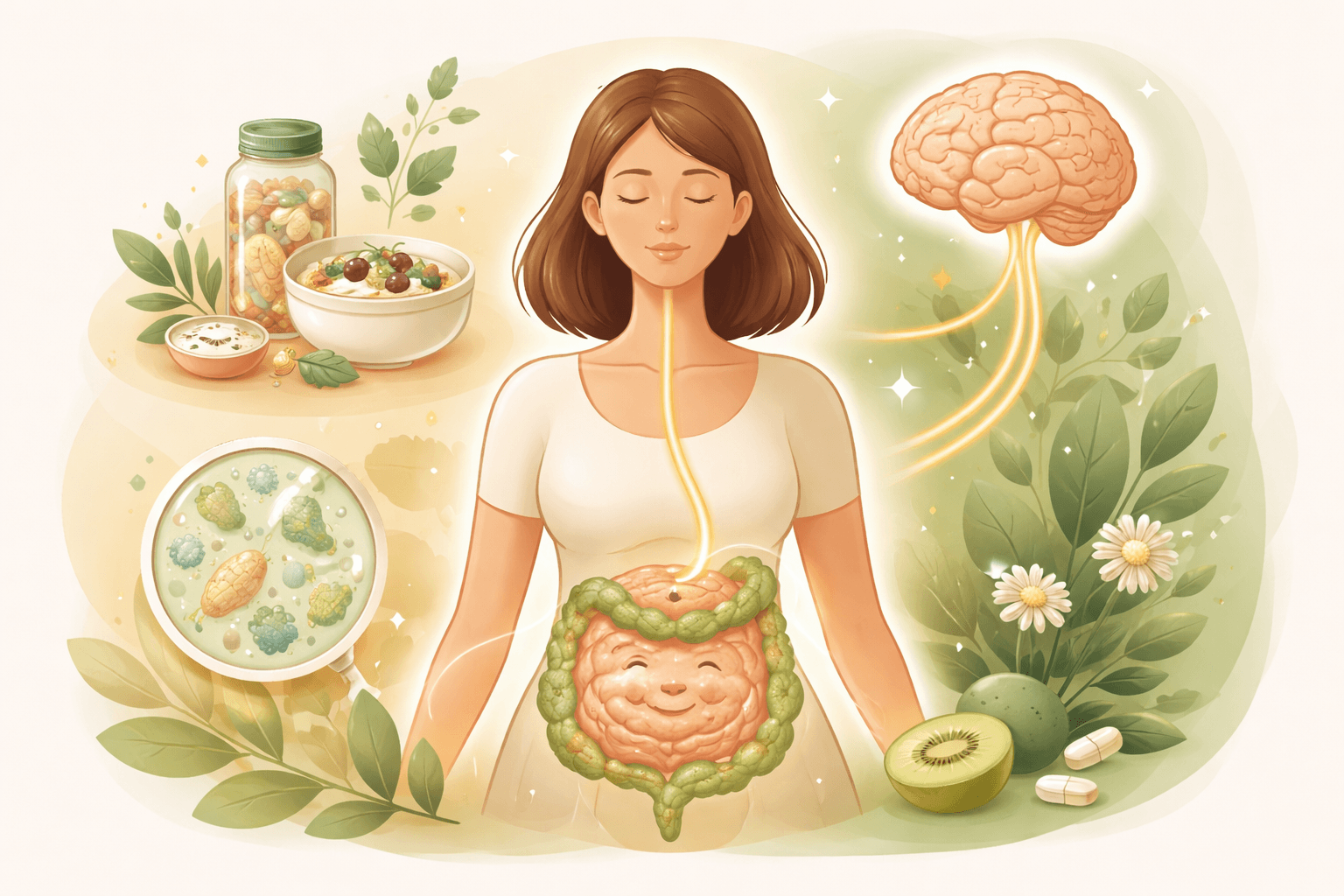
Psychobiotics are probiotic microorganisms that may support mental health via the gut–brain axis. They are typically strains of Lactobacillus and Bifidobacterium that can influence neurotransmitter signaling, immune activity, and stress pathways. Research suggests some strains may reduce symptoms of anxiety and depression or improve stress resilience in specific populations [Evidence: moderate].
The Vagus Nerve: A Gut–Brain Superhighway
The vagus nerve is a major bidirectional conduit connecting the gastrointestinal tract and the brain. It relays sensory information from the gut to brain regions involved in mood and stress responses and modulates anti-inflammatory reflexes. Preclinical and translational research indicates the vagus nerve is a plausible pathway through which gut microbes may influence emotional behavior [Evidence: moderate]. Reviews highlight that microbial metabolites, cell wall components, and neurotransmitter-like molecules can activate vagal pathways, altering brain circuits relevant to anxiety and mood (Breit et al., 2018; Bonaz et al., 2018) [Evidence: moderate].
Strain-Specific Signals: What Human and Animal Studies Show
Lactobacillus rhamnosus (JB-1) and GABA signaling: In a landmark mouse study, L. rhamnosus JB-1 altered expression of GABA receptors in the brain and reduced anxiety- and depression-like behavior. Notably, severing the vagus nerve abolished these effects, suggesting vagal mediation (Bravo et al., 2011) [Evidence: emerging, animal data].
Bifidobacterium longum NCC3001 in IBS: In a randomized controlled trial (RCT) involving people with irritable bowel syndrome, B. longum NCC3001 improved depression scores and altered brain activity in emotion-processing regions compared with placebo (Pinto-Sanchez et al., 2017, Gastroenterology) [Evidence: moderate, clinical population]. The authors proposed vagus-mediated signaling as one potential mechanism, although direct causality via the vagus was not tested [Evidence: emerging, mechanism].
Bifidobacterium longum 1714 and stress: A double-blind, placebo-controlled trial in healthy volunteers reported reduced daily perceived stress and changes in brain activity patterns associated with stress processing after B. longum 1714 (Allen et al., 2016) [Evidence: moderate in healthy adults; emerging for mechanism].
Lactobacillus helveticus R0052 + Bifidobacterium longum R0175 (combination): Multiple RCTs in healthy adults found this combination reduced scores of psychological distress and improved some mood-related measures versus placebo (Messaoudi et al., 2011, Br J Nutr) [Evidence: moderate]. The mechanism has been hypothesized to involve immune and vagal pathways, but remains to be fully clarified [Evidence: emerging, mechanism].
Lactobacillus plantarum 299v and mood: Some trials in people with gastrointestinal complaints suggest modest improvements in mood-related outcomes alongside symptom relief, but results are inconsistent and typically secondary endpoints [Evidence: emerging].
Meta-analyses: Small, Strain-Specific Effects
Systematic reviews and meta-analyses generally report small but statistically significant benefits of probiotics on depressive symptoms, with more mixed findings for anxiety:
Probiotics for depressive symptoms: A meta-analysis found probiotics modestly improved depressive symptoms, particularly in individuals with clinical depression or significant depressive scores (Ng et al., 2018, J Affect Disord) [Evidence: moderate].
Probiotics and mood in clinical samples: Another review reported reductions in depressive symptoms, with heterogeneity driven by strain, population, and study quality (Wallace & Milev, 2017, Ann Gen Psychiatry) [Evidence: moderate].
Anxiety outcomes: Evidence for anxiety is more variable, with some analyses showing benefit primarily when psychobiotics are used adjunctively or in populations with coexisting gut symptoms [Evidence: emerging].
Overall, research suggests psychobiotic benefits are not universal; they appear to be strain-specific and context-dependent, and effects are typically small to moderate compared with standard care [Evidence: moderate].
How Might Psychobiotics Engage the Vagus Nerve?
Metabolites and neurotransmitters: Some Lactobacillus and Bifidobacterium strains produce gamma-aminobutyric acid (GABA), short-chain fatty acids, and tryptophan metabolites that can influence vagal afferents or downstream neuroendocrine pathways [Evidence: emerging].
Barrier and immune signaling: By supporting gut barrier integrity and modulating cytokines, psychobiotics may reduce peripheral inflammation that otherwise sensitizes stress circuits. The vagus nerve modulates an anti-inflammatory reflex, potentially linking gut immune tone to mood [Evidence: moderate].
Enteroendocrine interactions: Microbial signals can influence gut hormones (e.g., CCK, GLP-1), which interact with vagal pathways to affect brain regions involved in emotion and satiety [Evidence: emerging].
Fermented Foods and Mood: Proto‑Psychobiotics
Traditional fermented foods—such as kimchi, kefir, miso, natto, yogurt, and certain pickled vegetables—deliver live microbes and microbial metabolites that may help shape the gut ecosystem. While strains and doses vary widely, these foods have been proposed as "proto-psychobiotics" in traditional dietary patterns.
Observational links: In a study of young adults, higher consumption of fermented foods was associated with fewer social anxiety symptoms, with stronger associations in those with higher neuroticism (Hilimire et al., 2015) [Evidence: emerging, observational].
Randomized diet trial: A 10-week RCT comparing a high-fermented-food diet versus a high-fiber diet found the fermented-food group had increased microbiome diversity and reduced inflammatory markers (Wastyk et al., 2021, Cell). Mood was not a primary endpoint, but reduced inflammation is often linked to improved mood in other research [Evidence: emerging for mood; moderate for immune effects].
Traditional perspectives: In East Asian traditions, fermented staples like kimchi and miso have long been valued for supporting "digestive harmony" and vitality; kefir and cultured milks in Eastern Europe and the Middle East were traditionally used to "fortify" and "calm." These practices anticipated modern psychobiotic concepts by leveraging live cultures and fermentation-derived bioactives [Evidence: traditional].
Practical Takeaways (No Medical Advice)
Focus on named strains: When considering psychobiotics, research suggests benefits are tied to specific strains with human data—examples include B. longum NCC3001 (IBS-related depression), B. longum 1714 (stress in healthy adults), and the combination L. helveticus R0052 + B. longum R0175 (psychological distress) [Evidence: moderate]. Product labels should specify strain identifiers.
Consider the gut–brain context: Individuals with coexisting gut symptoms (e.g., IBS) may experience more pronounced mood benefits in some trials, potentially reflecting stronger gut–brain interactions [Evidence: moderate].
Food-first options: Incorporating a variety of safe fermented foods (e.g., unsweetened yogurt, kefir, kimchi, miso soup) may help enrich the gut ecosystem as part of a balanced diet, though mental health effects are not guaranteed and can vary by product and person [Evidence: emerging].
Mechanism is evolving: The vagus nerve remains a leading candidate pathway, supported by animal studies and human neuroimaging correlates, but direct causal evidence in humans is still developing [Evidence: emerging].
Bottom Line
Psychobiotics—especially select Lactobacillus and Bifidobacterium strains—may modestly support anxiety and mood via the gut–brain axis, with the vagus nerve likely playing a key role. Human RCTs show small, strain-specific benefits, particularly in targeted groups such as individuals with IBS or elevated stress. Traditional fermented foods offer a culturally rooted, food-first way to engage the microbiome as proto-psychobiotics, though rigorous mood outcomes remain limited. Research is promising but not definitive; strain specificity, individual gut context, and comprehensive lifestyle and clinical care remain essential.
Key References
Bravo JA et al. Ingestion of Lactobacillus strain regulates emotional behavior and central GABA receptor expression via the vagus nerve in mice. PNAS. 2011.
Pinto-Sanchez MI et al. Probiotic Bifidobacterium longum NCC3001 reduces depression scores and alters brain activity in IBS. Gastroenterology. 2017.
Allen AP et al. Bifidobacterium longum 1714 modulates stress and brain activity in healthy volunteers. Translational Psychiatry. 2016.
Messaoudi M et al. Assessment of a probiotic mixture on psychological distress. Br J Nutr. 2011.
Ng QX et al. A meta-analysis of probiotics to alleviate depressive symptoms. J Affect Disord. 2018.
Wallace CJK, Milev R. The effects of probiotics on depressive symptoms: systematic review and meta-analysis. Ann Gen Psychiatry. 2017.
Breit S et al. Vagus nerve as a modulator of the microbiome–gut–brain axis. Front Neurosci. 2018.
Bonaz B, Bazin T, Pellissier S. The vagus nerve at the interface of the microbiota–brain–gut axis. Front Psychiatry. 2018.
Hilimire MR et al. Fermented foods, neuroticism, and social anxiety. Psychiatry Res. 2015.
Wastyk HC et al. Gut-microbiota–targeted diets modulate human immune status. Cell. 2021.
This content is for informational purposes only and does not constitute medical advice. Always consult a qualified healthcare provider before starting, stopping, or changing any supplement or medication regimen.
Introduction
Psychobiotics are living microorganisms that may influence mood, stress, and cognitive function through the gut–brain axis. Interest has surged as research links certain Lactobacillus and
[Psychobiotics](/articles/psychobiotics-gut-brain-axis-mental-health) are [probiotics](/supplements/probiotics) researched for their potential to influence mood and stress via the gut–brain axis. Amon
IBS and anxiety frequently travel together through a shared gut–brain axis. IBS is a disorder of gut–brain interaction defined by recurrent abdominal pain with altered bowel habits, while anxiety enco
Herbal Treatments for Anxiety Relief: Evidence-Based Herbs, Dosage, and Safety. Feeling keyed up, tense, or stuck in worry—and wondering whether herbal treatments for anxiety relief can help? Research suggests some plant-based options may ease mild to moderate anxiety symptoms, especially when combined with lifestyle strategies and therapy. This guide reviews what the science s
Introduction
Gamma-aminobutyric acid (GABA) is the brain’s primary inhibitory neurotransmitter—the chemical signal that helps quiet overactive neural circuits. Because anxious states are often linked
Naturopathic Remedies for Anxiety: Evidence‑Based Herbs, Supplements, Lifestyle Strategies & When to See a Naturopath. If you’re exploring naturopathic remedies for anxiety, you’re likely looking for options that address root causes, feel gentler than medication, and still have evidence behind them. This guide brings together research‑informed herbs, supplements, lifestyle strategies, and mind–body tools from both w