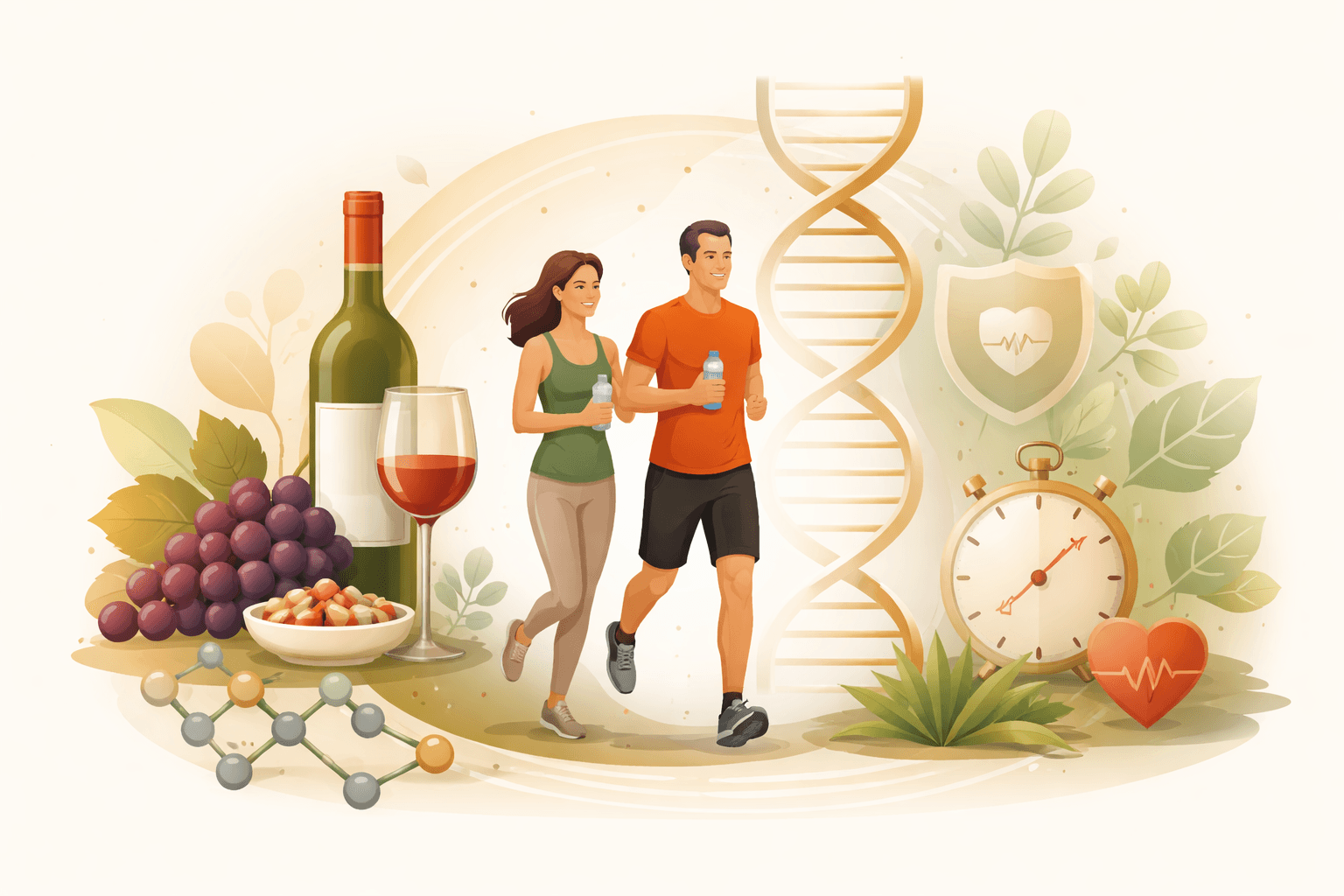
Resveratrol burst onto the longevity scene from an unexpected place: red wine. Early lab studies suggested this grape-derived polyphenol could switch on cellular longevity pathways called sirtuins, potentially explaining the so‑called French Paradox—relatively low heart disease rates despite diets rich in saturated fat. Two decades later, the story is far more complex. This article examines a single question—does resveratrol activate sirtuins in humans?—and where the research stands today.
What are sirtuins—and why do they matter?
- Sirtuins (SIRT1–SIRT7) are enzymes that help cells respond to stress by adjusting metabolism, DNA repair, and inflammation. Many are NAD+-dependent, linking them to energy and aging processes. Research suggests boosting sirtuin activity may support healthy aging in animal and cellular models [Evidence: moderate]. Reviews in Nature Reviews Molecular Cell Biology and Cell Metabolism describe roles for SIRT1 in metabolic regulation, mitochondrial biogenesis, and genomic stability (2014–2020).
The origin story: the French Paradox and resveratrol
- Observational reports in the 1990s highlighted lower cardiovascular mortality in some French populations alongside higher saturated fat intake, sparking interest in red wine’s polyphenols. Resveratrol in grape skins became a prime suspect. While red wine contains many polyphenols, its resveratrol content is modest; epidemiology is confounded by diet, lifestyle, and drinking patterns. Systematic reviews find that moderate wine intake may correlate with some cardiometabolic benefits, but causality and specific compounds remain uncertain [Evidence: moderate].
Lab breakthroughs—and early excitement
- A 2003 Nature paper reported small molecules, including resveratrol, activated SIRT1 and extended yeast lifespan (Howitz et al., 2003) [Evidence: emerging]. Follow‑up mouse studies suggested resveratrol might improve endurance and metabolic function via SIRT1 and PGC‑1α pathways (Cell, Lagouge et al., 2006) [Evidence: emerging]. These findings fueled the hypothesis that resveratrol could mimic calorie restriction and promote longevity.
The controversy: assay artifacts and off‑target effects
- Not all labs could reproduce the original sirtuin activation. Methodology mattered. Key critiques showed that SIRT1 “activation” by resveratrol in vitro depended on artificial fluorescent peptide substrates; with natural substrates, the effect often disappeared (Journal of Biological Chemistry, Pacholec et al., 2010) [Evidence: strong]. Subsequent work clarified that SIRT1 activation may occur only with substrates containing specific hydrophobic residues, making it context‑dependent (Science, Hubbard et al., 2013) [Evidence: strong].
- Parallel research found resveratrol influences multiple targets, including AMP‑activated protein kinase (AMPK) via phosphodiesterase inhibition and cAMP signaling (Cell, Park et al., 2012) [Evidence: strong]. These off‑target routes can produce “sirtuin‑like” downstream effects without directly turning on SIRT1, complicating interpretation.
So, does resveratrol activate sirtuins in humans?
The human evidence is mixed and indirect. Trials typically assess downstream markers (insulin sensitivity, mitochondrial function, inflammatory cytokines) rather than measuring tissue SIRT1 activity directly.
- Metabolic outcomes: Some randomized, placebo‑controlled trials in adults with obesity or metabolic syndrome reported improvements in insulin sensitivity, hepatic fat, or inflammatory markers alongside changes consistent with SIRT1/PGC‑1α activation (Cell Metabolism, Timmers et al., 2011; J Clin Endocrinol Metab, Brasnyó et al., 2011) [Evidence: moderate]. However, other RCTs with similar populations found no meaningful effects on insulin sensitivity, body composition, or inflammatory markers (Diabetes, Poulsen et al., 2013; Diabetes Care, Yoshino et al., 2012) [Evidence: moderate].
- Vascular and brain outcomes: Small RCTs have observed improved cerebral blood flow or memory performance associated with hippocampal connectivity changes (Journal of Neuroscience, Witte et al., 2014) [Evidence: emerging], while others report modest or null vascular effects in healthy individuals [Evidence: emerging].
- Meta‑analyses: Systematic reviews pooling RCTs often conclude that resveratrol may modestly improve some cardiometabolic parameters (e.g., fasting glucose or inflammatory markers) but with substantial heterogeneity and publication bias concerns (Nutrients, 2018–2022 meta-analyses) [Evidence: moderate]. Few reviews can attribute benefits specifically to sirtuin activation, given measurement limitations.
Bottom line on mechanism: In humans, direct, consistent activation of SIRT1 by resveratrol remains unproven. Resveratrol may influence sirtuin‑related pathways in certain contexts, but effects likely vary by tissue, health status, and co‑factors [Evidence: moderate].
Why are the results so inconsistent?
- Bioavailability and metabolism: Oral resveratrol is rapidly metabolized to glucuronide and sulfate conjugates, leading to low circulating free resveratrol. Pharmacokinetic studies in humans show high metabolite levels and limited parent compound exposure (Clin Cancer Res, Boocock et al., 2007; Drug Metab Dispos, Walle, 2004) [Evidence: strong]. This may limit target engagement in vivo.
- Context‑dependent activation: As noted, resveratrol’s ability to enhance SIRT1 depends on substrate characteristics in vitro, which may not reflect human biology (Science, Hubbard et al., 2013) [Evidence: strong].
- Off‑target pathways: Resveratrol’s interaction with AMPK, estrogen receptors, and PDEs can produce beneficial metabolic signals independent of SIRT1 (Cell, Park et al., 2012) [Evidence: strong]. Benefits observed in trials could arise from these alternative routes.
- Population and design differences: Baseline metabolic status, diet, microbiome composition, and trial duration vary widely across studies. Some evidence suggests individuals with metabolic dysfunction may be more responsive than healthy participants [Evidence: emerging].
How does resveratrol compare with other polyphenols?
While resveratrol sparked the sirtuin conversation, other polyphenols have more consistent clinical signals for specific health endpoints relevant to longevity.
- EGCG (green tea catechin): Meta‑analyses of RCTs associate green tea extracts with modest reductions in LDL cholesterol and improvements in some cardiometabolic markers (Am J Clin Nutr, 2011–2020) [Evidence: strong]. Mechanisms include AMPK activation and antioxidant effects rather than sirtuin‑specific activity.
- Curcumin (turmeric polyphenol): Systematic reviews report reductions in inflammatory markers (e.g., CRP) and improvements in joint discomfort and metabolic parameters in certain populations (Crit Rev Food Sci Nutr, 2017–2021) [Evidence: strong]. Curcumin’s pleiotropy, like resveratrol’s, spans NF‑κB and Nrf2 pathways.
- Quercetin (flavonol): Meta‑analyses suggest small reductions in blood pressure and improvements in endothelial function in some groups (Nutrition Reviews, 2015–2020) [Evidence: moderate].
Notably, these benefits do not equate to proven lifespan extension in humans; rather, they address risk factors and processes linked to healthy aging.
Traditional perspectives: polyphenol‑rich herbs through the centuries
- East Asian and Ayurvedic traditions have long used polyphenol‑dense plants—green tea (Camellia sinensis), turmeric (Curcuma longa), and Japanese knotweed (Polygonum cuspidatum, known in Traditional Chinese Medicine as Hu Zhang). In TCM, Hu Zhang is used to “invigorate blood” and clear “damp‑heat,” paralleling modern interest in vascular and inflammatory balance [Evidence: traditional]. These historical uses align with contemporary research on antioxidant and anti‑inflammatory pathways [Evidence: moderate].
What to watch next
- Better biomarkers: Direct, tissue‑specific readouts of sirtuin activity in humans would clarify mechanism [Evidence: emerging].
- Formulation science: Strategies that enhance bioavailability or target tissues could improve consistency, though real‑world effectiveness needs rigorous testing [Evidence: emerging].
- Comparative trials: Head‑to‑head studies of resveratrol versus other polyphenols on shared endpoints (e.g., endothelial function) may reveal where each compound best fits [Evidence: emerging].
Bottom Line
- The claim that resveratrol directly activates sirtuins in humans remains unconfirmed. Research suggests benefits observed in some trials may arise from multiple pathways, including AMPK and anti‑inflammatory signaling, with sirtuin involvement possible but context‑dependent [Evidence: moderate].
- Mixed clinical results likely reflect bioavailability challenges, varied study populations, and complex mechanisms [Evidence: strong].
- For healthy aging goals, other polyphenols—EGCG, curcumin, and quercetin—currently show more consistent human data for specific cardiometabolic and inflammatory endpoints, though none are proven longevity agents [Evidence: strong].
- Traditional medical systems have used polyphenol‑rich plants for centuries. Modern research increasingly maps these practices onto measurable biological pathways, but careful, placebo‑controlled trials remain essential [Evidence: moderate].
This article is for informational purposes only and is not a substitute for professional medical advice, diagnosis, or treatment.