Introduction
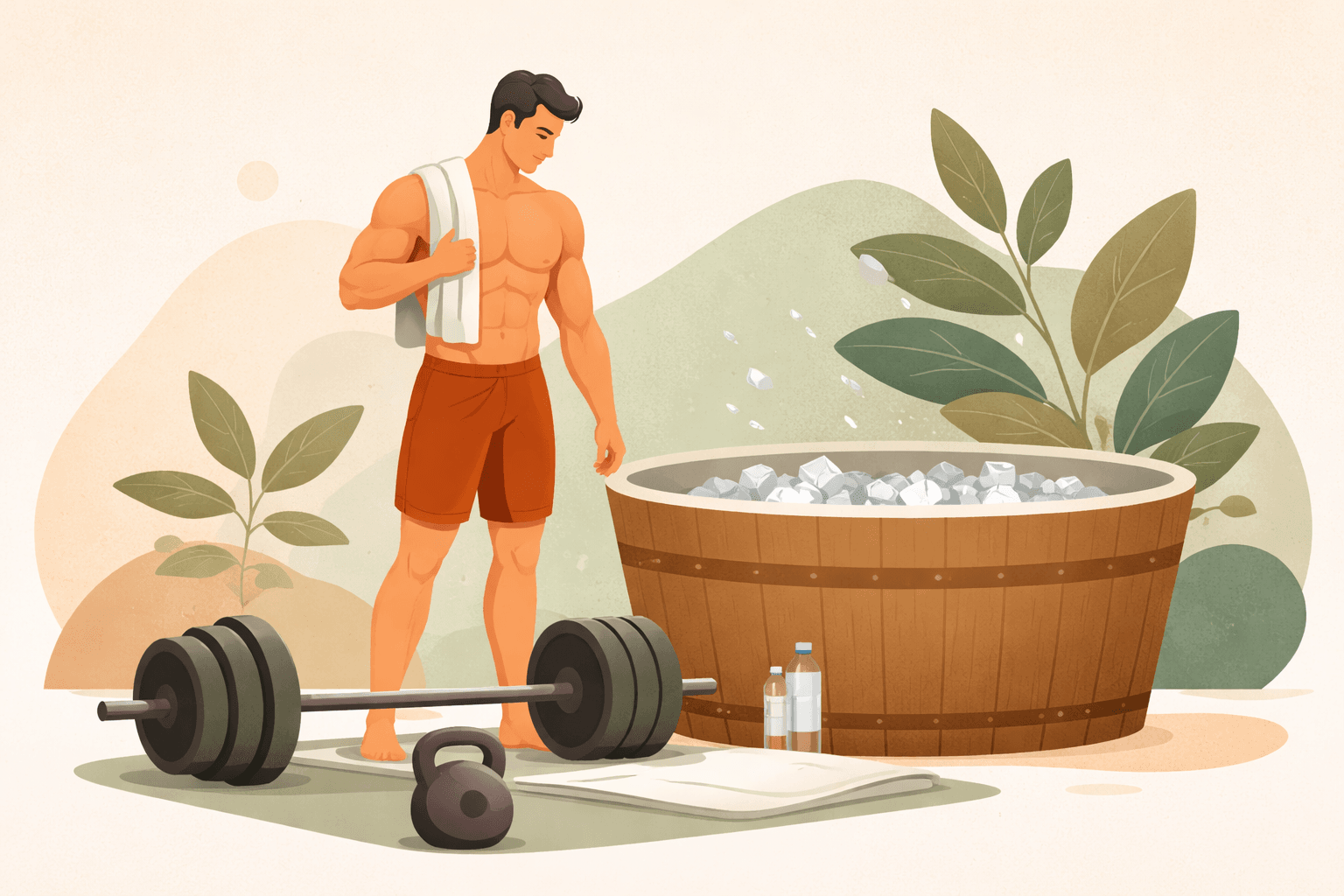
Interest in ice baths and cold plunges has surged in recent years—fueled in part by podcasts and social media conversations from scientists and enthusiasts alike. For athletes and lifters, one pressing question keeps coming up: does jumping into cold water right after a strength session reduce gains? Research suggests timing matters. This article focuses on the narrow question of post-lifting cold exposure and muscle hypertrophy/strength adaptations, and what the evidence indicates about smarter scheduling.
Key takeaways at a glance
- Cold exposure right after strength training may blunt some anabolic signaling and, over weeks, slightly reduce hypertrophy and strength gains compared with passive or active recovery [Evidence: moderate-strong].
- For endurance or mixed training, post-session cold may help reduce soreness and support recovery between closely spaced sessions, with less clear risk to aerobic adaptations [Evidence: moderate].
- Contrast water therapy (alternating hot–cold) may ease soreness similarly to ice baths, but long-term effects on strength and size are less studied [Evidence: emerging].
- Traditional Nordic hot–cold practices and modern methods like the Wim Hof approach emphasize resilience and mental training, which may complement—but do not replace—considerations about hypertrophy-specific timing [Evidence: traditional/emerging].
Why cold right after lifting can mute the “build” signal
Strength training activates molecular signals that promote muscle protein synthesis and growth, including mTORC1 signaling and satellite cell activity. Several controlled studies suggest that immediately cooling muscle tissue post-exercise can dampen these pathways.
- Mechanistic findings: In a randomized trial, post-exercise cold water immersion (CWI) reduced phosphorylation of key anabolic signaling proteins and lowered rates of myofibrillar protein synthesis in the hours after resistance exercise, compared with active recovery [Evidence: strong; Roberts et al., J Physiol 2015]. The same line of work reported reduced satellite cell activity over a training block with routine post-lift CWI [Evidence: moderate-strong; Roberts et al., J Physiol 2015].
- Inflammation context: While cooling may reduce inflammatory markers and perceived soreness in the short term, that same inflammatory signaling also participates in the adaptation process to resistance training. Damping it too aggressively right away may modestly constrain the remodeling response [Evidence: moderate; Ihsan et al., Sports Med 2016; Leeder et al., Br J Sports Med 2012].
What training studies report over weeks
Beyond acute signaling, several trials have tracked outcomes across weeks of training to see whether the lab signals translate into measurable changes.
- Resistance training outcomes: In supervised programs, groups using CWI immediately after lifting showed smaller improvements in muscle size and strength versus active or passive recovery controls [Evidence: moderate-strong; Roberts et al., J Physiol 2015; commentary and synthesis in Ihsan et al., Sports Med 2016]. The average differences were modest rather than dramatic, but consistent enough to matter for athletes prioritizing hypertrophy or maximal strength.
- Soreness and function: Meta-analyses report small-to-moderate reductions in delayed-onset muscle soreness (DOMS) and perceived fatigue 24–72 hours after hard exercise with cold exposure [Evidence: strong; Hohenauer et al., Sports Med 2015; Machado et al., Br J Sports Med 2016]. Acute performance restoration (e.g., jump or sprint) often improves slightly the day after with CWI, which is attractive when competing or training twice daily [Evidence: moderate-strong].
- Endurance adaptations: For primarily aerobic training, post-session cold seems less likely to impede key mitochondrial adaptations and may aid recovery between closely spaced efforts [Evidence: moderate; reviews by Ihsan et al., Sports Med 2016]. That said, data are more heterogeneous than in strength-focused studies.
Putting it together: timing may be the lever
Given the trade-off between short-term relief and long-term adaptation, timing stands out as a practical variable.
- Right after lifting: If your primary goal is muscle hypertrophy or strength, research suggests avoiding immediate, aggressive cold exposure to the trained muscles to preserve anabolic signaling [Evidence: moderate-strong].
- Between intense sessions or competition: When performance turnaround matters within 24–48 hours—such as tournaments or dense training blocks—post-session cold may help reduce soreness and restore function, accepting a potential small trade-off in adaptation [Evidence: strong for soreness/function; moderate for adaptation effects].
- Away from hypertrophy sessions: Cold exposure on rest days or separated by many hours from lifting may theoretically reduce interference with the post-exercise growth window, though direct trials on distant timing are limited [Evidence: emerging].
Contrast water therapy vs. ice baths alone
Alternating hot and cold (contrast therapy) is a long-standing practice in athletic settings.
- Soreness and recovery: Systematic reviews suggest contrast therapy can reduce DOMS and perceived fatigue to a degree comparable to CWI in the first 24–72 hours after strenuous exercise [Evidence: moderate; Hing et al., systematic review; Hohenauer et al., Sports Med 2015].
- Long-term adaptations: Fewer controlled studies have tested whether contrast therapy blunts resistance training gains over weeks. With limited evidence, it is unclear whether contrast meaningfully differs from CWI in chronic adaptation effects [Evidence: emerging].
Where brown fat and cold-shock proteins fit (and don’t)
- Brown adipose tissue (BAT): Cold exposure can activate BAT and increase acute energy expenditure [Evidence: strong for thermogenesis; van der Lans et al., J Clin Invest 2013; Cypess et al., Nat Med 2015]. This is compelling for metabolic health research, but BAT activation does not necessarily translate into better muscle growth from lifting [Evidence: emerging for hypertrophy linkage].
- Cold-shock proteins (e.g., RBM3): Cooling can induce cold-shock responses with neuroprotective roles observed in animal and cell models [Evidence: emerging]. Direct benefits for skeletal muscle hypertrophy in humans are not established [Evidence: emerging].
Eastern and traditional perspectives
- Nordic traditions: Alternating sauna and cold plunges has long been used for perceived resilience, circulation, and mental well-being in Nordic cultures [Evidence: traditional]. When paired with resistance training, such practices may be best viewed as recovery tools whose timing could be adjusted relative to hypertrophy goals [Evidence: emerging].
- Wim Hof method: Breathing techniques and cold exposure emphasize mental training, autonomic regulation, and stress tolerance [Evidence: emerging]. These aims differ from maximizing muscle hypertrophy; practitioners may separate resilience work from the immediate post-lift period if size and strength are top priorities [Evidence: emerging].
Practical, goal-driven framing
- Prioritizing size/strength: Research suggests minimizing immediate post-lift cold exposure to the trained muscles may help preserve anabolic signaling and longer-term gains [Evidence: moderate-strong].
- Prioritizing readiness tomorrow: If reducing soreness and restoring function by the next session or event is paramount, post-session cold may help, acknowledging a potential small trade-off in adaptation over time [Evidence: strong for acute recovery; moderate for adaptation effects].
- Mixed goals over a season: Some athletes periodize recovery modalities—using post-session cold more during congested competition weeks and less during dedicated hypertrophy blocks [Evidence: emerging].
Bottom line
- Ice baths and cold plunges are powerful tools for managing soreness and perceived fatigue after hard exercise. However, when used immediately after strength training, they may blunt anabolic signaling and slightly reduce hypertrophy and strength gains over time.
- For endurance or congested training schedules where next-day performance matters, post-session cold may be advantageous.
- Contrast therapy offers similar short-term relief, but its long-term effects on muscle size and strength remain under-studied.
- Traditional hot–cold practices and modern breathing-plus-cold methods can support resilience and mental well-being, but athletes focused on hypertrophy may benefit from separating cold exposure from the immediate post-lift window.
- As always, individual responses vary; aligning cold exposure timing with your primary goal—adaptation vs. rapid readiness—may help you get the most from both training and recovery.
Key studies and reviews
- Roberts LA et al. Post-exercise cold water immersion attenuates anabolic signaling and long-term adaptations to resistance training. The Journal of Physiology, 2015.
- Ihsan M et al. Cold water immersion for athletic recovery: one size does not fit all. Sports Medicine, 2016 (review).
- Hohenauer E et al. Cold water immersion and recovery from strenuous exercise: a systematic review and meta-analysis. Sports Medicine, 2015.
- Leeder J et al. Interventions for reducing muscle soreness after exercise: systematic review and meta-analysis of cryotherapy and other modalities. British Journal of Sports Medicine, 2012.
- Hing W et al. Contrast water therapy and exercise recovery: systematic review (summary across databases).