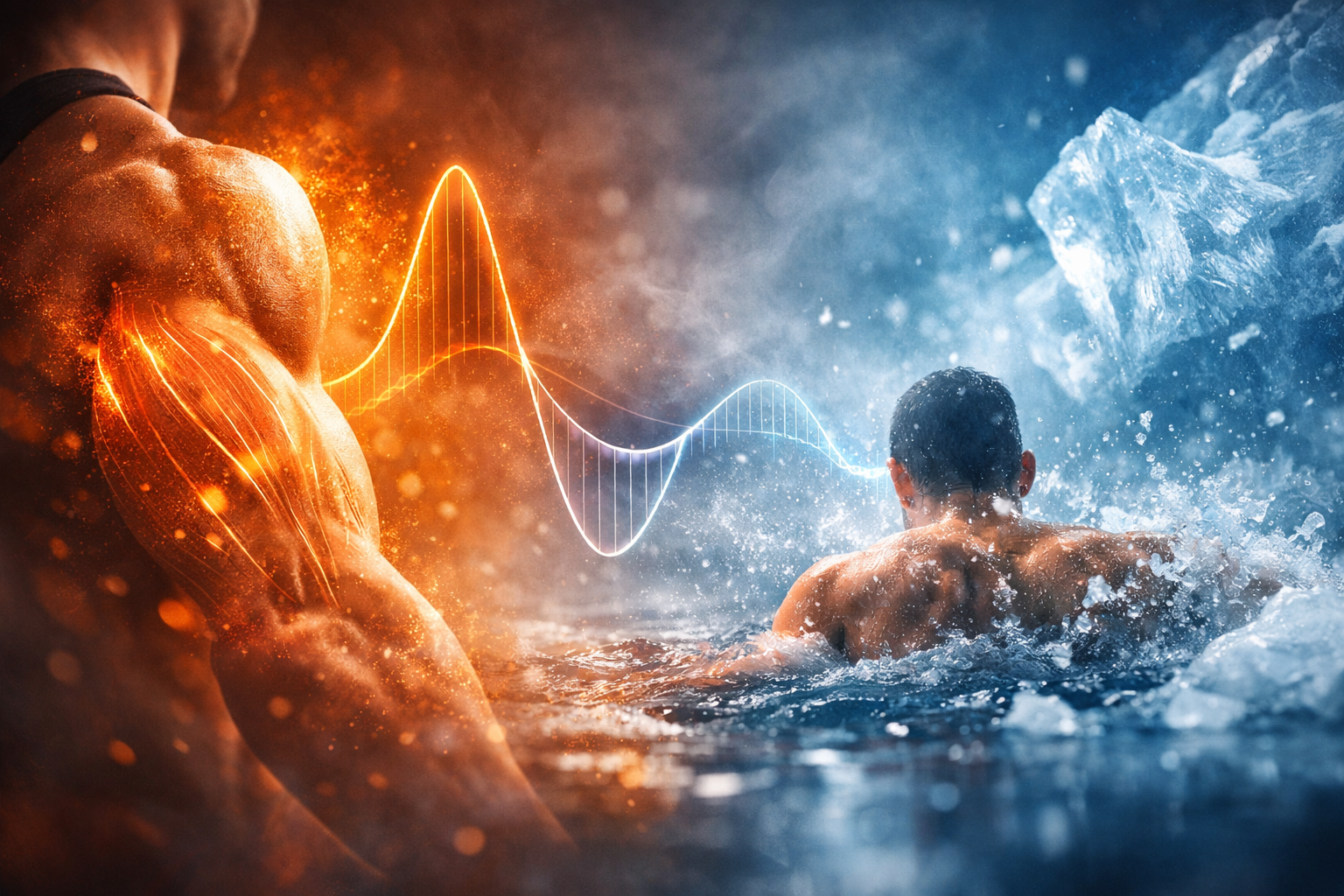
Does Cold Plunging After Lifting Blunt Muscle Gains? A Look at the Evidence
Thinking about an ice bath after lifting? Research suggests regular, immediate post-lift cold exposure may blunt muscle and strength gains, even as it can reduce soreness and help short-term recovery.
·7 min read
This content is for informational purposes only and does not constitute medical advice. Always consult a qualified healthcare provider before starting, stopping, or changing any supplement or medication regimen.
Overview
Cold exposure practices—ice baths, cold plunges, and cryotherapy—have surged in popularity, boosted by high-profile voices like Andrew Huberman discussing focus, mood, and recovery. For lifters and athletes chasing muscle and strength, a key question has emerged: does jumping into the cold right after lifting blunt training adaptations? Research suggests the answer can be yes under certain conditions, even as cold exposure may help with soreness and short-term recovery.
This focused review summarizes what is known about post-strength cold exposure and muscle adaptations, and where it may still have a role.
Key points (with evidence levels)
Regular cold immersion immediately after resistance training may attenuate hypertrophy and strength gains over weeks to months (Evidence: moderate-to-strong; RCTs and mechanistic data).
Cold exposure may reduce perceived soreness and markers of muscle damage in the first 24–72 hours after hard sessions (Evidence: moderate; systematic reviews/meta-analyses).
For endurance or mixed-sport contexts, cold exposure does not consistently blunt aerobic/mitochondrial adaptations and may help with short-term performance restoration (Evidence: moderate but mixed across protocols).
Contrast water therapy (alternating warm and cold) may reduce soreness similarly to cold alone, with limited data on long-term training adaptations (Evidence: moderate for soreness, emerging for adaptations).
Mechanisms likely involve reduced muscle temperature, blood flow, and inflammatory/anabolic signaling; “cold-shock” proteins and brown fat activation are intriguing but not yet directly tied to better strength outcomes (Evidence: emerging).
Why this matters now
The “Huberman effect” has made daily cold plunges a mainstream recovery ritual. While many athletes report feeling better, research suggests timing and training goals matter. Recovery modalities that mute inflammation and swelling can be helpful between competitions, but those same effects may dampen the cellular signals that drive muscle growth after lifting.
What muscle needs after lifting—and what cold changes
Resistance training creates microdamage and a controlled inflammatory response that helps trigger repair, satellite cell activation, and anabolic signaling (e.g., mTOR/p70S6K). Acute increases in muscle temperature and blood flow support this process. Cold immersion rapidly lowers skin and muscle temperatures, causes vasoconstriction, and may reduce inflammatory cytokines and edema. Those changes can feel good and reduce soreness, but they may also dial down signals that help muscles grow and strengthen.
Inflammation as a growth signal: Research suggests some post-exercise inflammation is part of the adaptive process (Evidence: moderate; mechanistic human data and reviews).
Cold reduces local temperature and blood flow: This may reduce anabolic signaling acutely (Evidence: moderate; human biopsy and perfusion studies).
The pivotal trial: reduced hypertrophy and strength with chronic post-lift cold
Roberts et al., Journal of Physiology (2015) ran a randomized controlled trial in humans: participants completed a multi-week resistance training program and either used cold-water immersion after each session or performed active recovery. Those who used cold immersion showed smaller gains in muscle size and strength. Muscle biopsies indicated reduced activation of anabolic pathways (e.g., p70S6K) and lower satellite cell activity compared with active recovery. (Evidence: strong for the specific protocol tested.)
Do broader reviews agree?
Multiple reviews highlight that regular use of cold immersion immediately after resistance exercise may dampen hypertrophy/strength adaptations over time (Ihsan et al., Sports Medicine 2016; Peake et al., 2017 review). While not all studies are identical, the overall pattern supports caution if muscle growth is the primary goal. (Evidence: moderate.)
What about soreness, DOMS, and short-term performance?
Soreness and perceived recovery: Systematic reviews and meta-analyses report small-to-moderate reductions in delayed-onset muscle soreness with cold water immersion compared with passive recovery (Hohenauer et al., Sports Medicine 2015; Machado et al., PLoS One 2016; Dupuy et al., Frontiers in Physiology 2018). (Evidence: moderate.)
Short-term performance restoration: For tasks performed within hours to a couple of days, research suggests cold may help restore sprint or power performance in some contexts, though effects are variable and protocol-dependent (Poppendieck et al., 2013 meta-analysis; Dupuy et al., 2018). (Evidence: moderate.)
Endurance training: a different story?
Some studies suggest cold post-exercise does not meaningfully blunt mitochondrial signaling or aerobic adaptations and may be neutral or beneficial for back-to-back aerobic performance (Broatch et al., 2014; reviews by Ihsan et al., 2016). However, other work has reported attenuated peripheral vascular or endurance adaptations with repeated post-exercise cooling (e.g., Yamane et al., studies in 2006–2015). Protocols differ widely, which likely explains mixed outcomes. (Evidence: moderate but mixed.)
Contrast therapy vs. ice baths alone
Contrast water therapy (alternating warm and cold) is a long-standing Nordic and athletic tradition. Systematic reviews suggest it may reduce perceived soreness and speed self-reported recovery similarly to cold alone (Bieuzen et al., Sports Medicine 2013). Data on long-term effects on hypertrophy/strength are sparse, so whether it avoids the adaptation-blunting effect is not yet clear. (Evidence: moderate for soreness; emerging for adaptations.)
Mechanistic notes: cold-shock proteins and brown fat
Cold-shock proteins: Proteins like RBM3 and CIRP increase with cooling and have been linked to cellular protection and remodeling in preclinical and some human contexts, particularly in the brain (Peretti et al., Nature 2015). Their role in muscle recovery and growth remains speculative. (Evidence: emerging.)
Brown adipose tissue (BAT): Cold can activate BAT and thermogenesis (van der Lans et al., J Clin Invest 2013). While interesting for metabolism, direct links between BAT activation and superior post-lift recovery or hypertrophy are not established. (Evidence: emerging.)
Traditional perspectives: Nordic cycles and the Wim Hof method
Nordic cultures have long used alternating heat and cold for vigor and resilience. This tradition emphasizes overall well-being more than immediate post-lift recovery outcomes. (Evidence: traditional.)
The Wim Hof method combines breathing and cold exposure. An RCT showed trained practitioners modulated immune responses during experimental endotoxemia (Kox et al., PNAS 2014). This speaks to immune-autonomic interactions but does not directly demonstrate improved muscle growth after lifting. (Evidence: moderate for immune effects; not specific to hypertrophy.)
Where cold may fit if muscle growth is your priority
If maximizing hypertrophy or peak strength is the main goal, research suggests avoiding routine immediate post-lift cold immersion may help preserve anabolic signaling and long-term gains. (Evidence: moderate-to-strong.)
If the priority shifts to rapid turnaround—such as during congested competition schedules, two-a-day practices, or tournaments—cold strategies may help reduce soreness and perceived fatigue to maintain performance between efforts. (Evidence: moderate.)
For general well-being, mood, or mental resilience, cold exposure may be practiced at times separated from key hypertrophy-focused sessions, acknowledging that evidence for performance enhancement outside of recovery context is still developing. (Evidence: emerging.)
Practical nuances without prescriptions
Protocol details matter: temperature, duration, and timing likely influence outcomes, but optimal parameters remain debated across sports and goals. (Evidence: emerging.)
Individual response varies: Some athletes report clear benefits in soreness and readiness; others perceive minimal changes. Monitoring how you feel and perform across training blocks may help align cold use with your goals. (Evidence: emerging.)
Bottom line
If building muscle and strength is your primary focus, regular immediate post-lift cold immersion may blunt adaptations. For soreness relief and quick turnarounds, cold can help you feel and perform better in the short term. Contrast water therapy offers similar soreness benefits, though its long-term effects on gains are unclear. Mechanistic stories about cold-shock proteins and brown fat are compelling but not yet a reason to use cold right after lifting for growth.
Tradition and modern science can coexist: Nordic heat-cold cycles and contemporary cold practices may support overall resilience when timed thoughtfully relative to key training sessions.
Selected references
Roberts LA et al. Post-exercise cold water immersion attenuates anabolic signaling and long-term adaptations in skeletal muscle to strength training. Journal of Physiology. 2015.
Ihsan M, Watson G, Abbiss CR. What are the physiological mechanisms for post-exercise cold water immersion in the recovery from prolonged endurance and intermittent exercise? Sports Medicine. 2016 (review).
Hohenauer E et al. The effect of post-exercise cryotherapy on recovery characteristics: A systematic review and meta-analysis. Sports Medicine. 2015.
Machado AF et al. Can water temperature and immersion time influence the effect of cold water immersion on muscle soreness? A systematic review and meta-analysis. PLoS One. 2016.
Dupuy O et al. An evidence-based approach for choosing post-exercise recovery techniques to reduce markers of muscle damage, soreness, fatigue, and inflammation. Frontiers in Physiology. 2018.
Bieuzen F, Bleakley CM, Costello JT. Contrast water therapy and exercise induced muscle damage: A systematic review and meta-analysis. Sports Medicine. 2013.
Broatch JR et al. Postexercise cold water immersion benefits are not greater than active recovery during high-intensity interval training. Journal of Physiology. 2014.
van der Lans AA et al. Cold acclimation recruits human brown fat and increases nonshivering thermogenesis. Journal of Clinical Investigation. 2013.
Kox M et al. Voluntary activation of the sympathetic nervous system and attenuation of the innate immune response in humans. PNAS. 2014.
This content is for informational purposes only and does not constitute medical advice. Always consult a qualified healthcare provider before starting, stopping, or changing any supplement or medication regimen.
# Cold Exposure for Recovery: Sorting Hype from Evidence on Ice Baths, Cryotherapy, and Contrast Therapy
Cold plunges and ice baths have surged from locker-room rituals to living-room tubs, thanks in
Cryotherapy. Cryo Therapy, Cryotherpy, Cryotherapy Treatment. ## Overview
**Cryotherapy** refers to the therapeutic use of cold exposure for health-related purposes. The term covers a broad range of approaches, from **localized ice application**, cold water immersion, and contrast therapy to **whole-body cryotherapy (WBC)** chambers that expose the body to ver
Contrast Therapy. Hot Cold Therapy, Contrast Hydrotherapy. ## Contrast Therapy Overview
**Contrast therapy** is a recovery and conditioning modality that alternates **heat and cold exposure** over a defined period of time. It may involve switching between hot and cold water immersion, alternating hot and cold packs, moving between a sauna and a cold plunge
Massage Therapy for Athletes: An Evidence‑Based Guide to Modalities, Timing, and Recovery. Athletes want to train hard, perform well, and bounce back quickly. Massage therapy for athletes aims to enhance performance, accelerate recovery, prevent injuries, and manage pain. Research suggests massage can reduce delayed onset muscle soreness (DOMS) and improve range of motion, although effect
Best Supplements for Athletic Recovery: An Evidence‑Based Guide to What Works, Dosage & Safety. If you’re training hard and still waking up sore, the question becomes: which are the best supplements for athletic recovery, and when do they actually help beyond food, sleep, and smart programming? Research suggests the biggest wins come from getting the fundamentals right—adequate protein and car
Overview
L‑glutamine is the most abundant free amino acid in human blood and skeletal muscle. During intense training or illness, the body’s demand for glutamine rises as muscles, the gut lining, and