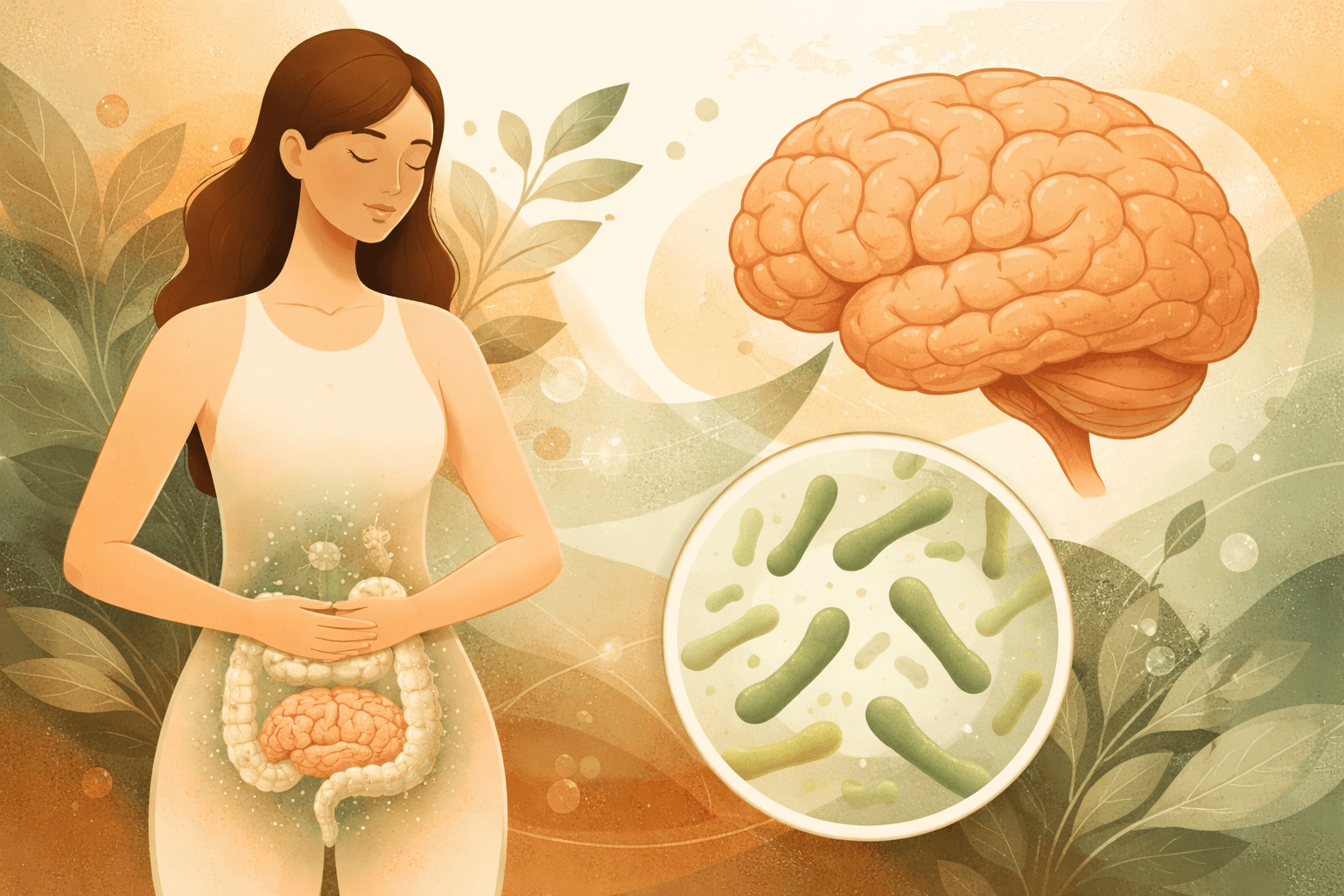
Psychobiotics and Mental Health (Supporting Topic)
Focus: Bifidobacterium longum NCC3001 and mood in people with irritable bowel syndrome (IBS)
Key takeaways at a glance
- What it is: Bifidobacterium longum NCC3001 is a specific probiotic strain studied as a “psychobiotic,” a microbe that may influence mental health via the gut–brain axis. [Evidence level for classification: emerging]
- Why it matters: People with IBS often report anxiety and depressive symptoms. Research suggests certain gut microbes may modulate brain circuits tied to stress and mood. [Evidence: moderate]
- What the science shows: A randomized controlled trial in adults with IBS found that B. longum NCC3001 reduced depressive symptoms and altered brain activity compared with placebo. [Evidence: moderate]
- How it may work: Animal studies point to vagus nerve signaling and inflammation–brain interactions as potential pathways. [Evidence: emerging]
- Food angle: Traditional fermented foods don’t provide this exact strain, but they represent a broader, time-tested route of consuming live microbes that may influence mood through overlapping mechanisms. [Evidence: emerging]
What is Bifidobacterium longum NCC3001?
Bifidobacterium longum is a species of beneficial gut bacteria common in humans. NCC3001 is a well-characterized strain within this species, investigated for gut and brain effects. Psychobiotics are a subset of probiotics researched for potential benefits on mood, stress, and cognition through the gut–brain axis, which includes immune, metabolic, and neural pathways such as the vagus nerve. [Evidence for psychobiotic concept: emerging]
Why target IBS-related mood symptoms?
IBS is a disorder of gut–brain interaction. Beyond abdominal pain and altered bowel habits, many people with IBS report anxiety, low mood, and stress sensitivity. Meta-analyses indicate higher rates of anxiety and depression in IBS compared with the general population, and symptom severity often tracks with stress. Addressing gut–brain communication is therefore a major research priority. [Evidence: strong for IBS–mood comorbidity]
Human evidence for B. longum NCC3001 and mood
- Randomized controlled trial in IBS: In a double-blind, placebo-controlled study published in Gastroenterology, adults with IBS and mild-to-moderate depressive symptoms received B. longum NCC3001 or placebo for six weeks. Compared with placebo, the psychobiotic group showed greater reductions in depression scores and altered brain activity in emotional processing regions on fMRI; quality-of-life measures also improved. Importantly, gut symptom changes were modest, suggesting mood effects were not solely due to improved GI symptoms (Pinto-Sanchez et al., 2017, Gastroenterology). [Evidence: moderate]
- Brain imaging findings: The same trial reported decreased limbic reactivity (including amygdala-related circuits) in the NCC3001 group, consistent with reduced emotional hyper-responsivity. This aligns with the gut–brain axis framework where peripheral microbial signals may influence central stress circuits. [Evidence: moderate]
- Context from related strains: Other psychobiotic formulations—such as Bifidobacterium longum R0175 combined with Lactobacillus helveticus R0052—have reduced psychological distress in healthy volunteers in randomized trials (Messaoudi et al., 2011, British Journal of Nutrition), though results vary by population and formulation. These data provide converging, but not identical, evidence across strains. [Evidence: moderate]
What mechanisms are being explored?
- Vagus nerve signaling: In mouse models of chronic gut inflammation, B. longum NCC3001 normalized anxiety-like behavior; surgical disruption of the vagus nerve abolished the effect (Bercik et al., 2011, Gastroenterology). This suggests that vagal afferent signaling is necessary for the behavioral response to this strain in animals. [Evidence: emerging]
- Immune–inflammatory pathways: Psychobiotics may lower peripheral inflammatory tone, which is implicated in stress-related mood symptoms. While the NCC3001 human RCT focused on brain and mood endpoints, separate diet-based trials show that increasing fermented food intake can reduce inflammatory markers, potentially easing neuroimmune stress (Wastyk et al., 2021, Cell). [Evidence: moderate for inflammation changes; emerging for direct mood linkage]
- Metabolites and neurotransmitters: Bifidobacteria can produce short-chain fatty acids and modulate tryptophan metabolism; these metabolites are hypothesized to influence neuroplasticity and stress responsivity. Direct, strain-specific evidence in humans remains limited. [Evidence: emerging]
How does B. longum NCC3001 fit into the broader psychobiotic picture?
- Strain specificity matters: Effects observed with NCC3001 cannot be generalized to all B. longum or probiotic products. Human studies indicate that benefits, when present, are strain- and condition-specific. [Evidence: strong for strain specificity in probiotics]
- Population matters: The strongest human data for NCC3001 relate to IBS with co-occurring depressive symptoms. Evidence in otherwise healthy individuals or in primary depressive disorders without gut symptoms is less clear. [Evidence: moderate]
- Complement, not cure: Psychobiotics are being investigated as adjuncts within a multifaceted approach to gut–brain health—diet, stress management, sleep, and, when indicated, clinical care. [Evidence: strong for multifactorial nature of IBS and mood]
Where do fermented foods fit?
Traditional fermented foods—such as kimchi, kefir, yogurt, sauerkraut, kombucha, and miso—supply live microbes and bioactive compounds that may influence the gut–brain axis, even though they typically do not contain the exact NCC3001 strain.
- Observational links: Higher habitual fermented food intake has been associated with lower social anxiety symptoms in young adults (Hilimire et al., 2015, Psychiatry Research). While observational, this suggests a food–mood connection. [Evidence: emerging]
- Randomized diet trial: A Stanford study assigning adults to a high–fermented food diet increased gut microbial diversity and decreased several inflammatory cytokines compared with a high-fiber diet (Wastyk et al., 2021, Cell). Mood was not the primary endpoint, but reduced inflammation may indirectly support emotional well-being. [Evidence: moderate for immune effects; emerging for mood]
- Traditional perspective: In East Asian and Caucasian culinary traditions alike, long-fermented staples (kimchi, kefir, miso, tempeh) have been valued for resilience and vitality. While historical practices predate modern psychobiotic science, they align with the concept that regular exposure to diverse live microbes may support mind–body balance. [Evidence: traditional]
What about other psychobiotic strains?
- Lactobacillus rhamnosus (JB-1): Robust anxiolytic effects via the vagus nerve have been shown in rodents, but early human trials have not consistently replicated mood benefits in healthy adults. [Evidence: emerging]
- Bifidobacterium longum 1714: In healthy volunteers, this strain has been associated with reduced stress responses and altered EEG markers in small RCTs (Allen et al., 2016, Translational Psychiatry). Findings need replication in clinical populations. [Evidence: emerging to moderate]
These related lines of research support the plausibility of gut–brain effects while highlighting that translation from animal to human outcomes is not guaranteed.
Safety and practical considerations
- Product variability: Probiotic products differ in strains, viability, and quality control. Labels often list species but not the specific research-grade strain. Outcomes seen with NCC3001 cannot be assumed for other B. longum strains. [Evidence: strong]
- Sensitive populations: Individuals with significant health conditions or immunocompromise should discuss probiotics with a clinician. Adverse events are uncommon in healthy individuals but can occur. [Evidence: strong for general safety profile; caution warranted]
- No one-size-fits-all: Responses to psychobiotics appear heterogeneous, influenced by baseline microbiome, diet, and stress levels. Trial-and-observation approaches are common in research settings. [Evidence: moderate]
Bottom line
- Bifidobacterium longum NCC3001 is one of the better-studied psychobiotic strains for IBS-related mood symptoms. A randomized controlled trial found reductions in depressive symptoms and changes in brain activity, independent of large shifts in gut symptoms. [Evidence: moderate]
- Animal data suggest the vagus nerve and immune signaling are likely conduits for gut-to-brain communication with this strain. [Evidence: emerging]
- Traditional fermented foods do not deliver NCC3001 specifically, but research suggests they may enhance microbial diversity and lower inflammatory tone—mechanisms relevant to mood. [Evidence: moderate for immune effects; emerging for mood]
- Overall, psychobiotics remain a promising, but developing, area. For individuals with IBS and co-occurring mood symptoms, strains like NCC3001 may help as part of a broader gut–brain strategy that includes dietary patterns, stress-reduction practices, and clinical care when needed. [Evidence: moderate]