

Inflammatory Bowel Disease (IBD) and Probiotics
Inflammatory bowel disease (IBD) encompasses ulcerative colitis (UC) and Crohn’s disease (CD). UC causes continuous inflammation of the colon’s lining, while CD can affect any part of the gastrointestinal tract in a patchy, transmural pattern. Both conditions are linked to disturbances in the gut microbiome—reduced diversity, shifts in key bacterial groups, impaired mucus barrier, and altered immune signaling. Because microbes influence intestinal inflammation and barrier function, probiotics—live microorganisms that, when administered in adequate amounts, confer a health benefit—have been investigated as adjuncts to standard IBD therapy. Evidence differs by condition and outcome. For UC, several randomized trials and meta-analyses suggest some probiotics can help induce remission when added to conventional therapy and maintain remission in mild disease. A well-known single-strain product (Escherichia coli Nissle 1917) has shown maintenance efficacy similar to mesalamine in older trials, and high-potency multi‑strain formulations (e.g., VSL#3/Visbiome) have reported benefits for symptom reduction and induction in mild-to-moderate UC in some studies. However, results are heterogeneous and guideline bodies remain cautious due to variable study quality and strain-specific effects. For Crohn’s disease, trials overall have not demonstrated consistent benefit for induction or maintenance of remission with commonly studied probiotics (including Lactobacillus, Bifidobacterium, and Saccharomyces boulardii). Current systematic reviews and guidelines generally do not support routine probiotic use in CD outside research settings. The strongest probiotic signal in IBD relates to pouchitis (inflammation of the ileal pouch after surgery for UC). High‑potency multi‑strain probiotics have reduced the risk of pouchitis and helped maintain remission after antibiotic-induced control in multiple trials. Many gastroenterology guidelines acknowledge this as a potential use case. Formu
Updated August 10, 2026This content is for informational purposes only and does not constitute medical advice. Always consult a qualified healthcare provider before starting, stopping, or changing any supplement or medication regimen.
Medical Perspectives
Two Ways of Seeing Health

Western
scientific · clinical
Western medicine applies science, technology, and clinical experience to treat symptoms through testing, diagnosis, and targeted intervention.
Surgeons · Pharmaceuticals · Clinical trials · Diagnostics 
Eastern
traditional · alternative
Eastern medicine focuses on treating the body naturally by applying traditional knowledge practiced for thousands of years, emphasizing balance and whole-person wellness.
Acupuncture · Herbal medicine · Yoga · Meditation
Gold Bamboo presents both perspectives side-by-side so you can make informed decisions. We don't advocate for one over the other — your health choices are yours.
Two Ways of Seeing Health
Western
scientific · clinical
Western medicine applies science, technology, and clinical experience to treat symptoms through testing, diagnosis, and targeted intervention.
Eastern
traditional · alternative
Eastern medicine focuses on treating the body naturally by applying traditional knowledge practiced for thousands of years, emphasizing balance and whole-person wellness.
Gold Bamboo presents both perspectives side-by-side so you can make informed decisions. We don't advocate for one over the other — your health choices are yours.
Western Perspective
Western medicine views IBD as an immune-mediated disease shaped by genetic susceptibility, environmental factors, and a dysregulated interaction with the intestinal microbiome. Probiotics are explored as adjunctive therapies to modulate microbial communities, enhance barrier function, and dampen mucosal inflammation. Evidence is condition- and strain-specific: more supportive in ulcerative colitis (especially for maintenance in mild disease and as an adjunct for induction) and pouchitis, and largely negative or inconclusive in Crohn’s disease.
Key Insights
- Gut dysbiosis contributes to IBD pathogenesis via impaired barrier function, innate/adaptive immune activation, and reduced beneficial metabolites like short-chain fatty acids (moderate).
- Probiotic effects are strain- and dose-dependent; multi‑strain, high‑potency products show the most consistent signals in UC and pouchitis (moderate).
- Escherichia coli Nissle 1917 has shown noninferiority to mesalamine for UC maintenance in older RCTs, though contemporary guidelines urge caution due to heterogeneity (moderate).
- In Crohn’s disease, RCTs and meta-analyses generally show no clear benefit for induction or maintenance (strong for lack of effect).
- Safety is generally favorable, but rare bacteremia/fungemia can occur in severely immunocompromised patients or those with central lines; quality control and strain identification matter (moderate).
Treatments
- High‑potency multi‑strain probiotics (e.g., VSL#3/Visbiome) as adjuncts, especially in pouchitis
- Escherichia coli Nissle 1917 for UC maintenance (where available)
- Select Lactobacillus/Bifidobacterium combinations as adjuncts in mild-to-moderate UC
- Standard IBD therapies in parallel: mesalamine, corticosteroids, immunomodulators, biologics
Deep Dive
IBD arises from an interplay among host genetics, environmental exposures, and an altered relationship with gut microbes. In health, a diverse m... IBD arises from an interplay among host genetics, environmental exposures, and an altered relationship with gut microbes. In health, a diverse microbiota supports mucus production, short-chain fatty acid synthesis, and immune tolerance. In IBD, researchers consistently observe reduced microbial diversity, lower levels of beneficial taxa, and a damaged epithelial barrier that amplifies immune activation. Probiotics are investigated as adjuncts to shift this ecology toward balance, reinforce barrier integrity, and modulate immune pathways such as T regulatory responses and pattern-recognition signaling. Clinical data are clearest in two areas: ulcerative colitis and pouchitis. In UC, several randomized trials and meta-analyses report that certain probiotics—especially high-potency, multi-strain formulations—can improve induction outcomes when layered onto standard therapy, and may help maintain remission in mild disease. Escherichia coli Nissle 1917 demonstrated noninferiority to mesalamine for maintenance in older studies, though contemporary guidance remains conservative due to heterogeneity, product variability, and limited head-to-head trials against modern standards of care. By contrast, Crohn’s disease has not shown reproducible benefit from common probiotics for either induction or maintenance. This likely reflects disease heterogeneity, small-bowel involvement, and deep transmural inflammation that may not be readily influenced by luminal probiotics alone. The strongest evidence base pertains to pouchitis after ileal pouch–anal anastomosis for UC. Multiple randomized trials indicate that high‑potency, multi‑strain probiotics reduce the incidence of pouchitis and help maintain remission following antibiotic-induced control. Many guidelines acknowledge this niche as a reasonable application. Safety profiles are generally favorable, with gastrointestinal gas or bloating most common. Nevertheless, rare cases of bacteremia or fungemia have occurred, particularly with severe immunosuppression, critical illness, or central venous access. Strain identification, product quality, and appropriate patient selection are essential, and probiotics should complement—not replace—evidence-based IBD therapies such as aminosalicylates, corticosteroids, immunomodulators, and biologics. Current research is moving toward precision approaches—matching strains to microbial signatures and inflammatory phenotypes, and testing defined microbial consortia or postbiotics in rigorous trials.
Sources
- AGA Clinical Practice Guidelines on the Role of Probiotics in the Management of Gastrointestinal Disorders. Gastroenterology. 2020.
- Derwa Y et al. Systematic review and meta-analysis: efficacy of probiotics in IBD and pouchitis. Aliment Pharmacol Ther. 2017.
- Cochrane Reviews on probiotics in UC and CD (various updates).
- Gionchetti P et al. Probiotics for prevention/maintenance of pouchitis. Multiple RCTs.
- Kruis W et al. E. coli Nissle 1917 vs mesalazine in UC maintenance. Gut. 1997; 2004.
Eastern Perspective
Traditional systems long framed gut health as foundational to systemic balance. While not originally defined by microbial strains, concepts in Traditional Chinese Medicine (TCM) and Ayurveda align with restoring digestive harmony—strengthening the gut’s transformative capacity, calming intestinal inflammation, and supporting a healthy internal ecosystem. Fermented foods and probiotic-rich preparations are seen as tools to encourage balance, often paired with dietary changes and botanicals that act as prebiotics or modulators of the ‘terrain’. Contemporary integrative practice blends probiotic supplementation with traditional dietary and herbal strategies to support remission maintenance in mild cases and postoperative states like pouchitis.
Key Insights
- TCM associates chronic colitis with patterns such as damp-heat in the Large Intestine and Spleen Qi deficiency; therapy aims to clear heat, resolve dampness, and fortify the Spleen (traditional).
- Ayurveda links IBD-like presentations to aggravated Pitta with impaired Agni; care emphasizes calming inflammation, supporting digestion, and restoring microbial balance via diet and cultured dairy (traditional/emerging).
- Fermented foods (yogurt, kefir, miso, kimchi) and synbiotics (probiotics plus prebiotic fibers) are used to nurture a diverse microbiota (emerging).
- Select herbs (e.g., berberine-containing Coptis, turmeric/curcumin, and Triphala) may modulate the microbiome and intestinal barrier, potentially complementing probiotics (emerging).
Treatments
- Dietary fermented foods tailored to tolerance
- Synbiotics combining probiotics with prebiotic fibers (e.g., inulin/FOS)
- TCM formulas for damp-heat/deficiency patterns (e.g., Bai Tou Weng Tang variants) alongside diet
- Ayurvedic approaches emphasizing Pitta-pacifying diet and cultured dairy when tolerated
Deep Dive
Traditional systems have long emphasized that digestive harmony underpins systemic health. In TCM, chronic colitis-like patterns reflect imbalan... Traditional systems have long emphasized that digestive harmony underpins systemic health. In TCM, chronic colitis-like patterns reflect imbalances such as damp-heat in the Large Intestine with underlying Spleen Qi deficiency. Treatment principles aim to clear heat, resolve dampness, and fortify digestive transformation, often by combining herbal formulas with dietary strategies. Ayurveda similarly views IBD-like conditions as aggravated Pitta with weakened Agni; care seeks to soothe intestinal heat, stabilize digestion, and restore balance through diet, spices, and cultured dairy when tolerated. Within these frameworks, probiotics are interpreted as tools that cultivate a healthier internal ecosystem. Fermented foods—yogurt, kefir, miso, kimchi, and traditionally cultured vegetables—provide live microbes alongside bioactive metabolites that may calm inflammation and support barrier function. Synbiotic approaches, pairing probiotics with prebiotic fibers (such as inulin or fructo-oligosaccharides), align with the traditional concept of nourishing the terrain so friendly microbes can thrive. Botanicals used in TCM and Ayurveda—like berberine-containing Coptis (Huang Lian), Triphala, and turmeric/curcumin—have been reported to influence microbial composition and mucosal signaling, offering potential synergy with probiotic strategies. Contemporary integrative practice seeks to harmonize these traditions with modern care. Probiotics are considered as adjuncts during periods of relative stability, after antibiotic courses for pouchitis, or in mild UC, while core medical therapies continue to manage inflammation. Individual tolerance guides selection: some people do well with fermented foods; others prefer standardized supplements or synbiotics. Practitioners emphasize mindful observation—tracking digestive comfort, stool patterns, and energy—to personalize choices. While controlled trials validating specific traditional combinations remain limited, the shared emphasis on restoring digestive balance, nurturing beneficial microbes, and reducing inflammatory load provides a coherent, patient-centered pathway that complements evidence-based gastroenterology.
Sources
- Zhang Z et al. Traditional Chinese Medicine and the intestinal microbiome in IBD. World J Gastroenterol. 2014.
- Gupta A et al. Ayurveda and gut health: concepts of Agni and dysbiosis. J Altern Complement Med. 2017.
- Sanders ME et al. Probiotics and prebiotics in digestive health. Nat Rev Gastroenterol Hepatol. 2019.
- Integrative overviews on fermented foods and microbiome modulation (various).
Evidence Ratings
Multi-strain, high-potency probiotics help prevent or maintain remission of pouchitis after IPAA for UC.
Gionchetti P et al., multiple RCTs; Derwa Y et al. 2017 meta-analysis; guideline summaries.
Probiotics can aid induction of remission in mild-to-moderate ulcerative colitis when added to standard therapy, with heterogeneity by strain.
Derwa Y et al. 2017; several RCTs with VSL#3/Visbiome and Lactobacillus/Bifidobacterium combinations.
Escherichia coli Nissle 1917 is comparable to mesalamine for maintenance of remission in UC in older trials.
Kruis W et al. Gut. 1997; 2004.
Probiotics have not shown consistent benefit for inducing or maintaining remission in Crohn’s disease.
AGA 2020 guideline; Cochrane reviews on probiotics in CD.
Serious adverse events with probiotics are rare but include bacteremia/fungemia in severely immunocompromised patients or those with central lines.
Case series/reviews (e.g., Lherm T et al. 2002; safety reviews in Gastroenterology 2020 guideline).
Multi-strain formulations tend to outperform single-strain products in UC and pouchitis studies.
Derwa Y et al. 2017 meta-analysis and pooled analyses.
Concurrent antibiotics may reduce viability of certain bacterial probiotics when taken at the same time.
Manufacturer/pharmacologic data and small clinical studies on timing; general pharmacology principles.
Sources
- AGA Clinical Practice Guidelines on the Role of Probiotics in the Management of Gastrointestinal Disorders. Gastroenterology. 2020;159:697-705.
- Derwa Y, Gracie DJ, Hamlin PJ, Ford AC. Systematic review and meta-analysis: efficacy of probiotics in IBD and pouchitis. Aliment Pharmacol Ther. 2017;46(4):389-400.
- Cochrane Reviews: Probiotics for induction and maintenance of remission in UC and CD (various authors/years; latest updates around 2019–2021).
- Gionchetti P, Rizzello F, et al. Probiotics for prevention and treatment of pouchitis. Lancet 2000; Gut 2003; Inflamm Bowel Dis 2013.
- Kruis W, Fric P, Pokrotnieks J, et al. E. coli Nissle 1917 vs mesalazine in UC maintenance. Gut. 1997;53:1617–1623; 2004 updates.
- Bourreille A, Cadiot G, et al. Saccharomyces boulardii in CD maintenance: negative multicenter RCT. Gastroenterology. 2013.
- Sood A, Midha V, et al. VSL#3 as adjunct in UC: Clin Gastroenterol Hepatol. 2009.
- Shen B. Pouchitis: clinical features, diagnosis, and treatment. Gastroenterol Clin North Am. 2009.
- Lherm T, Monet C, et al. Fungemia with Saccharomyces boulardii. Clin Infect Dis. 2002.
- Sanders ME, Merenstein DJ, et al. Probiotics in gastroenterology: position paper. Nat Rev Gastroenterol Hepatol. 2019.
- Zhang Z, Wu X, et al. TCM and the intestinal microbiome in IBD. World J Gastroenterol. 2014.
Related Topics
Recommended Products
![Crohn's and Colitis: Understanding and Managing IBD: Steinhart MD MSc FRCP[C], Dr. Hillary](https://m.media-amazon.com/images/I/51akR12k-EL.jpg)
Crohn's and Colitis: Understanding and Managing IBD: Steinhart MD MSc FRCP[C], Dr. Hillary
Crohn’s Disease and Ulcerative Colitis <strong>A Comprehensive Guide to Understanding and Healing: Empowering Tools for Living Well with IBD - Your Roadmap to Informed Treatment and Lasting Wellness</
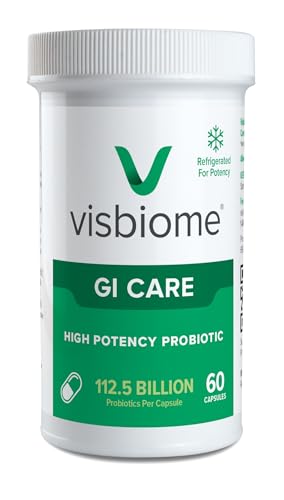
Visbiome® GI Care - High Potency Probiotic - 112.5 Billion CFU Live Probiotics, Original De Simone Formulation, Made in USA, 60 Capsules.
Buy Visbiome® GI Care - High Potency Probiotic - 112.5 Billion CFU Live Probiotics, Original De Simone Formulation, Made in USA, 60 Capsules. on Amazon.com ✓ FREE SHIPPING on qualified orders

Florastor Probiotics for Digestive and Immune Health, 100 Capsules, Probiotics for Women & Men, Helps Flush Out Bad Bacteria, Boosts The Good with Our Unique Strain Saccharomyces Boulardii
Saccharomyces boulardii CNCM I-745 250mg, Lactose 32.5mg.
Health Disclaimer
This content is for informational purposes only and does not constitute medical advice. Always consult a qualified healthcare provider before starting, stopping, or changing any supplement or medication regimen.