Introduction
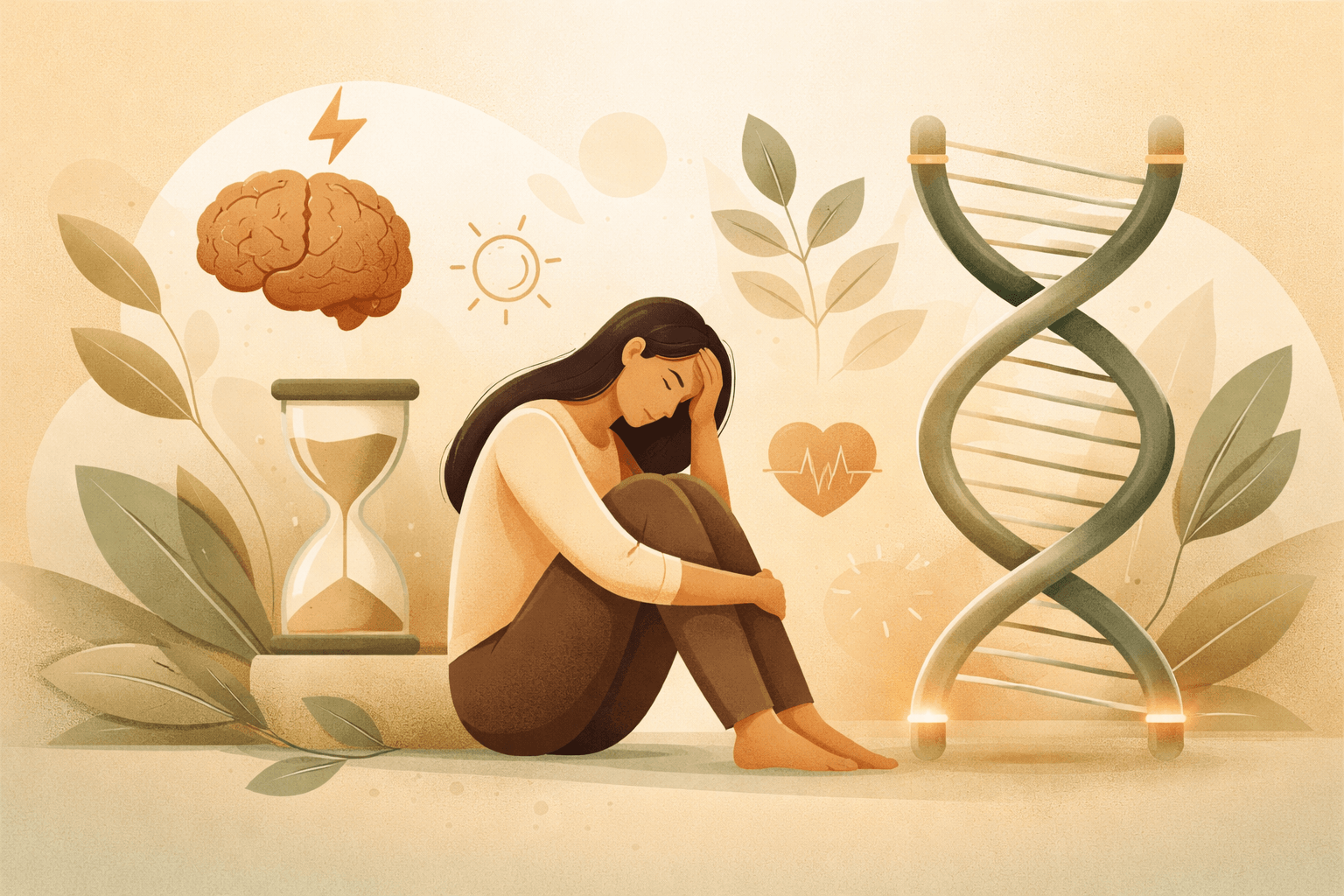
Telomeres are the protective DNA caps at the ends of chromosomes that help maintain genomic stability. As cells divide, telomeres generally shorten—a process associated with cellular aging. Lifestyle factors appear to influence this trajectory. Among them, chronic psychological stress stands out as a plausible accelerator of telomere erosion. This article focuses on what research suggests about stress and telomere biology, how stress-reduction practices may help, and where the evidence remains uncertain.
How Stress Might Influence Telomeres
Stress activates the hypothalamic–pituitary–adrenal (HPA) axis and sympathetic nervous system, elevating cortisol and catecholamines. Over time, chronic activation may:
- Increase oxidative stress and reactive oxygen species that directly damage telomeric DNA, which is particularly sensitive to oxidative injury (evidence: strong, based on mechanistic and cellular studies).
- Promote low-grade inflammation (e.g., higher IL-6, CRP), which is associated with faster leukocyte turnover and potential telomere shortening (evidence: moderate, human observational and mechanistic data).
- Suppress or dysregulate telomerase, the enzyme that can help maintain telomeres in certain cell types (evidence: emerging, mixed human data; stronger in short-term intervention studies than in long-term population data).
What Human Studies Show About Stress and Telomere Length
- High perceived stress and caregiving burden: A landmark cross-sectional study of mothers caring for chronically ill children reported that greater perceived stress was associated with shorter leukocyte telomere length and lower telomerase activity compared with matched controls (Epel et al., PNAS; evidence: moderate for association, not causality).
- Meta-analytic evidence: Several systematic reviews and meta-analyses report that higher psychosocial stress correlates with shorter leukocyte telomeres across cohorts. Pooled effects are generally small but statistically significant (evidence: strong for association across studies; effect sizes modest).
- Early-life adversity: A meta-analysis linking childhood maltreatment and adversity to shorter telomere length in adulthood strengthens the case that severe, sustained stress may leave a biological imprint (Ridout et al., systematic review and meta-analysis; evidence: strong for association, small-to-moderate effects, heterogeneity present).
- Longitudinal observations: Prospective cohorts suggest that ongoing stress exposure and stress reactivity are linked with faster telomere attrition over follow-up periods of 1–5+ years, though not all studies agree and measurement methods vary (evidence: moderate; mixed results, small effect sizes).
Can Stress Reduction Help Maintain Telomeres?
Trials testing whether stress-management can influence telomeres or telomerase activity are accumulating, with cautious optimism warranted.
- Mindfulness-based programs in oncology: A randomized trial in breast cancer survivors reported that mindfulness-based cancer recovery and supportive-expressive therapies helped maintain telomere length over several months compared with usual care, which showed slight shortening (Carlson et al., Cancer; evidence: moderate for maintenance in this context; short-to-medium term follow-up).
- Intensive meditation retreats: A study of intensive meditation practice observed increases in peripheral blood mononuclear cell telomerase activity compared with controls (Jacobs et al., PNAS; evidence: emerging; small samples, uncertain durability).
- Multicomponent lifestyle interventions: In men with low-risk prostate cancer, a comprehensive program including a plant-forward diet, stress management (yoga, meditation), moderate activity, and social support was associated with increased telomerase activity at 3 months and longer telomeres at 5-year follow-up versus controls in a small cohort (Ornish et al.; evidence: emerging due to small, non-randomized design and multiple components).
- Meta-analyses of contemplative practices: Systematic reviews suggest stress-reduction and meditation programs may modestly increase telomerase activity and may slow telomere shortening, though results vary and many trials are small with short follow-up (evidence: moderate for small telomerase effects; emerging for telomere length changes).
Mechanisms Linking Stress Reduction to Telomere Biology
- Reduced HPA-axis activation and improved autonomic balance may lower oxidative and inflammatory signaling that accelerates telomere loss (evidence: moderate; supported by biomarker changes in RCTs of stress-reduction).
- Enhanced health behaviors often accompany structured programs (better sleep continuity, physical activity, nutrition quality), which independently correlate with healthier telomere dynamics (evidence: moderate to strong for individual behaviors; hard to isolate effects).
Traditional Perspectives and Mind–Body Practices
Traditional East Asian medicine conceptualizes chronic stress as a disruption of qi flow—often described as Liver qi stagnation—which may manifest as tension, irritability, or sleep disturbance. Practices such as qigong and tai chi aim to restore balance through slow movement, breath regulation, and focused attention. Modern studies of these practices report improvements in perceived stress, sleep, and inflammatory markers, with a few small trials suggesting increases in telomerase activity or attenuation of telomere shortening (evidence: traditional for conceptual framework; emerging for telomere-related outcomes; moderate for stress reduction and quality-of-life benefits).
Important Caveats and Critiques
- Association versus causation: Most stress–telomere data are observational. While longitudinal studies strengthen inference, residual confounding (e.g., smoking, adiposity, socioeconomic factors) remains possible (evidence: strong for this limitation).
- Measurement variability: Different laboratory methods (qPCR vs. Southern blot vs. flow-FISH) and batch effects can yield inconsistent absolute values. Within-person changes over short periods may reflect technical noise as much as biology (evidence: strong; well-documented in methodological papers).
- Small effect sizes: On average, stress-related telomere differences correspond to months to a few years of cellular aging equivalents—meaningful at the population level but modest for individuals (evidence: strong for small average effects).
- Tissue specificity: Most human studies measure leukocyte telomere length, which may not reflect telomere dynamics in other tissues (evidence: strong for this conceptual limitation).
- Telomerase trade-offs: While increasing telomerase activity in somatic cells could, in theory, slow telomere loss, unchecked telomerase is a hallmark of many cancers. Short-term, modest increases seen in behavioral trials have not been linked to cancer risk, but long-term implications are unknown (evidence: strong for theoretical cancer link of telomerase; emerging for clinical significance of small behavioral-induced changes).
Practical, Evidence-Informed Ways to Lower Stress Load
While no single behavior “fixes” telomeres, research suggests that sustained changes that reduce allostatic load may support healthier telomere dynamics over time.
- Mindfulness-based programs (e.g., MBSR, MBCT) may reduce perceived stress, improve sleep, and modestly affect telomerase activity in some studies (evidence: moderate for stress, emerging to moderate for telomerase).
- Regular physical activity is consistently associated with longer telomeres in cross-sectional studies and slower attrition longitudinally; it may also buffer the impact of acute stress on telomere dynamics (evidence: moderate to strong for association; causal evidence indirect in this context).
- Sleep continuity and duration correlate with healthier telomere profiles; stress and poor sleep often reinforce one another (evidence: moderate for association; emerging for intervention effects on telomeres).
- Social connection and support mitigate perceived stress and are linked with better immune and inflammatory profiles, potentially favoring telomere maintenance (evidence: moderate for stress/immune outcomes; emerging for telomere-specific effects).
- Traditional mind–body practices like tai chi, qigong, yoga, and meditation align with both Eastern frameworks and Western stress-physiology models and may be reasonable options to explore for stress management (evidence: traditional for rationale; moderate for stress reduction; emerging for telomere outcomes).
What This Means for You
- Telomeres are one piece of the longevity puzzle. Managing chronic stress appears to be beneficial for overall health and may help preserve telomere integrity over time. However, effects are generally modest and unfold over the long term (evidence: moderate).
- A balanced approach that includes psychological stress management, movement, restorative sleep, and social support is consistent with both Western research and traditional health systems (evidence: moderate to strong for overall health impacts; emerging to moderate for telomere-specific outcomes).
- Telomere tests currently provide a rough snapshot of leukocyte telomere length with method-dependent variability. They are not definitive aging scores and should be interpreted cautiously alongside other health markers (evidence: strong for limitation).
Bottom Line
- Chronic stress is associated with shorter telomeres and potentially faster telomere attrition, but effects are small on average and do not prove causation (evidence: strong for association, moderate for longitudinal change).
- Stress-reduction practices—mindfulness-based programs, mind–body movement, and multicomponent lifestyle changes—may modestly increase telomerase activity and help maintain telomeres in some groups (evidence: moderate, with emerging findings on telomere length itself).
- Telomere biology should not be reduced to a single metric or quick fix. Focus on sustainable stress management within a broader lifestyle pattern that supports overall well-being and healthy aging (evidence: strong for holistic approach; emerging to moderate for telomere-specific benefits).