PharmaGABA vs. Synthetic GABA: Does the Source Matter for Natural Calm?
Is fermented PharmaGABA really better than synthetic GABA for calm? Explore the BBB debate, human trial evidence, and how source may—or may not—matter for stress relief.
·8 min read
This content is for informational purposes only and does not constitute medical advice. Always consult a qualified healthcare provider before starting, stopping, or changing any supplement or medication regimen.
The question
“Natural” GABA made by fermentation (often sold as PharmaGABA) is frequently marketed as superior to chemically synthesized GABA for easing stress and supporting calm. But does the source really change how GABA works in the body? And if GABA struggles to cross the blood–brain barrier (BBB), why do some people report feeling calmer after taking it? This focused review examines what research suggests about oral GABA, the BBB debate, and whether fermented vs. synthetic GABA differs in effect.
GABA 101: why it’s linked to calm
Gamma-aminobutyric acid (GABA) is the brain’s primary inhibitory neurotransmitter—think of it as the brake pedal in the nervous system. When GABA activity increases, neuronal firing quiets down, which is associated with reduced anxiety and improved relaxation (Evidence: strong, based on decades of neurobiology).
Benzodiazepines (like alprazolam and lorazepam) reduce anxiety by enhancing the effect of endogenous GABA at GABA-A receptors as positive allosteric modulators; they do not provide GABA itself (Evidence: strong, pharmacology consensus). This distinction matters when evaluating supplements—ingesting GABA is different from boosting receptor responsiveness the way medications do.
The BBB debate: can oral GABA act on the brain?
A long-standing view in neuroscience is that GABA, as a small but zwitterionic molecule, does not efficiently cross the healthy BBB when taken orally. Classic animal and in vitro studies suggest minimal transport under normal conditions (Evidence: strong). More recent work proposes nuanced possibilities: small amounts may cross via transporter-mediated or paracellular routes under specific states (e.g., stress, inflammation) or in regions with a more permissive barrier. However, direct, well-controlled human evidence of substantial BBB crossing after typical oral doses remains limited (Evidence: moderate).
So how might people still experience calm? Two plausible, non-mutually exclusive pathways are being investigated:
Peripheral–vagal mechanisms: GABA receptors are found in the gut and on the vagus nerve. Signals from the enteric nervous system can influence brain activity via the gut–brain axis. In animals, certain GABA-producing Lactobacillus strains altered GABA receptor expression and reduced stress behaviors in a vagus-dependent manner (Evidence: moderate in animals; emerging in humans).
Indirect stress physiology effects: Oral GABA may affect autonomic tone or immune markers (e.g., salivary IgA, cortisol responses), which correlate with subjective calm without requiring substantial central penetration (Evidence: emerging in humans).
Bottom line on BBB: research suggests oral GABA likely has limited direct brain entry in healthy adults, but may still influence relaxation via peripheral or gut–brain pathways (Evidence: moderate overall, with ongoing debate).
What the human studies show
Human trials of oral GABA are relatively small and heterogeneous, but a pattern emerges:
Acute relaxation and stress reactivity: Small randomized, placebo-controlled studies report that a single dose of GABA—often a fermented form—can increase alpha brain-wave activity (a marker of relaxed wakefulness) and blunt physiological stress responses during mental tasks compared with placebo (Evidence: moderate; multiple small RCTs).
Sleep-related outcomes: Several RCTs suggest oral GABA may reduce sleep onset latency and modestly improve subjective sleep quality in people with occasional sleep difficulties, though effect sizes are small and trials are short (Evidence: moderate; small RCTs and pilot studies).
Cognitive performance under stress: Some trials note maintained accuracy or calmer affect during arithmetic or attention tasks following GABA vs. placebo, especially when co-administered with L-theanine (Evidence: emerging; small RCTs with mixed designs).
A systematic review of oral GABA studies concluded that while early findings are promising for relaxation and sleep, overall evidence quality is limited by small sample sizes, potential sponsorship bias, and variable endpoints, warranting larger independent trials (Evidence: moderate, based on systematic review).
PharmaGABA vs. synthetic GABA: is one better?
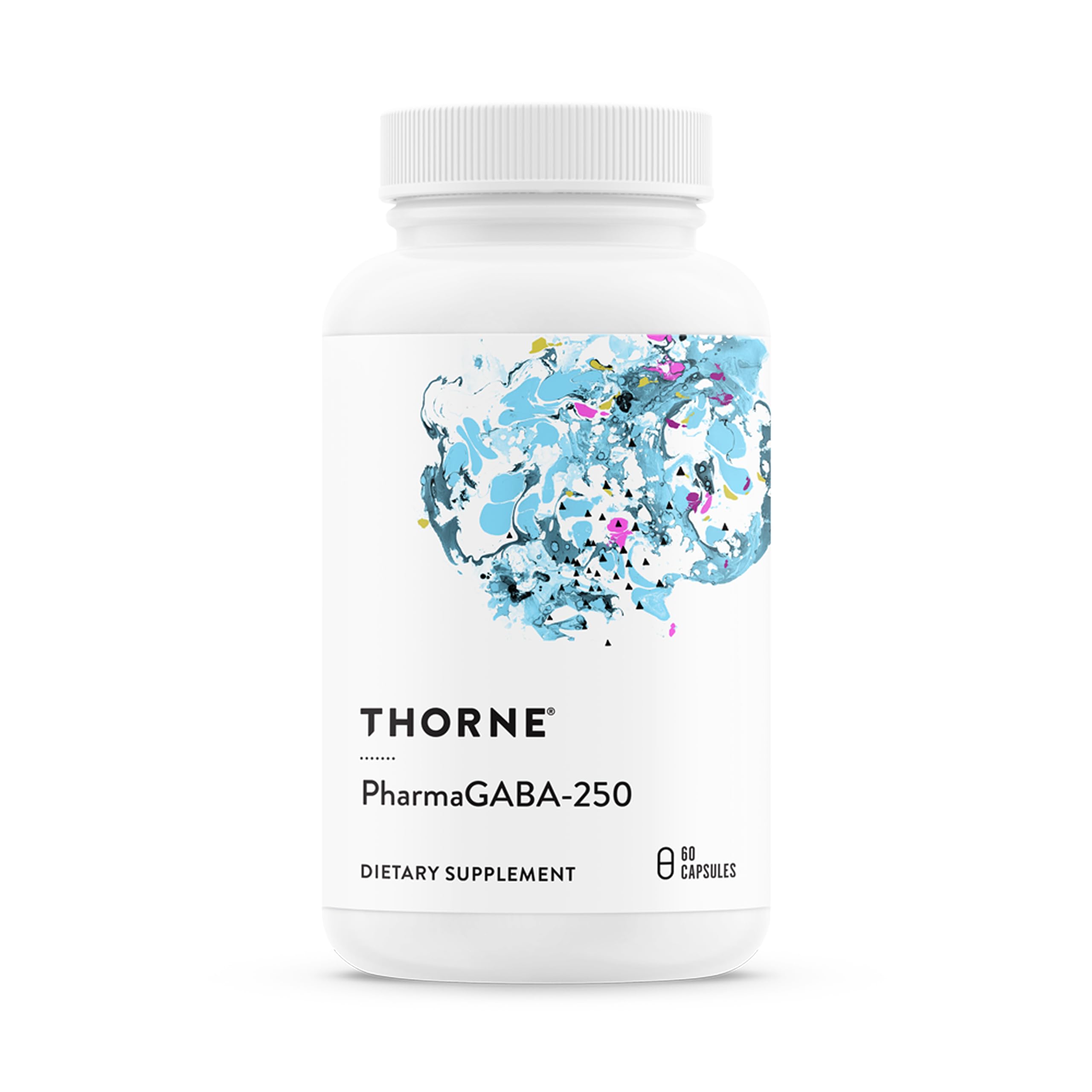
PharmaGABA is produced by fermenting substrates with Lactobacillus species (often L. hilgardii), yielding GABA that is chemically identical to synthetic GABA. Key points:
Most published human RCTs demonstrating acute relaxation (e.g., increased alpha waves, reduced stress-related biomarkers) used fermented/“natural” GABA products (Evidence: moderate for fermented GABA; limited for synthetic due to fewer trials).
There are no robust head-to-head clinical trials directly comparing fermented vs. synthetic GABA for anxiety or sleep outcomes (Evidence: strong on absence of data).
Chemically, both forms are the same molecule; any theoretical advantage of fermented GABA would likely stem from manufacturing impurities, co-factors, or matrix effects—not the GABA itself. Such advantages remain unproven in humans (Evidence: emerging/speculative).
What this means: research suggests fermented GABA has the larger human evidence base simply because it has been studied more. Claims that fermented GABA is categorically superior lack head-to-head proof (Evidence: moderate on equivalence uncertainty).
A quick note on medications vs. supplements
Benzodiazepines act at the benzodiazepine site on GABA-A receptors to increase chloride channel opening frequency, producing reliable anxiolysis and sedation (Evidence: strong). They can carry tolerance and dependence risks and require medical oversight.
Oral GABA is a nutrient/supplement approach with a different mechanism and a more modest, variable effect profile (Evidence: moderate for mild relaxation; emerging for broader anxiety indications).
Comparing the two is not like-for-like; expectations for supplements should remain conservative.
Natural ways that may support GABAergic calm (beyond GABA itself)
If you are weighing PharmaGABA vs. synthetic GABA, it’s useful to know there are additional, evidence-informed strategies that may influence GABAergic tone:
L-theanine (from green tea): Research suggests it may promote alpha-wave activity and reduce stress-related symptoms; several RCTs and systematic reviews report modest anxiolytic effects in stress-prone individuals (Evidence: moderate).
Magnesium: A meta-analysis indicates magnesium may reduce subjective anxiety in selected groups, though studies are small and heterogeneous (Evidence: moderate for subjective anxiety; emerging for clinical anxiety).
Taurine: An amino sulfonic acid with GABA-A/glycine receptor interactions; animal data are stronger than human trials, with limited preliminary human findings for calm or sleep (Evidence: emerging).
Traditional calming herbs with potential GABAergic actions:
Ayurveda: Ashwagandha (Withania somnifera) has multiple RCTs and a meta-analysis suggesting reduced stress and anxiety and improved sleep; preclinical work indicates GABA-mimetic or receptor-modulating effects (Evidence: moderate for stress/anxiety; emerging for direct GABA mechanisms). Bacopa monnieri shows anxiolytic effects in some trials and GABAergic modulation in preclinical models (Evidence: emerging to moderate).
Traditional Chinese Medicine (TCM): Suan Zao Ren (Ziziphus jujuba seed) and Magnolia bark (honokiol/magnolol) demonstrate GABA-A–modulating activity in preclinical studies and traditional use for calm and sleep; rigorous human data remain limited (Evidence: traditional for use; emerging for mechanisms/human efficacy).
These options illustrate that “natural calm” can be approached through multiple pathways—some with stronger clinical evidence than oral GABA itself.
Safety and practical considerations
Oral GABA is generally well-tolerated in short-term studies, with occasional reports of mild GI upset or drowsiness (Evidence: moderate).
Because GABAergic agents can cause additive sedation, caution is warranted if combined with other calming substances or medications acting on GABA pathways (Evidence: strong, pharmacology consensus).
Individuals with neurological conditions, those who are pregnant or lactating, or anyone taking psychoactive medications should consult a clinician before using GABA-containing products (Evidence: strong for prudent risk management).
The bottom line
Oral GABA likely has limited BBB penetration in healthy adults, but research suggests it may still promote mild relaxation and support sleep via peripheral or gut–brain pathways (Evidence: moderate).
Fermented GABA (PharmaGABA) has more human data than synthetic GABA, but there is no convincing head-to-head evidence that it is clinically superior; both deliver the same molecule (Evidence: moderate).
Effects of oral GABA in trials are generally modest; expectations should be calibrated accordingly, especially relative to prescription GABA-A modulators like benzodiazepines (Evidence: strong for medication mechanisms; moderate for supplement efficacy).
For those exploring “natural calm,” L-theanine and magnesium have comparable or stronger human evidence than GABA in some contexts, and traditional herbs from Ayurveda and TCM may act on GABAergic pathways, though high-quality trials are still catching up (Evidence: moderate to emerging).
As always, decisions about stress-support strategies are best made with a healthcare professional who can consider your unique context and any medications you use.
This content is for informational purposes only and does not constitute medical advice. Always consult a qualified healthcare provider before starting, stopping, or changing any supplement or medication regimen.
Introduction
Gamma-aminobutyric acid (GABA) is the brain’s primary inhibitory neurotransmitter—the chemical signal that helps quiet overactive neural circuits. Because anxious states are often linked
GABA and Natural Calm: Do Oral GABA Supplements Cross the Blood–Brain Barrier?
If you’ve ever wondered whether taking a GABA capsule can directly calm your brain, you’re asking the right question. Th
Introduction
Psychobiotics are living microorganisms that may influence mood, stress, and cognitive function through the gut–brain axis. Interest has surged as research links certain Lactobacillus and
Best Supplements for Anxiety Relief: Evidence‑Based Options, Dosage & Safety. If you’re searching for the best supplements for anxiety relief, you want what works, what’s safe, and how to use it alongside proven strategies like therapy, exercise, and good sleep. This guide reviews the most studied options—magnesium, L‑theanine, ashwagandha, GABA, valerian, CBD, B‑complex vita
Benzodiazepines. . ## Overview
**Benzodiazepines** are a class of prescription medications that act on the central nervous system, primarily by enhancing the effect of the neurotransmitter **gamma-aminobutyric acid (GABA)**. This action generally produces calming, sedative, muscle-relaxing, and anticonvulsant effects