Early-stage research, mostly preclinical or preliminary human studies
Do Oral GABA Supplements Cross the Blood–Brain Barrier? A Look at the Evidence
Does oral GABA cross the blood–brain barrier? This focused review weighs human trials, BBB science, PharmaGABA vs synthetic, and GABA-supportive alternatives for natural calm.
·8 min read
This content is for informational purposes only and does not constitute medical advice. Always consult a qualified healthcare provider before starting, stopping, or changing any supplement or medication regimen.
GABA and Natural Calm: Do Oral GABA Supplements Cross the Blood–Brain Barrier?
If you’ve ever wondered whether taking a GABA capsule can directly calm your brain, you’re asking the right question. The crux of the debate is simple: does orally ingested GABA cross the blood–brain barrier (BBB) in meaningful amounts? Here’s what research suggests, how “PharmaGABA” compares with synthetic GABA, and why some people still report feeling calmer after taking GABA—plus evidence-based, GABA-supportive alternatives.
Key takeaways at a glance:
The BBB appears to be largely impermeable to GABA under normal conditions. [Evidence: strong]
Small human trials report modest stress-calming signals after oral GABA, but mechanisms may be peripheral (gut–brain–vagal) rather than direct brain entry. [Evidence: emerging]
PharmaGABA (fermented GABA) and synthetic GABA are chemically identical; there is no clear head-to-head evidence that one is superior. [Evidence: emerging]
Non-GABA supplements that modulate GABAergic tone—like L-theanine and magnesium—may help with calm, with better overall human data. [Evidence: moderate]
What the Blood–Brain Barrier Does—and Why It Matters
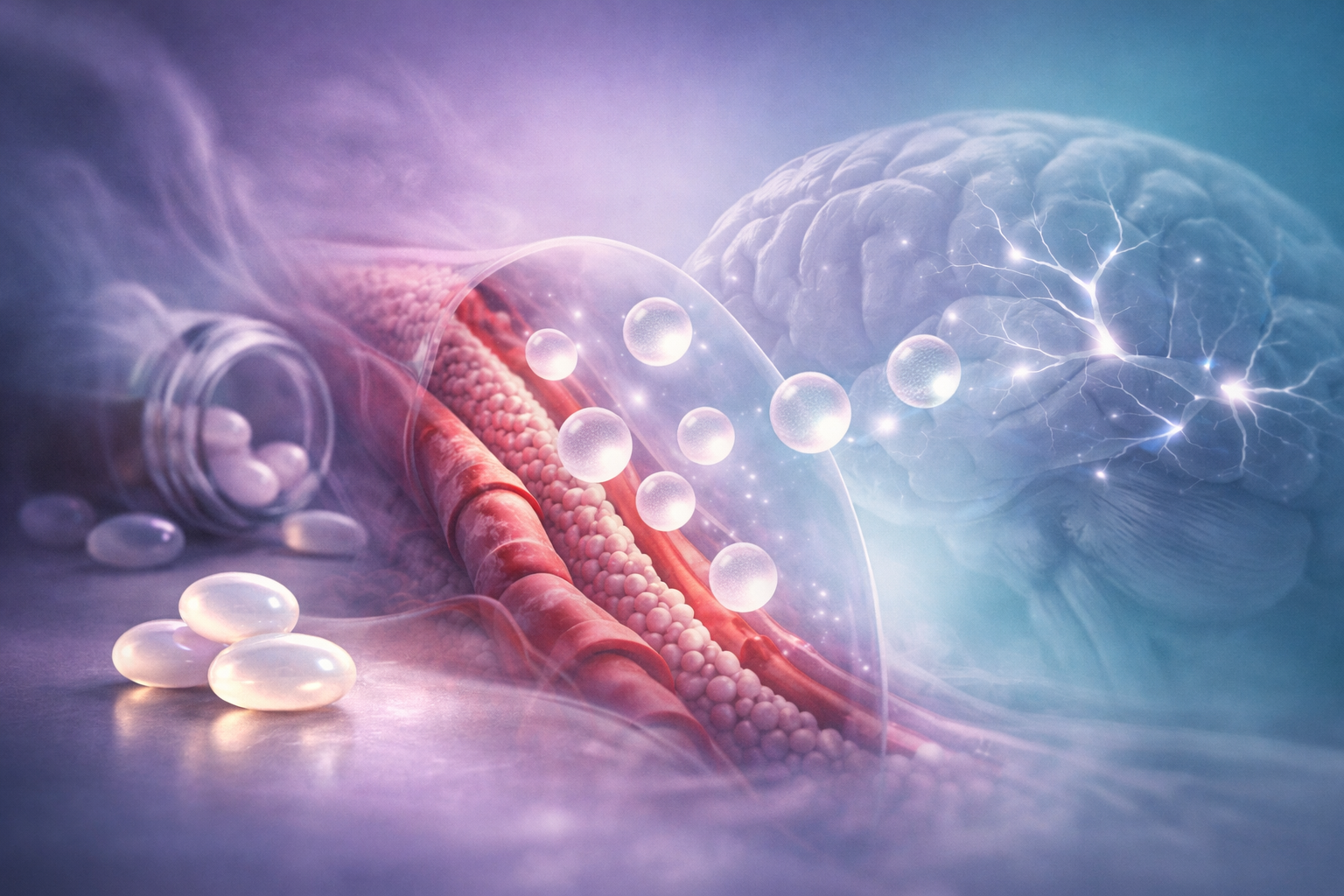
The BBB is a tightly regulated interface that shields the brain from circulating compounds. Small, lipophilic molecules often cross; larger or highly charged ones generally do not. GABA is a small molecule but highly polar and zwitterionic at physiological pH, which hinders passive diffusion. Multiple transporters exist for amino acids at the BBB, but specialized high-capacity influx transport for GABA into the brain has not been clearly demonstrated in healthy adults. [Evidence: strong]
A narrative and scoping review concluded that GABA’s BBB permeability in humans is likely minimal, and existing positive behavioral findings may involve indirect mechanisms or expectancy effects (Boonstra et al., Frontiers in Psychology, 2015). [Evidence: strong]
Classic and contemporary animal pharmacokinetic work generally finds negligible brain uptake of peripheral GABA unless the BBB is disrupted or very high/non-physiologic dosing is used. [Evidence: strong]
So Why Do Some Human Studies Find Calming Signals After Oral GABA?
Despite the BBB issue, several small randomized controlled trials have reported modest psychophysiological changes consistent with relaxation after acute GABA intake.
An RCT using fermented GABA reported increased alpha-wave activity and a blunted fall in secretory IgA during a stress task versus placebo (Abdou et al., Biofactors, 2006). [Evidence: emerging]
Another placebo-controlled trial found reduced salivary chromogranin A (a stress marker) and small improvements in task performance after beverages containing low-dose GABA (Yoto et al., Journal of Physiological Anthropology, 2012). [Evidence: emerging]
Some sleep-focused studies report shorter sleep latency with daily GABA, though sample sizes are small and methodologies heterogeneous (various small RCTs and pilot studies). [Evidence: emerging]
Taken together, these data suggest that oral GABA may influence stress-related markers and subjective calm in some contexts, but the overall quality and consistency of evidence are limited. Effects—when present—tend to be modest, and replication in larger, preregistered RCTs is still needed. [Evidence: emerging]
If GABA Doesn’t Cross the BBB Well, How Might It Still Help?
Several plausible, non–brain-entry mechanisms could explain observed effects:
Gut–brain–vagus pathway: GABA receptors are present in the enteric nervous system. Peripheral signaling in the gut may influence brain activity via the vagus nerve. In mice, a GABA-producing Lactobacillus strain altered central GABA receptor expression and anxiety-like behavior in a vagus-dependent manner (Bravo et al., PNAS, 2011). While this does not prove oral GABA itself acts identically, it supports a gut–vagal route for GABAergic signaling. [Evidence: moderate (preclinical), emerging (human)]
Peripheral receptor and endocrine effects: GABA receptors exist on immune cells, pancreatic islets, and other peripheral tissues. Modest shifts in autonomic tone or inflammatory signaling could secondarily affect mood and stress perception. [Evidence: emerging]
Expectancy/placebo: In small psychophysiology studies, expectancy can contribute meaningfully to perceived calm. [Evidence: moderate]
PharmaGABA vs. Synthetic GABA: Is There a Real Difference?
“PharmaGABA” is a branded, fermented form of GABA produced by Lactobacillus hilgardii. Synthetic GABA is chemically synthesized. Chemically, the active molecule—gamma-aminobutyric acid—is identical in both. [Evidence: strong]
Several of the positive RCTs used fermented GABA (e.g., Abdou et al., 2006), but there are no robust head-to-head trials showing superior efficacy of PharmaGABA over synthetic GABA. [Evidence: emerging]
Claims that fermented GABA has uniquely better bioavailability or BBB penetration are not substantiated by independent human pharmacokinetic studies. [Evidence: emerging]
In short, while some branded fermented products have been studied, current evidence does not establish that fermentation confers unique clinical advantages beyond study-specific contexts. [Evidence: emerging]
How This Differs From Prescription GABAergic Drugs
Benzodiazepines and certain sleep agents bind to specific sites on GABA-A receptors, enhancing the effect of endogenous GABA and reliably producing anxiolysis and sedation. These drugs are lipophilic, cross the BBB efficiently, and have well-documented efficacy alongside known risks and side effects. [Evidence: strong]
Natural GABA-Supportive Strategies With Better Evidence
If your goal is “natural calm,” research suggests considering approaches that modulate GABAergic tone indirectly and have more consistent human data.
L-theanine (from tea): May increase alpha-wave activity and reduce state anxiety under stress. RCTs and small meta-analyses report benefits on stress-related symptoms, particularly in high-stress individuals (e.g., Hidese et al., Nutrients, 2019). Mechanisms include glutamate–GABA balance and increased alpha oscillations. [Evidence: moderate]
Magnesium: Systematic reviews report suggestive benefits for subjective anxiety, particularly in deficient or high-stress populations, though study quality varies (Boyle et al., Nutrients, 2017). Magnesium modulates NMDA/GABA balance and neuronal excitability. [Evidence: moderate]
Taurine: A conditional GABA-A and glycine receptor agonist in preclinical models. Limited human data suggest possible calming or sleep-supportive effects, but high-quality RCTs for anxiety are sparse. [Evidence: emerging]
Traditional East–West Bridge: Calming Botanicals With GABAergic Actions
Several traditional herbs used in Ayurveda and Traditional Chinese Medicine (TCM) may influence GABAergic pathways, offering a complementary route to “natural calm.”
Valerian (Western/TCM): Preclinical data show modulation of GABA-A receptors (valerenic acid). Human trials on anxiety and sleep are mixed but trend positive for sleep latency. [Evidence: moderate]
Ashwagandha (Ayurveda): Multiple RCTs in stressed adults report reductions in perceived stress and anxiety; mechanisms may include GABA-mimetic activity and HPA-axis modulation. [Evidence: moderate]
Magnolia bark (Houpu, TCM): Honokiol and magnolol positively modulate GABA-A receptors in preclinical studies; human stress/anxiety data are limited. [Evidence: emerging]
Jujube seed (Suan Zao Ren, TCM): Traditionally used for calm and sleep; early studies suggest GABAergic and serotonergic effects, but high-quality RCTs are limited. [Evidence: emerging]
Passionflower (Western/TCM use): Some RCTs report anxiolytic effects, possibly via GABAergic modulation; overall evidence is modest with heterogeneity. [Evidence: moderate]
What This Means for GABA Supplements
Direct brain entry of oral GABA in healthy adults appears minimal. [Evidence: strong]
Modest calming effects seen in small trials may be mediated by gut–brain signaling, peripheral receptors, or expectancy. [Evidence: emerging]
Branded fermented GABA has been used in studies, but superiority over synthetic GABA is unproven. [Evidence: emerging]
If seeking “natural calm,” strategies that support GABAergic tone indirectly—such as L-theanine or magnesium—and traditionally used botanicals with emerging GABAergic mechanisms may be reasonable to explore. Always consider individual context and consult a qualified professional for personalized guidance. [Evidence: moderate]
Bottom Line
Oral GABA likely does not cross the blood–brain barrier to a meaningful degree in healthy adults. Yet some small human studies report modest calming signals after ingestion, probably via indirect pathways rather than direct brain entry. [Evidence: strong for poor BBB crossing; emerging for indirect effects]
PharmaGABA and synthetic GABA are chemically the same; current data do not show a clear efficacy difference. [Evidence: emerging]
For “natural calm,” research suggests considering non-GABA options that influence GABAergic tone (e.g., L-theanine, magnesium) and time-honored botanicals from TCM and Ayurveda with plausible GABAergic actions. These have comparatively stronger or at least more consistent human data than GABA itself. [Evidence: moderate]
References (selected)
Boonstra E et al. Neurotransmitters as food supplements: the effects of GABA on brain and behavior. Frontiers in Psychology, 2015.
Abdou AM et al. Relaxation and immunity enhancement by GABA administration. Biofactors, 2006.
Yoto A et al. Effects of GABA beverage on stress and cognitive function. Journal of Physiological Anthropology, 2012.
Bravo JA et al. Ingestion of Lactobacillus strain regulates emotional behavior and central GABA receptor expression in a mouse via the vagus nerve. PNAS, 2011.
Boyle NB et al. The effects of magnesium supplementation on subjective anxiety and stress. Nutrients, 2017.
Hidese S et al. Effects of L-theanine on stress-related symptoms and cognitive functions in healthy adults: a randomized controlled trial. Nutrients, 2019.
This content is for informational purposes only and does not constitute medical advice. Always consult a qualified healthcare provider before starting, stopping, or changing any supplement or medication regimen.
Introduction
Gamma-aminobutyric acid (GABA) is the brain’s primary inhibitory neurotransmitter—the chemical signal that helps quiet overactive neural circuits. Because anxious states are often linked
Natural Supplements for Brain Health: An Evidence‑Based Guide to Nootropics, Omega‑3s, and Key Vitamins. If you’re searching for natural supplements for brain health, you’re likely looking for safe, evidence‑based ways to support memory, focus, mood, or long‑term cognitive resilience. This guide reviews what research suggests works, how these supplements may act in the brain, and how to use them though
Best Supplements for Anxiety Relief: Evidence‑Based Options, Dosage & Safety. If you’re searching for the best supplements for anxiety relief, you want what works, what’s safe, and how to use it alongside proven strategies like therapy, exercise, and good sleep. This guide reviews the most studied options—magnesium, L‑theanine, ashwagandha, GABA, valerian, CBD, B‑complex vita
Introduction
Psychobiotics are living microorganisms that may influence mood, stress, and cognitive function through the gut–brain axis. Interest has surged as research links certain Lactobacillus and
Gut-Brain Axis. GBA, Gut-Brain Connection. ## Gut-Brain Axis Overview
The **gut-brain axis** refers to the complex, bidirectional communication network linking the **gastrointestinal tract**, the **central nervous system**, and a wider set of hormonal, immune, and metabolic signaling pathways. Rather than a single structure, it is a functio
Benzodiazepines. . ## Overview
**Benzodiazepines** are a class of prescription medications that act on the central nervous system, primarily by enhancing the effect of the neurotransmitter **gamma-aminobutyric acid (GABA)**. This action generally produces calming, sedative, muscle-relaxing, and anticonvulsant effects