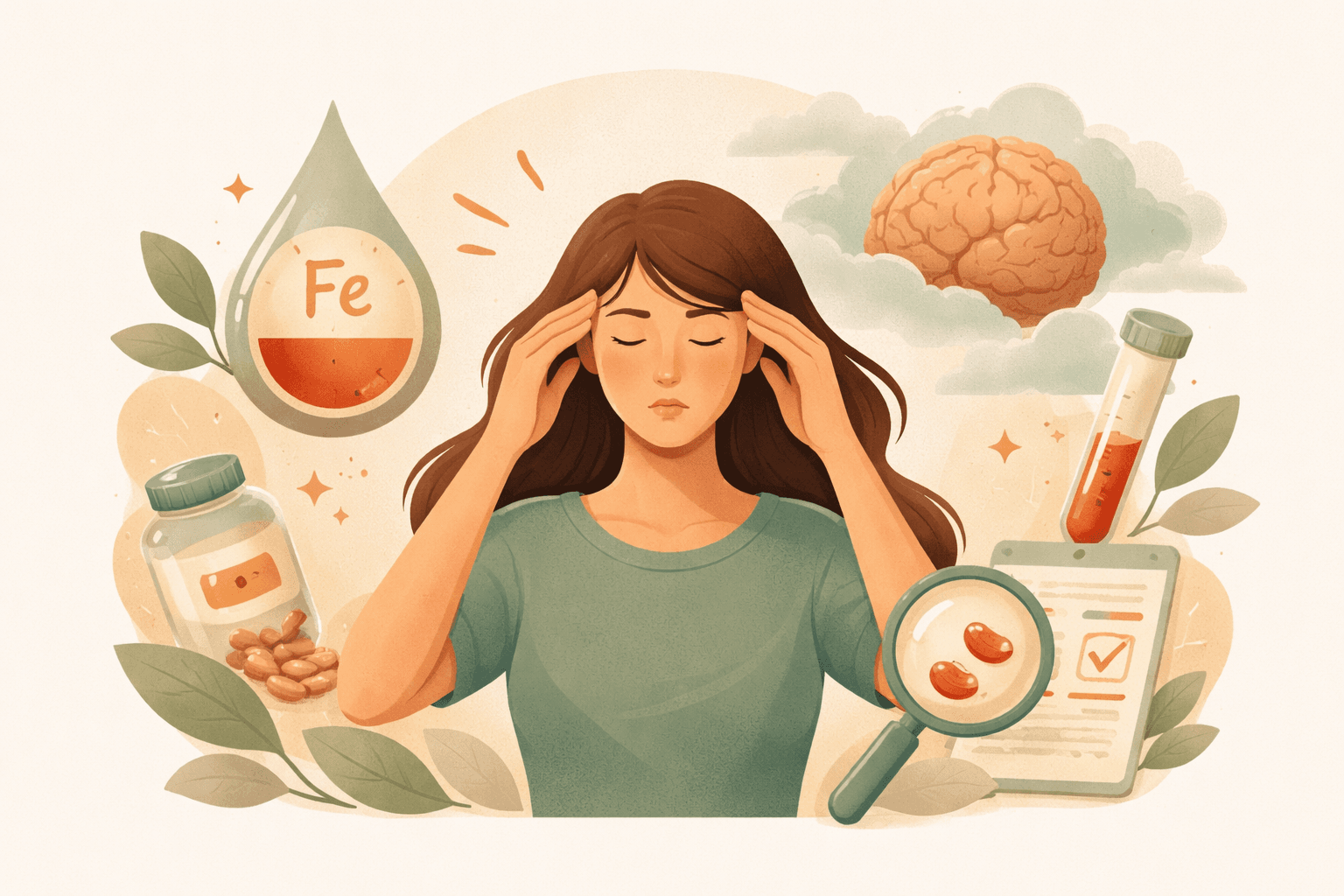
Iron Deficiency Beyond Anemia: Why Ferritin Matters
When lab results say “not anemic,” but you still feel wiped out, low ferritin may be the missing piece. Ferritin reflects your iron stores, and research suggests that ferritin can dip well before hemoglobin does—producing fatigue, brain fog, hair shedding, and sometimes restless legs, even with a “normal” blood count.
Key idea (evidence: strong): Ferritin is a more sensitive early marker of iron deficiency than hemoglobin alone. The World Health Organization recognizes ferritin as the preferred indicator of iron stores in individuals and populations, with interpretation adjusted for inflammation (WHO guideline, 2020).
What Ferritin Tells You—And Hemoglobin Doesn’t
- Hemoglobin is the oxygen-carrying protein in red blood cells. It usually drops only after iron deficiency progresses to anemia.
- Ferritin is an intracellular protein that stores iron; low ferritin reflects depleted iron reserves even when hemoglobin remains in range. In other words, you can have “non‑anemic iron deficiency.”
- Caveat: Ferritin rises with inflammation or infection (it’s an acute-phase reactant). Interpreting ferritin alongside clinical context and, when needed, markers of inflammation (e.g., CRP) helps avoid misclassification (evidence: strong; WHO 2020 guidance).
Non‑Anemic Iron Deficiency Symptoms: More Than Tiredness
Research suggests that iron-dependent enzymes and brain pathways are affected before red blood cell production falters, which may explain symptoms with normal hemoglobin. Commonly reported features include:
- Persistent fatigue and reduced stamina (evidence: strong)
- Cognitive dulling or “brain fog,” reduced concentration, and lower work capacity (evidence: moderate)
- Restless legs sensations, especially at night (evidence: moderate)
- Hair shedding, brittle nails, pallor, and exertional shortness of breath in some individuals (evidence: emerging)
What the Evidence Shows
Fatigue and cognitive function
- Randomized controlled trials suggest that iron therapy reduces fatigue in non‑anemic women with low ferritin. In a CMAJ RCT (Vaucher et al., 2012), fatigued women with ferritin <50 µg/L and normal hemoglobin experienced greater improvement in fatigue scores at 12 weeks compared with placebo (evidence: strong).
- An earlier BMJ RCT (Verdon et al., 2003) also reported significant fatigue improvement in non‑anemic premenopausal women with low ferritin receiving iron versus placebo (evidence: strong).
- Systematic reviews indicate that iron repletion may improve subjective fatigue and some cognitive performance measures in iron‑deficient, non‑anemic individuals, though effect sizes vary and populations are heterogeneous (evidence: moderate; multiple narrative and systematic reviews of non‑anemic iron deficiency).
Restless legs syndrome (RLS)
- Iron plays a role in dopaminergic pathways implicated in RLS. A Cochrane Review (2019) concluded that iron therapy may reduce RLS severity in individuals with low ferritin, even without overt anemia, although study quality and protocols varied (evidence: moderate).
Exercise capacity and work output
- A Cochrane Review on iron in non‑anemic adults found modest improvements in exercise performance and fatigue-related outcomes, particularly in those with low ferritin at baseline (evidence: moderate).
Who Is More Likely to Have Low Ferritin With Normal Hemoglobin?
While anyone can develop depleted iron stores, research highlights several higher‑risk groups:
- People with heavy or frequent menstrual bleeding (evidence: strong)
- Endurance athletes and those with high training loads (gastrointestinal microbleeds, foot‑strike hemolysis, and sweat iron loss) (evidence: moderate)
- Individuals with low dietary iron intake or limited heme iron intake (e.g., some plant‑forward or restrictive patterns) (evidence: moderate)
- Frequent blood donors (evidence: strong)
- Those with gastrointestinal conditions affecting absorption (e.g., celiac disease, inflammatory bowel disease, post‑surgical changes) (evidence: moderate)
Ferritin Testing: When to Consider It
If you have persistent fatigue, brain fog, reduced exercise tolerance, or RLS—especially with risk factors above—discuss ferritin testing with a clinician. Research suggests ferritin helps identify early iron deficiency before anemia appears (evidence: strong). Because ferritin rises with inflammation, clinicians may consider context, repeat testing, or adjunct markers like transferrin saturation or C‑reactive protein when interpreting results (evidence: strong).
Iron Absorption Basics: Heme vs. Non‑Heme and Food Synergy
Even with adequate intake, absorption determines how much iron you actually use.
- Heme iron (from animal sources such as red meat, poultry, and fish) is generally absorbed more efficiently and is less affected by inhibitors (evidence: strong; classic human balance studies and reviews, e.g., Hallberg; Hurrell & Egli 2010).
- Non‑heme iron (from plants, eggs, and fortified foods) has variable absorption influenced by meal composition. Vitamin C and organic acids can enhance non‑heme absorption, while phytates (grains/legumes), polyphenols (tea/coffee), and calcium may inhibit it (evidence: strong; multiple metabolic studies and reviews).
Traditional practices echo these mechanisms:
- Cooking in cast‑iron cookware can transfer small amounts of iron to food, especially acidic or moist dishes like tomato sauces and stews (evidence: moderate; food chemistry studies show meaningful increases under certain conditions).
- Pairing plant‑based iron sources with vitamin C–rich foods (citrus, bell peppers, tomatoes, amla) is a longstanding culinary tradition in many cultures and may improve non‑heme iron uptake (evidence: strong).
- Ayurveda historically used iron preparations such as Loha Bhasma for conditions resembling fatigue and pallor. Modern evaluations are limited and variable in quality, and safety/standardization remain concerns; this sits within traditional evidence rather than modern RCTs (evidence: traditional).
A Note on Safety: Iron Overload Exists
Low ferritin is not the only story. Some people accumulate excess iron, which can be harmful.
- Hereditary hemochromatosis, often linked to HFE gene variants (e.g., C282Y), leads to increased intestinal iron absorption and tissue iron loading (evidence: strong). Persistently high ferritin and elevated transferrin saturation raise suspicion.
- Indiscriminate iron use may pose risks for individuals with undiagnosed overload states or liver disease. Testing and clinical guidance help tailor decisions (evidence: strong).
Bringing It Together: Practical, Food‑First Strategies
Without giving medical advice or dosage guidance, research‑informed, food‑forward habits may help support healthy iron status:
- Combine plant iron with vitamin C–rich produce in meals (evidence: strong).
- Consider traditional cookware strategies (cast iron) for suitable recipes (evidence: moderate).
- Space tea/coffee away from iron‑rich meals if low ferritin is a concern (evidence: strong).
- For individuals with symptoms or risk factors, discuss ferritin and related iron studies with a healthcare professional before considering supplements, given the possibility of iron overload (evidence: strong).
How Clinicians Interpret Ferritin
- Low ferritin suggests depleted stores even with normal hemoglobin (evidence: strong; WHO 2020). Thresholds vary by guideline, age, sex, and inflammation status.
- Context matters: concurrent inflammation, infection, liver disease, or malignancy can elevate ferritin independent of iron status (evidence: strong). Additional labs and clinical history refine interpretation.
Bottom Line
- Ferritin is often a better early marker of iron deficiency than hemoglobin. You can feel fatigued and cognitively flat with normal hemoglobin if ferritin is low (evidence: strong).
- RCTs show that addressing low ferritin in non‑anemic individuals can reduce fatigue and may improve select cognitive and RLS outcomes, though results vary by population (evidence: moderate–strong).
- Risk is higher with heavy menses, endurance training, limited heme iron intake, frequent blood donation, and malabsorption conditions (evidence: moderate–strong).
- Traditional practices—like pairing iron‑rich foods with vitamin C and using cast‑iron cookware—align with modern absorption science (evidence: moderate–strong). Ayurvedic iron preparations are historical but lack robust modern safety and efficacy data (evidence: traditional).
- Because iron overload is real, testing and individualized guidance are important before pursuing iron interventions.
References (select)
- World Health Organization. Ferritin concentrations for assessing iron status in individuals and populations. 2020.
- Vaucher P, et al. Effect of iron supplementation on fatigue in nonanemic menstruating women with low ferritin. CMAJ. 2012.
- Verdon F, et al. Iron supplementation for unexplained fatigue in non-anaemic women. BMJ. 2003.
- Cochrane Review: Iron therapy for restless legs syndrome. 2019.
- Hurrell R, Egli I. Iron bioavailability and dietary reference values. Int J Vitam Nutr Res. 2010.