

Brain Fog
Also known as: Cognitive Dysfunction
Overview
Brain fog is a non-medical, umbrella term commonly used to describe reduced mental clarity, including symptoms such as forgetfulness, difficulty concentrating, slowed thinking, mental fatigue, word-finding problems, and a sense of feeling “not sharp.” Although widely discussed by patients and the public, brain fog is not a formal diagnosis in conventional medicine. Instead, it is generally understood as a symptom complex that can occur in many different contexts, ranging from poor sleep and high stress to hormonal shifts, medication effects, infection, autoimmune disease, nutritional deficiencies, and mood disorders.
The significance of brain fog lies in how broadly it can affect daily functioning and quality of life. People may notice trouble staying focused at work, following conversations, recalling routine information, organizing tasks, or sustaining attention. In recent years, the term has gained more clinical visibility because of its association with post-viral syndromes, including post-acute sequelae after COVID-19, as well as conditions such as chronic fatigue syndrome/myalgic encephalomyelitis, fibromyalgia, perimenopause, thyroid disorders, and sleep disturbances. Research suggests that the experience is real and often multifactorial, even when standard medical testing is unrevealing.
From a health-content perspective, brain fog is best understood as a signal rather than a standalone disease. It may reflect changes in sleep quality, inflammation, autonomic function, blood sugar regulation, stress physiology, or neurological processing. Because symptoms can overlap with anxiety, depression, attention disorders, dementia, and medication side effects, careful evaluation is often needed to clarify what may be contributing. Consultation with a qualified healthcare professional is important, particularly when cognitive symptoms are new, progressive, severe, or accompanied by other concerning signs.
Interest in brain fog is especially strong in integrative and alternative medicine because many traditional systems frame cognitive dullness as connected to broader patterns of imbalance involving energy, digestion, circulation, stress, and restorative capacity. This has led to growing public interest in dietary patterns, mind-body practices, herbal traditions, and sleep-supportive routines. At the same time, the scientific literature remains mixed: some causes of cognitive impairment are well characterized, while specific interventions for general “brain fog” are still being actively studied.
Medical Perspectives
Two Ways of Seeing Health

Western
scientific · clinical
Western medicine applies science, technology, and clinical experience to treat symptoms through testing, diagnosis, and targeted intervention.

Eastern
traditional · alternative
Eastern medicine focuses on treating the body naturally by applying traditional knowledge practiced for thousands of years, emphasizing balance and whole-person wellness.
Gold Bamboo presents both perspectives side-by-side so you can make informed decisions. We don't advocate for one over the other — your health choices are yours.
Western Medicine Perspective
Western Medicine Perspective
In conventional medicine, brain fog is usually approached as a symptom with a differential diagnosis, not a disease entity of its own. Clinicians may consider a wide range of contributors, including sleep deprivation, obstructive sleep apnea, depression, anxiety, chronic stress, medication effects, substance use, anemia, iron deficiency, vitamin B12 deficiency, thyroid dysfunction, uncontrolled blood sugar, menopause-related changes, autoimmune illness, infection, concussion, chronic pain, and neuroinflammatory or post-viral states. In older adults, cognitive complaints may also prompt evaluation for mild cognitive impairment or neurodegenerative disease, while in younger adults attention disorders or mood-related cognitive slowing may be more relevant.
Research suggests that the biology behind brain fog may differ depending on the underlying cause. Proposed mechanisms include poor sleep-related impairment of attention and memory consolidation, inflammatory signaling, altered neurotransmitter function, autonomic nervous system dysregulation, hormonal fluctuation, vascular changes, and fatigue-related reductions in executive function. Post-COVID brain fog, for example, has been studied in relation to immune activation, microvascular injury, and dysregulation of the central nervous system, though the science is still evolving. In other settings, such as hypothyroidism or nutrient deficiency, cognitive symptoms may be linked more directly to metabolic dysfunction.
The conventional approach generally emphasizes identifying and addressing the root cause, which may involve medical history, medication review, sleep assessment, mental health screening, and laboratory evaluation when appropriate. Clinicians may also look for red-flag symptoms such as sudden confusion, focal neurological deficits, severe headache, personality change, or rapidly worsening cognition, which can indicate urgent conditions requiring prompt medical care. Because the term brain fog is broad, western medicine tends to focus on measurable domains like attention, working memory, processing speed, fatigue, and executive function rather than using the phrase as a diagnostic endpoint.
From an evidence standpoint, western medicine has strong research on many individual causes of cognitive symptoms, but less consensus on brain fog as a unified syndrome. Studies indicate that interventions are most effective when matched to the specific contributor—for example, treating sleep disorders, correcting deficiencies, managing mood symptoms, or addressing endocrine and inflammatory conditions. For general, nonspecific brain fog, the evidence base remains more variable and condition-dependent.
Eastern & Traditional Perspective
Eastern / Traditional Medicine Perspective
In Traditional Chinese Medicine (TCM), brain fog is not typically framed as a single disorder but may be interpreted through patterns such as Spleen Qi deficiency, Dampness, Phlegm misting the mind, Heart Blood deficiency, Kidney essence deficiency, or Liver Qi stagnation. In this framework, poor concentration, heavy-headedness, fatigue, and mental dullness may reflect impaired transformation of الغذ and fluids, insufficient nourishment of the mind, or obstruction of clear yang rising to the head. TCM traditionally views cognition as influenced not only by the brain, but also by the functional balance of organ systems and the smooth movement of qi and blood.
In Ayurveda, symptoms associated with brain fog are often discussed in relation to ama (a concept often translated as toxic or undigested metabolic residue), imbalance in Vata, or disturbances in Sadhaka Pitta and Tarpaka Kapha, which are linked to mental clarity, emotional processing, and nervous system nourishment. Mental cloudiness, poor focus, lethargy, and memory difficulty may be understood as signs that digestion, daily rhythm, stress adaptation, and mind-body balance are out of sync. Traditional Ayurvedic texts and contemporary practitioners frequently connect cognitive dullness with inadequate sleep, overstimulation, weak digestion, and depletion from chronic stress.
In naturopathic and integrative traditions, brain fog is often explored as a multifactorial issue involving sleep quality, blood sugar variability, digestive health, chronic stress load, hormonal transitions, inflammation, and nutritional status. These systems generally emphasize whole-person assessment and patterns of imbalance rather than symptom suppression alone. Mind-body medicine, breathing practices, meditation, gentle movement, and traditional herbal systems are commonly discussed in this context, though the strength of evidence varies considerably depending on the therapy and the population studied.
From an evidence perspective, some eastern and traditional approaches align with modern findings on the importance of sleep, stress regulation, metabolic health, and inflammation in cognitive function. However, many traditional explanatory models remain system-specific frameworks rather than concepts directly validated by biomedical science. Consultation with qualified practitioners is important, especially because persistent cognitive symptoms can overlap with medically significant conditions that warrant conventional assessment.
Supplements & Products
Recommended Products
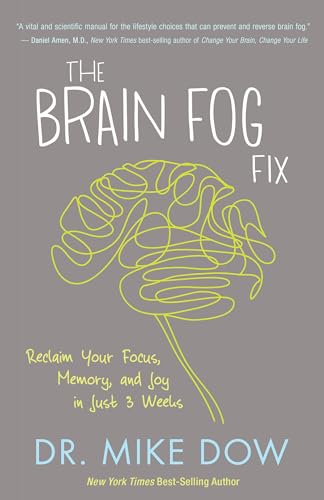
The Brain Fog Fix: Reclaim Your Focus, Memory, and Joy in Just 3 Weeks: Dow, Dr. Mike
This book is a must read for anyone wanting freedom from ‘bad brain’ plus an escape from the emotional roller coaster our brain chemistry creates. Follow his 21-day plan and rediscover greater energy

Jarrow Formulas Methyl Vitamin B12 5000 mcg - 60 Chewable Tablets, Naturally Fruit Flavored- Bioactive B12 Vitamin - Supports Cellular Energy Production, Brain Health & Metabolism - 60 Servings
Better Retained With Jarrow B12: ... and vegans (1) Convenient Chewable Tablet: <strong>Each naturally fruit flavored chewable tablet delivers 5000 micrograms (mcg) of methyl B-12</strong>; our B12 me

Nordic Naturals DHA Xtra, Strawberry - 60 Soft Gels - 1660 mg Omega-3 - High-Intensity DHA Formula for Brain & Nervous System Support - Non-GMO - 30 Servings
DHA-DOMINANT FORMULA - Nordic Naturals DHA Xtra is <strong>our most potent DHA formula with almost 1000 mg of pure omega-3 DHA in a single serving</strong>. It also supports healthy memory, cognition,
Evidence & Sources
Promising research with growing clinical support from multiple studies
- National Center for Complementary and Integrative Health (NCCIH)
- National Institute of Neurological Disorders and Stroke (NINDS)
- Centers for Disease Control and Prevention (CDC) Long COVID resources
- Nature Reviews Neurology
- JAMA
- The Lancet
- BMJ
- World Health Organization (WHO)
- Mayo Clinic Proceedings
- Frontiers in Immunology
This content is for informational purposes only and does not constitute medical advice. Always consult a qualified healthcare provider before starting, stopping, or changing any supplement or medication regimen.