L‑Glutamine and Exercise‑Induced Gut Permeability: A Focused Look for Endurance Athletes
A focused, evidence‑based look at L‑glutamine for exercise‑induced gut permeability—what the research shows, how it ties to the gut–muscle axis, and where traditional practices like bone broth fit.
·9 min read
This content is for informational purposes only and does not constitute medical advice. Always consult a qualified healthcare provider before starting, stopping, or changing any supplement or medication regimen.
Why target the gut during hard training?
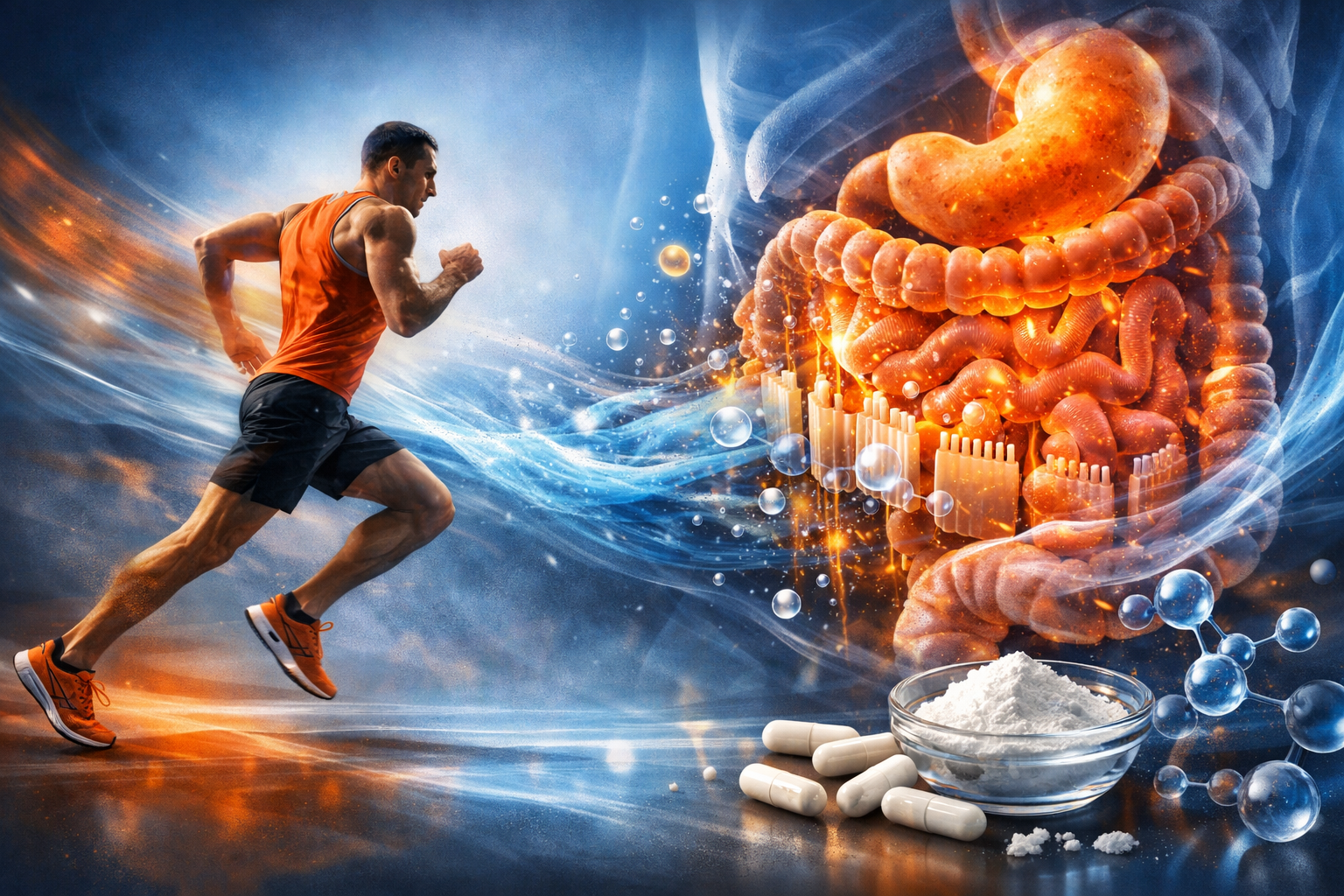
Long runs, races in the heat, and high‑intensity sessions can challenge the gastrointestinal (GI) tract as much as the legs. Reduced blood flow to the gut, heat stress, and mechanical jostling may loosen tight junctions between intestinal cells—an effect often called exercise‑induced gut permeability. For some athletes, that translates to nausea, cramping, urgent bathroom stops, or post‑race malaise. Research suggests L‑glutamine—the most abundant amino acid in the body—may help maintain gut barrier integrity under stress without directly acting as a stimulant or performance enhancer (Evidence: moderate).
This article focuses on the long‑tail question: Can L‑glutamine support the gut barrier during intense or hot‑weather exercise?
Why L‑glutamine matters to the gut–muscle axis
L‑glutamine is synthesized primarily in skeletal muscle and circulates as a key nitrogen shuttle. It fuels rapidly dividing cells, notably enterocytes (intestinal lining) and immune cells. During strenuous exercise or heat exposure, muscle may release glutamine to support whole‑body demands. Plasma glutamine can dip after exhaustive efforts, paralleling transient immune perturbations and GI symptoms (Evidence: moderate, based on physiological studies and exercise trials).
Key roles relevant to athletes:
Fuel for the intestinal epithelium and immune cells (Evidence: strong in basic and clinical physiology)
Support for tight‑junction proteins and mucosal defenses under stress (Evidence: moderate in human exercise studies; strong in cell/animal models)
Nitrogen transport and acid–base regulation, which may be relevant during prolonged exertion (Evidence: strong in physiology)
What happens to the gut during hard exercise
Intense or prolonged efforts, especially in the heat, reduce splanchnic blood flow while raising core temperature. This combination can injure enterocytes, increase permeability (often measured via lactulose:rhamnose sugar probes), and allow lipopolysaccharide (LPS) from gut bacteria to enter circulation—contributing to GI symptoms and systemic fatigue sensations (Evidence: strong for the phenomenon; moderate for symptom linkage). Hydration, heat acclimation, and fueling strategies are first‑line countermeasures. Nutritional adjuncts like L‑glutamine have been investigated as additional supports (Evidence: moderate).
What the research says about L‑glutamine and exercise‑induced gut permeability
Randomized, placebo‑controlled trials in runners and cyclists show that oral L‑glutamine given before or around exercise in the heat can attenuate rises in gut permeability (lactulose:rhamnose ratio), reduce markers of enterocyte injury (intestinal fatty acid‑binding protein, I‑FABP), and blunt endotoxemia compared with placebo. Several studies from independent groups, including work using alanine–glutamine dipeptide, report similar protective effects under heat stress or exhaustive protocols (Evidence: moderate; small RCTs with consistent direction of effect).
Mechanistic data in humans indicate that glutamine may upregulate cellular stress responses (for example, heat shock proteins) and support tight‑junction integrity under thermal and ischemic stress. These effects align with cell and animal data showing glutamine as a preferred fuel for the intestinal barrier (Evidence: moderate in humans; strong in preclinical models).
Systematic and narrative reviews on nutritional countermeasures for "exercise‑induced gastrointestinal syndrome" conclude that glutamine shows promise for reducing permeability and GI symptoms in stressful conditions, while noting heterogeneity in protocols and small sample sizes. Not all trials are positive, and outcomes vary by environmental heat load, exercise duration, and measurement methodology (Evidence: moderate).
Performance outcomes: Across studies, glutamine has not reliably improved time‑trial performance or maximal output directly. Any benefit appears more related to gut comfort and the ability to maintain fueling and hydration strategies during events, rather than to an ergogenic effect per se (Evidence: moderate for lack of direct performance effect; emerging for symptom‑mediated benefits).
Immune ripple effects after hard efforts
Prolonged endurance exercise is followed by a transient "open window" of immune susceptibility. Older randomized work in marathoners reported fewer self‑reported upper‑respiratory symptoms in the week after racing when athletes consumed glutamine compared with placebo. However, studies using objective immune markers (e.g., salivary IgA, lymphocyte function) show mixed results, and meta‑analyses do not confirm a robust, consistent immune‑protective effect in athletes (Evidence: emerging for symptom reduction; moderate for null/mixed immune biomarkers).
Lessons from clinical stress states (burn/trauma) and IBS
Burn and trauma recovery: In patients with major burns or trauma, enteral or parenteral glutamine has been studied extensively. Several meta‑analyses report reductions in infectious complications and shorter hospital stays, particularly in burns, yet large pragmatic ICU trials in heterogeneous critical illness populations have shown no benefit and, at very high doses, potential harm. These findings underscore that context, route, dose, and patient status matter and should not be extrapolated directly to healthy athletes (Evidence: moderate overall; mixed by population and protocol).
Irritable bowel syndrome (IBS‑D with increased permeability): A randomized, double‑blind, placebo‑controlled trial in adults with diarrhea‑predominant IBS and documented intestinal hyperpermeability found that glutamine improved symptom severity and normalized permeability markers relative to placebo. This suggests a permeability‑targeted role in a defined IBS subgroup, though replication and broader applicability are needed (Evidence: moderate for IBS‑D with hyperpermeability; emerging for other IBS phenotypes).
These clinical data, while not athlete‑specific, are consistent with glutamine’s role in supporting epithelial repair and immune homeostasis under stress.
Traditional perspective: bone broth and convalescence
Across East Asian and European culinary traditions, slow‑simmered broths are classic convalescent foods for the ill and the recovering athlete. While exact amino acid content varies by ingredients and preparation, such broths provide peptides and amino acids, including glutamine from collagen‑rich tissues. From a modern lens, this aligns with providing gentle, hydrating nourishment that may support the gut lining during recovery. Evidence for broth itself in athletic gut protection is limited, but the practice resonates with glutamine’s known biology (Evidence: traditional for use; emerging for mechanistic alignment).
Practical considerations for athletes
When exercise is hot, long, or gut‑jostling, protecting the intestinal barrier may help reduce GI distress and support post‑exercise recovery (Evidence: strong for the problem; moderate for glutamine’s role).
Strategies with the best support remain foundational: personalized fueling plans, adequate hydration/electrolytes, heat acclimation, and pacing (Evidence: strong). Glutamine may be considered as an adjunct within a broader gut‑protective plan (Evidence: moderate).
Individuals with medical conditions such as kidney or liver disease, or those recovering from severe illness, should consult a qualified clinician before considering supplemental amino acids. Athletes with chronic GI symptoms warrant medical evaluation to rule out underlying conditions.
Glutamine’s ubiquity reflects its central roles: it ferries nitrogen between tissues, buffers acid–base status in the kidney, and serves as a primary fuel for the gut and immune system. Skeletal muscle both stores and releases glutamine, linking muscular work with immune and gut function—the essence of the gut–muscle axis (Evidence: strong in physiology).
Bottom line
Hard or hot exercise can transiently increase gut permeability and provoke GI symptoms; maintaining the gut barrier is a performance‑relevant recovery target (Evidence: strong).
Research suggests L‑glutamine may help attenuate exercise‑induced increases in intestinal permeability and markers of gut injury, particularly under heat stress, with less consistent effects on performance or objective immune markers (Evidence: moderate).
Findings from burn/trauma and IBS‑D with hyperpermeability support a role for glutamine in epithelial repair and immune homeostasis, though translation to healthy athletes should be cautious and individualized (Evidence: moderate).
Traditional bone broths, long used for convalescence, align conceptually with glutamine’s biology but lack direct athlete‑specific evidence (Evidence: traditional/emerging).
Glutamine fits best as one tool—alongside hydration, fueling, and heat acclimation—to support gut comfort and post‑exercise recovery, rather than as a standalone performance enhancer (Evidence: moderate).
This content is for informational purposes only and does not constitute medical advice. Always consult a qualified healthcare provider before starting, stopping, or changing any supplement or medication regimen.
Overview
L‑glutamine is the most abundant free amino acid in human blood and skeletal muscle. During intense training or illness, the body’s demand for glutamine rises as muscles, the gut lining, and
L-Glutamine. Glutamine. ## L-Glutamine Overview
**L-glutamine** is a conditionally essential amino acid that plays a central role in human metabolism. Under typical conditions, the body can synthesize enough glutamine to meet its needs, but during periods of physiological stress—such as severe illness, injury, intense exe
Intestinal Permeability Test. Leaky Gut Test, Gut Permeability Test, Lactulose Mannitol Test. ## Overview
**Intestinal permeability testing** refers to a group of assessments intended to evaluate how selectively the intestinal lining allows substances to pass from the gut into the bloodstream. In normal physiology, the intestinal barrier acts as a highly regulated interface: it permits abso
Introduction
“Leaky gut” is a popular phrase for a real physiologic phenomenon: increased intestinal permeability. The gut barrier is not a concrete wall; it is a living interface that selectively all
Leaky Gut Syndrome. Intestinal Permeability. ## Overview
**"Leaky gut syndrome"** is a popular term used to describe the idea that the intestinal lining becomes overly permeable, allowing larger molecules, microbial products, and other substances to pass from the gut into the bloodstream more easily than expected. In scientific and medical li
Best Digestive Health Supplements: Probiotics, Enzymes, L‑Glutamine, and What the Evidence Says. If you’re wrestling with bloating, gas, constipation, reflux, or irritable bowel syndrome (IBS), it’s natural to search for the best digestive health supplements. Research suggests some supplements can meaningfully support digestion, while others are overhyped. This guide compares top options—probio