Exercise-Associated Hyponatremia: Sodium and Fluid Balance for Endurance Efforts
Hyponatremia in endurance exercise explained: why it happens, who’s at risk, and what research suggests about sodium-containing drinks, ORS science, and traditional salty foods—without one-size-fits-all dosing.
·7 min read
This content is for informational purposes only and does not constitute medical advice. Always consult a qualified healthcare provider before starting, stopping, or changing any supplement or medication regimen.
Overview
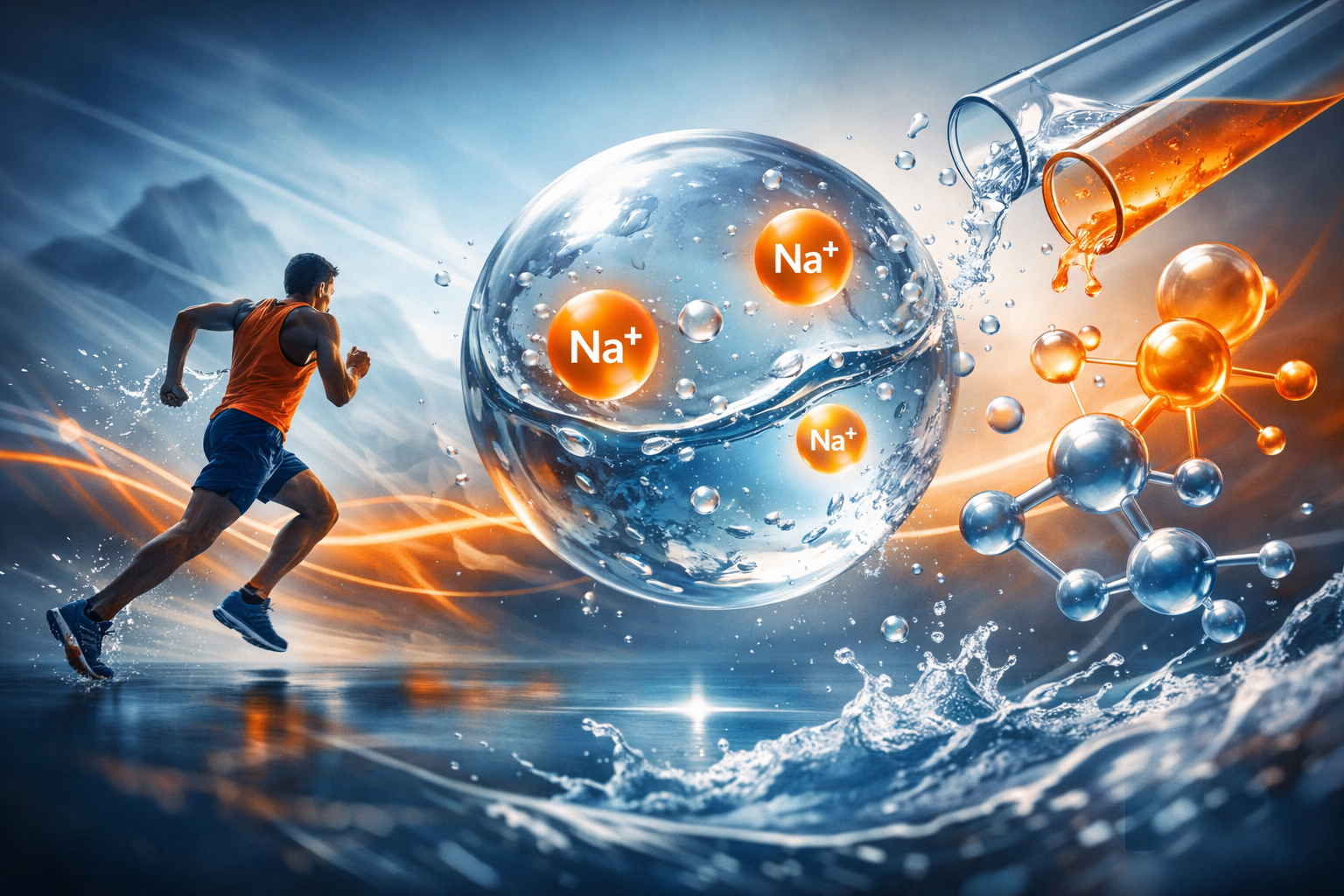
Exercise-associated hyponatremia (EAH) refers to an abnormally low blood sodium level occurring during or after exercise. While dehydration gets more headlines, research suggests overconsuming low-sodium fluids—and not replacing sodium relative to sweat—may be a more common driver of EAH in long-duration events. This article focuses on what athletes and active people need to know about hyponatremia: why it happens, who is most vulnerable, what kinds of drinks may help, and where traditional hydration practices fit. It does not provide medical advice or dosing instructions.
Why Hyponatremia Happens in Sport
Dilution from overdrinking: The leading mechanism is dilutional—drinking more fluid than the body can excrete while sweating out sodium. This lowers plasma sodium concentration even if total body water is high. Consensus statements highlight “overconsumption of hypotonic fluids” as the primary risk factor. [Evidence: strong; Hew-Butler et al., 2015 consensus]
Hormonal water retention: Non-osmotic release of antidiuretic hormone (ADH) during prolonged exercise, pain, or stress may reduce urine output, compounding dilution when fluids are plentiful. [Evidence: moderate; Rosner & Kirven, 2007 review]
Sodium losses in sweat: Sweat contains sodium in variable amounts. Prolonged, heavy sweating without proportionate sodium intake may contribute to lower plasma sodium, particularly when paired with large volumes of low-sodium fluid. [Evidence: strong for sweat sodium variability; Baker, 2019 review]
Who Is More Vulnerable?
Long duration, slower pace: Ultra-endurance events, long triathlons, and marathons done at slower paces increase exposure time for drinking, elevating EAH risk. [Evidence: strong; Almond et al., 2005 NEJM]
Smaller body mass and high drinking volumes: Lower body mass reduces the volume threshold for dilution when intake is high. [Evidence: moderate; Almond et al., 2005; Hew-Butler et al., 2015]
Hot, humid conditions: Heat promotes higher sweat rates and more frequent drinking, raising the potential for imbalance. [Evidence: moderate; consensus and field studies]
Certain medications: Nonsteroidal anti-inflammatory drugs (NSAIDs) have been associated with EAH, potentially via effects on renal water handling and ADH activity. [Evidence: moderate; consensus review]
Recognizing When It’s a Concern
EAH can resemble heat illness or dehydration, so context matters. Research and case reports describe early features such as bloating, nausea, headache, and confusion, with severe cases progressing to vomiting, seizures, or respiratory distress. Any concerning neurologic symptoms during or after long events warrant urgent medical evaluation. [Evidence: strong for clinical features and risks; Hew-Butler et al., 2015]
Sports Drinks, Salt, and Oral Rehydration Science: What Actually Helps?
Plain water alone may increase dilution risk in long events: Studies and consensus documents note that exclusive intake of plain water during prolonged exercise can lower plasma sodium concentration, especially with high sweat losses. [Evidence: strong; Hew-Butler et al., 2015; observational and lab data]
Sodium-containing beverages can improve fluid retention post-exercise: Randomized crossover trials show that beverages containing sodium and carbohydrate enhance plasma volume restoration and fluid retention after dehydration compared with plain water. [Evidence: strong; Shirreffs & Maughan, 1998; Maughan & Leiper, 1995]
Oral rehydration solution (ORS) principles: ORS leverages sodium-glucose co-transport in the gut to speed water and electrolyte absorption. Although ORS was designed for diarrheal illness, athlete studies indicate solutions using this mechanism may improve rehydration and reduce urine losses versus water alone. [Evidence: strong for mechanism, moderate for sport-specific benefits; WHO ORS science; sports rehydration trials]
Sodium supplements during exercise: Systematic and narrative reviews suggest sodium capsules or highly salty drinks do not consistently prevent EAH if fluid intake is excessive. They may help maintain plasma sodium concentration in some contexts but are not a substitute for appropriate drinking strategies. [Evidence: moderate; Hew-Butler et al., 2015; Maughan & Shirreffs, 2008 review]
“Drink to thirst” versus scheduled drinking: Event medical surveillance and consensus guidance indicate that drinking in response to thirst cues reduces EAH incidence compared with aggressive, fixed-volume drinking strategies. [Evidence: moderate; Hew-Butler et al., 2015]
Sweat Sodium Is Personal
Wide individual variability: Sweat sodium concentration varies several-fold among athletes and even within the same athlete across conditions. Factors include genetics, acclimation status, diet, and training. [Evidence: strong; Baker, 2019]
Practical implication: Because sweat sodium is not uniform, one-size-fits-all approaches to “electrolyte replacement” may be misleading. Research suggests aligning fluid intake with thirst and selecting beverages that include some sodium during or after very long, hot sessions may help support balance, while avoiding excessive fluid volumes. [Evidence: moderate; consensus and reviews]
Traditional Hydration Wisdom: Coconut Water, Broths, and Salt Traditions
Coconut water: Naturally rich in potassium and fluid, coconut water may be refreshing and hydrating. However, research and nutrient analyses show it typically contains less sodium than is lost in sweat, so it may not be ideal as the sole beverage during very long, salty-sweat conditions. [Evidence: moderate for composition; emerging for performance implications]
Bone broth and savory soups: Across cultures, salty broths have long been used to restore fluids and salts after physical labor or illness. Limited modern trials exist in athletes, but the sodium and warm fluid may aid post-exercise rehydration and appetite. [Evidence: traditional for use; emerging for sport-specific outcomes]
Salted foods: Traditional practices—such as including salted rice balls in Japanese endurance events or pickled foods in Mediterranean and East Asian cuisines—provide both sodium and carbohydrates. These may complement fluid intake after long sessions. [Evidence: traditional for practice; emerging for sport-specific outcomes]
Marketing Hype Versus Measurable Help
Not every “electrolyte” label addresses EAH: Many sports drinks and tablets emphasize potassium or magnesium. While these minerals are important for overall health, sodium is the primary electrolyte lost in sweat in quantities relevant to fluid balance. [Evidence: strong for sweat composition; Baker, 2019]
More isn’t always better: Very high sodium intakes without attention to total fluid volume may not reduce EAH risk and can cause gastrointestinal discomfort for some athletes. Research suggests the balance between fluid volume, sodium content, duration, and environmental stressors matters more than any single number on a label. [Evidence: moderate; consensus and rehydration trials]
Practical, Evidence-Guided Habits (No Doses)
Use thirst as your baseline guide, especially in long events. [Evidence: moderate]
In hot, long-duration sessions, consider beverages that include sodium and carbohydrate rather than plain water alone. [Evidence: strong]
After heavy sweating, pair fluids with salty foods or broths that you tolerate well. [Evidence: moderate/traditional]
Be cautious with aggressive, scheduled drinking plans that outpace thirst for many hours. [Evidence: moderate]
If you use NSAIDs around long events, be aware of potential fluid–electrolyte implications and discuss concerns with a clinician if needed. [Evidence: moderate]
Bottom Line
Exercise-associated hyponatremia arises primarily from a mismatch between high fluid intake and insufficient sodium relative to sweat losses. Research suggests that drinking to thirst, favoring sodium-containing beverages for prolonged, hot efforts, and using traditional salty foods or broths after heavy sweating may help maintain balance. Sodium supplements alone are unlikely to prevent EAH if total fluid intake is excessive. Because sweat sodium is highly individual, aligning choices with conditions, duration, and personal tolerance—and avoiding overdrinking—appears more effective than relying on one-size-fits-all “electrolyte” products.
References
Hew-Butler T, et al. Statement of the Third International Exercise-Associated Hyponatremia Consensus Development Conference. Br J Sports Med. 2015.
Almond CSD, et al. Hyponatremia among runners in the Boston Marathon. N Engl J Med. 2005.
Baker LB. Sweating rate and sweat sodium concentration in athletes: a review of methodology and intra/interindividual variability. Sports Med. 2019.
Shirreffs SM, Maughan RJ. Restoration of fluid balance after exercise-induced dehydration: effects of beverages containing different amounts of sodium. Eur J Appl Physiol. 1998.
Maughan RJ, Leiper JB. Sodium intake and post-exercise rehydration in man. Eur J Appl Physiol. 1995.
Maughan RJ, Shirreffs SM. Development of hydration strategies to optimize performance for athletes in high-intensity sports and in sports with repeated intense efforts. Scand J Med Sci Sports. 2008.
Rosner MH, Kirven J. Exercise-associated hyponatremia. Clin J Am Soc Nephrol. 2007.
World Health Organization. Oral rehydration salts: production of the new ORS. WHO documents on ORS mechanism and efficacy.
This content is for informational purposes only and does not constitute medical advice. Always consult a qualified healthcare provider before starting, stopping, or changing any supplement or medication regimen.
Overview
Electrolytes get marketed as magic for performance, but most active people don’t need a neon-colored bottle to hydrate well. Research suggests that the real story is about context: your sweat
Low-Sodium Diet. Low salt diet, Sodium restricted diet, Salt-restricted diet. ## Overview
A **low-sodium diet** is an eating pattern that limits dietary sodium, a mineral found naturally in some foods and widely added to packaged, processed, and restaurant meals. Sodium plays an essential role in **fluid balance, nerve signaling, and muscle function**, but excess intake has l
Water Retention. Fluid Retention, Edema, Swelling. ## Overview
**Water retention**—also called **fluid retention** or **edema**—refers to the buildup of excess fluid in the body's tissues. It commonly appears as **swelling, puffiness, or a feeling of heaviness**, often affecting the **feet, ankles, legs, hands, abdomen, or face**. Mild, short-term w
Introduction
Beta‑alanine has become a staple in performance nutrition, particularly for athletes who thrive in the red zone—think 400–800 m runners, rowers, swimmers, cyclists, combat sport athletes,
Diuretics. water pills, fluid pills, diuretic medications. ## Overview
**Diuretics** are a broad class of substances that increase urine production and help the body eliminate excess sodium and water. In conventional medicine, prescription diuretics are commonly used for **high blood pressure, edema (fluid retention), heart failure, certain kidney or liver-
Hydrochlorothiazide. HCTZ, Water pill, Hydrochlorothiazide. # Hydrochlorothiazide: Overview
**Hydrochlorothiazide** is a prescription **thiazide diuretic** commonly used in conventional medicine to help manage **high blood pressure (hypertension)** and **fluid retention (edema)**. It works primarily by increasing the excretion of sodium and water through th