Introduction
Feeling tired, foggy, or short of breath yet your “blood count” looks normal? Research suggests iron deficiency can exist without anemia, and traditional hemoglobin-based screening may miss it. Ferritin—the protein that stores iron—is often a more sensitive early marker of low iron status than hemoglobin alone.
This focused guide explains why ferritin matters, how it complements other iron markers, when inflammation can complicate interpretation, and who may benefit from targeted testing. We also bridge modern lab testing with traditional food-based strategies for supporting iron status.
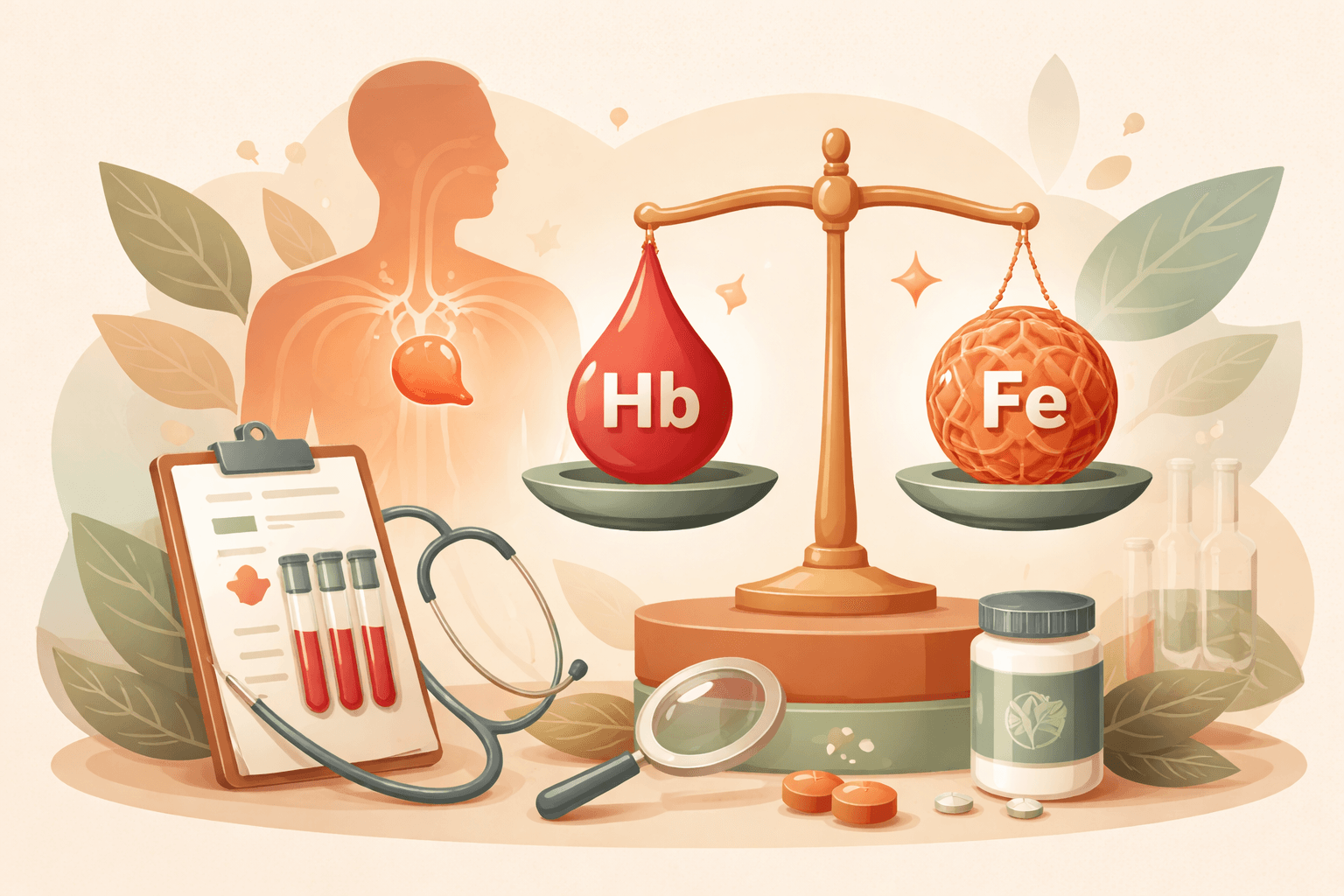
Why hemoglobin can look “normal” while iron is low
- What hemoglobin measures (evidence: strong): Hemoglobin reflects the oxygen‑carrying protein inside red blood cells. Anemia is diagnosed when hemoglobin falls below a defined threshold. However, hemoglobin changes relatively late in iron deficiency (World Health Organization, WHO) [Strong].
- What ferritin measures (evidence: strong): Ferritin reflects iron stores in the body and typically declines before hemoglobin drops. WHO and multiple clinical guidelines identify ferritin as the most sensitive single test for iron deficiency in otherwise healthy adults [Strong].
- Evidence that ferritin detects early deficiency (evidence: strong): WHO’s 2020 guideline states low ferritin indicates depleted iron stores and recommends accounting for inflammation when interpreting values. The American Gastroenterological Association (AGA) also emphasizes ferritin as a key diagnostic marker, with attention to context such as inflammation and chronic disease [Strong].
Symptoms can appear before anemia
- Fatigue and cognitive effects (evidence: moderate): Non‑anemic iron deficiency (NAID) may be associated with fatigue, reduced exercise tolerance, and brain fog. A randomized controlled trial in menstruating women with low ferritin but normal hemoglobin found that iron treatment improved fatigue compared with placebo (Vaucher et al., CMAJ 2012) [Moderate]. Systematic reviews suggest improvements in perceived fatigue and physical performance in iron‑deficient, non‑anemic individuals, particularly women and athletes, though results vary by population and baseline status [Moderate].
- Restless legs and sleep quality (evidence: moderate): Low brain iron stores have been linked to restless legs syndrome (RLS). Guidelines note that iron repletion may improve RLS in people with low ferritin, though not all cases respond and study methods differ [Moderate].
- Mood and cognition (evidence: emerging): Observational studies connect low ferritin to reduced attention and mood changes, especially in adolescents and women. Interventional evidence is mixed and evolving [Emerging].
Ferritin’s key advantage—and its caveat
- Advantage: Early signal of depleted stores (evidence: strong): Ferritin typically declines before hemoglobin, catching deficiency earlier and potentially explaining symptoms in the absence of anemia [Strong].
- Caveat: Ferritin rises with inflammation (evidence: strong): Ferritin is an acute‑phase reactant and can be elevated during infection, chronic inflammatory conditions, liver disease, or malignancy. WHO recommends interpreting ferritin alongside inflammation markers (e.g., C‑reactive protein) and clinical context [Strong].
A smarter testing approach to iron status
- Pair ferritin with other markers (evidence: strong): Research and guidelines suggest combining ferritin with transferrin saturation (TSAT), serum iron, and total iron‑binding capacity (TIBC), plus inflammatory markers when relevant, for a fuller picture [Strong]. Low ferritin with low TSAT supports iron deficiency, while high ferritin with low TSAT can suggest anemia of inflammation [Strong].
- Consider life stage and physiology (evidence: strong): Pregnancy, postpartum changes, growth in adolescence, and endurance training all alter iron demand or hepcidin dynamics, which can shift ferritin independent of diet alone [Strong].
- Lab cut‑offs vary (evidence: strong): Different organizations propose different ferritin thresholds depending on health status and setting. WHO and specialty societies emphasize context; interpretation should be individualized [Strong].
Who may benefit from ferritin testing beyond a hemoglobin check
Research suggests targeted ferritin testing may help uncover early deficiency in people with normal hemoglobin who have relevant risks or symptoms:
- Heavy menstrual bleeding, postpartum period, or frequent blood donation [Moderate]
- Endurance athletes or those increasing training load [Moderate]
- Vegetarians/vegans or low‑meat dietary patterns [Moderate]
- Gastrointestinal conditions affecting absorption (e.g., celiac disease, inflammatory bowel disease) or prior bariatric surgery [Strong]
- Unexplained fatigue, reduced exercise tolerance, brain fog, or restless legs symptoms [Moderate]
Note: Testing decisions should be made with a clinician who can integrate history, exam, and labs.
Iron overload is the flip side: Don’t self‑supplement blindly
- Hereditary hemochromatosis risk (evidence: strong): Genetic variants (e.g., HFE mutations) can drive excessive iron absorption. Elevated ferritin and high TSAT may indicate overload. Untreated iron overload can affect the liver, heart, joints, and pancreas (EASL guidance) [Strong].
- Inflammation can also elevate ferritin (evidence: strong): High ferritin does not always mean iron overload; it can reflect inflammatory or liver conditions. Professional evaluation is essential before taking iron [Strong].
Dietary patterns and traditional practices to support iron status
- Heme vs. non‑heme iron (evidence: strong): Heme iron from animal sources is generally more bioavailable than non‑heme iron from plants. Non‑heme absorption is influenced by meal composition and inhibitors (e.g., phytates, polyphenols, calcium) [Strong].
- Vitamin C pairing (evidence: strong): Research shows vitamin C can enhance non‑heme iron absorption when consumed with plant sources (e.g., pairing legumes or leafy greens with vitamin‑C‑rich foods). Food‑based strategies may help maintain or improve status without supplements for some individuals [Strong].
- Cooking methods (evidence: moderate): Studies suggest cooking acidic or high‑moisture foods in cast iron cookware can increase the iron content of meals, though the effect varies by food type and acidity [Moderate].
- Traditional perspectives (evidence: traditional/emerging): Traditional cuisines have long emphasized iron‑rich foods such as organ meats, shellfish, dark leafy greens, legumes, molasses, and sesame. Ayurvedic texts describe iron preparations like Loha Bhasma used for “weakness” and pallor; modern analyses vary in quality and standardization, and safety depends on proper preparation [Traditional/Emerging]. As with any preparation, clinical oversight is important.
Putting it together: Practical interpretation framework
- If hemoglobin is normal but symptoms suggest iron issues, ferritin can provide an early window into iron stores [Strong].
- Interpret ferritin with TSAT, TIBC/serum iron, and an inflammation marker such as CRP, especially if infection, chronic disease, or liver conditions are present [Strong].
- Consider physiologic demands (menstruation, pregnancy, adolescent growth, training) and dietary patterns (low heme iron, inhibitors) [Strong].
- Before using iron supplements, rule out iron overload and discuss risks, benefits, and alternatives with a healthcare professional [Strong].
Bottom line
Hemoglobin alone can miss early iron deficiency. Ferritin—interpreted in context with other iron indices and inflammation markers—often offers a clearer, earlier signal of low iron stores. For people with fatigue, brain fog, exercise intolerance, or restless legs despite a “normal blood count,” targeted ferritin testing may help uncover non‑anemic iron deficiency. Balanced, traditional food strategies (heme sources when appropriate, vitamin C pairing, mindful use of cast iron) may support status. Because high ferritin can signal inflammation or iron overload, testing and any treatment decisions are best made with a clinician.
References
- WHO. Ferritin concentrations for the assessment of iron status and iron deficiency in populations (2020).
- American Gastroenterological Association (AGA). Clinical Practice Guideline on GI evaluation of iron deficiency anemia (2020) and Technical Review.
- Vaucher P, et al. Effect of iron supplementation on fatigue in nonanemic menstruating women with low ferritin: a randomized controlled trial. CMAJ. 2012.
- Tolkien Z, et al. Iron deficiency and fatigue: evidence from randomized trials in nonanemic individuals. Systematic reviews/meta-analyses (various).
- Hurrell R, Egli I. Iron bioavailability and dietary reference values. Int J Vitam Nutr Res. 2010.
- EASL Clinical Practice Guidelines on haemochromatosis (2022).
- Reviews on restless legs syndrome and iron status (AAN guidelines; Cochrane/other systematic reviews).