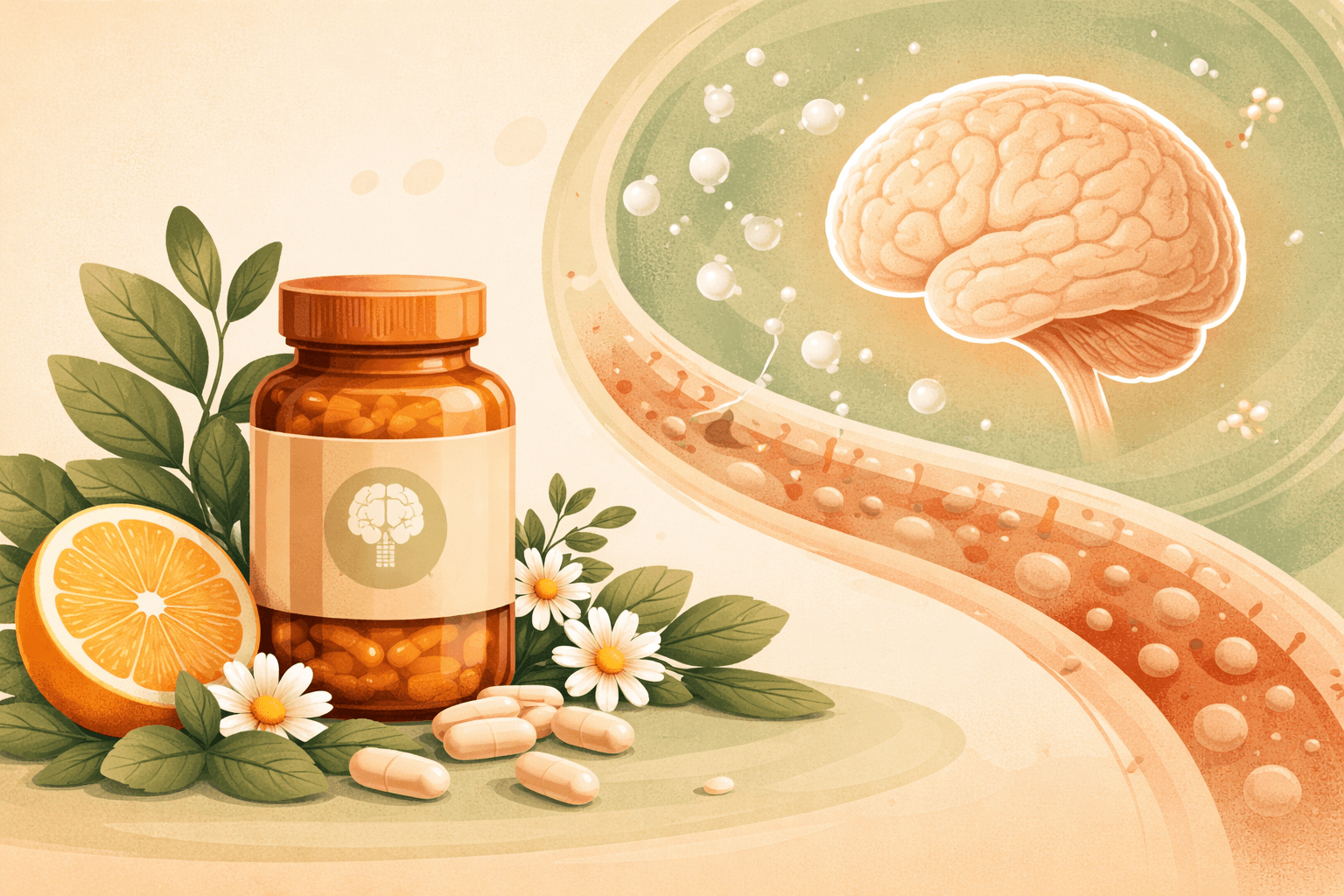
Does Oral GABA Cross the Blood–Brain Barrier? What the Science Says about Natural Calm
GABA (gamma-aminobutyric acid) is the brain’s primary inhibitory neurotransmitter. When GABA activity rises, neuronal firing slows, which is associated with feelings of calm and decreased anxiety (Evidence: strong; established neurophysiology). This has made oral GABA supplements popular—yet a lingering question remains: can ingested GABA reach the brain through the blood–brain barrier (BBB), and does that matter for feeling calmer?
This focused review examines the BBB debate, what human studies show about oral GABA’s effects, how “PharmaGABA” differs from synthetic GABA, and natural strategies that may support GABAergic calm—bridging Western research with insights from traditional systems like TCM and Ayurveda.
The BBB Debate: Can Oral GABA Reach the Brain?
- Classic view: The healthy BBB is highly selective, and early animal work suggested GABA has poor permeability, meaning it does not substantially enter the brain from the bloodstream (Evidence: strong; preclinical pharmacology consensus since mid-20th century).
- Nuance: More recent discussions note potential exceptions—limited transport under specific conditions, entry through regions with a weaker BBB (circumventricular organs), or indirect brain effects via peripheral pathways (Evidence: emerging; mechanistic hypotheses from animal and cellular studies).
In other words, while the consensus is that GABA itself crosses the BBB poorly, people sometimes report feeling calmer after taking it. How could that be?
How Oral GABA May Still Influence Calm
- Peripheral GABA receptors: GABA receptors exist outside the brain—in the enteric nervous system, immune cells, and endocrine tissues. Activating these could influence autonomic tone and stress physiology without needing central penetration (Evidence: emerging; preclinical and human physiological studies).
- Gut–brain signaling: Certain gut bacteria produce GABA. In mice, a Lactobacillus strain altered brain GABA receptor expression and reduced stress behaviors in a vagus nerve–dependent manner (Bravo et al., 2011, PNAS; Evidence: emerging; animal model).
- Sensory/EEG changes without direct CNS entry: Small human trials of oral GABA have reported shifts in brainwave patterns and stress markers, suggesting functional effects even if BBB crossing is limited (Evidence: emerging; small RCTs and crossover trials).
What Human Studies Show
Human data on oral GABA are mixed but intriguing, often with small sample sizes and short durations.
- Stress and EEG markers: In a crossover study, a fermented GABA product increased alpha brain waves and reduced markers of stress during tasks (Abdou et al., 2006, BioFactors; Evidence: emerging; small acute trial).
- Psychological stress during tasks: Chocolate or beverages enriched with GABA have been associated with attenuated subjective stress and altered heart rate variability during challenging tasks in healthy adults (e.g., Yoto et al., 2012, J Physiol Anthropol; Evidence: emerging; small, acute human studies).
- Sleep and relaxation: Some small RCTs have reported improved sleep latency or quality with fermented GABA ingredients, though effects and methodologies vary (Evidence: emerging; heterogeneous trials, modest effects).
Overall, research suggests oral GABA may modestly influence stress-related physiology in the short term, but the evidence base is limited by small studies and variability in products and outcomes (Evidence: moderate for short-term stress physiology; emerging for clinical anxiety or sleep outcomes).
PharmaGABA vs Synthetic GABA
“PharmaGABA” is a branded form produced by fermenting GABA with Lactobacillus hilgardii, sometimes called “natural” GABA. Synthetic GABA is chemically produced. Key points:
- Several of the small human studies reporting stress-related benefits used fermented (PharmaGABA-like) preparations (Evidence: emerging; product-dependent trials).
- There are no robust head-to-head clinical trials definitively showing fermented GABA is superior to synthetic GABA for anxiety or stress outcomes (Evidence: emerging/insufficient).
- Proposed mechanisms for fermented GABA include concurrent bioactives from fermentation and potential gut–brain signaling differences (Evidence: emerging; mechanistic speculation).
Lessons from Benzodiazepines: Why GABA Matters for Anxiety
Benzodiazepines (e.g., diazepam) bind to GABA-A receptor complexes and increase the frequency of chloride channel opening in response to GABA, enhancing inhibitory signaling and producing anxiolysis, muscle relaxation, and sedation (Evidence: strong; pharmacology and extensive RCT history). This pharmacologic success underscores the central role of GABAergic tone in anxiety. However, it does not prove that oral GABA supplementation can replicate these CNS effects, especially given BBB constraints.
Natural GABA-Supportive Strategies
If the goal is to support a calmer state through GABAergic pathways, research suggests several adjuncts may help—even if they do not rely on GABA itself crossing the BBB.
- L-theanine (from tea): L-theanine may increase alpha brain waves and modulate glutamate/GABA balance. Systematic reviews suggest small but meaningful benefits for stress and anxiety-related symptoms in healthy or stressed populations (Evidence: moderate; e.g., systematic reviews in Nutrients and Plant Foods for Human Nutrition 2016–2020).
- Magnesium: Magnesium modulates NMDA receptors and indirectly supports inhibitory tone. A 2017 systematic review found suggestive benefits for subjective anxiety, particularly in stress-related conditions, though study quality varied (Boyle et al., 2017, Nutrients; Evidence: moderate for mild anxiety/stress; methods heterogeneous).
- Taurine: Taurine interacts with GABAergic and glycinergic systems and shows anxiolytic-like effects in animal models. Human data are limited and mixed (Evidence: emerging; preclinical support, few human trials).
- Probiotics/fermented foods: Certain Lactobacillus and Bifidobacterium strains produce GABA and may influence stress responses via the gut–brain axis. Human RCTs on “psychobiotics” show modest stress benefits in some contexts, but strain-specificity and endpoints vary (Evidence: emerging; mixed human results, stronger animal data).
Importantly, responses are individualized, and products differ widely in composition and quality.
Traditional Calming Herbs with Possible GABAergic Actions
Traditional systems emphasize calming the “spirit” or supporting resilience to stress, and some herbs may influence GABA pathways.
- Valerian (Western/TCM use): Extracts may inhibit GABA breakdown or reuptake and modulate GABA-A receptors (preclinical). Meta-analyses for sleep show mixed but generally modest benefits; anxiety data are limited (Evidence: moderate for sleep; emerging for anxiety).
- Passionflower (Passiflora incarnata): RCTs suggest short-term anxiolytic effects in procedural or situational anxiety, possibly via GABA-A modulation (e.g., preoperative studies comparing favorably to low-dose benzodiazepines with fewer side effects) (Evidence: moderate for situational anxiety; small trials).
- Ashwagandha (Withania somnifera; Ayurveda): Systematic reviews and multiple RCTs in stress and anxiety suggest reductions in perceived stress and improvements in well-being. Mechanisms may include GABA-mimetic effects and HPA-axis modulation (Evidence: moderate; growing RCT base, variable preparations).
- Magnolia bark (Magnolia officinalis; TCM): Honokiol and magnolol positively modulate GABA-A receptors in preclinical work; limited human data exist, often in combination formulas (Evidence: emerging).
- Jujube seed (Ziziphus jujuba var. spinosa; Suan Zao Ren in TCM): Animal studies suggest sedative–hypnotic effects with possible GABAergic interactions; human data are sparse (Evidence: emerging; traditional use supported by preclinical data).
Traditional frameworks often emphasize patterns (e.g., “heart–shen disturbance,” “vata aggravation”) rather than single targets; nevertheless, GABAergic modulation offers a plausible bridge between ancient practices and modern neurobiology.
Why People May Feel Calmer on Oral GABA Despite the BBB
Putting the pieces together, research suggests several non-mutually exclusive explanations:
- Indirect central effects via gut–brain signaling and autonomic modulation (Evidence: emerging).
- Peripheral GABA receptor activation influencing stress physiology (Evidence: emerging).
- Expectancy/placebo contributions, which can be substantial in stress studies (Evidence: moderate; well-known in psychophysiology).
- Small amounts of GABA could reach specific brain regions or act under conditions where BBB permeability is altered (Evidence: limited; speculative in healthy adults).
Practical Takeaways
- The BBB likely limits direct brain entry of oral GABA in healthy adults (Evidence: strong), yet small human studies suggest short-term calming effects are possible via indirect pathways (Evidence: emerging to moderate).
- Fermented “PharmaGABA” has the most human data among GABA products, but head-to-head superiority over synthetic GABA is unproven (Evidence: emerging).
- Non-GABA approaches that influence inhibitory tone—L-theanine, magnesium, taurine, targeted probiotics, and select calming herbs—may help support a relaxed state (Evidence: moderate to emerging, depending on the modality).
- Benzodiazepines demonstrate why GABAergic signaling powerfully reduces anxiety, but their mechanism and risk–benefit profile differ fundamentally from dietary supplements (Evidence: strong).
Bottom Line
GABA is central to calm, but the healthy blood–brain barrier appears to restrict direct entry of oral GABA. Even so, research suggests some people may experience short-term stress relief from fermented or synthetic GABA, likely through gut–brain and peripheral mechanisms rather than robust central penetration. For a natural calm strategy, consider the broader GABAergic landscape: L-theanine and magnesium show moderate evidence for easing everyday stress, while taurine, certain probiotics, and traditional botanicals like passionflower, valerian, ashwagandha, magnolia, and jujube offer emerging-to-moderate support. As always, individual responses vary, product quality matters, and the current evidence base—especially for oral GABA itself—remains early-stage and evolving.