Early-stage research, mostly preclinical or preliminary human studies
BPC‑157 and Tissue Repair: What Animal Studies Show—and What Athletes Should Know
BPC‑157 is a gut‑derived peptide that may accelerate tendon, ligament, and muscle healing in animal models, but it remains unapproved, prohibited in sport, and unproven in human trials.
·9 min read
This content is for informational purposes only and does not constitute medical advice. Always consult a qualified healthcare provider before starting, stopping, or changing any supplement or medication regimen.
Introduction
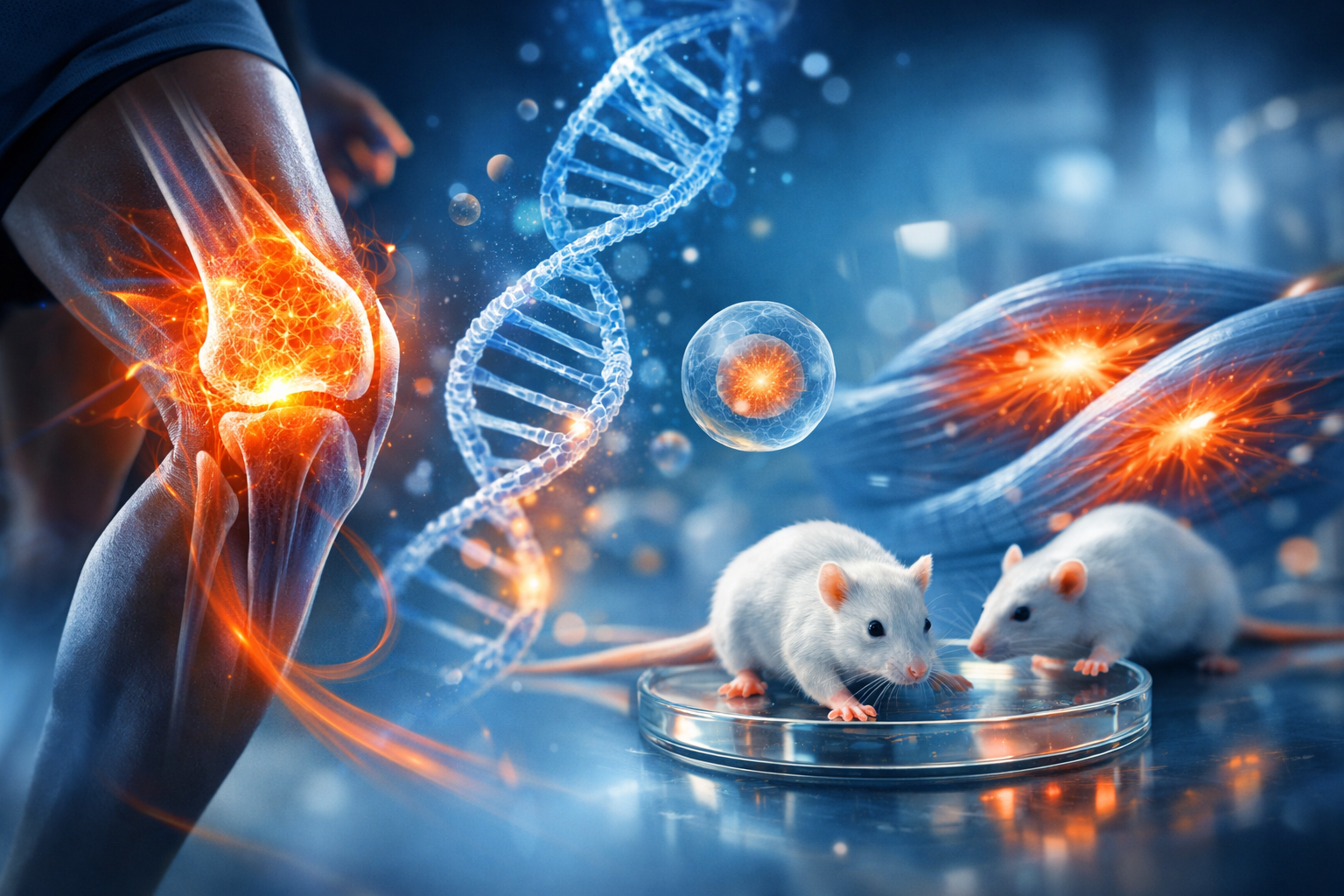
BPC‑157 (Body Protection Compound‑157) is a synthetic fragment of a protein found in gastric juice that has captured the attention of athletes and recovery enthusiasts. Preclinical studies suggest it may influence tissue repair, angiogenesis (new blood vessel formation), and protection against certain forms of injury. Yet, its regulatory status, human evidence base, and product quality concerns remain major caveats. This article reviews what research suggests about BPC‑157’s origins, mechanisms, animal data for tendon/ligament/muscle healing, current clinical trial status, and safety profile, with clear notes on evidence strength and practical implications for performance and recovery.
What is BPC‑157?
BPC‑157 is a 15–amino‑acid peptide (pentadecapeptide) originally identified during investigations into cytoprotective factors in human gastric juice. It is often referred to as a “stable gastric pentadecapeptide” in the scientific literature. Researchers have explored its effects across a range of tissues in rodent models, from gastrointestinal mucosa to musculoskeletal structures. (Evidence: emerging)
• Origins from gastric juice research: BPC‑157 was derived from a naturally occurring protein complex in gastric juice during efforts to understand mucosal protection and repair. Preclinical studies subsequently expanded into systemic injury models (e.g., tendon, muscle, nerve). (Evidence: emerging; based on preclinical and narrative reviews)
How might it work? Proposed mechanisms of action
While definitive human mechanistic data are lacking, several pathways have been proposed based on cell and animal models:
• Angiogenesis and growth factor signaling: BPC‑157 appears to enhance angiogenesis and upregulate factors linked to vascular remodeling (e.g., VEGF pathways), which are central to tissue repair. Some studies report improved microvascular integrity and capillary density in injured tissues. (Evidence: emerging; preclinical models)
• Cell migration and extracellular matrix remodeling: Tendon fibroblast migration, collagen organization, and focal adhesion signaling (e.g., FAK–paxillin) have been reported to improve in injured tissues exposed to BPC‑157. These processes underpin how tendons and ligaments remodel after injury. (Evidence: emerging; preclinical models)
• Nitric oxide (NO) system modulation: BPC‑157 has been reported to interact with the NO system in animal models, potentially balancing endothelial and neuronal NO synthase activity. This may influence vasodilation, inflammation, and wound milieu—factors relevant to healing. (Evidence: emerging; preclinical models)
• Cytoprotection and anti‑inflammatory effects: Early work in the gastrointestinal tract suggested mucosal protection against various insults. Subsequent rodent studies describe reduced edema, oxidative stress markers, and inflammatory signaling in injured tissues. (Evidence: emerging; preclinical models)
What do animal studies show for soft‑tissue repair?
Across numerous rodent studies—many from a single research network—BPC‑157 has been associated with accelerated healing and improved tissue architecture after injury. Importantly, these are preclinical findings that require validation in humans.
Tendon and ligament
• Tendon transection and rupture: In rat models of Achilles tendon transection, BPC‑157 administration has been associated with faster biomechanical recovery (e.g., higher load to failure) and improved histologic organization of collagen compared with saline controls. Angiogenesis markers and fibroblast activity also appear elevated. (Evidence: emerging; preclinical, randomized animal studies)
• Steroid‑impeded repair: Rodent studies have reported that BPC‑157 may counteract corticosteroid‑delayed tendon healing, potentially by normalizing vascular and extracellular matrix remodeling pathways. (Evidence: emerging; preclinical)
• Ligament injury: Similar patterns have been reported in medial collateral ligament sprain/tear models, including improved tensile properties and vascularization relative to controls. (Evidence: emerging; preclinical)
Skeletal muscle
• Muscle contusion/crush: In rodent muscle injury models, BPC‑157 has been associated with reduced necrosis, less fibrosis, improved angiogenesis, and faster functional recovery (e.g., contractile properties). (Evidence: emerging; preclinical)
• Neuro‑muscular interface: Some animal experiments suggest preserved neuromuscular junction integrity or improved nerve–muscle recovery after injury, potentially through vascular and anti‑inflammatory effects. (Evidence: emerging; preclinical)
Other tissues often cited
• Gastrointestinal mucosa: A substantial body of rodent research reports mucosal cytoprotection and accelerated ulcer healing, consistent with BPC‑157’s gastric origins. (Evidence: moderate in animals; limited human data)
• Nerve and bone: Preliminary rodent work suggests potential benefits in peripheral nerve and bone injury, though data are less developed than for tendon/muscle. (Evidence: emerging; preclinical)
Key context for animal evidence
• Concentration of research: A large share of the literature originates from one primary research group, with relatively few independent replications to date. (Evidence: moderate)
• Lack of standardized protocols: Doses, timing, injury models, and outcome measures vary widely, complicating cross‑study comparison. (Evidence: moderate)
The clinical evidence to date
Despite robust activity in animal models, there is no high‑quality, peer‑reviewed randomized controlled trial (RCT) evidence in humans demonstrating efficacy for tendon, ligament, or muscle healing as of the latest public data (through 2024). There are no meta‑analyses or systematic reviews of human RCTs for these indications because trials have not been completed and published. (Evidence: strong—negative for availability of RCT evidence)
• Trial registries: Public clinical trial registries list minimal human research on BPC‑157, and none that robustly address musculoskeletal repair with published, peer‑reviewed RCT results. (Evidence: strong—registry‑based observation)
• GI indications: Historically, BPC‑157 has been explored for gastrointestinal lesions; however, published, peer‑reviewed clinical outcomes remain sparse and insufficient to establish efficacy or safety profiles for clinical use. (Evidence: moderate—literature gap)
Safety profile: what’s known and unknown
• Preclinical safety: Animal studies generally report a wide safety margin with few acute adverse signals at studied exposures. BPC‑157 has been described as non‑toxic in standard rodent toxicity paradigms, and protective against some drug‑induced GI injuries. (Evidence: moderate in animals)
• Human safety: There is no established human safety profile from large, well‑designed RCTs or long‑term observational cohorts. Without dose‑finding, pharmacokinetic, and pharmacodynamic data, key questions remain about systemic exposure, immunogenicity, off‑target effects, and long‑term risks. (Evidence: strong—absence of robust human data)
• Theoretical concerns: Because BPC‑157 may stimulate angiogenesis and cell migration in preclinical models, unintended effects (e.g., abnormal vessel growth in undesired contexts) are theoretical risks that warrant formal study before clinical adoption. (Evidence: emerging; mechanistic inference)
Regulatory and anti‑doping status
• Not an approved medicine: BPC‑157 is not approved by the U.S. Food and Drug Administration (FDA) or the European Medicines Agency (EMA) for any indication. The FDA has issued warning letters to vendors marketing unapproved peptide products, and quality/sterility of gray‑market products is uncertain. (Evidence: strong—regulatory communications)
• Anti‑doping: The World Anti‑Doping Agency (WADA) lists BPC‑157 as a prohibited substance under the S0 category (non‑approved substances). This means athletes subject to anti‑doping rules who use BPC‑157 risk sanctions. (Evidence: strong—WADA Prohibited List, 2022 onward)
Why athletes are interested
• Recovery narrative: Animal data indicate potential acceleration of soft‑tissue repair and vascularization—attributes attractive to athletes recovering from tendon, ligament, or muscle injuries. (Evidence: emerging; preclinical)
• Oral stability claims: Early work suggested BPC‑157 might remain stable in gastric juice, prompting claims it could be active when taken orally. Human bioavailability and pharmacokinetics, however, remain unestablished. (Evidence: emerging; preclinical and physicochemical rationale)
• Practical caveats: Unapproved status, anti‑doping prohibitions, uncertain product quality, and lack of human efficacy/safety data represent substantial risks. (Evidence: strong—regulatory and evidence‑gap based)
Bridging Western and traditional perspectives
Traditional medical systems have long emphasized the stomach and spleen’s role in nourishing tissues and supporting recovery. Practices such as consuming broths or organ‑derived preparations for convalescence conceptually parallel the Western discovery that gastric tissues contain cytoprotective peptides. BPC‑157 emerged from that line of inquiry—isolating a defined peptide from gastric juice and testing it systematically in controlled models. While traditional frameworks highlight the gut’s centrality to systemic vitality, Western research seeks specific molecules and mechanisms. BPC‑157 exemplifies this bridge: a gut‑derived peptide with preclinical signals of systemic tissue protection, now awaiting rigorous human trials to determine whether those signals translate into clinical benefit. (Evidence: traditional for historical practices; emerging for mechanistic link in animals)
What would robust evidence look like?
To move from promising animal data to practice, the field would benefit from:
• Independent, multicenter RCTs in clearly defined injuries (e.g., acute Achilles tendon rupture), with validated functional endpoints and imaging/biomechanical outcomes. (Evidence: strong—standards of clinical science)
• Pharmacokinetic and pharmacodynamic studies to define exposure, tissue distribution, and mechanism in humans. (Evidence: strong)
• Dose‑finding and safety studies with standardized manufacturing and quality controls. (Evidence: strong)
• Comparative studies against standard‑of‑care rehabilitation and, where ethical, placebo controls. (Evidence: strong)
How to interpret the current state of evidence
• Signal in animals, gap in humans: Research suggests BPC‑157 may enhance angiogenesis and soft‑tissue repair in rodents, but there are no peer‑reviewed, controlled human trials demonstrating benefit for athletic injuries. (Evidence: strong for the gap; emerging for preclinical benefit)
• Regulatory and doping constraints: It is unapproved for medical use and prohibited in sport. (Evidence: strong)
• Quality and reproducibility: The literature is dominated by a small number of groups; independent replication is limited. (Evidence: moderate)
Bottom Line
• What it is: BPC‑157 is a synthetic peptide derived from gastric juice research that may influence tissue repair and angiogenesis in animal models. (Evidence: emerging)
• What the science shows: Preclinical studies in rodents report faster healing of tendons, ligaments, and muscle with improved vascularization and matrix remodeling. Human RCT evidence is absent. (Evidence: emerging in animals; strong for absence of human RCTs)
• Safety: Animal studies generally suggest a wide safety margin, but human safety is not established, and theoretical risks exist. (Evidence: moderate in animals; strong for unknowns in humans)
• Regulation and doping: Not FDA‑approved; listed as prohibited by WADA. (Evidence: strong)
• For athletes: Interest stems from potential recovery benefits seen in animals, but regulatory risks, product quality issues, and the lack of human efficacy/safety data are significant. (Evidence: strong for risks; emerging for benefits)
References and further reading
• World Anti‑Doping Agency (WADA). Prohibited List (2022 onward): BPC‑157 under S0 (Non‑Approved Substances).
• U.S. Food and Drug Administration (FDA). Warning letters and statements regarding the sale of unapproved peptide products (multiple years).
• Preclinical literature on BPC‑157’s effects on tendon, ligament, and muscle healing in rodents; and narrative reviews summarizing proposed mechanisms (angiogenesis, NO system, FAK–paxillin signaling). No peer‑reviewed human RCTs for musculoskeletal repair published as of 2024.
This content is for informational purposes only and does not constitute medical advice. Always consult a qualified healthcare provider before starting, stopping, or changing any supplement or medication regimen.
Overview
[BPC‑157 (Body Protection Compound‑157)](/supplements/bpc-157) is a synthetic fragment of a protein first identified in gastric juice during research on stomach mucosal protection. Because it
Body Protection Compound-157. BPC-157. ## Overview
**BPC-157** is a synthetic peptide derived from a protein fragment associated with human gastric juice, and it is often discussed in the supplement and research-chemical space for its proposed effects on **tissue repair, inflammation regulation, gut integrity, and recovery from injury**.
BPC-157 (Body Protection Compound-157) is a synthetic peptide consisting of 15 amino acids derived from a protective protein found in human gastric juice. It was first isolated by researchers studying
## What Are Peptides?
Peptides are short chains of amino acids — typically between 2 and 50 — linked by peptide bonds. They're smaller than proteins but biologically active in ways that have drawn in
Platelet-Rich Plasma (PRP) Therapy. PRP injections, platelet therapy. ## Overview
**Platelet-Rich Plasma (PRP) therapy** is a regenerative treatment that uses a concentrated portion of a person’s own blood—rich in platelets and biologically active proteins—with the goal of supporting tissue repair. After a blood sample is collected, it is processed to separate and co
Introduction
[Beta‑alanine has become a staple in performance nutrition](/articles/beta-alanine-1-10-minute-efforts-evidence), particularly for athletes who thrive in the red zone—think 400–800 m runn