

Gold Bamboo
"related" Treatment Briefs Health AI Practitioners List your practice Search
Strong Evidence

Supported by multiple clinical trials and meta-analyses

Turkey Tail’s PSK/PSP and the Immune System: What Research Suggests

A focused evidence review of turkey tail mushroom’s PSK/PSP and how these protein-bound polysaccharides may modulate the gut–immune axis, with clinical insights, mechanisms, extraction considerations, and TCM context.

7 min read
Turkey Tail’s PSK/PSP and the Immune System: What Research Suggests

This content is for informational purposes only and does not constitute medical advice. Always consult a qualified healthcare provider before starting, stopping, or changing any supplement or medication regimen.

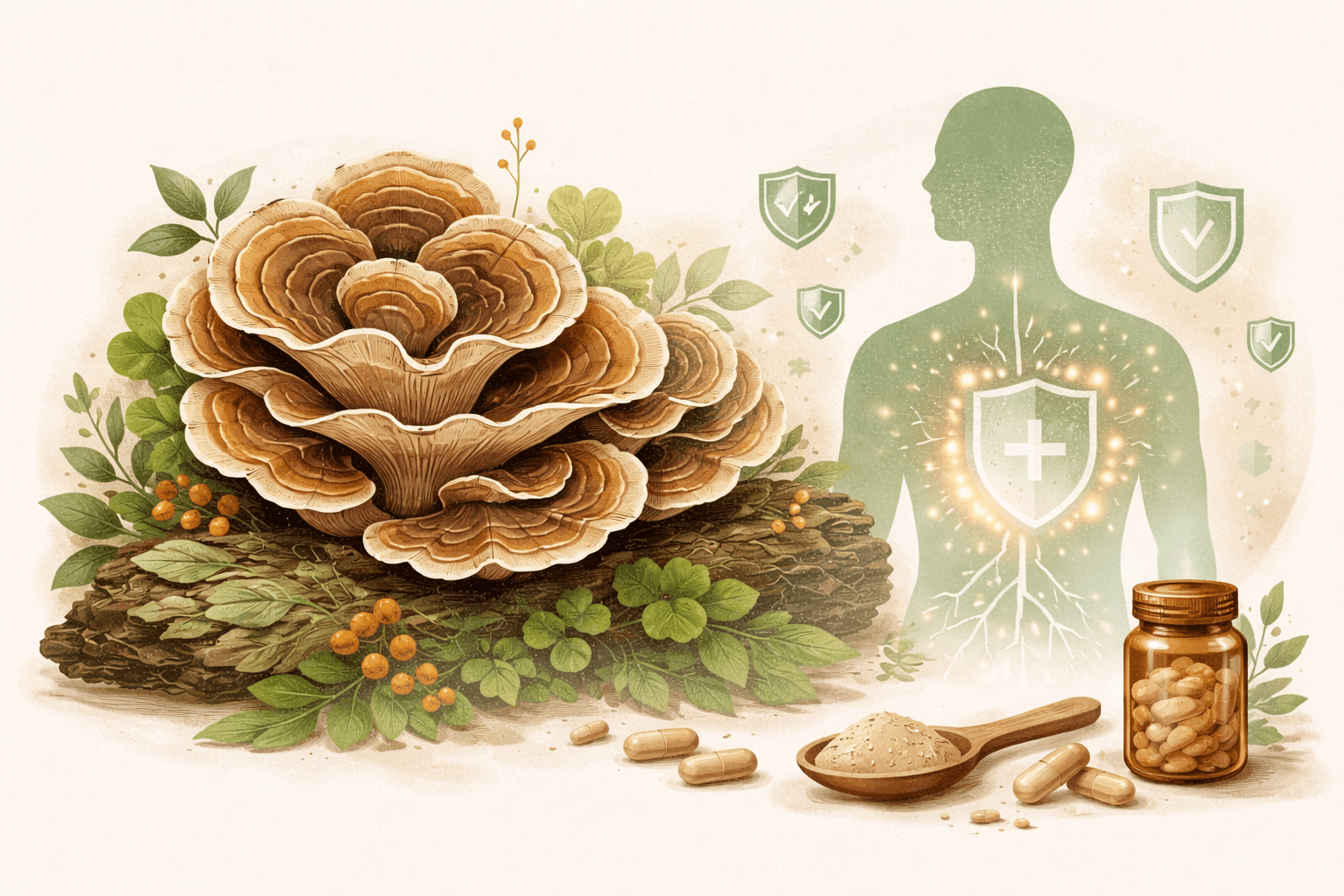
Turkey tail (Coriolus versicolor, also called Trametes versicolor or Yun Zhi) has become one of the most studied medicinal mushrooms for immune modulation. At the center of that research are two protein-bound polysaccharides—PSK (polysaccharide-K) and PSP (polysaccharopeptide)—that have been used for decades in East Asia as adjuncts to conventional care. This focused review explains how PSK/PSP may influence the gut–immune axis, what clinical research has found, and why extraction methods matter when considering mushroom products.

What are PSK and PSP?

  • PSK and PSP are protein-bound polysaccharides isolated primarily through hot-water extraction of C. versicolor mycelium. They are rich in β-glucans with (1→3),(1→6) linkages, coupled to peptides/proteins that appear to enhance bioactivity. (Evidence: strong for composition/chemistry from multiple analytical studies)
  • In Japan, PSK (also known as Krestin) has been used as an approved adjunct to chemotherapy for certain cancers since the 1970s. PSP was developed in China and has been evaluated in clinical and preclinical studies for immune modulation. (Evidence: strong for regulatory history and clinical adoption in East Asia)

How PSK/PSP may modulate immunity

  1. Pattern-recognition receptor engagement
  • β-glucans in PSK/PSP can bind innate immune receptors such as dectin-1, complement receptor 3 (CR3), and can act synergistically with Toll-like receptors (TLR2/6) to influence downstream signaling. This may prime macrophages, dendritic cells, and neutrophils to respond more effectively to challenges while shaping cytokine balance. (Evidence: strong for receptor biology; based on immunology research in cells and animal models)
  • Outcomes observed in experimental systems include modulation of cytokines (e.g., IL-2, IFN-γ, IL-10), enhanced natural killer (NK) cell activity, and improved antigen presentation by dendritic cells—changes associated with immune surveillance rather than indiscriminate stimulation. (Evidence: moderate; consistent preclinical data, supported by biomarker shifts in some human studies)
  1. Gut-associated immune training
  • Orally consumed β-glucans interact with gut-associated lymphoid tissue (GALT). M cells and dendritic cells in Peyer’s patches can sample these polysaccharides, potentially initiating immune education locally and systemically. (Evidence: moderate; supported by animal and ex vivo human tissue studies)
  • A growing body of work on “trained immunity” suggests certain β-glucans can induce a functional memory in innate immune cells, leading to more rapid, balanced responses to subsequent challenges. PSK/PSP share structural features with β-glucans studied in this context. (Evidence: emerging; mechanistic plausibility supported by training models, direct clinical confirmation for PSK/PSP is limited)
  1. Microbiome-mediated effects
  • PSK/PSP may exhibit prebiotic-like activity, influencing the composition and metabolic output of the gut microbiota. Short-chain fatty acids (SCFAs) from microbial fermentation can, in turn, shape T-regulatory responses and mucosal immunity. (Evidence: emerging; animal studies and early human data suggest microbiota shifts, but findings vary by method and population)

What clinical research has found

  • Adjunct therapy in cancer: Multiple randomized trials from Japan and China have reported that adding PSK (and, in some studies, PSP) to standard chemotherapy regimens was associated with improvements in disease-free and overall survival in certain solid tumors, notably gastric and colorectal cancers. Pooled analyses and systematic reviews have concluded there is a survival signal when these extracts are used as adjuncts, though heterogeneity of protocols and study eras limits generalization. (Evidence: strong for adjunct benefit in select cancers within East Asian trials; applicability may vary across healthcare systems)
  • Immune markers in humans: Trials have reported changes in NK cell activity, T-cell subsets, and cytokine profiles in participants taking PSK/PSP compared with controls, aligning with the immunomodulatory—not purely stimulatory—profile seen preclinically. (Evidence: moderate; consistent biomarker shifts reported, clinical significance outside oncology is less defined)
  • Quality of life and treatment tolerance: Some studies note better treatment tolerance and patient-reported outcomes when PSK/PSP are added to conventional care. Methods and endpoints vary, and publication bias is possible. (Evidence: moderate)
  • General immune support: Outside oncology, small trials and observational studies suggest PSK/PSP may support aspects of immune function, but high-quality randomized trials in healthy or diverse clinical populations remain limited. (Evidence: emerging)

Why extraction and product form matter

  • Hot-water extraction is key: PSK and PSP are water-soluble protein-bound polysaccharides traditionally obtained by hot-water extraction of the mycelium. Products that do not use water extraction or that emphasize alcohol-only extraction may contain fewer of the specific polysaccharide–protein complexes studied clinically. (Evidence: strong for chemistry and manufacturing practices)
  • Fruiting body vs mycelium: Many immune-active β-glucans are present in both, but PSK/PSP as named entities are typically derived from mycelial cultures using defined processes. Labeling that specifies PSK/PSP or protein-bound polysaccharides from C. versicolor is more aligned with the clinical literature. (Evidence: moderate; based on manufacturing standards and published extraction reports)
  • “Dual extracts” (water + alcohol): Alcohol extraction can concentrate triterpenes useful in other mushrooms (e.g., reishi), but turkey tail’s best-characterized immune actives are water-soluble. A dual extract is not necessarily superior for PSK/PSP content. (Evidence: moderate)
  • Standardization and testing: Independent assays of total β-glucans (e.g., via specific enzymatic methods) and identification of protein-bound fractions can help verify that a product resembles the material used in studies. (Evidence: moderate)

The traditional lens: Yun Zhi and the spleen–gut axis

  • In Traditional Chinese Medicine (TCM), Yun Zhi is used to “support spleen and resolve dampness,” an idiom often interpreted today as nurturing digestive and immune resilience. This traditional role harmonizes with modern findings that orally consumed mushroom polysaccharides act at the gut–immune interface. (Evidence: traditional for TCM usage; moderate for conceptual bridge to gut immunity)
  • Japan’s long clinical use of PSK as an adjunct to standard care illustrates a pragmatic integration of traditional mushroom medicine with Western oncology. (Evidence: strong for historical and clinical integration)

Safety and considerations

  • Research suggests PSK/PSP are generally well-tolerated, with the most common complaints being mild gastrointestinal symptoms in some studies. (Evidence: moderate)
  • As immunomodulators, they may influence how the body responds to infections, vaccines, or immunotherapies. Clinical context matters; individuals receiving medical treatment should discuss any mushroom extracts with their healthcare team. (Evidence: moderate)
  • Product variability is substantial in the consumer market. Identity (C. versicolor), extraction method (hot-water), and verification of polysaccharide or β-glucan content are practical quality considerations. (Evidence: moderate)

How PSK/PSP compare to generic β-glucans

  • Structure matters: β-glucans vary by source (yeast, oats, mushrooms) and by linkage/branching patterns, which affect receptor binding and bioactivity. PSK/PSP contain (1→3),(1→6)-β-glucans complexed with proteins/peptides, a configuration repeatedly linked to immunological effects in preclinical and clinical studies. (Evidence: strong for structural–functional relationships)
  • Not a stand-in for all mushrooms: While many mushrooms contain β-glucans, turkey tail’s PSK/PSP are among the best characterized for adjunct oncology settings. Extrapolating those results to unrelated products or species is not supported by evidence. (Evidence: strong)

Bottom line

  • PSK and PSP, the protein-bound polysaccharides from turkey tail mushroom, are among the most researched mushroom-derived immunomodulators. In East Asian trials, adding PSK/PSP to standard cancer care was associated with improved survival and immune biomarkers. (Evidence: strong in adjunct oncology settings)
  • Mechanistically, PSK/PSP likely act through β-glucan engagement of innate immune receptors, gut-associated immune priming, and possible microbiome-mediated effects—supporting a balanced, context-dependent immune response rather than indiscriminate stimulation. (Evidence: moderate-to-strong for mechanisms; emerging for microbiome pathways)
  • For those considering turkey tail products, extraction matters: clinical literature focuses on hot-water–extracted, protein-bound polysaccharides from C. versicolor, not generic mushroom powders. (Evidence: strong)
  • Traditional use of Yun Zhi in TCM to bolster digestive and immune resilience aligns with modern insights into the gut–immune axis, exemplifying how ancient practice and contemporary immunology can meet. (Evidence: traditional with modern corroboration)

References (selected)

  • Brown GD. Dectin-1: a signalling non-TLR pattern-recognition receptor. Nat Rev Immunol. 2006.
  • Goodridge HS, Wolf AJ, Underhill DM. Beta-glucan recognition by the innate immune system. Nat Immunol. 2009.
  • Borchers AT, Krishnamurthy A, Keen CL, Meyers FJ, Gershwin ME. The immunobiology of mushrooms. Exp Biol Med (Maywood). 2008.
  • Netea MG et al. Trained immunity: A program of innate immune memory in health and disease. Science. 2016.
  • Eliza WL et al. Efficacy of Yun Zhi (Coriolus versicolor) on survival of cancer patients: a systematic review and meta-analysis. Chinese Medicine. 2012.
  • Wasser SP. Medicinal mushrooms as a source of antitumor and immunomodulating polysaccharides. Appl Microbiol Biotechnol. 2002.

Health Disclaimer

This content is for informational purposes only and does not constitute medical advice. Always consult a qualified healthcare provider before starting, stopping, or changing any supplement or medication regimen.