

Turkey Tail
Also known as: Trametes Versicolor
Overview
Turkey tail refers to the medicinal mushroom Trametes versicolor (also known as Coriolus versicolor), a bracket fungus named for its multicolored, fan-like rings that resemble a wild turkey’s tail. It has a long history of use in East Asian herbal traditions and is now widely marketed as a dietary supplement for immune support, general wellness, and as a complementary therapy interest area in oncology. Its best-known bioactive compounds include polysaccharopeptides, especially PSK (polysaccharide-K) and PSP (polysaccharopeptide), along with beta-glucans and other polysaccharides that appear to interact with immune signaling pathways.
Interest in turkey tail has grown because immune health is a major focus in both conventional and integrative medicine. Research has examined whether compounds from this mushroom may influence innate and adaptive immune responses, including natural killer cell activity, macrophage signaling, cytokine production, and gut-associated immune function. In some countries, purified extracts derived from T. versicolor have been studied or used alongside standard cancer care, particularly in gastrointestinal and breast cancer settings. However, the evidence base varies considerably depending on whether the product is a pharmaceutical-grade extract, a standardized supplement, or a whole-mushroom preparation.
From a safety and quality perspective, turkey tail occupies a familiar space in the supplement world: it is broadly regarded as a promising but product-dependent natural therapy. Studies suggest it is generally well tolerated, but supplement quality, dose standardization, extraction method, and active compound content can differ substantially across commercial products. As with many mushroom supplements, questions around contamination, labeling accuracy, and interactions with medical treatment remain relevant. For people considering its use, discussion with a qualified healthcare professional is especially important in the context of cancer, autoimmune conditions, organ transplantation, or concurrent immunomodulating therapies.
Overall, turkey tail is best understood as a traditional medicinal mushroom with growing scientific interest rather than a simple wellness trend. Its reputation is strongest in the area of immune modulation, while other proposed uses remain less established. The topic sits at the intersection of traditional herbal practice, nutritional supplementation, microbiome science, and supportive oncology research.
Medical Perspectives
Two Ways of Seeing Health

Western
scientific · clinical
Western medicine applies science, technology, and clinical experience to treat symptoms through testing, diagnosis, and targeted intervention.

Eastern
traditional · alternative
Eastern medicine focuses on treating the body naturally by applying traditional knowledge practiced for thousands of years, emphasizing balance and whole-person wellness.
Gold Bamboo presents both perspectives side-by-side so you can make informed decisions. We don't advocate for one over the other — your health choices are yours.
Western Medicine Perspective
Western Medicine Perspective
In conventional medicine, turkey tail is primarily evaluated through the lens of immunology, oncology, and supportive care research. Scientists have focused on isolated compounds such as PSK and PSP, which appear to act as biological response modifiers rather than direct anticancer agents in the traditional pharmaceutical sense. Research suggests these compounds may help modulate immune activity, potentially affecting dendritic cells, T cells, natural killer cells, and inflammatory signaling pathways. This has made turkey tail of particular interest as an adjunct to standard care rather than a standalone intervention.
The strongest conventional research history involves PSK in Japan, where it has been studied alongside chemotherapy in certain cancers, especially gastric and colorectal cancer. Some clinical studies and meta-analyses have reported improved survival-related outcomes in selected settings when PSK was added to standard treatment, though interpretation is complicated by differences in study quality, treatment protocols, and regional practice patterns. In the United States and Europe, turkey tail supplements are generally sold as dietary products rather than approved drugs, and the evidence for over-the-counter formulations is much less standardized than the evidence for specific medical extracts.
Western clinicians also consider safety, interactions, and evidence quality. Available data indicate turkey tail is usually tolerated reasonably well, with occasional gastrointestinal symptoms, darkened stools, nail changes, or other mild adverse effects reported in some studies of mushroom-derived preparations. Important unanswered questions remain around use in people taking immunotherapy, immunosuppressants, or complex cancer regimens. For that reason, conventional medicine generally views turkey tail as an area of promising adjunctive research, but not as a replacement for established medical treatment.
Eastern & Traditional Perspective
Eastern / Traditional Medicine Perspective
In Traditional Chinese Medicine (TCM), turkey tail is associated with the herb known as Yun Zhi. Traditionally, it has been used to support the body’s vital energy and defensive function, especially in contexts involving fatigue, recurrent illness, weakness after disease, and general depletion. Rather than targeting a single symptom or lab marker, TCM typically frames mushrooms like turkey tail as agents that help restore systemic balance, strengthen resistance, and harmonize the body over time. Its traditional reputation aligns closely with the modern idea of immune resilience, though the conceptual framework is different.
In Japanese practice, related preparations such as Kawaratake-derived PSK gained notable attention as part of integrative cancer support. This reflects a broader East Asian approach in which medicinal mushrooms may be used in combination with conventional therapies to support constitution, recovery, and host defense. Traditional systems often emphasize the importance of preparation method, combination formulas, and the individual pattern of imbalance, rather than treating turkey tail as a one-size-fits-all supplement.
In broader integrative and naturopathic traditions, turkey tail is often categorized as an adaptogenic or immunomodulating mushroom, though these labels can vary by practitioner and tradition. It may also be discussed in relation to the gut-immune connection, as mushroom polysaccharides are thought to interact with the microbiome and mucosal immunity. While these traditional and integrative frameworks offer a rich historical context, they do not substitute for individualized medical assessment, especially when turkey tail is being considered in serious illnesses such as cancer or autoimmune disease.
Supplements & Products
Recommended Products
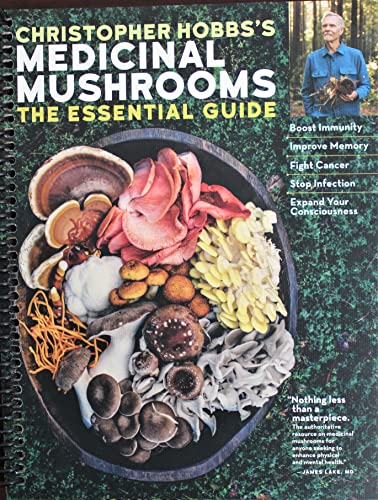
Christopher Hobbs's Medicinal Mushrooms: The Essential Guide: Boost Immunity, Improve Memory, Fight Cancer, Stop Infection, and Expand Your Consciousness: Hobbs L.Ac. AHG, Christopher
Christopher Hobbs, a mycologist and herbalist at the forefront of contemporary research, <strong>profiles the most powerful medicinal mushrooms and explains the nutritional and medicinal compounds in
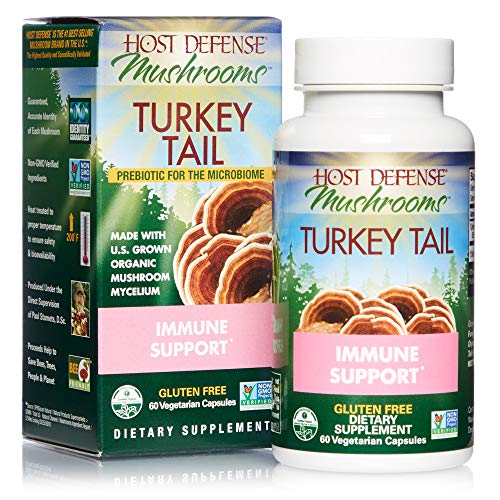
Host Defense Turkey Tail Capsules - Digestive Health & Immune Response Support Supplement - Mushroom Supplement for Gastrointestinal & Gut Microbiome Support - 60 Capsules
Supplement with Turkey Tail: Our digestive health and immune support supplement is formulated with Turkey Tail; our capsules are <strong>enriched with prebiotics, bolstering the gut microbiome to main
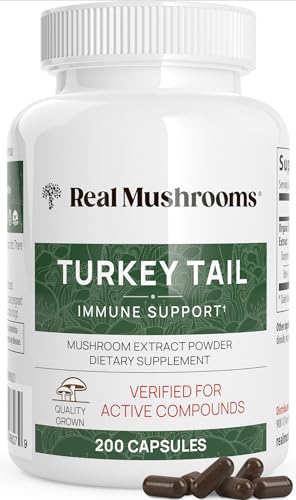
Real Mushrooms Turkey Tail Capsules – Organic Mushroom Extract for Wellness & Daily Rhythm – Vegan, Non-GMO, No Fillers Turkey Tail Extract – 90 Count Mushroom Supplement : Everything Else
100% Turkey Tail Mushroom Fruiting Body Extract: <strong>Made with organic turkey tail mushroom extract from fruiting bodies only—no grain, starch, or mycelium</strong>. Experience potent benefits for
Evidence & Sources
Promising research with growing clinical support from multiple studies
- National Center for Complementary and Integrative Health (NCCIH)
- Memorial Sloan Kettering Cancer Center
- Journal of Clinical Oncology
- Cochrane Database of Systematic Reviews
- Integrative Cancer Therapies
- Cancer Immunology, Immunotherapy
- World Journal of Gastroenterology
- Nutrients
This content is for informational purposes only and does not constitute medical advice. Always consult a qualified healthcare provider before starting, stopping, or changing any supplement or medication regimen.