Mushroom Immunology: Focus on Turkey Tail’s PSK and PSP
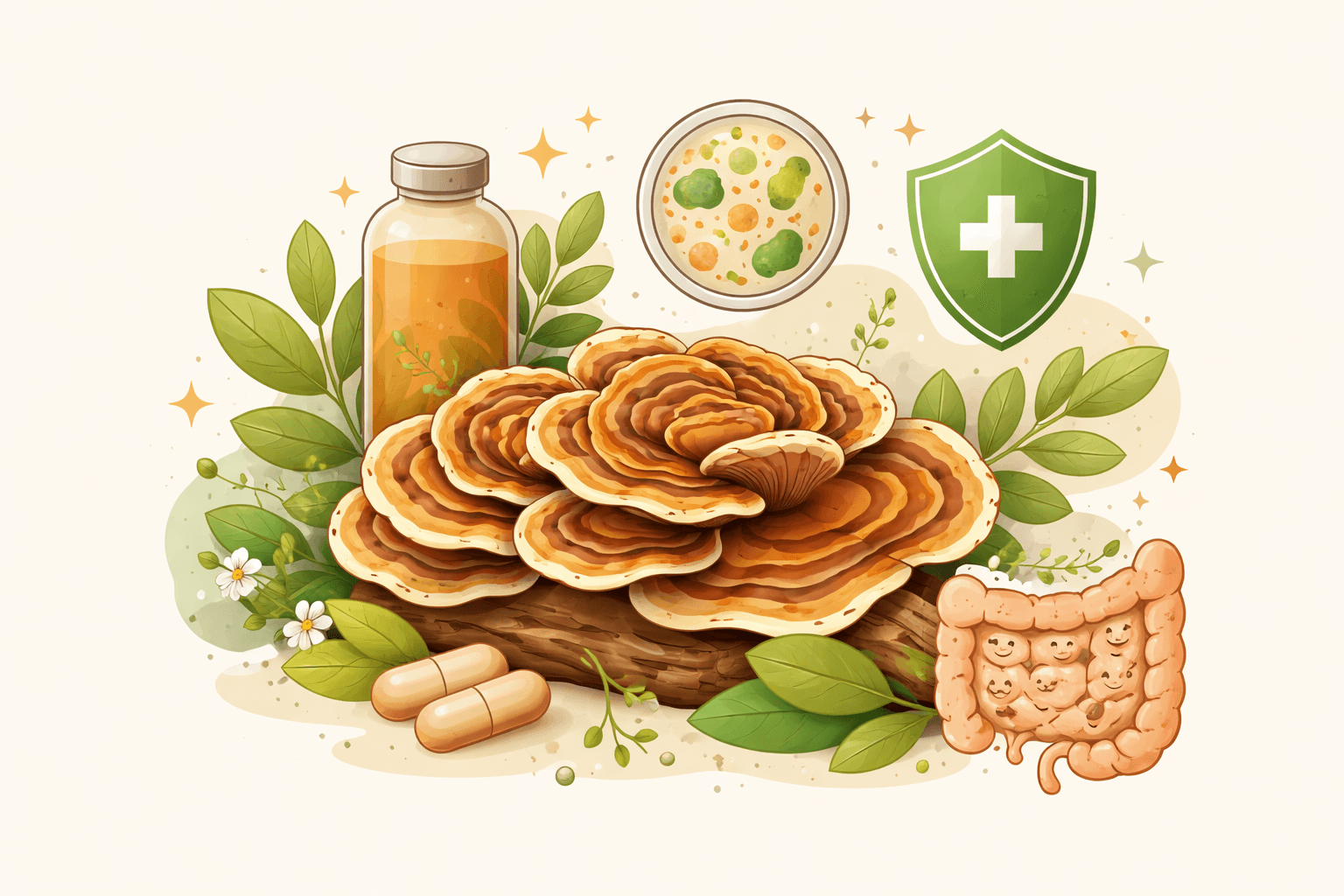
Turkey tail (Trametes versicolor), known as yun zhi in Traditional Chinese Medicine (TCM), has a long history of use for vitality and “supporting qi.” Modern research zeroes in on two hot-water–derived fractions—PSK (polysaccharide-K) and PSP (polysaccharopeptide)—that may modulate immune function via beta-glucan–rich complexes. This article explains how PSK/PSP might work, what human studies suggest about their role as adjuncts to therapy, and why extraction methods matter.
Key takeaways are framed with evidence levels: strong, moderate, emerging, or traditional.
What Are PSK and PSP?
- PSK and PSP are protein-bound polysaccharides produced by hot-water extraction of turkey tail. They are rich in beta-glucans linked to small peptides, sometimes called polysaccharopeptides. (Evidence: strong for composition characterization)
- PSK (also known as Krestin) has been widely studied in Japan and used clinically as an adjunct to standard cancer care since the late 1970s. PSP is a related fraction developed in China, with a similar overall profile but distinct carbohydrate side chains. (Evidence: strong for historical and regulatory context)
How Beta-Glucans May Modulate Immunity
- Pattern recognition: Mushroom beta-glucans can bind to immune receptors such as Dectin-1, complement receptor 3 (CR3), and toll-like receptors (e.g., TLR2/6), triggering downstream signaling that influences innate and adaptive responses. This may enhance functions of macrophages, dendritic cells, natural killer (NK) cells, and T lymphocytes. (Evidence: strong, based on mechanistic studies and reviews)
- Cytokine orchestration: Binding events can shift cytokine profiles (e.g., IL-2, IFN-γ, TNF-α), potentially supporting coordinated immune surveillance without indiscriminate stimulation. In practice, this is often described as immune “modulation,” not simple boosting. (Evidence: moderate, based on translational and human biomarker studies)
- Trained innate immunity: Some beta-glucans have been explored for “training” innate immune cells—priming them to respond more robustly to subsequent challenges. Whether PSK/PSP produce sustained trained immunity in humans remains under study. (Evidence: emerging)
Clinical Evidence Snapshot: PSK/PSP as Adjuncts
- Post-surgical adjuvant therapy in solid tumors: Systematic reviews and meta-analyses of randomized trials from Japan report that adding PSK to standard chemotherapy after curative surgery for gastric or colorectal cancer was associated with improvements in disease-free and overall survival versus chemotherapy alone. These data derive from multiple RCTs conducted over several decades. While trial quality and regimens vary, the overall signal favors PSK as an adjunct to conventional care in these settings. (Evidence: moderate)
- Immune markers and quality of life: Small randomized and phase I/II trials (and pilot studies) report that turkey tail extracts or PSP may increase NK cell activity, support T-cell function, and help maintain certain immune parameters during or after chemotherapy. Some studies also note potential benefits for fatigue and appetite, though results are mixed and sample sizes are small. (Evidence: emerging to moderate)
- Safety alongside standard therapy: Across trials, PSK/PSP have generally been well tolerated, with gastrointestinal upset the most common complaint. However, careful coordination with the oncology team is emphasized in research protocols to avoid interactions and ensure appropriate timing with cytotoxic or immunomodulating drugs. (Evidence: moderate)
Important context: Most robust clinical outcome data (e.g., survival) relate to PSK used in defined adjuvant settings in Japan. Data for PSP are expanding but are less extensive and often focus on immune biomarkers rather than hard outcomes. Neither PSK nor PSP is a standalone treatment; research investigates them as adjuncts within standard-of-care protocols.
Turkey Tail, the Microbiome, and Gut–Immune Crosstalk
- Prebiotic potential: Polysaccharides from turkey tail may act as prebiotic fibers that influence gut microbial communities. Early human and animal studies suggest shifts toward beneficial taxa and short-chain fatty acid production, which in turn may affect mucosal immunity and systemic inflammatory tone. Findings are preliminary and vary by extract and population. (Evidence: emerging)
- Gut barrier and immune homeostasis: By shaping microbial metabolites and mucosal signaling, prebiotic fibers can theoretically support barrier integrity and balanced immune responses. Direct clinical evidence specific to PSK/PSP for these endpoints remains limited. (Evidence: emerging)
Extraction Matters: Hot Water vs Dual Extracts
- Hot-water extracts: PSK and PSP are produced by hot-water extraction, which is optimal for liberating water-soluble polysaccharides and beta-glucans central to immunomodulation. If immune support is the focus, research suggests hot-water fractions are most relevant. (Evidence: strong)
- Alcohol (or dual) extracts: Organic solvent steps enrich non-polysaccharide compounds (e.g., triterpenes in reishi). Turkey tail contains diverse molecules, but its best-studied immune effects stem from polysaccharopeptides rather than alcohol-soluble constituents. (Evidence: moderate)
- Standardization and identity: Studies commonly reference beta-glucan content, protein–polysaccharide ratio, and molecular weight distribution. Reproducible identity and quality control are crucial for translating research to products; mislabeling and variable extraction can alter bioactivity. (Evidence: strong)
How PSK/PSP May Integrate with Traditional Perspectives
- TCM view: Yun zhi (turkey tail) is traditionally used to “fortify the spleen,” support qi, and harmonize digestion—concepts aligning with modern ideas about gut–immune interplay and resilience. (Evidence: traditional)
- Bridging frameworks: Modern beta-glucan mechanisms (pattern recognition, cytokine orchestration, and potential microbiome effects) provide a biological lens for the traditional notion of building foundational vitality rather than acutely suppressing or stimulating a single pathway. (Evidence: conceptual synthesis)
What Research Still Needs to Clarify
- Standardized, contemporary RCTs: Many PSK trials predate current oncology protocols. Updated, well-controlled trials could clarify who benefits most, how PSK/PSP interact with modern regimens (including immunotherapy), and which biomarkers predict response. (Evidence gap)
- PSP clinical outcomes: While immune biomarkers look promising, larger trials powered for clinical endpoints (e.g., progression-free or overall survival, infection rates) are needed. (Evidence gap)
- Microbiome-specific effects: Head-to-head studies comparing hot-water–only PSK/PSP with whole-mushroom powders could define prebiotic versus direct immunomodulatory contributions. (Evidence gap)
Practical Considerations and Precautions
- Product differences: “Turkey tail” on a label does not guarantee PSK/PSP content. Research on immune endpoints most often uses standardized hot-water extracts with characterized polysaccharopeptides. (Evidence: strong)
- Medical coordination: Because PSK/PSP may interact with immune pathways, individuals receiving chemotherapy, targeted agents, immunotherapies, or taking immunosuppressants should discuss mushroom extracts with their care team before use. This is particularly important around surgery and during active treatment cycles. (Evidence: moderate)
- Tolerability: Reported adverse effects are typically mild gastrointestinal symptoms; rare hypersensitivity is possible, as with any biologically active extract. (Evidence: moderate)
Bottom Line
- PSK and PSP are hot-water polysaccharopeptides from turkey tail that may modulate immune function by engaging receptors such as Dectin-1 and TLRs and influencing cytokine networks. (Evidence: strong to moderate)
- As adjuncts to standard therapy, PSK has the most clinical support—older randomized trials and meta-analyses in resected gastric and colorectal cancer report survival benefits when added to chemotherapy. PSP shows promising effects on immune markers, with fewer outcome-focused trials. Neither is a standalone therapy. (Evidence: moderate)
- For immune support, extraction matters: research-backed effects center on hot-water–derived polysaccharides. Quality, standardization, and coordination with healthcare professionals are key. (Evidence: strong)
- TCM’s centuries-long yun zhi tradition resonates with modern findings that turkey tail may help “organize” rather than simply stimulate immunity, potentially including gut–immune crosstalk. (Evidence: traditional/emerging)
This article is informational and not medical advice. Always discuss complementary approaches with a qualified clinician, especially when receiving immunotherapy, chemotherapy, or other immune-active medications.