Mushroom Beta‑Glucans and Immune Modulation: How They May Train Your Defenses
A focused look at how mushroom beta‑glucans may modulate innate immunity and the gut‑immune axis, why extraction methods matter, and what clinical research suggests.
·7 min read
This content is for informational purposes only and does not constitute medical advice. Always consult a qualified healthcare provider before starting, stopping, or changing any supplement or medication regimen.
Overview
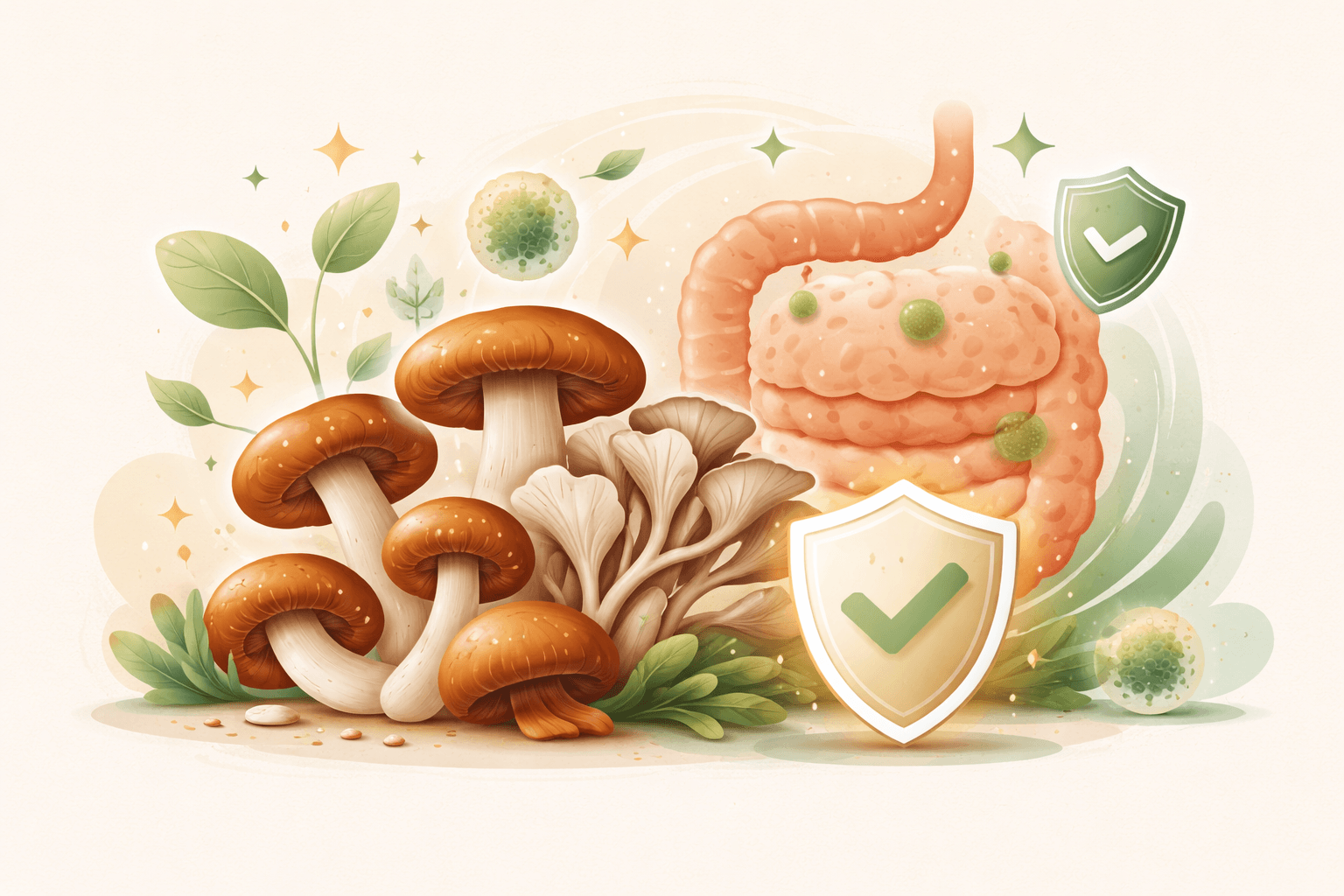
Mushroom immunology often starts with one family of compounds: beta‑glucans. These complex polysaccharides, found in the cell walls of many medicinal mushrooms, may “talk” to innate immune cells and influence the gut‑immune axis. This supporting article focuses on how mushroom beta‑glucans may modulate immunity, what the research suggests, why extraction methods matter, and how traditional medicine has long framed these effects.
What Are Beta‑Glucans?
Beta‑glucans are long chains of glucose linked primarily by β‑(1→3) backbones with β‑(1→6) branches in fungi. This branching pattern differs from cereal beta‑glucans (e.g., oats, which are β‑(1→3)/(1→4)) and appears to be key for immune recognition. In mushrooms, beta‑glucans are embedded in the cell wall matrix and can be extracted, especially with hot water.
Claim: Fungal β‑(1→3),(1→6)‑glucans are recognized by immune receptors more readily than many cereal beta‑glucans due to their branching and higher molecular weight. (Evidence level: moderate; based on receptor biochemistry and comparative in vitro studies)
How Beta‑Glucans “Talk” to Immune Cells
Immune cells use pattern‑recognition receptors to detect microbial patterns. Mushroom beta‑glucans may engage several of these receptors, including dectin‑1 (on macrophages, dendritic cells, neutrophils), complement receptor 3 (CR3), and toll‑like receptors (TLR2/6), triggering signaling cascades such as NF‑κB and MAPKs. Downstream, this can enhance phagocytosis, antigen presentation, and natural killer (NK) cell activity while balancing cytokine profiles.
Claim: Beta‑glucans bind dectin‑1, activating innate immune responses and cytokine production. (Evidence level: strong; multiple mechanistic studies and reviews)
Claim: Beta‑glucans can prime NK cell cytotoxicity via innate pathways, potentially improving surveillance against infected or aberrant cells. (Evidence level: moderate; supported by animal studies and small human trials measuring NK activity)
Trained Immunity: Priming Innate Memory
Beyond immediate signaling, beta‑glucans may induce “trained immunity”—a form of functional reprogramming in innate cells (e.g., monocytes) that leads to a more robust response upon later challenge. This appears to involve epigenetic remodeling and metabolic shifts (e.g., glycolysis) in myeloid progenitors.
Claim: Beta‑glucans can induce trained immunity in human monocytes in experimental settings, leading to enhanced cytokine responses to secondary stimuli. (Evidence level: moderate; human ex vivo experiments and early clinical translational work)
Claim: Trained immunity from beta‑glucans may enhance general resistance to common infections, though clinical relevance remains under investigation. (Evidence level: emerging; preliminary human trials with beta‑glucans—largely from yeast—suggest fewer or shorter respiratory infections)
The Gut–Immune Interface
Because beta‑glucans are poorly digested, they largely reach the intestine intact. There, two complementary paths may be relevant:
Sampling by gut immune tissues: Particulate beta‑glucans may be transported by M‑cells in Peyer’s patches, engaging dectin‑1–expressing dendritic cells and macrophages. (Evidence level: moderate; animal and ex vivo intestinal models)
Microbiome modulation: Some mushroom polysaccharides act as fermentable substrates, shifting the composition and activity of gut microbes and increasing short‑chain fatty acids (SCFAs) that influence systemic immunity. (Evidence level: moderate; animal studies and early human trials with mushroom polysaccharides show changes in microbiota and SCFA profiles)
Species Spotlight Through the Beta‑Glucan Lens
Turkey tail (Trametes versicolor): PSK and PSP are protein‑bound beta‑glucan complexes produced by hot‑water extraction and purification. As adjuncts to standard oncology care in Japan and China, these have been evaluated in randomized trials. Systematic reviews of these trials report improved immune markers and, in some cancers (e.g., gastric, colorectal), modest survival advantages when used alongside conventional therapy. (Evidence level: moderate; multiple RCTs and meta‑analyses, primarily from East Asia)
Reishi (Ganoderma lucidum): Hot‑water and combined extracts rich in polysaccharides have been studied for immune modulation. Reviews of clinical trials suggest increases in certain T‑cell subsets and NK activity along with symptom improvements when used adjunctively, though effects on major clinical endpoints remain uncertain. (Evidence level: moderate; small RCTs and a past systematic review)
Maitake (Grifola frondosa): D‑fraction (a beta‑glucan complex) has been investigated in pilot human studies, showing changes in immune parameters such as NK activity. Larger, well‑controlled trials are limited. (Evidence level: emerging; small, heterogeneous clinical studies)
Chaga (Inonotus obliquus): Rich in polysaccharides and polyphenols, chaga demonstrates antioxidant and immune‑modulating effects in vitro and in animals; rigorous human data are sparse. (Evidence level: emerging)
What About Energy and Nerve Growth?
While cordyceps (Cordyceps militaris/sinensis) and lion’s mane (Hericium erinaceus) are often discussed for energy and nerve growth factor support, their immune effects are secondary in this context.
Claim: Cordyceps polysaccharides may modulate cytokines and support exercise recovery in preliminary human studies, but findings are mixed. (Evidence level: emerging)
Claim: Lion’s mane contains polysaccharides and hericenones/erinacines; limited human data suggest cognitive support, while immune data are preliminary. (Evidence level: emerging)
Extraction Methods Matter
How beta‑glucans are prepared influences their bioactivity.
Hot‑water extraction: Traditionally used in East Asia, this method solubilizes polysaccharides and yields the beta‑glucan‑rich fractions evaluated in many clinical studies (e.g., PSK/PSP). (Evidence level: strong; direct correspondence to products used in trials)
Alcohol extraction: Pulls out triterpenes (e.g., ganoderic acids from reishi) that may modulate inflammation and have complementary effects, but contributes little to beta‑glucan content. (Evidence level: moderate)
Dual extracts: Combine hot‑water and alcohol fractions, aiming to capture both polysaccharides and triterpenes. (Evidence level: emerging; logical from chemistry, but comparative clinical data are limited)
Fruiting body vs mycelium: Beta‑glucan levels often differ between fruiting bodies and mycelial products, and grain‑grown mycelium may include starches that dilute beta‑glucan content. Independent assays suggest wide variability. (Evidence level: moderate; analytical studies)
From Tradition to Today: Lingzhi and “Defensive Qi”
Traditional Chinese Medicine has used lingzhi (reishi) for centuries to “nourish Zheng Qi” and fortify “Wei Qi” (defensive Qi), concepts that resonate with modern ideas of resilient, well‑regulated immunity rather than constant stimulation. In practice, traditional preparations relied on decoctions—essentially hot‑water extracts—mirroring methods now used to isolate polysaccharide fractions. (Evidence level: traditional)
What the Clinical Evidence Suggests
General immune support: Systematic reviews on beta‑glucans (often yeast‑derived but mechanistically similar) report small reductions in upper respiratory infection incidence and symptom duration in healthy adults, with improved salivary IgA or NK markers in some trials. Mushroom‑specific data are more limited but directionally consistent. (Evidence level: moderate)
Oncology adjuncts: For turkey tail’s PSK/PSP, pooled analyses of randomized trials suggest survival and immune‑marker benefits when combined with standard therapy in select cancers. These findings apply to standardized protein‑bound polysaccharides rather than generic mushroom powders. (Evidence level: moderate)
Safety: Clinical studies generally report good tolerability of standardized polysaccharide extracts, though individual responses vary and interactions with immunotherapies or anticoagulants are possible. (Evidence level: moderate)
Practical Quality Considerations (No Dosage Advice)
Look for products that report beta‑glucan content with third‑party testing rather than only “polysaccharides,” which can include starches. (Evidence level: moderate)
If immune modulation is the goal, hot‑water or protein‑bound polysaccharide extracts align most closely with clinical literature; alcohol fractions contribute different compounds. (Evidence level: strong for alignment with studied materials)
Species identity, part used (fruiting body vs mycelium), and extraction method all influence the final product’s chemistry and, potentially, its effects. (Evidence level: moderate)
Bottom Line
Mushroom beta‑glucans may engage dectin‑1 and related receptors to prime innate immunity, potentially contributing to better surveillance and balanced inflammatory responses. (Evidence level: strong for mechanism; moderate for clinical relevance)
The gut‑immune axis likely plays a role: beta‑glucans interact with intestinal immune tissues and may modulate the microbiome and SCFAs. (Evidence level: moderate)
Not all mushroom products are equivalent. Many of the most compelling clinical data—especially for turkey tail PSK/PSP—come from standardized, hot‑water–derived beta‑glucan complexes used adjunctively with conventional care. (Evidence level: moderate)
Traditional decoctions from TCM align with modern extraction science, emphasizing polysaccharide‑rich preparations for immune modulation. (Evidence level: traditional)
Research suggests potential benefits for general immune support and specific adjunctive contexts, but outcomes vary by species, extract type, and individual factors. High‑quality sourcing and realistic expectations are essential. (Evidence level: moderate)
This content is for informational purposes only and does not constitute medical advice. Always consult a qualified healthcare provider before starting, stopping, or changing any supplement or medication regimen.
Introduction
Medicinal mushrooms have occupied a unique space in traditional medicine, especially in East Asia, for centuries. Today, modern immunology is catching up with aspects of that wisdom. Rese
Mushroom Immunology: Beta‑Glucans and the Innate Immune System
Medicinal mushrooms are often described as “immune-supportive,” but the most studied reason why comes down to one family of complex suga
Reishi Mushroom Benefits: Evidence-Based Uses, Dosage & Safety. If you’re curious about reishi mushroom benefits, you’re not alone. Reishi (Ganoderma lucidum) has been revered in East Asian medicine for centuries as a “mushroom of immortality.” Modern research suggests it may support immune balance, stress resilience, sleep quality, and more—but the strength of
Best Mushroom Supplements 2026 — Top Lion’s Mane, Reishi & Cordyceps. If you’re shopping for the best mushroom supplements, you’ve likely noticed big differences in extraction methods, “fruiting body” vs. “mycelium,” and claims about beta‑glucans. This guide cuts through the noise with evidence‑aware picks, clear label criteria, and practical dosing and safety tips.
Maitake. Grifola Frondosa, Hen of the Woods, Maitake Mushroom. ## Overview
**Maitake** (*Grifola frondosa*), sometimes called “hen of the woods,” is an edible and medicinal mushroom used in both culinary and traditional health contexts. It has a long history of use in East Asia and is now widely marketed as a **dietary supplement** for **immune support**, **me