Overview
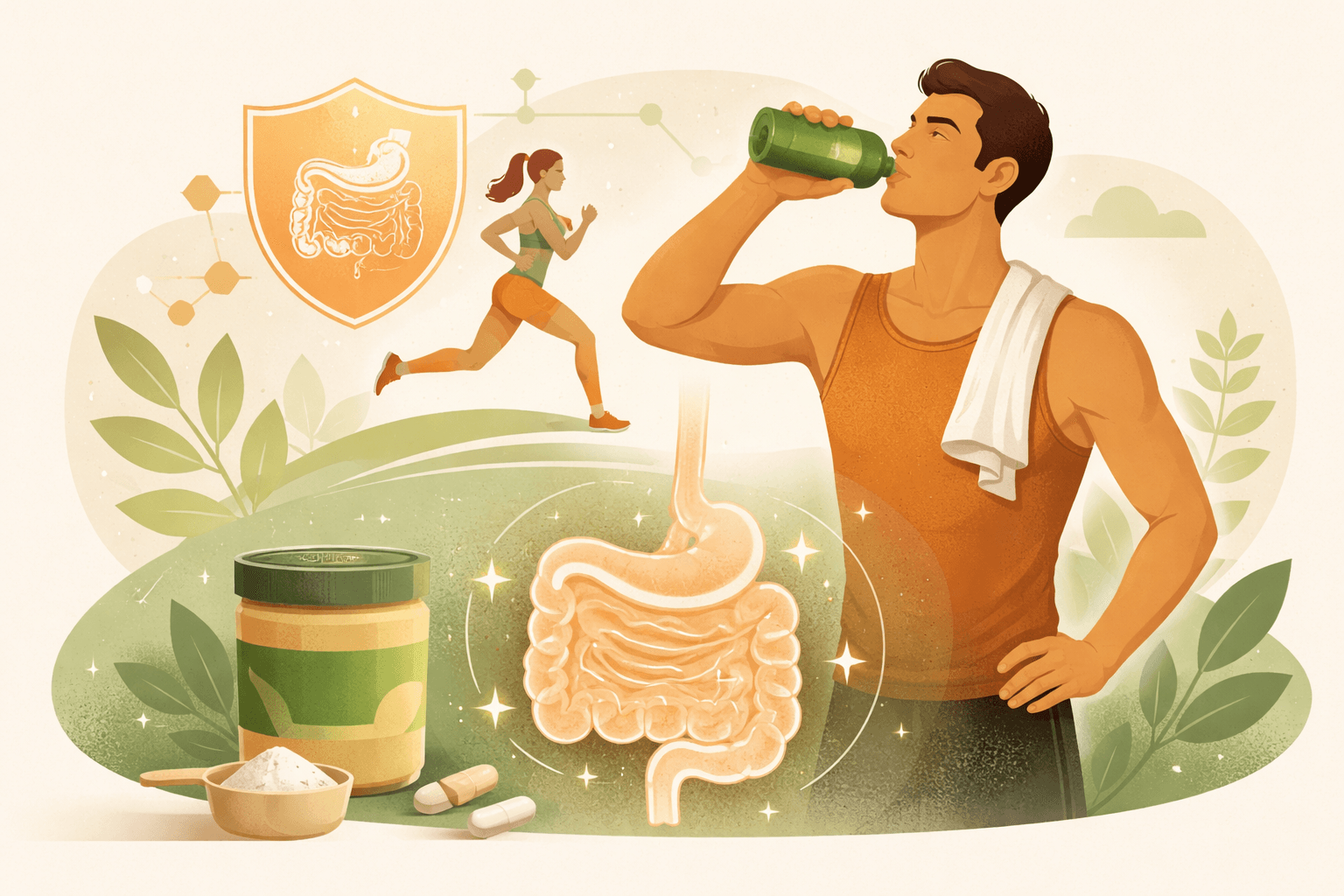
High‑intensity or prolonged exercise can disrupt the gut barrier—often called “exercise‑induced gastrointestinal (GI) syndrome.” Research suggests that L‑glutamine, the body’s most abundant amino acid, may help maintain gut barrier integrity under athletic stress, potentially supporting recovery and immune resilience. This focused review summarizes what’s known about glutamine’s role in exercise‑related gut permeability, where the evidence is strongest, and how traditional nutrition perspectives intersect with modern sports science.
Why the Gut Barrier Matters in Hard Training
During strenuous or prolonged efforts—especially in heat—the body redistributes blood flow away from the intestines toward working muscles and skin. This, along with mechanical jostling and stress hormones, can lead to:
- Increased intestinal permeability (“leaky gut”) and tight‑junction disruption [Evidence: strong for phenomenon]
- Translocation of luminal contents (e.g., LPS/endotoxin) into circulation [Evidence: moderate]
- GI symptoms (nausea, cramping, diarrhea) that impair performance and recovery [Evidence: strong]
Systematic reviews describe this as a common stress response in endurance and ultra‑endurance contexts and a contributor to GI distress, systemic inflammation, and next‑day fatigue (Costa et al., Sports Medicine, 2017) [Evidence: strong].
What Makes Glutamine Relevant?
Glutamine plays dual roles critical to athletes:
- Fuel and nitrogen donor for enterocytes and immune cells, supporting barrier repair and mucin production [Evidence: strong]
- A key shuttle for acid‑base balance and carbon skeletons between tissues (the “gut–muscle axis”), with skeletal muscle acting as a major producer and reservoir [Evidence: strong]
During intensive training or heat stress, plasma glutamine can fall as muscles export it to support immune and gut demands, which may coincide with transient immunosuppression and barrier stress (Gleeson, 2008) [Evidence: moderate].
Evidence in Athletes: Can Glutamine Support Gut Integrity?
Multiple controlled studies have assessed glutamine or dipeptide forms (e.g., L‑alanyl‑L‑glutamine) during exercise stress:
Oral L‑glutamine and permeability markers: Randomized trials report that glutamine ingestion before or during strenuous running in the heat attenuated post‑exercise increases in intestinal permeability (e.g., urinary sugar probe ratios) and reduced GI symptom scores (Zuhl et al., Journal of Applied Physiology, 2014) [Evidence: moderate].
Dipeptide forms during heat stress: L‑alanyl‑L‑glutamine has been shown to reduce biomarkers of epithelial injury (e.g., I‑FABP) and lessen permeability changes during prolonged exercise in hot conditions (van Wijck et al., Am J Physiol Gastrointest Liver Physiol, 2012; Rowlands et al., Int J Sport Nutr Exerc Metab, 2015) [Evidence: moderate].
Mechanistic plausibility: In vitro and translational work indicates glutamine supports tight‑junction proteins (occludin, claudins), enhances intestinal water and sodium absorption, and buffers exercise‑induced oxidative stress in enterocytes [Evidence: moderate].
Overall, the athlete‑specific evidence suggests glutamine may help blunt exercise‑induced gut permeability, especially in heat or high‑stress conditions. However, trials are modest in size, and not all show uniform benefits across performance outcomes or symptom relief [Evidence: moderate].
Immune Considerations: The Gut–Muscle–Immune Triangle
Immune dysfunction after heavy training often coincides with GI barrier stress. Because glutamine is a preferred fuel for lymphocytes and macrophages, maintaining availability may support normal immune surveillance:
- Early athlete studies observed fewer self‑reported upper‑respiratory symptoms after endurance events when glutamine was used, but subsequent randomized trials report mixed results (Castell & Newsholme, 1997; Krzywkowski et al., 2001; Gleeson, 2008) [Evidence: mixed overall; moderate for immune biomarker modulation].
- Glutamine’s most consistent immune‑related effects in athletes appear to be biochemical (e.g., cytokine shifts) rather than robust reductions in illness incidence [Evidence: emerging].
Takeaway: Supporting gut integrity may indirectly support immune resilience post‑exercise, but prevention of infections in athletes with glutamine remains uncertain [Evidence: emerging].
Lessons From Clinical Stress States (Burns/Trauma)
Catabolic stressors such as major burns and trauma create profound demands on gut and immune tissues:
- Meta‑analyses in surgical and burn populations historically reported improvements in nitrogen balance and fewer infections with glutamine‑enriched feeding (enteral or parenteral) [Evidence: moderate].
- Large critical‑care trials in heterogeneous ICU patients have produced mixed findings, including neutral or adverse outcomes at high doses (e.g., REDOXS) [Evidence: strong for mixed/nuanced clinical evidence].
Relevance to athletes: While hospital settings are not directly comparable to training, these data reinforce glutamine’s role in barrier and immune metabolism under stress—while underscoring that context, route, and patient status matter [Evidence: moderate].
IBS and Permeability: A Window Into Mechanism
Athletes with IBS‑like symptoms often report exercise‑exacerbated GI distress. In adults with IBS‑D and increased intestinal permeability, a randomized, placebo‑controlled trial reported improved symptom severity scores and reductions in permeability markers with L‑glutamine versus placebo (Zhou et al., 2019) [Evidence: moderate].
Implication: In people with demonstrable permeability issues, glutamine may help normalize barrier function alongside symptom improvement—supporting its mechanistic rationale in exercise‑induced barrier stress [Evidence: moderate].
Why Is Glutamine the Body’s Most Abundant Amino Acid?
- High intracellular pools in skeletal muscle and lungs enable rapid delivery to tissues in need [Evidence: strong].
- Essential for rapidly dividing cells (enterocytes, immune cells) and as a nitrogen and carbon donor for nucleotide, hexosamine, and glutathione synthesis [Evidence: strong].
- Central to the gut–muscle axis: muscle exports glutamine during stress to sustain barrier and immune integrity, linking training load to whole‑body recovery [Evidence: strong].
Traditional Perspective: Bone Broth and Convalescence
Bone broths and long‑simmered soups have been traditional staples for convalescence across cultures. They provide amino acids—including glutamine and glycine—along with minerals and gelatin/collagen peptides. While the exact glutamine content varies widely by preparation, the traditional practice aligns with modern insights that easily digested, amino‑acid–rich liquids may support gut comfort during recovery [Evidence: traditional; scientific quantification of effects is limited].
Practical Considerations for Athletes
- Context matters: Potential benefits appear more evident during heat exposure, very prolonged efforts, or when GI symptoms/permeability are documented [Evidence: moderate].
- Formulation: Studies use free L‑glutamine or dipeptide forms (e.g., L‑alanyl‑L‑glutamine). Dipeptides may be more stable in solution and better tolerated in some protocols, though superiority is not definitively established [Evidence: emerging].
- Outcomes to track: GI symptom logs, perceived recovery, and, in research settings, permeability markers (e.g., lactulose:rhamnose ratio, I‑FABP) [Evidence: strong for utility of markers; moderate for response to glutamine].
- Safety: Generally well‑tolerated in healthy adults in research settings, but responses vary. Individuals with medical conditions should consult a qualified clinician before use, especially given mixed results in critical illness [Evidence: strong for need to individualize].
Where the Evidence Is Strong vs. Uncertain
- Strong: Exercise can acutely increase intestinal permeability; glutamine is central fuel for enterocytes and immune cells; gut stress can impair performance and recovery.
- Moderate: Glutamine may attenuate exercise‑induced permeability and GI symptoms, particularly in heat or prolonged exercise; IBS‑D with permeability may improve with glutamine.
- Emerging/Mixed: Reduction of illness incidence in athletes; superiority of specific glutamine formulations; translation to performance gains across all contexts.
Bottom Line
- Exercise, especially in the heat, can transiently compromise the gut barrier and contribute to GI symptoms and systemic stress. Glutamine’s biological role in fueling and repairing the intestinal lining makes it a plausible tool for protecting barrier integrity under these conditions.
- Controlled trials in athletes suggest glutamine may reduce markers of exercise‑induced permeability and ease GI symptoms, though results vary and effects on illness incidence or performance are not guaranteed.
- Findings from IBS with increased permeability and from burn/trauma settings bolster the mechanistic case for glutamine in barrier support, while reminding us that context and individual response are crucial.
- Traditional bone broth practices echo the modern view that amino acid–rich nourishment may be soothing to a stressed gut, though precise effects depend on preparation and individual tolerance.
As with any recovery strategy, athletes may consider glutamine within a broader plan that prioritizes training progression, heat acclimation, hydration/nutrition strategies, and sleep—while consulting qualified professionals when GI symptoms persist or medical conditions are present.