How to Find a Holistic Practitioner Near You: A Practical Guide to Modalities, Credentials, and What to Ask
A step‑by‑step guide to finding a holistic practitioner near me—modalities, search tips, credentials, red flags, and smart questions to ask before booking.
·10 min read
This content is for informational purposes only and does not constitute medical advice. Always consult a qualified healthcare provider before starting, stopping, or changing any supplement or medication regimen.
If you’ve typed “finding a holistic practitioner near me” into a search bar, you’re probably looking for care that treats the whole person—mind, body, and lifestyle—not just a diagnosis. This guide walks you through what “holistic” really means, which modalities fit your needs, where and how to search locally (and via telehealth), how to vet safety and training, and smart questions to ask before you book. Throughout, we point out where research is strong, where it’s still emerging, and where traditions guide practice.
What Is a Holistic Practitioner?
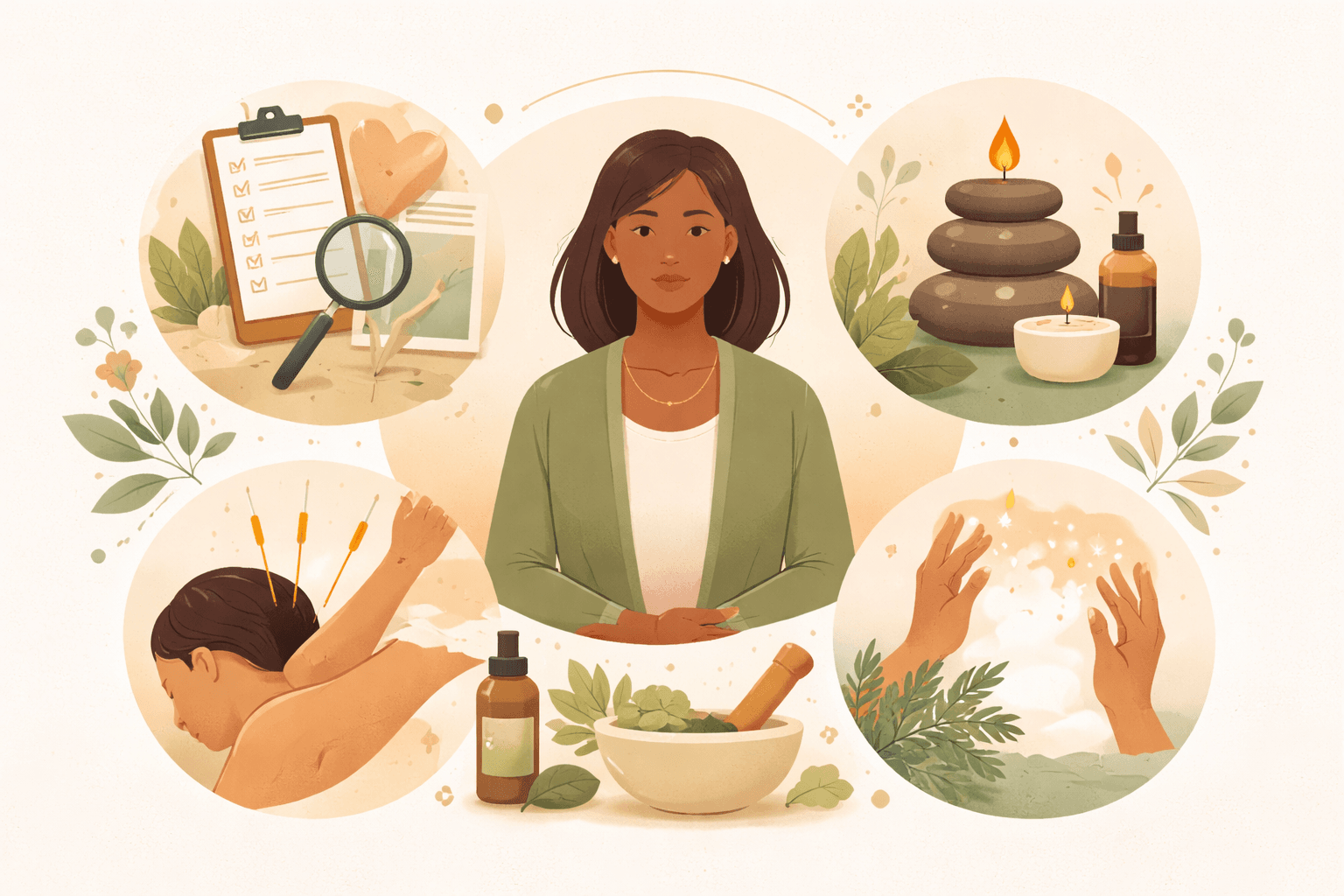
“Holistic” typically means addressing the whole person—physical symptoms, emotional well‑being, diet, sleep, movement, stress, community, and meaning/purpose. Holistic practitioners may come from conventional medicine (MD/DO), licensed complementary professions (ND, LAc, DC, RD/RDN, CNS), or traditional systems (Ayurvedic practitioners, herbalists, homeopaths). They differ in training, legal scope, and the tools they use.
For a broader overview of approaches, see our primer on complementary options in Alternative Medicine Explained: Types, Evidence, Safety & Choosing Care (/articles/alternative-medicine-explained-types-evidence-safety-choosing-care).
Common Modalities, Scope, and When to Choose Which
Naturopathic Doctors (ND/NMD)
Scope: In licensed states/provinces, NDs are primary‑care trained with a focus on lifestyle, nutrition, botanicals, mind‑body practices, and selected pharmaceuticals depending on jurisdiction. They order labs and create individualized plans. In unlicensed regions, “naturopath” may indicate variable training—clarify credentials.
Typical reasons people seek NDs: Digestive issues, hormonal concerns, fatigue, preventive care, chronic conditions managed with lifestyle and integrative tools.
When to choose: You want a whole‑person primary‑care or consultative partner emphasizing lifestyle and natural therapies, with labs and care coordination.
Resource: Find a Naturopathic Doctor Near You: Credentials, Services & How to Choose (/articles/find-a-naturopathic-doctor-credentials-services-how-to-choose)
Integrative or Functional Medicine MD/DO
Scope: Board‑certified physicians who integrate nutrition, sleep, stress management, physical activity, sometimes supplements or botanicals, and selected advanced testing. Functional medicine often emphasizes systems biology and root‑cause frameworks.
When to choose: You want a physician who blends conventional standards with evidence‑informed complementary care and can manage prescriptions alongside lifestyle plans.
Acupuncturists/Traditional Chinese Medicine (LAc, Dipl. OM)
Scope: Acupuncture, cupping, moxibustion, TCM pattern diagnosis, lifestyle guidance, and Chinese herbal formulas (where trained and allowed). Licensed in most U.S. states.
When to choose: You prefer a non‑drug, body‑based approach for pain or stress, or you’re exploring TCM for functional complaints. See topic pages on Stress and Acupuncture (/relates/stress-and-acupuncture) and Chronic Pain and Acupuncture (/relates/chronic-pain-and-acupuncture).
Herbalists (clinical herbalists; TCM or Western herbal traditions)
Scope: Botanicals tailored to constitution and symptoms; in some cases, collaboration with your primary clinician. Herbalists themselves are generally not state‑licensed (outside of LAc/ND contexts), so vet training carefully.
Typical reasons: Sleep, stress, digestion, mild mood concerns, women’s health, adjunctive support during recovery.
When to choose: You want targeted botanical support and lifestyle guidance, ideally coordinated with your medical team. For specifics on formulas and safety, see Chinese Herbs: A Practical, Evidence‑Based Guide (/articles/chinese-herbs-guide).
Chiropractors (DC)
Scope: Diagnosis and conservative management of musculoskeletal conditions; spinal and extremity manipulation; exercise and ergonomics; some offer soft‑tissue work, laser, or nutrition.
Typical reasons: Acute and chronic back/neck pain, headaches related to musculoskeletal dysfunction, mobility limitations.
When to choose: You need hands‑on care for spine or joint issues and want movement and self‑management strategies.
Ayurveda Practitioners
Scope: Constitution (dosha) assessment; personalized nutrition, spices/herbs, daily routines (dinacharya), yoga, breathwork, and bodywork (abhyanga, shirodhara) based on traditional texts.
When to choose: You’re drawn to a time‑tested, whole‑life framework and mindful routines; you’re comfortable blending tradition with modern care. For background, see Ayurveda Explained: Principles, Doshas, Benefits & How to Start (/articles/ayurveda-explained-principles-doshas-benefits-how-to-start).
Homeopaths
Scope: Homeopathy uses highly diluted preparations selected by symptom patterns; typically adjunctive to conventional or integrative care. In most places, homeopaths are not state‑licensed unless they have another professional license.
Typical reasons: Recurrent colds, allergies, functional complaints; some pursue for pediatric care within a coordinated plan.
When to choose: You prefer a gentle, historically used approach; ensure your primary clinician oversees medical conditions and medications.
Nutrition Professionals (RD/RDN or CNS)
Scope: Medical nutrition therapy (RD/RDN) or advanced nutrition practice (CNS), including lab‑informed plans, supplement guidance, and behavior change coaching.
When to choose: You want evidence‑based nutrition care integrated with your medical team.
No single modality is “best.” The right fit depends on your condition, preferences, budget, and how much hands‑on vs. lifestyle‑focused support you want. Many people blend modalities—e.g., an integrative MD for diagnostics and prescriptions, an acupuncturist for pain/stress, and a dietitian for meal planning.
How to Search for a “Holistic Practitioner Near Me”
When you’re actively looking—typing “holistic practitioner near me”—you’ll get better results with specific keywords and filters.
Professional directories and association locators: Naturopathic (state‑licensed NDs), acupuncture (NCCAOM), chiropractic (state boards/associations), functional medicine (IFM), integrative medicine (AIHM), Ayurveda (NAMA), nutrition (Academy of Nutrition and Dietetics; CNS Credentialing Board). Use filters for location, specialty, and insurance.
Healthcare marketplaces: General physician and therapist marketplaces often list integrative clinicians; you can filter by “integrative,” “functional,” or “holistic.”
Primary‑care/specialist referrals: Ask your PCP or specialist which integrative colleagues they trust. Many hospital systems now host integrative centers.
Community clinics and teaching clinics: Some acupuncture, chiropractic, and naturopathic schools run low‑cost clinics. Federally Qualified Health Centers may offer behavioral health, nutrition, and sometimes acupuncture.
Local support groups: Disease‑focused groups often share vetted local resources.
Social media and community boards: Local subreddits, parenting groups, and neighborhood forums can surface real‑world experiences. Verify credentials independently.
Telehealth alternatives: If local options are scarce, consider telehealth consults for nutrition, integrative/functional medicine, health coaching, or follow‑up visits with NDs/MDs where permitted.
Tip: If you’re in a major metro, specific guides can help—for example, our local overview of Holistic Acupuncture Clinics in San Diego: A Local Guide to Integrative Care (/articles/holistic-acupuncture-clinics-in-san-diego) illustrates how to compare clinics and services.
How to Vet Credentials, Safety, and Quality
Holistic care can be excellent—but training and legal scope vary. Here’s how to evaluate safely.
Licensing vs. Certification
Licensed Professions (vary by state/country): MD/DO, ND (in licensed jurisdictions), DC (chiropractor), LAc (acupuncturist), RN/LPN, RD/RDN, PT, OT, psychologist, LCSW, and more. Licensing sets minimum education, exams, scope, and oversight.
Certified but Not State‑Licensed (often voluntary): Clinical herbalists, Ayurveda practitioners, health coaches, some homeopaths. Quality can be high—but verify training hours, supervised practice, and safety protocols.
Key clarifications:
“Naturopathic doctor (ND/NMD)” vs “traditional naturopath”: An ND from an accredited program has standardized medical and clinical training; “naturopath” alone can mean many things.
Integrative/functional MD/DO: Look for conventional board certification (e.g., internal medicine, family medicine) plus additional integrative training or fellowships.
Nutrition: RD/RDN (licensed in many states) and CNS (advanced nutrition credential) both meet rigorous standards; “nutritionist” alone may be unregulated.
Training, Experience, and Approach
Ask about:
Education, residency or supervised clinical hours, and years in practice.
Conditions they most often treat and your practitioner’s specific experience with yours.
How they decide when to use labs, imaging, supplements, bodywork, or referrals.
Collaboration: Will they coordinate with your PCP/specialists?
Evidence‑Based vs. Experimental
Research‑supported: Acupuncture for chronic pain and headache prevention; spinal manipulation for some low‑back pain; cognitive and mindfulness strategies for anxiety, insomnia, and chronic pain; nutrition and exercise for cardio‑metabolic health. Evidence is moderate to strong for many of these.
Mixed/limited: Some specialty lab tests (e.g., food IgG panels) have limited consensus support; many supplements have promising but variable evidence; complex hormone panels may not change outcomes in general populations. Ask how results will guide action.
Traditional use: Ayurveda routines, Chinese herbal formulas, and homeopathy have centuries of practice. Safety and fit depend on practitioner skill, product quality, and coordination with standard care.
Red Flags
Promises of cures, especially for cancer, autoimmune disease, or neurodegenerative conditions.
Advising you to stop prescribed medications without collaborating with your prescriber.
Selling expensive, proprietary packages or supplements as the only path to health.
Heavy reliance on non‑validated tests without explaining limitations.
Lack of informed consent, poor transparency about risks, or refusal to share records.
Insurance, Fees, and Accessibility
Ask up front: Do they take insurance, health savings accounts (HSAs/FSAs), or offer sliding scale? What are visit lengths and follow‑up plans? Any required bundles?
Product policies: If they sell supplements, can you buy elsewhere? Are there markups? Do they disclose conflicts of interest?
Access: Telehealth options, portal messaging, refill timelines, and after‑hours guidance.
What to Ask and How to Evaluate Fit
A good fit blends competence, collaboration, and communication.
Pre‑Visit Checklist
Your goals in plain language (e.g., “walk 30 minutes pain‑free,” “sleep at least 6.5 hours most nights”).
A concise health timeline, medication/supplement list, and prior lab results.
Your preferences and boundaries (e.g., minimal supplements, comfort with needles/bodywork, cultural or dietary needs).
Smart Questions to Ask
Training and scope: “What is your license/certification, and what does it allow you to do in this state?”
Approach: “How do you typically evaluate and treat my condition? Where does research support your plan, and where is it more traditional or emerging?”
Testing: “Which labs or assessments do you recommend, and how will results change the plan?”
Timeline and touchpoints: “What results should I expect at 2–6 weeks and 3–6 months? How often will we meet?”
Collaboration: “How do you coordinate with my PCP/specialists?”
Safety: “Any interactions with my medications? What are the potential risks, and what symptoms would prompt urgent care?”
Costs: “What are visit fees, test prices, and estimated supplement or product costs?”
Assessing Rapport and Cultural Fit
Notice whether you feel heard, respected, and not rushed. Do they acknowledge your values and cultural context? Are recommendations realistic for your time, budget, and family situation? The therapeutic relationship itself—trust, empathy, and partnership—has measurable impact on outcomes, according to multiple studies in both conventional and integrative settings.
Tracking Outcomes and Deciding Next Steps
Define success: Use symptom scales (0–10 pain, sleep diaries, bowel movement logs), wearable metrics (steps, heart rate variability), or condition‑specific questionnaires.
Reassess: If there’s no meaningful movement after a reasonable trial (often 4–8 weeks, depending on the issue), discuss why—adherence, misdiagnosis, wrong modality, or life factors—and adjust or consider a referral.
Integrate: Many people do best when blending conventional care (diagnostics, medications as needed) with holistic tools (nutrition, movement, stress practices, manual therapies, and botanicals) tailored to them.
Tip: Tools can help with tracking. Many people find a simple Symptom & Habit Tracker App useful for logging sleep, pain, and meals. If you’re monitoring cardiovascular basics at home, an At‑Home Blood Pressure Monitor can make it easier to share readings with your clinician. For general wellness discussions with your provider, some people consider a High‑Quality Omega‑3 Supplement; talk with your clinician about whether it fits your goals and medications.
What the Research Says
Evidence for “holistic” care varies by modality and condition. Highlights include:
Acupuncture
Evidence level: moderate to strong for chronic low‑back pain, osteoarthritis knee pain, neck pain, and headache prevention. Studies indicate small to moderate effect sizes compared with sham and usual care, with low rates of adverse events when performed by trained practitioners.
Chiropractic/manual therapy
Evidence level: moderate for acute and some chronic low‑back pain and cervicogenic headache. Research suggests spinal manipulation can reduce pain and improve function in the short term; best results often occur when combined with exercise and education.
Evidence level: strong for mild to moderate anxiety and stress reduction; moderate for chronic pain and insomnia (CBT‑I is first‑line). Mechanisms may include down‑regulation of the stress axis and improved emotional regulation.
Nutrition and lifestyle interventions
Evidence level: strong for cardio‑metabolic risk reduction (dietary patterns, physical activity, sleep hygiene) and moderate for certain GI conditions (e.g., low‑FODMAP for IBS under RD guidance). Personalized coaching improves adherence.
Herbal medicine
Evidence level: mixed. Some botanicals (e.g., turmeric’s curcumin inhibiting NF‑kB in inflammatory pathways) have supportive trials; others rely more on traditional use or small studies. Quality, dose, and product standardization influence outcomes.
Naturopathic and integrative primary care models
Evidence level: emerging to moderate. Pragmatic and observational studies suggest potential improvements in patient satisfaction, lifestyle behaviors, and some clinical markers; more large randomized trials are needed.
Overall, research supports integrating evidence‑based complementary modalities with standard care for specific conditions—especially when plans emphasize lifestyle changes, shared decision‑making, and realistic goals. Where evidence is emerging or traditional, transparency, informed consent, and careful monitoring are essential.
Practical Takeaways: How to Use This Guide
Clarify your goal and preferred style of care (hands‑on, lifestyle‑focused, botanicals, or blended).
Use precise search phrases—condition + modality—and filters like insurance, telehealth, and language.
Verify licensing or credible certification, plus years of experience with your condition.
Ask about evidence, risks, costs, and how plans will adapt over time.
Track progress with simple metrics and reassess at 4–8 weeks.
Blend care wisely: keep your primary clinician in the loop and coordinate across providers.
For deeper dives while you search:
Alternative Medicine Explained: Types, Evidence, Safety & Choosing Care (/articles/alternative-medicine-explained-types-evidence-safety-choosing-care)
Find a Naturopathic Doctor Near You: Credentials, Services & How to Choose (/articles/find-a-naturopathic-doctor-credentials-services-how-to-choose)
Chinese Herbs: A Practical, Evidence‑Based Guide (/articles/chinese-herbs-guide)
Stress and Acupuncture (/relates/stress-and-acupuncture) and Chronic Pain and Acupuncture (/relates/chronic-pain-and-acupuncture)
Disclaimer
This information is for educational purposes and should not replace professional medical advice. Always consult a qualified healthcare provider for diagnosis and treatment, disclose all medications and supplements you use, and seek urgent care for red‑flag symptoms (e.g., chest pain, severe shortness of breath, new neurological deficits, uncontrolled bleeding, or high fever).
This content is for informational purposes only and does not constitute medical advice. Always consult a qualified healthcare provider before starting, stopping, or changing any supplement or medication regimen.
What Is Holistic Medicine? A Clear Guide to Principles, Therapies & Evidence. If you’ve ever wondered what is holistic medicine and whether it could help you feel better, you’re not alone. Many people are looking for care that treats the whole person—not just a symptom or a lab result. This guide explains what holistic medicine is, how it works, what the research says, and pr
Many people search for a naturopathic doctor when they want a more holistic, root-cause approach without abandoning conventional medicine. If you’re wondering what an ND actually does, how they’re tra
How to Find Holistic Health Practitioners in Asheville: Naturopaths, Acupuncturists, Integrative Clinics & What to Expect. If you’re searching for holistic health practitioners in Asheville, you’re not alone. This mountain city blends a vibrant wellness culture with evidence-informed care, from community acupuncture and herbal apothecaries to functional medicine consults and trauma‑informed bodywork. This guide explains
Holistic Methods for Pain Relief: An Evidence‑Based Guide to Mind‑Body, Manual, Herbal, and Lifestyle Approaches. If you’re looking for holistic methods for pain relief, you’re likely hoping for options that reduce pain without heavy side effects, help you function better, and respect both body and mind. This guide brings together evidence‑based mind–body practices, movement and manual therapies, acupuncture an
Holistic Wellness Centers in San Diego: Top Integrative Clinics, Services, and How to Choose. If you’re exploring holistic wellness centers in San Diego, you’re probably looking for care that blends conventional medicine with therapies like acupuncture, chiropractic, functional nutrition, massage, and mind‑body practices. This guide maps the local landscape, outlines evidence and safety for
Holistic Acupuncture Clinics in San Diego: A Local Guide to Integrative Care. If you’re searching for holistic acupuncture clinics in San Diego, you’re likely looking for whole-person care that blends Eastern and Western approaches—help for pain, stress, fertility, digestion, or sleep that respects the body’s interconnected systems. This local guide explains what “holistic” a