

Restless Legs Syndrome
Also known as: RLS, Restless Legs Syndrome (RLS)
Restless Legs Syndrome (RLS)
Restless Legs Syndrome (RLS), also called Willis-Ekbom disease, is a neurological sensorimotor condition marked by an uncomfortable urge to move the legs, often described as crawling, tingling, pulling, aching, or inner restlessness. Symptoms typically worsen during periods of rest, especially in the evening or at night, and are partially or temporarily relieved by movement such as walking or stretching. For many people, RLS disrupts sleep initiation and sleep continuity, making it closely linked with insomnia, daytime fatigue, impaired concentration, and reduced quality of life.
RLS is considered relatively common, though severity varies widely. Population studies suggest that a meaningful minority of adults experience symptoms consistent with RLS, with clinically significant cases occurring less often than occasional leg restlessness. The condition can affect adults of any age and also occurs in children, but prevalence tends to increase with age and appears higher in women. RLS may occur on its own (primary or idiopathic RLS) or in association with other factors such as iron deficiency, pregnancy, kidney disease, neuropathy, and certain medications.
A key feature of RLS is its circadian pattern: symptoms often intensify in the evening and at night. Many individuals also have periodic limb movements during sleep (PLMS), repetitive leg movements that can fragment sleep. Although RLS is not usually dangerous in itself, its downstream effects can be substantial. Chronic sleep disruption has been associated with mood changes, impaired daily functioning, and increased healthcare burden. Because symptoms may overlap with leg cramps, peripheral neuropathy, vascular discomfort, anxiety-related restlessness, or positional discomfort, careful evaluation is often important.
From a broader health perspective, RLS sits at the intersection of neurology, sleep medicine, and metabolic health. Research has explored roles for brain iron regulation, dopamine signaling, genetics, and nervous system excitability. At the same time, traditional medical systems often interpret RLS through patterns involving circulation, nourishment, nerve agitation, or imbalance in rest-activity rhythms. This makes RLS a condition where both conventional and traditional frameworks attempt to explain a symptom pattern that is highly real, often underrecognized, and clinically significant.
Compare Treatment Options
Restless Legs Syndrome (RLS), also called Willis-Ekbom disease, is a neurologic sensorimotor condition characterized by an urge to move the legs, usually accompanied by uncomfortable sensations such as crawling, tingling, pulling, aching, or inner restlessness. Symptoms classically worsen during rest, become more noticeable in the evening or at night, and are at least partly relieved by movement. For many people, the biggest impact is not pain alone but sleep disruption, which can then contribute to fatigue, mood changes, impaired concentration, and reduced quality of life. Treatment options vary because RLS is not a single-pathway condition. In some cases, symptoms are linked to iron deficiency or low brain iron availability even when anemia is not obvious; in others, medications, kidney disease, pregnancy, neuropathy, or coexisting sleep disorders may contribute. Western care often focuses on identifying reversible drivers, improving sleep quality, and using medications when symptoms are frequent or distressing. Eastern approaches such as acupuncture, mind-body regulation, and traditional herbal strategies are often explored for symptom relief, relaxation, and sleep support, though the evidence base is generally more limited and less standardized than for core medical therapies. A balanced review usually includes both symptom severity and the broader context of sleep, triggers, iron status, and medication side effects.
View treatment comparison (6 options)Medical Perspectives
Two Ways of Seeing Health

Western
scientific · clinical
Western medicine applies science, technology, and clinical experience to treat symptoms through testing, diagnosis, and targeted intervention.

Eastern
traditional · alternative
Eastern medicine focuses on treating the body naturally by applying traditional knowledge practiced for thousands of years, emphasizing balance and whole-person wellness.
Gold Bamboo presents both perspectives side-by-side so you can make informed decisions. We don't advocate for one over the other — your health choices are yours.
Western Medicine Perspective
Western / Conventional Medicine Perspective
In conventional medicine, RLS is understood primarily as a neurological disorder with strong links to iron metabolism and dopaminergic function. Diagnostic criteria are clinical and generally include: an urge to move the legs, symptom worsening during rest, improvement with movement, evening or nighttime predominance, and symptoms not being solely explained by another medical or behavioral condition. Clinicians often distinguish primary RLS, which may have a familial or genetic component, from secondary RLS, which can be associated with iron deficiency, pregnancy, end-stage kidney disease, neuropathy, or medication effects. Common medication triggers or aggravators discussed in the literature include some antidepressants, antihistamines, dopamine-blocking agents, and certain anti-nausea drugs.
A major area of research concerns low brain iron availability, even when standard blood counts are not severely abnormal. Iron is important for dopamine synthesis and other neurological processes, and studies indicate that reduced iron stores may contribute to symptom generation in at least some patients. For this reason, conventional evaluation often includes consideration of ferritin and iron status, alongside review of sleep quality, medication use, kidney function, pregnancy status, and neurologic symptoms. Differential diagnosis matters because RLS can be mistaken for nocturnal leg cramps, akathisia, arthritis-related discomfort, positional pain, or peripheral neuropathy.
Management in conventional care is typically individualized and may include identifying contributory conditions, addressing iron deficiency when present, and using behavioral or pharmacologic approaches in selected cases. Current medical literature also discusses the challenge of augmentation, a phenomenon in which long-term use of certain dopaminergic medications may paradoxically worsen or spread symptoms over time. As a result, modern guidelines increasingly emphasize careful symptom characterization, attention to iron status, and risk-benefit discussion around medication classes. Because RLS often overlaps with insomnia and periodic limb movements, sleep-focused assessment is also central to the conventional view.
Eastern & Traditional Perspective
Eastern / Traditional Medicine Perspective
In Traditional Chinese Medicine (TCM), symptoms resembling RLS are not usually classified under a single modern disease label, but may be interpreted through pattern-based frameworks such as deficiency of Blood or Yin failing to nourish the sinews, or stagnation of Qi and Blood obstructing the channels, especially when discomfort worsens at night. Nighttime aggravation may be viewed as reflecting impaired internal nourishment during the body’s restorative phase, while the urge to move may be seen as a sign that the limbs and channels are not being properly soothed or supplied. Traditional assessment often considers associated signs such as insomnia, anxiety, numbness, fatigue, pallor, muscle tightness, or sensations of heat or irritability.
TCM-based approaches described in classical practice and modern integrative literature may include acupuncture, moxibustion, herbal formulas, and lifestyle regulation, selected according to the individual pattern rather than the diagnosis name alone. Research into acupuncture for RLS remains limited but evolving; some small studies suggest possible symptom and sleep benefits, while larger, higher-quality trials are still needed. Herbal medicine is also discussed in traditional contexts, though the evidence base is variable and product quality, herb-drug interactions, and diagnostic consistency remain important considerations.
In Ayurveda, symptoms that resemble RLS may be interpreted through disturbances of Vata dosha, particularly when there is restlessness, variable discomfort, sleep disruption, and nervous system overactivity. Traditional descriptions may connect the condition to depletion, irregular routines, stress, or impaired tissue nourishment. Depending on the practitioner and lineage, the emphasis may be on restoring steadiness, calming neuromuscular irritability, and supporting sleep and circulation through individualized diet, bodywork, herbal preparations, and daily routine practices.
Naturopathic and other traditional systems often frame RLS more functionally, considering nutrient status, sleep quality, nervous system balance, circulation, and inflammation-related contributors. While these perspectives may offer useful symptom-context frameworks, the strength of evidence varies considerably across modalities. Integrative care discussions commonly emphasize collaboration with qualified healthcare professionals, especially because RLS-like symptoms can reflect iron deficiency, kidney disease, neuropathy, pregnancy-related changes, or medication effects that warrant conventional evaluation.
Related Topics
Anemia
Anemia — condition topic in the Gold Bamboo health ontology.
How They Relate
Anemia & Restless Legs Syndrome (RLS)
Anemia and restless legs syndrome (RLS) frequently intersect, most clearly when anemia is driven by iron deficiency. RLS is a neurological sensorimotor condition marked by an urge to move the legs ...
Iron Supplements & Restless Legs Syndrome (RLS)
Restless legs syndrome (RLS) is a neurological sensorimotor disorder marked by an urge to move the legs, often with uncomfortable sensations that worsen at night and disrupt sleep. A central, evide...
Supplements & Products
Recommended Products
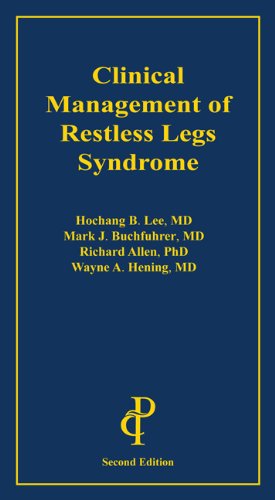
Clinical Management of Restless Legs Syndrome: Hochang B. Lee, Mark J. Buchfuhrer, Richard Allen
Mark J. Buchfuhrer, MD is Consulting Assistant Professor,Department of Sleep Medicine Stanford University School of Medicine and Medical Director, SleepMed of Cypress, California. Richard Allen, PhD i

THORNE - Iron Bisglycinate - 25 mg Iron Supplement for Enhanced Absorption Without Gastrointestinal Side Effects* - NSF Certified for Sport - Gluten-Free - 60 Servings
One Capsule Contains: Iron (as Ferrochel Ferrous Bisglycinate Chelate)* 25 mg.
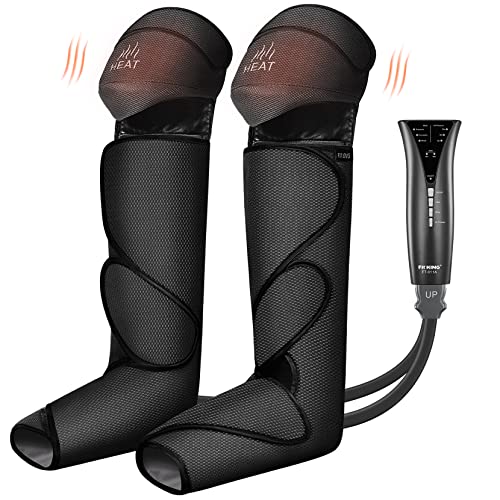
FIT KING Leg Massager with Heat and Compression Therapy, Leg Compression Massage for Circulation, Swollen Leg, RLS Pain & Fatigue Relief, Foot Calf Massager Boots, Recovery Pressure Boots
(FSA HSA APPROVED) The heating ... & Relaxation: <strong>Featuring powerful 4 air chambers, the air massage boots provide 360° dynamic air compression for your feet and legs, imitating hands knead
Evidence & Sources
Promising research with growing clinical support from multiple studies
- International Restless Legs Syndrome Study Group (IRLSSG)
- American Academy of Sleep Medicine
- Mayo Clinic Proceedings
- National Institute of Neurological Disorders and Stroke (NINDS)
- National Center for Complementary and Integrative Health (NCCIH)
- Sleep Medicine Reviews
- New England Journal of Medicine
- The Lancet Neurology
This content is for informational purposes only and does not constitute medical advice. Always consult a qualified healthcare provider before starting, stopping, or changing any supplement or medication regimen.