Molecular Mimicry: How Gut Microbes May Trigger Autoimmunity
A focused, evidence-based explainer on molecular mimicry—how immune responses to gut microbes may cross-react with self and contribute to autoimmune disease.
·8 min read
This content is for informational purposes only and does not constitute medical advice. Always consult a qualified healthcare provider before starting, stopping, or changing any supplement or medication regimen.
Introduction
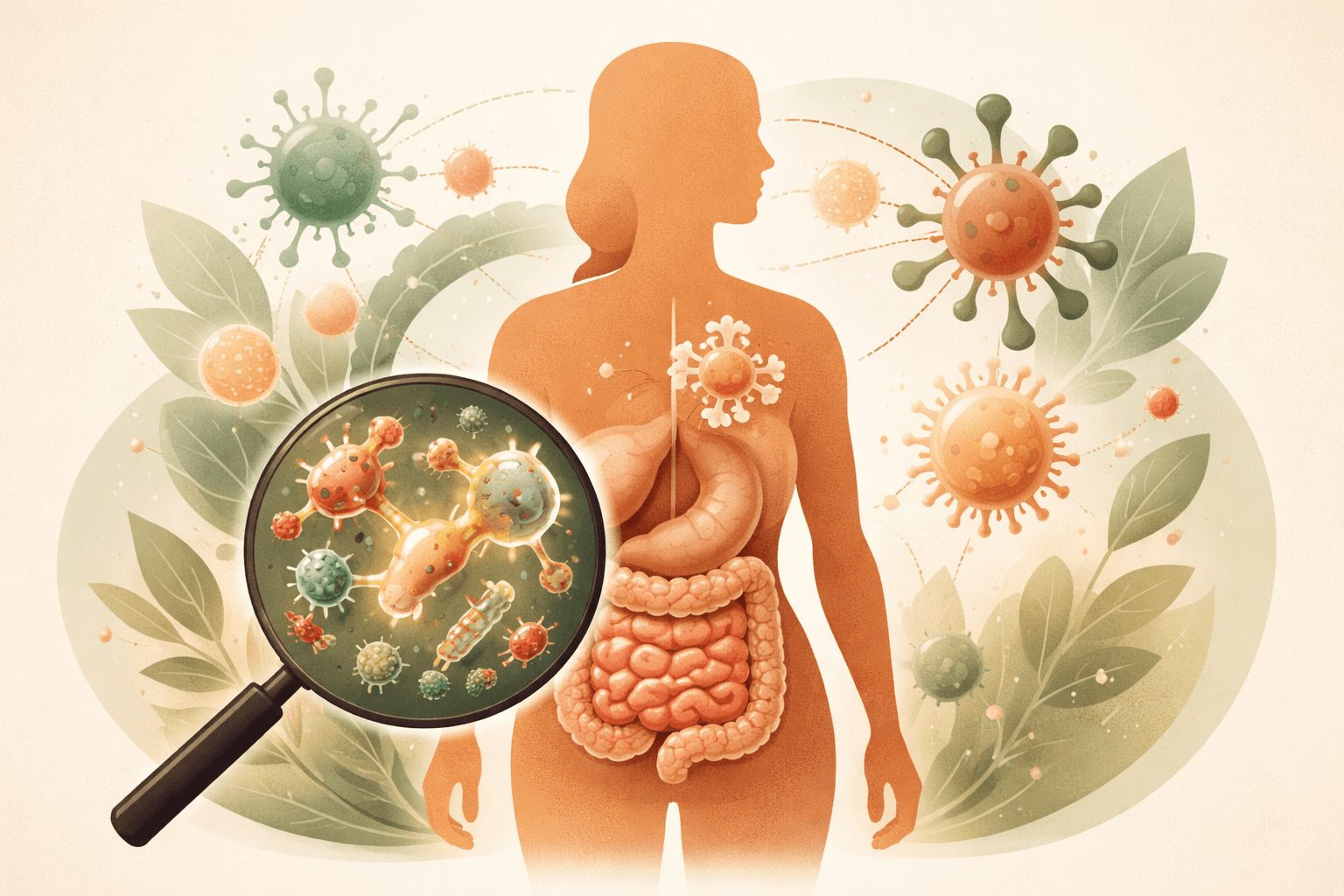
Autoimmune conditions arise when the immune system targets the body’s own tissues. Research increasingly points to the gut—home to the largest immune organ and trillions of microbes—as a key stage where loss of tolerance may begin. One leading mechanism is molecular mimicry: immune responses to microbes that resemble self, potentially priming cross-reactive T cells or antibodies against human tissues. This article focuses on what molecular mimicry is, why the gut is uniquely positioned to drive it, and how it may connect to specific autoimmune diseases.
What is molecular mimicry?
Molecular mimicry refers to structural or sequence similarities between microbial antigens and host proteins. When the immune system mounts a response to a pathogen or commensal microbe, cross-reactive receptors can sometimes recognize similar-looking self-epitopes, breaking tolerance and contributing to autoimmunity. Key immunologic features include:
Cross-reactive T-cell receptors and B-cell receptors that bind both microbial and self-peptides (Evidence: strong for several post-infectious autoimmune syndromes; moderate for commensal-driven autoimmunity) [Cusick et al., 2012; Willison et al., 2016].
Epitope spreading, where the immune response broadens from the original trigger to additional self-epitopes over time (Evidence: moderate) [Cusick et al., 2012].
Genetic susceptibility such as HLA alleles that present both microbial and self-peptides efficiently (Evidence: strong in conditions like celiac disease and type 1 diabetes) [Sollid & Jabri, 2013; Knip & Siljander, 2016].
Why the gut matters
The intestinal mucosa is a constant meeting point between immune cells and a vast, antigen-rich microbial community. Several gut-specific features may amplify mimicry risks:
Immune exposure to dense antigen loads: The gut microbiome provides a continual source of peptides for antigen-presenting cells, increasing the odds that a microbial epitope resembles self (Evidence: moderate, mechanistic and observational) [Valdes et al., 2018].
Barrier function and permeability: When intestinal permeability increases, more luminal antigens may interact with the immune system. Elevated zonulin and barrier changes have been documented in celiac disease and associated with other autoimmune conditions (Evidence: moderate; strongest in celiac) [Fasano, 2012].
Mucosal immune imprinting: Gut-primed lymphocytes can traffic systemically, potentially spreading cross-reactive responses to distant tissues (Evidence: emerging) [Cekanaviciute et al., 2017].
Condition snapshots: where mimicry and the gut intersect
Guillain–Barré syndrome (GBS) after Campylobacter jejuni infection
What research suggests: A substantial proportion of GBS cases follow C. jejuni enteritis. Lipooligosaccharides on the bacterium structurally resemble peripheral nerve gangliosides, leading to cross-reactive antibodies that damage myelin or axons. This is a canonical example of infection-triggered molecular mimicry with gut origins. (Evidence: strong; epidemiology, mechanistic studies, and reviews) [Willison et al., 2016].
Celiac disease: a gut antigen sparks autoimmunity
What research suggests: In genetically susceptible individuals (HLA-DQ2/DQ8), immune responses to gluten peptides presented in the gut lead to autoantibodies against tissue transglutaminase (TG2) and intestinal injury. While often described as antigen-driven autoimmunity rather than classic mimicry, the TG2–gliadin complex and downstream epitope spreading illustrate how a gut antigen can precipitate an autoimmune cascade. (Evidence: strong; human genetics, pathology, and interventional studies) [Sollid & Jabri, 2013].
Rheumatoid arthritis (RA) and gut microbes
What research suggests: Early, untreated RA has been associated with an increased abundance of Prevotella copri in the gut. Experimental work reports T- and B-cell reactivity to P. copri antigens in subsets of patients, with hints of cross-reactivity to human epitopes. These findings support a possible gut-initiated immune priming in RA, though causality and specificity remain under study. (Evidence: emerging to moderate; observational cohorts and immunologic assays) [Scher et al., 2013; Pianta et al., 2017; Valdes et al., 2018].
Multiple sclerosis (MS) and microbial look-alikes
What research suggests: People with MS often exhibit gut microbiome shifts (e.g., higher Akkermansia, lower Prevotella). Several studies have identified myelin-reactive T cells that also recognize microbial peptides, suggesting mimicry may participate in MS pathogenesis. Transfer of gut microbes from MS patients has exacerbated disease in mouse models, supporting a causal role for the microbiota. (Evidence: emerging to moderate; human immunology and animal transfer studies) [Cekanaviciute et al., 2017; Sabatino et al., 2019].
Type 1 diabetes (T1D) and early-life gut signals
What research suggests: Infants who later develop T1D often show distinct microbiome trajectories and reduced functional diversity before seroconversion. Experimental data indicate that certain bacterial peptides may resemble islet antigens (e.g., insulin B-chain epitopes), potentially priming cross-reactive T cells. However, direct, causal evidence in humans is still developing. (Evidence: emerging; longitudinal cohorts and mechanistic studies) [Vatanen et al., 2016; Knip & Siljander, 2016].
Autoimmune thyroid disease and enteric microbes
What research suggests: Associations between Yersinia enterocolitica exposure and thyroid autoimmunity (especially Graves’ disease) have been reported, with proposed mimicry between microbial and thyroidal epitopes. For Hashimoto’s thyroiditis, evidence is mixed and largely inferential. (Evidence: emerging; sero-epidemiology and in vitro cross-reactivity) [Benvenga et al., 2016].
How mimicry may unfold: a stepwise view
Step 1: Antigen encounter in the gut. A microbe bearing a mimic epitope expands or infects the host (Evidence: moderate in disease-specific settings).
Step 2: Presentation in a susceptible host. HLA molecules efficiently present microbial peptides that resemble self, activating naïve T cells (Evidence: strong in celiac; moderate in others) [Sollid & Jabri, 2013].
Step 3: Cross-reactive response. Activated T or B cells recognize both microbial and self targets, initiating tissue inflammation (Evidence: strong in GBS; emerging-to-moderate in RA/MS) [Willison et al., 2016; Sabatino et al., 2019].
Step 4: Amplification. Bystander activation, epitope spreading, and barrier alterations perpetuate the response, potentially moving beyond the original trigger (Evidence: moderate) [Cusick et al., 2012].
Bridging perspectives: traditional medicine and mimicry
Traditional Chinese Medicine (TCM): Autoimmunity is often conceptualized as internal disharmony—imbalances of qi, blood, and fluids—frequently centered on “Spleen” dysfunction (a system that maps loosely onto digestive and immune processing). Patterns like “dampness-heat” or “wind” may mirror, in modern terms, chronic mucosal inflammation and immune dysregulation. The TCM focus on restoring gut harmony parallels research emphasizing mucosal homeostasis in preventing aberrant immune activation. (Evidence: traditional)
Ayurveda: The concept of ama (incompletely digested or transformed substances) accumulating due to weakened agni (digestive/metabolic fire) resonates with contemporary ideas about antigen load, barrier integrity, and immune tolerance. Ayurvedic approaches that aim to reduce ama and support digestion have conceptual overlap with strategies to maintain gut-immune balance. (Evidence: traditional)
What this means for prevention and management research
Microbiome modulation: Trials investigating dietary patterns, prebiotics, probiotics, and microbiome-targeting strategies are ongoing in various autoimmune diseases. While some early studies show symptom or biomarker changes, consistent disease-modifying effects remain to be proven across conditions. (Evidence: emerging; mixed clinical data) [Valdes et al., 2018].
Barrier support: Research suggests that maintaining intestinal barrier integrity and reducing chronic gut inflammation may help preserve immune tolerance, particularly in genetically susceptible individuals. Direct interventional evidence outside of celiac disease is still limited. (Evidence: moderate in celiac; emerging elsewhere) [Fasano, 2012].
Infection control and the “old friends” perspective: Updated views of the hygiene hypothesis emphasize exposure to diverse, non-pathogenic microbes that educate the immune system. Balanced microbial exposures—distinct from harmful infections—may support tolerance. (Evidence: moderate; ecological and immunologic studies) [Valdes et al., 2018].
Important caveats
Not all associations are causal. Microbiome changes may be consequences rather than causes of disease in some contexts. (Evidence: strong as a general principle of observational research.)
Mimicry is one of several mechanisms. Bystander activation, superantigens, and metabolic or barrier pathways may also contribute to loss of tolerance. (Evidence: strong as a conceptual framework) [Cusick et al., 2012].
Individual variability is substantial. Genetics (e.g., HLA alleles), timing, infections, medications, and diet can all shape risk. (Evidence: strong in several diseases) [Sollid & Jabri, 2013; Knip & Siljander, 2016].
Bottom line
Molecular mimicry offers a compelling explanation for how gut microbes may help trigger or amplify autoimmunity in genetically susceptible people. The evidence is strongest for post-infectious syndromes like Guillain–Barré and for gut-origin autoimmunity in celiac disease; it is growing but not yet definitive for conditions such as rheumatoid arthritis, multiple sclerosis, type 1 diabetes, and autoimmune thyroid disorders. Research suggests that safeguarding mucosal homeostasis—through healthy microbial ecosystems, intact barriers, and balanced immune education—may help maintain tolerance, though more interventional data are needed. Traditional frameworks from TCM and Ayurveda, which view autoimmune illness as arising from internal disharmony and digestive-immune imbalance, conceptually align with modern efforts to understand and restore gut-immune equilibrium.
References (selected)
Cusick MF, Libbey JE, Fujinami RS. Molecular mimicry as a mechanism of autoimmune disease. Clin Rev Allergy Immunol. 2012. https://doi.org/10.1007/s12016-011-8294-7
Sollid LM, Jabri B. Triggers and drivers of autoimmunity: lessons from coeliac disease. Nat Rev Immunol. 2013;13:294–302. https://doi.org/10.1038/nri3407
Scher JU et al. Expansion of intestinal Prevotella copri correlates with enhanced susceptibility to arthritis. eLife. 2013;2:e01202. https://doi.org/10.7554/eLife.01202
Pianta A et al. Evidence of the immune relevance of Prevotella copri in patients with rheumatoid arthritis. Sci Transl Med. 2017;9:eaal2459. https://doi.org/10.1126/scitranslmed.aal2459
Cekanaviciute E et al. Gut bacteria from multiple sclerosis patients modulate human T cells and exacerbate mouse experimental autoimmune encephalomyelitis. PNAS. 2017;114:10713–10718. https://doi.org/10.1073/pnas.1711235114
Vatanen T et al. Variation in microbiome LPS immunogenicity contributes to autoimmunity in humans. Nature. 2016;535:508–511. https://doi.org/10.1038/nature18604
Knip M, Siljander H. The role of the intestinal microbiota in type 1 diabetes mellitus. Nat Rev Endocrinol. 2016;12:154–167. https://doi.org/10.1038/nrendo.2015.218
This content is for informational purposes only and does not constitute medical advice. Always consult a qualified healthcare provider before starting, stopping, or changing any supplement or medication regimen.
Overview
[Hashimoto’s thyroiditis](/relates/autoimmune-disease-and-thyroid-disease)—the most common cause of [hypothyroidism](/compare/thyroid-disorders) in many countries—is an autoimmune condition i
Introduction
Autoimmune diseases arise when the immune system misidentifies the body’s own tissues as foreign. Over the past decade, research suggests the gut—its barrier, microbes, and immune crossta
Autoimmune Disease. . ## Overview
**Autoimmune disease** refers to a broad group of conditions in which the immune system mistakenly targets the body’s own tissues. Rather than responding only to infections or harmful foreign substances, immune cells, antibodies, and inflammatory signals react against organs, joints, gl
Mucosal Immune System. Mucosal Immunity, MALT, Mucosa-Associated Immune System. ## Overview
The **mucosal immune system** is the branch of immunity that protects the body’s internal surfaces that are continuously exposed to the outside world, including the **gastrointestinal tract, respiratory tract, oral cavity, nasal passages, eyes, and genitourinary tract**. These surfaces
Celiac disease (CeD) is an immune-mediated enteropathy triggered by dietary gluten in genetically susceptible individuals, characterized by small-bowel mucosal injury and autoantibodies to tissue tran
Autoimmune diseases and thyroid disease intersect frequently because autoimmune thyroid diseases (AITD)—primarily Hashimoto’s thyroiditis and Graves’ disease—are among the most common organ‑specific a