Introduction
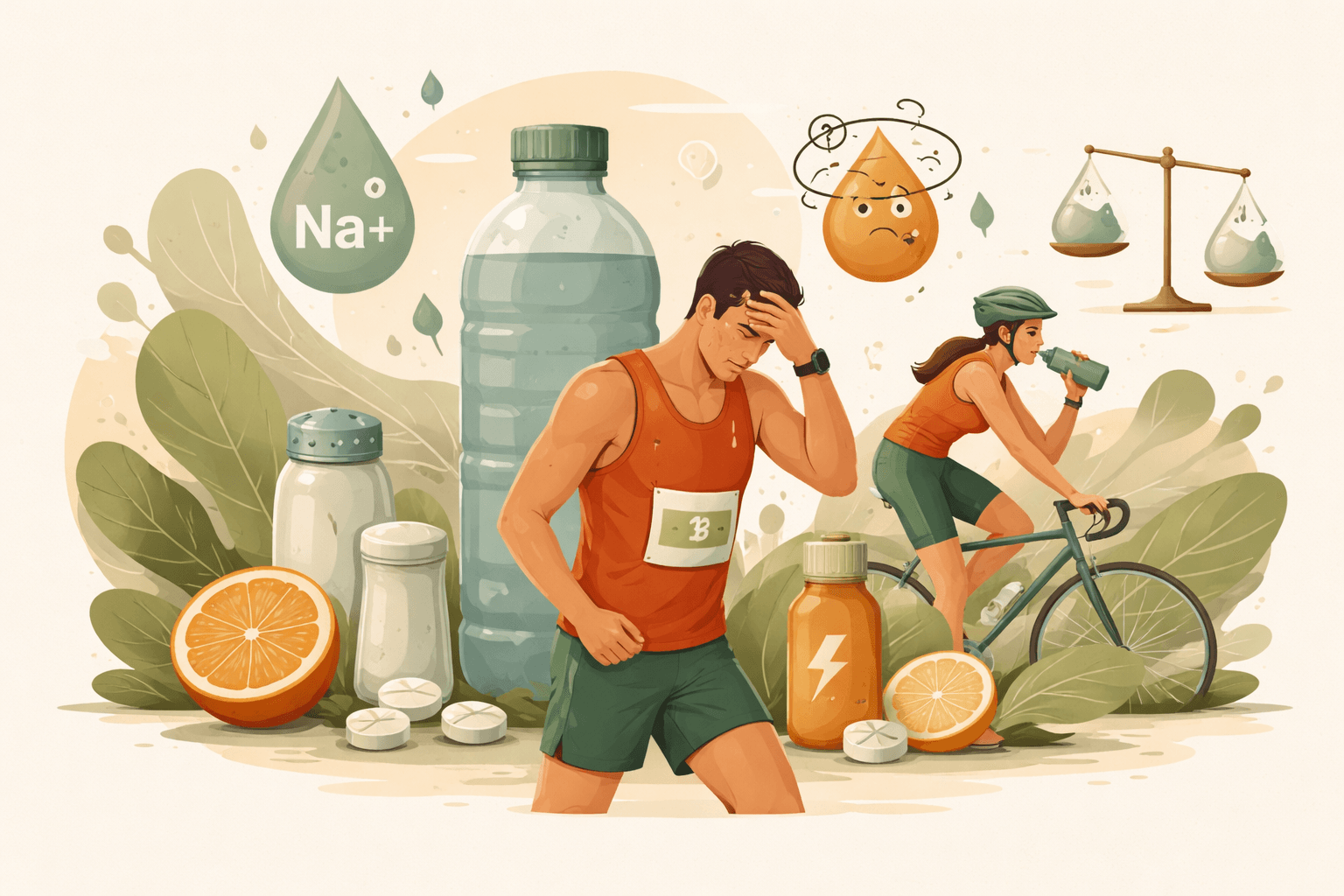
Exercise-associated hyponatremia (EAH) — abnormally low blood sodium during or up to 24 hours after exercise — is a preventable risk that continues to affect endurance athletes. It is often mistaken for dehydration, leading to more drinking and worsening symptoms. Understanding how sodium balance, sweat composition, and oral rehydration science interact may help athletes reduce risk without relying on marketing hype. [Evidence: strong]
What Is Hyponatremia and Why It Happens
EAH arises when total body water increases relative to total body sodium. Two pathways typically converge: overdrinking hypotonic fluids (water or low-sodium drinks) and non-osmotic water retention driven by hormones like antidiuretic hormone (ADH) during prolonged exertion. The result is dilution of serum sodium, which can cause cellular swelling and neurologic symptoms in severe cases. [Evidence: strong]
- Overdrinking: During long events, especially in cooler conditions or with aggressive drinking strategies, fluid intake may outpace losses, diluting plasma sodium. Observational studies consistently show race-day weight gain is a key predictor of EAH. [Evidence: strong]
- Hormonal effects: Prolonged exercise, pain, nausea, heat stress, and certain drugs can increase ADH, reducing water excretion even when plasma is diluted. [Evidence: strong]
How Common Is It — and Who Is at Risk?
Prevalence varies widely by event, climate, and drinking practices. In the 2002 Boston Marathon, 13% of finishers tested had hyponatremia, with critical cases also observed (Almond et al., N Engl J Med, 2005). Consensus statements summarize ranges from rare to over 10% in marathons and even higher in ultra-endurance events where fluid stations are frequent and durations are long (Hew-Butler et al., Clin J Sport Med, 2015). [Evidence: strong]
Risk factors repeatedly identified include longer race duration or slower pace, low body mass, female sex (likely linked to pace and size, not biology alone), high fluid availability, weight gain during the event, and use of NSAIDs. The NSAID link may reflect effects on kidney perfusion and prostaglandins that can interact with water balance (Hew-Butler et al., 2015). [Evidence: strong]
Symptoms: Not Just “Dehydration With a Twist”
Early symptoms can mimic dehydration — headache, nausea, fatigue — but EAH often includes bloating, swollen hands, and in severe cases confusion, vomiting, seizures, or collapse. Because signs overlap, distinguishing based solely on “how you feel” is unreliable. Event medical teams increasingly assess for EAH, especially when an athlete presents with illness despite reporting copious fluid intake or visible weight gain (Hew-Butler et al., 2015; Rosner & Kirven, Clin J Am Soc Nephrol, 2007). [Evidence: strong]
Sweat Sodium Isn’t One-Size-Fits-All
Sodium loss in sweat varies dramatically among individuals and conditions — research reports roughly a 10-fold range in sweat sodium concentration, influenced by genetics, acclimation, diet, and intensity (Baker, Sports Med, 2017; Baker, Temperature, 2019). Some athletes are “salty sweaters,” leaving visible salt on clothing or skin, whereas others lose much less sodium. This variability helps explain why a uniform hydration message fails many people. [Evidence: strong]
Key points from the sweat science:
- Sweat rate and composition are individual and context-dependent (heat, humidity, altitude, pace). [Evidence: strong]
- Acclimation to heat usually reduces sweat sodium concentration, even while total sweat volume may rise. [Evidence: moderate]
- High-sodium sweaters who drink a lot of low-sodium fluid may be more vulnerable to dilutional hyponatremia during very long efforts. [Evidence: moderate]
Do Electrolyte Drinks Prevent Hyponatremia?
Electrolyte-containing drinks may help maintain plasma osmolality and stimulate thirst in some contexts, but they do not “immunize” against EAH if total fluid intake still exceeds needs. The 2015 International Consensus emphasizes that overconsumption of any fluid — even sports drinks — can precipitate hyponatremia. [Evidence: strong]
What research suggests about sodium supplementation:
- Performance: A 2019 systematic review reported no consistent endurance performance benefits from sodium supplementation, though individual cases with high sweat sodium losses may experience improved comfort or reduced cramping perception (McCubbin, Cox & Broad, Sports Med, 2019). [Evidence: moderate]
- Hyponatremia risk: In ultra-endurance settings with heavy sweating and large fluid intake, sodium intake from foods/fluids may help reduce the fall in serum sodium relative to plain water alone, but it is not a substitute for avoiding overdrinking (Hew-Butler et al., 2015; McCubbin et al., 2019). [Evidence: moderate]
Oral Rehydration Science: Why Sodium Plus Glucose Matters
Decades of research on oral rehydration solutions (ORS) show that sodium and glucose together enhance water and sodium absorption through the SGLT1 transporter in the small intestine. Reduced-osmolarity ORS improves rehydration in diarrheal illness and reduces the need for IV fluids (Cochrane Review, 2006; updated analyses confirm effectiveness). In exercise, similar physiology applies: sodium plus glucose can speed fluid uptake compared with plain water, supporting better maintenance of circulation and gut comfort in some athletes. However, this mechanism does not override the basic risk of drinking in excess of need. [Evidence: strong for ORS in clinical dehydration; moderate for translation to endurance exercise]
“Drink to Thirst” vs. Schedules
Hydration strategies have shifted from aggressive pre-set schedules toward individualized plans that respect thirst and avoid substantial weight gain during exercise. The EAH consensus recommends against overdrinking and supports drinking according to thirst cues in most scenarios, acknowledging that extreme heat, altitude, or multi-hour efforts may require more deliberate planning (Hew-Butler et al., 2015). [Evidence: strong]
When Supplementation Actually Helps vs. Hype
Research suggests electrolyte-containing fluids or salty foods may be most useful when:
- Exercise is prolonged (e.g., many hours), especially in heat or humidity. [Evidence: moderate]
- The athlete has high sweat rates and high sweat sodium concentration (e.g., visible salt residue on gear, prior testing). [Evidence: moderate]
- There is a history of cramping associated with heavy sweating or nausea from plain water alone. [Evidence: emerging]
- Large volumes of fluid are consumed due to environmental or event demands; adding sodium and carbohydrate may help maintain osmolality and gut absorption. [Evidence: moderate]
Marketing hype to approach cautiously:
- Claims that “more electrolytes” always boost performance. Most endurance gains from sports drinks derive from carbohydrate availability and palatability rather than electrolytes per se (systematic reviews on carbohydrate-electrolyte solutions show benefits tied mainly to carbohydrate). [Evidence: strong for carbohydrate effects; moderate for electrolytes]
- Promises that custom sweat tests universally translate to better outcomes. While sweat testing can inform education for some athletes, direct evidence that testing-driven plans improve performance or health across the board remains limited. [Evidence: emerging]
Traditional Hydration Wisdom: Coconut Water, Broths, and Salt Traditions
Traditional practices offer nuanced perspectives:
- Coconut water: Naturally rich in potassium and carbohydrate but relatively low in sodium compared with many sports drinks. Trials suggest it rehydrates as effectively as typical sports drinks after mild dehydration and may be easier on the stomach for some, but its low sodium means it may not be ideal as the sole fluid during very long, salty-sweat efforts (Kalman et al., J Int Soc Sports Nutr, 2012). [Evidence: moderate]
- Bone broth and salted soups: Common across cultures for recovery after labor or illness, these provide fluid, sodium, and amino acids. While controlled trials in athletes are scarce, the higher sodium content may be more aligned with replacing sweat sodium than potassium-heavy choices alone. [Evidence: traditional; emerging]
- Salt traditions: Many cuisines pair salt with starches (e.g., rice congee with salt, salted teas), echoing the ORS principle that sodium plus carbohydrate supports absorption. This aligns with modern rehydration science, though specific athletic outcomes require more research. [Evidence: traditional; moderate for mechanism]
Practical Signals Without Prescriptions
Without giving medical advice or dosages, research suggests athletes and support staff can watch for:
- Unusual weight gain during an event compared with pre-event baseline. [Evidence: strong]
- Bloating, puffy hands, or headache with a history of high fluid intake. [Evidence: strong]
- Long durations with low-sodium fluid intake in hot conditions if you are a “salty sweater.” [Evidence: moderate]
- NSAID use around long events, which may compound risk. [Evidence: strong]
If symptoms of severe EAH occur (confusion, vomiting, seizures, collapse), event medical evaluation is critical. [Evidence: strong]
Bottom Line
- EAH is primarily a dilution problem from overdrinking relative to needs, sometimes compounded by hormonal water retention and high sweat sodium losses. [Evidence: strong]
- Electrolyte drinks and salty foods may help maintain osmolality and comfort during prolonged efforts, but they do not prevent EAH if total fluid intake is excessive. [Evidence: strong]
- ORS science shows that sodium plus glucose improves intestinal absorption; this mechanism likely benefits some endurance scenarios, yet does not justify drinking beyond thirst. [Evidence: strong for mechanism; moderate for sport translation]
- Sweat sodium varies widely; a personalized approach grounded in thirst, event conditions, and individual history is more defensible than one-size-fits-all schedules. [Evidence: strong]
- Traditional options like broths (higher sodium) and coconut water (higher potassium) can play complementary roles, but context matters — especially for long, hot events. [Evidence: moderate]
Overall, research supports a simple, athlete-centered message: avoid overconsumption of fluid, respect thirst, and consider electrolyte-containing options strategically for long, hot, and salty-sweat efforts — while recognizing that no beverage or supplement overrides the fundamental physics of water and sodium balance.