Electrolyte Balance for Performance — Supporting Article
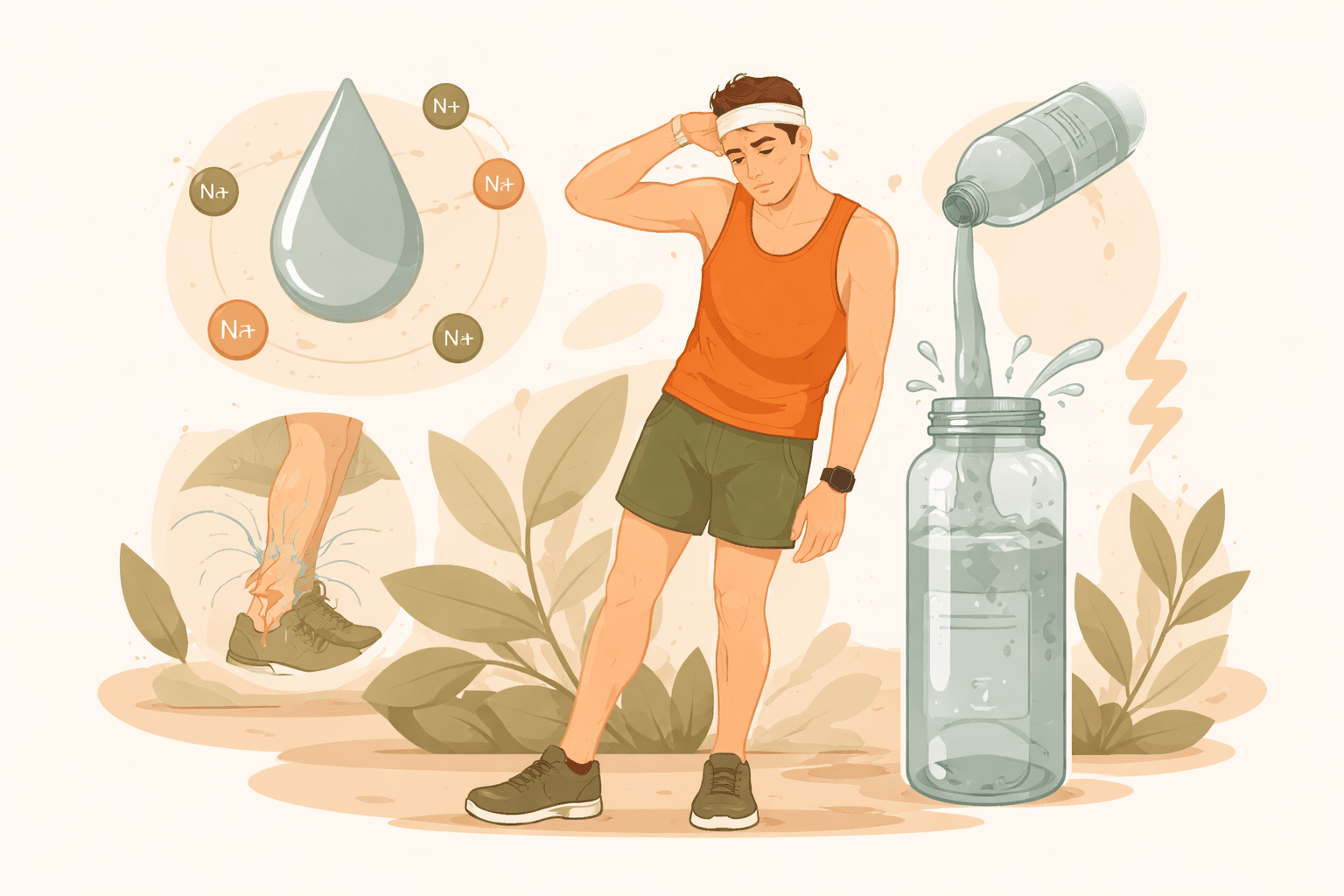
Exercise-associated hyponatremia (EAH) is a preventable performance limiter that has little to do with not drinking “enough” and much to do with drinking too much of the wrong thing. For endurance athletes and anyone training for prolonged periods, understanding how sodium, water, and sweat interact may help avoid dangerous dilution of blood sodium and protect performance. This article focuses on what EAH is, who is at risk, and what research suggests about practical prevention — including the roles of sodium-containing fluids, oral rehydration solutions, and traditional hydration practices.
What Is Exercise-Associated Hyponatremia?
EAH refers to abnormally low blood sodium concentration (typically <135 mmol/L) that develops during or up to 24 hours after physical activity. Symptoms can range from headache, nausea, and dizziness to confusion, seizures, and, in rare cases, life-threatening brain swelling (strong evidence: consensus and epidemiology) [Hew-Butler 2015; Rosner 2019; Almond 2005]. Research suggests the primary driver is excessive intake of hypotonic fluids (e.g., water or low-sodium beverages) relative to sweat and urine losses, which dilutes plasma sodium (strong evidence) [Almond 2005; Hew-Butler 2015].
Why “Overdrinking” Matters More Than “Not Enough Electrolytes”
- Dilutional effect: When fluid intake exceeds losses, total body water rises faster than sodium, lowering sodium concentration (strong evidence) [Almond 2005; Rosner 2019].
- Non-osmotic water retention: Exercise, pain, and nausea can stimulate antidiuretic hormone (ADH), reducing the kidney’s ability to excrete free water and compounding dilution (moderate evidence) [Rosner 2019].
- Sodium supplements are not a failsafe: Studies in ultramarathons report that sodium supplementation alone does not prevent EAH if athletes overconsume fluids (strong evidence) [Hoffman & Stuempfle 2015].
Who Is Most at Risk?
Epidemiology from large road races and ultra-endurance events highlights patterns:
- Longer event duration and slower finish times (more opportunities to drink) (strong evidence) [Almond 2005; Kipps 2011].
- Net weight gain during the event — a practical sign of overhydration (strong evidence) [Almond 2005].
- Smaller body size and female sex have been associated in some cohorts (association, not causation) (moderate evidence) [Almond 2005; Kipps 2011].
- High fluid availability and encouragement to “drink as much as possible” (strong evidence) [Hew-Butler 2015].
- NSAID use has been associated with greater risk, potentially via kidney and ADH effects (emerging to moderate evidence) [Hoffman & Stuempfle 2015; Rosner 2019].
Sweat Science: Sodium Losses Vary Widely
Sweat composition is not one-size-fits-all. Reviews report a roughly 10–80 mmol/L range in sweat sodium, influenced by genetics, acclimation, fitness, environment, and training status (moderate to strong evidence) [Baker 2019]. Two implications follow:
- Some athletes lose relatively more sodium for a given sweat volume and may be more vulnerable to sodium dilution if they replace losses predominantly with low-sodium fluids (moderate evidence) [Baker 2019].
- Personalized strategies that consider individual sweat rate, conditions, and gut tolerance are more defensible than universal drinking rules (moderate evidence) [ACSM Position Stand 2007; Hew-Butler 2015].
What Actually Helps, According to Research
- Avoid net weight gain during events
- Simple check: Pre- to post-event body mass change can flag overdrinking. Weight gain during an endurance event is strongly linked to hyponatremia (strong evidence) [Almond 2005].
- Let thirst be a primary guide — but within a plan
- The EAH consensus recommends “drink to thirst” as a practical approach to reduce overconsumption in most scenarios (moderate to strong evidence) [Hew-Butler 2015]. Thirst-driven intake has been shown to limit excessive fluid replacement compared with prescriptive high-volume drinking.
- Prioritize sodium-containing fluids and foods when exercise is prolonged and sweat is heavy
- Compared with plain water, beverages with higher sodium content improve fluid retention and plasma volume restoration during recovery from dehydration (strong evidence) [Shirreffs & Maughan 1998; Maughan & Leiper 1995/1999]. During long-duration efforts, research suggests sodium-containing drinks and salty foods may help maintain plasma volume and reduce the likelihood of dilution when used alongside moderated fluid intake (moderate evidence) [Hew-Butler 2015; Baker 2019].
- Important nuance: Sodium intake does not counteract the risks of overdrinking very large volumes of hypotonic fluid (strong evidence) [Hoffman & Stuempfle 2015].
- Understand oral rehydration solution (ORS) science
- ORS leverages glucose-sodium co-transport (SGLT1) in the small intestine to enhance water and sodium absorption. Low-osmolarity ORS (about 75 mmol/L sodium) is validated for clinical dehydration from diarrhea and cholera (strong evidence) [WHO; Binder 2010].
- In exercise contexts, research suggests ORS-type sodium levels improve rehydration and fluid retention compared to plain water and many standard sports drinks, particularly post-exercise (moderate evidence) [Maughan & Leiper 1999; Evans et al. 2017 review]. However, formulas designed for medical settings may be saltier and less palatable; individualized tolerance matters (moderate evidence).
- Monitor context: heat, altitude, and high humidity
- Hot, humid conditions increase sweat rate and can concentrate sodium losses early in acclimation. Progressive heat acclimation typically reduces sweat sodium over time (moderate evidence) [Baker 2019].
Traditional Hydration Wisdom: Where It Fits
- Coconut water: Naturally rich in potassium but relatively low in sodium. Small trials suggest it rehydrates similarly to commercial sports drinks after moderate dehydration, but its low sodium may make it less suited to preventing hyponatremia during very long or very sweaty efforts (moderate evidence) [Kalman 2012]. It may be better viewed as a recovery beverage paired with salty foods rather than a sole long-event fluid.
- Bone broth and salted soups: Historically used in endurance and manual labor settings to provide salt and fluid. Sodium content varies widely by recipe; such broths may help replace sodium when used judiciously alongside thirst-driven intake (traditional to emerging evidence).
- Salt traditions (e.g., salted rice balls, pickled vegetables, salted teas): Many cultures pair starch and salt — a combination that may support both carbohydrate delivery and sodium replacement. While formal trials are limited, the pattern aligns with ORS principles of carbohydrate-sodium co-transport (emerging evidence) [Binder 2010].
Marketing vs. Meaningful Supplementation
- “Electrolyte” products differ vastly in sodium content; some offer mostly flavor and potassium with minimal sodium. For EAH risk, sodium concentration matters more than a long ingredient list (moderate evidence) [Shirreffs & Maughan 1998; Baker 2019].
- Claims that you must drink constantly to stay ahead of dehydration are not supported and may increase EAH risk (strong evidence) [Almond 2005; Hew-Butler 2015].
- Potassium and magnesium are essential for muscle and nerve function, but current research around acute prevention of EAH centers on water-sodium balance rather than potassium or magnesium supplementation (moderate evidence) [Rosner 2019].
Practical, Research-Guided Steps (No Medical Advice)
- Calibrate by conditions: Use training to learn how your body mass typically changes in different weather and sessions. Large post-session weight gain suggests overdrinking; large losses suggest under-replacement (moderate evidence) [ACSM 2007].
- Plan to access sodium: For long, hot, or high-sweat sessions, have sodium-containing options available (drinks or salty foods) and let thirst guide intake (moderate evidence) [Hew-Butler 2015; Shirreffs & Maughan 1998].
- Be cautious with ad libitum water only: Persistently choosing plain water in high volumes over many hours may raise dilution risk, especially if you are a salty sweater (moderate evidence) [Baker 2019; Almond 2005].
- Watch for red flags: Headache, nausea, unusual fatigue, swelling of hands, confusion, or sudden weight gain during an event warrant pausing intake and seeking qualified help if symptoms progress (strong evidence) [Hew-Butler 2015; Rosner 2019].
Bottom Line
EAH is largely a problem of too much low-sodium fluid, not too little fluid overall. Research suggests that avoiding net weight gain during events, allowing thirst to guide intake, and incorporating sodium-containing fluids or salty foods during prolonged, high-sweat efforts may help maintain safer sodium balance. Traditional practices like salted broths and salty snacks align with the physiology behind modern oral rehydration science, while low-sodium options like plain water or coconut water alone may be insufficient for very long or very sweaty sessions. Personalization matters: sweat rates and sodium losses vary widely, and no single beverage fits all situations.
References
- Almond CS et al. Hyponatremia among runners in the Boston Marathon. N Engl J Med. 2005.
- Hew-Butler T et al. Statement of the Third International Exercise-Associated Hyponatremia Consensus Development Conference. Clin J Sport Med / Br J Sports Med. 2015.
- Rosner MH et al. Exercise-associated hyponatremia. Clin J Am Soc Nephrol. 2019.
- Hoffman MD, Stuempfle KJ. Sodium supplementation and EAH in 161-km ultramarathoners. Med Sci Sports Exerc. 2015.
- Kipps C et al. The incidence of EAH at the London Marathon. Eur J Endocrinol. 2011.
- Baker LB. Sweating rate and sweat sodium concentration in athletes: a review. Sports Med. 2019.
- Shirreffs SM, Maughan RJ. Restoration of fluid balance after exercise is affected by the volume of fluid consumed and its sodium content. J Appl Physiol. 1998.
- Maughan RJ, Leiper JB. Beverage electrolyte composition and rehydration after exercise: reviews and trials. Sports Med. 1995/1999.
- Binder HJ et al. Oral rehydration therapy: physiology and clinical application. Curr Opin Gastroenterol. 2010.
- Kalman DS et al. Comparison of coconut water and carbohydrate-electrolyte sport drink on measures of hydration. J Int Soc Sports Nutr. 2012.
- American College of Sports Medicine (ACSM). Position Stand: Exercise and Fluid Replacement. Med Sci Sports Exerc. 2007.