Why this matters
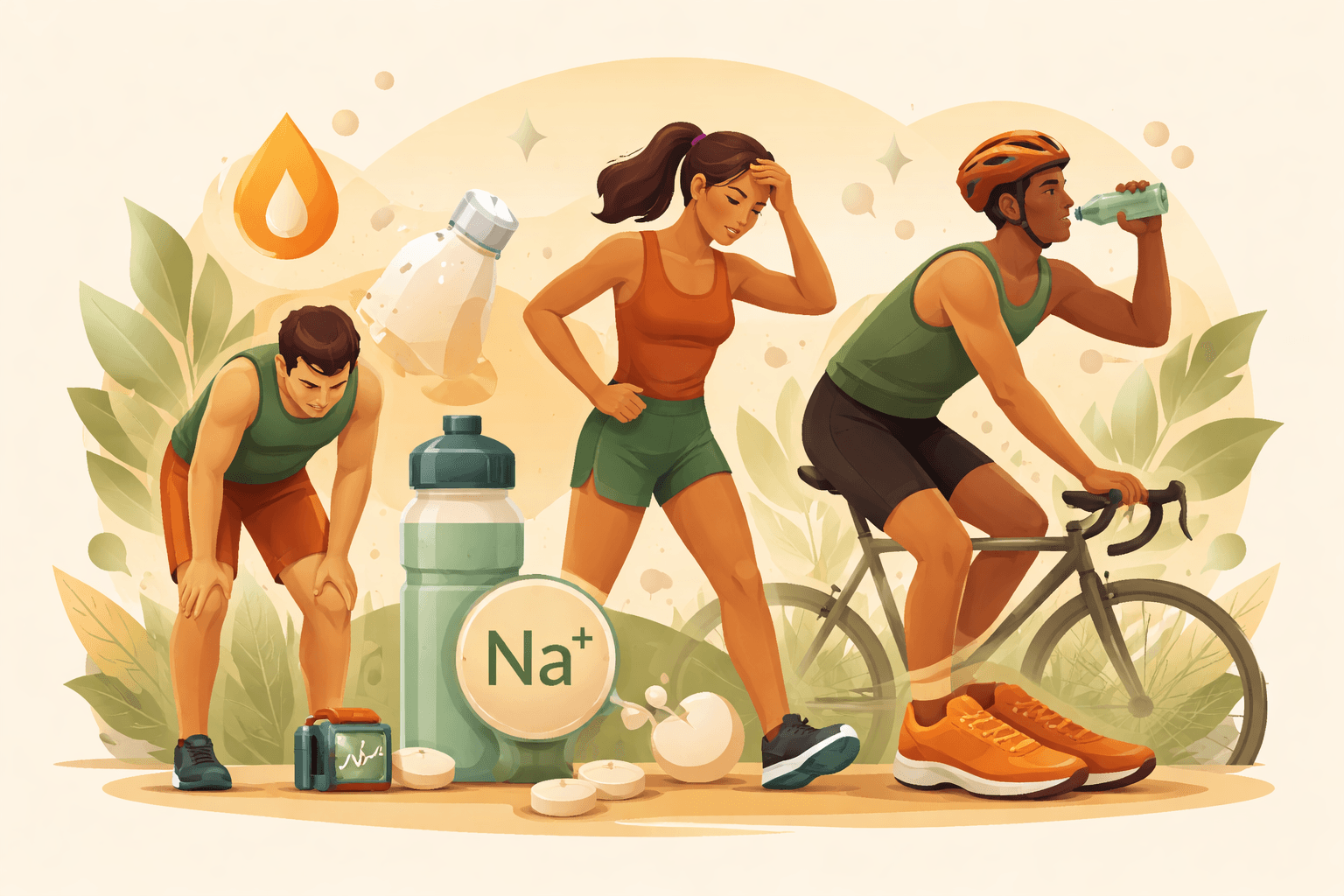
Exercise-associated hyponatremia (EAH) — abnormally low blood sodium during or after exercise — is uncommon but potentially life-threatening. Research suggests it happens most often in endurance events when fluid intake exceeds losses, diluting sodium in the blood. Understanding why it occurs and how oral rehydration science works may help athletes balance performance with safety.
What is EAH?
EAH is typically defined as a serum sodium concentration below 135 mmol/L developing during or up to 24 hours after physical activity. Mechanistically, it most often stems from overconsumption of hypotonic fluids (water or low-sodium beverages) relative to sweat and urine losses, compounded by non-osmotic antidiuretic hormone (ADH) secretion that limits water excretion (Hew-Butler et al., Clin J Sport Med, 2015; strong evidence). In other words, too much fluid and too little sodium replacement can dilute blood sodium.
Key points (evidence level in parentheses):
- Overdrinking hypotonic fluids is the primary driver of EAH (strong)
- ADH elevation during prolonged exercise reduces free-water clearance (strong)
- Sodium loss in sweat contributes, but dilutional overhydration is often the dominant factor (strong)
Who is most at risk?
Systematic reviews and consensus statements identify these risk factors (Hew-Butler et al., Clin J Sport Med, 2015; Rosner & Ayus, Kidney Int, 2008; moderate-to-strong evidence):
- Event duration >4 hours; ultramarathons, Ironman triathlons, long hikes or rucks in heat (strong)
- High fluid intake, especially “drinking to a schedule” without accounting for thirst or body mass (strong)
- Weight gain during the event (a proxy for overdrinking) (strong)
- Smaller body size and slower race pace, both linked to longer exposure and potential overconsumption (moderate)
- Warm/humid environments with high sweat rates (moderate)
- Use of NSAIDs, which may alter kidney water handling (emerging)
The sweat science: why sodium needs vary
Sweat rate and sodium concentration vary widely between individuals. Reviews report sweat sodium commonly ranges from roughly 20–80 mmol/L (about 460–1840 mg/L), affected by genetics, heat acclimation, diet, and training status (Baker, Sports Med, 2019; moderate evidence). Some athletes leave visible salt rings on clothing, while others do not.
Implications (moderate evidence):
- One-size-fits-all hydration advice may miss individual variability.
- Personalized strategies informed by experience, conditions, and—where available—sweat testing may help.
Oral rehydration science vs. typical sports drinks
Oral rehydration solutions (ORS) were designed for clinical dehydration, leveraging the sodium-glucose co-transport mechanism (SGLT1) in the small intestine. Glucose and sodium are co-transported together, pulling water with them to enhance absorption (strong mechanistic evidence). Cochrane reviews show reduced dehydration and improved outcomes with reduced-osmolality ORS in diarrheal illness (Cochrane Review, 2006; strong evidence). While athletes are a different population, the same physiology applies.
What this means for athletes:
- Sodium plus glucose enhances intestinal water absorption compared with water alone (strong mechanism; moderate sport-specific evidence).
- In controlled trials, sodium-containing beverages improve fluid retention during post-exercise rehydration versus low-sodium fluids (Shirreffs & Maughan, J Appl Physiol, 1998; Maughan & Leiper, Sports Med, 1999; moderate evidence).
- Standard “sports drinks” vary. Some are relatively low in sodium and may not meaningfully counter large sodium losses in heavy sweaters over long durations (emerging-to-moderate evidence).
Recognizing EAH: signs can mimic dehydration
Early signs may include headache, nausea, bloating, and swollen hands or feet. More severe cases can involve confusion, seizures, or collapse. Because symptoms overlap with heat illness and dehydration, awareness of total fluid intake and weight change can provide context (Hew-Butler et al., Clin J Sport Med, 2015; moderate evidence). EAH can be life-threatening and requires prompt medical evaluation when suspected (strong evidence).
Practical, research-aligned strategies to lower risk
These strategies summarize what research suggests may help, without prescribing specific amounts:
Drink to thirst, not beyond it (strong):
- Consensus statements recommend a thirst-guided approach to reduce the risk of overdrinking and weight gain during events (Hew-Butler et al., Clin J Sport Med, 2015; strong).
Monitor body weight trends across similar sessions (moderate):
- Repeatedly finishing long training bouts heavier than you started suggests overconsumption relative to losses (moderate).
Include sodium in fluids or foods during prolonged, sweaty efforts (moderate):
- Sodium-containing beverages and salty foods may help maintain plasma volume and reduce excess urine output during recovery (Shirreffs & Maughan, J Appl Physiol, 1998; moderate). Individual needs vary widely (Baker, Sports Med, 2019; moderate).
Individualize based on conditions and personal sweat traits (emerging-to-moderate):
- Hotter, more humid conditions with higher sweat rates may merit more deliberate sodium inclusion (moderate). Field cues like salt stains on clothing or stinging eyes from sweat suggest higher salt loss (emerging).
Be cautious with low-sodium, hypotonic fluids as the sole intake during long events (strong):
- Consuming large volumes of water alone increases dilution risk when exercise is prolonged (strong consensus).
Traditional hydration wisdom: how it fits
Cultures long relied on simple, salty, and brothy beverages for labor in the heat. These practices often align with modern physiology by providing sodium alongside fluid.
Coconut water (moderate evidence/traditional): Naturally high in potassium but relatively low in sodium. Small RCTs show coconut water can rehydrate comparably to some sports drinks after moderate dehydration, though fullness or GI discomfort may be higher for some (Kalman et al., J Int Soc Sports Nutr, 2012; moderate). For heavy salt sweaters, its low sodium content may not address sodium losses adequately (moderate).
Bone broth and salted soups (traditional/emerging): These provide fluid, sodium, and amino acids. There are few controlled trials in athletes, but their sodium content aligns with the goal of supporting fluid retention post-exercise (emerging; traditional practice).
Salt traditions (traditional): Salted teas, pickled vegetables, and salted rice porridges have long supported laborers working in heat. While modern trials are limited, these practices reflect the principle that fluid plus sodium may better sustain hydration than plain water alone during prolonged exertion (traditional/emerging).
Marketing vs. need: when sodium-focused options may help
- Longer-than-usual sessions, multi-hour races, or hot/humid conditions with high sweat rates (moderate): Sodium-containing fluids or foods may help maintain fluid balance better than plain water.
- Habitual salt “crusters” (moderate): Athletes who see heavy salt staining on gear may be more likely to benefit from deliberate sodium inclusion.
- Short, cool sessions (moderate): For activities under an hour in temperate conditions, research suggests plain water to thirst often suffices for most people (moderate), reducing the need for specialized products.
Key distinctions
- Dehydration vs. EAH (strong): Both can impair performance and present with nonspecific symptoms. Dehydration relates to inadequate fluid intake; EAH is a dilutional problem often from excess low-sodium fluid. Strategies that indiscriminately push high volumes of plain water can reduce dehydration but increase EAH risk in long events (strong consensus).
Bottom line
- EAH is driven largely by overconsumption of hypotonic fluids during prolonged exercise while ADH remains elevated (strong evidence).
- Thirst-guided drinking and avoiding weight gain during events are associated with lower EAH risk (strong evidence).
- Sodium plus glucose enhances intestinal fluid absorption; sodium-containing beverages may improve fluid retention versus low-sodium fluids, especially during recovery (strong mechanism; moderate athlete-specific evidence).
- Individual sweat sodium and rate vary widely; personalization matters (moderate evidence).
- Traditional salty broths and foods align with modern hydration physiology, whereas coconut water’s low sodium may be insufficient for heavy salt sweaters despite being a useful potassium source (moderate/traditional evidence).
Research-informed, individualized hydration that respects thirst and recognizes personal sweat patterns may help athletes balance performance with safety while reducing the risk of exercise-associated hyponatremia.
References (select): Hew-Butler et al., Clin J Sport Med, 2015; Baker, Sports Med, 2019; Shirreffs & Maughan, J Appl Physiol, 1998; Cochrane Review on reduced-osmolarity ORS, 2006; Kalman et al., J Int Soc Sports Nutr, 2012.