Bovine Colostrum for Intestinal Permeability: What the Evidence Says
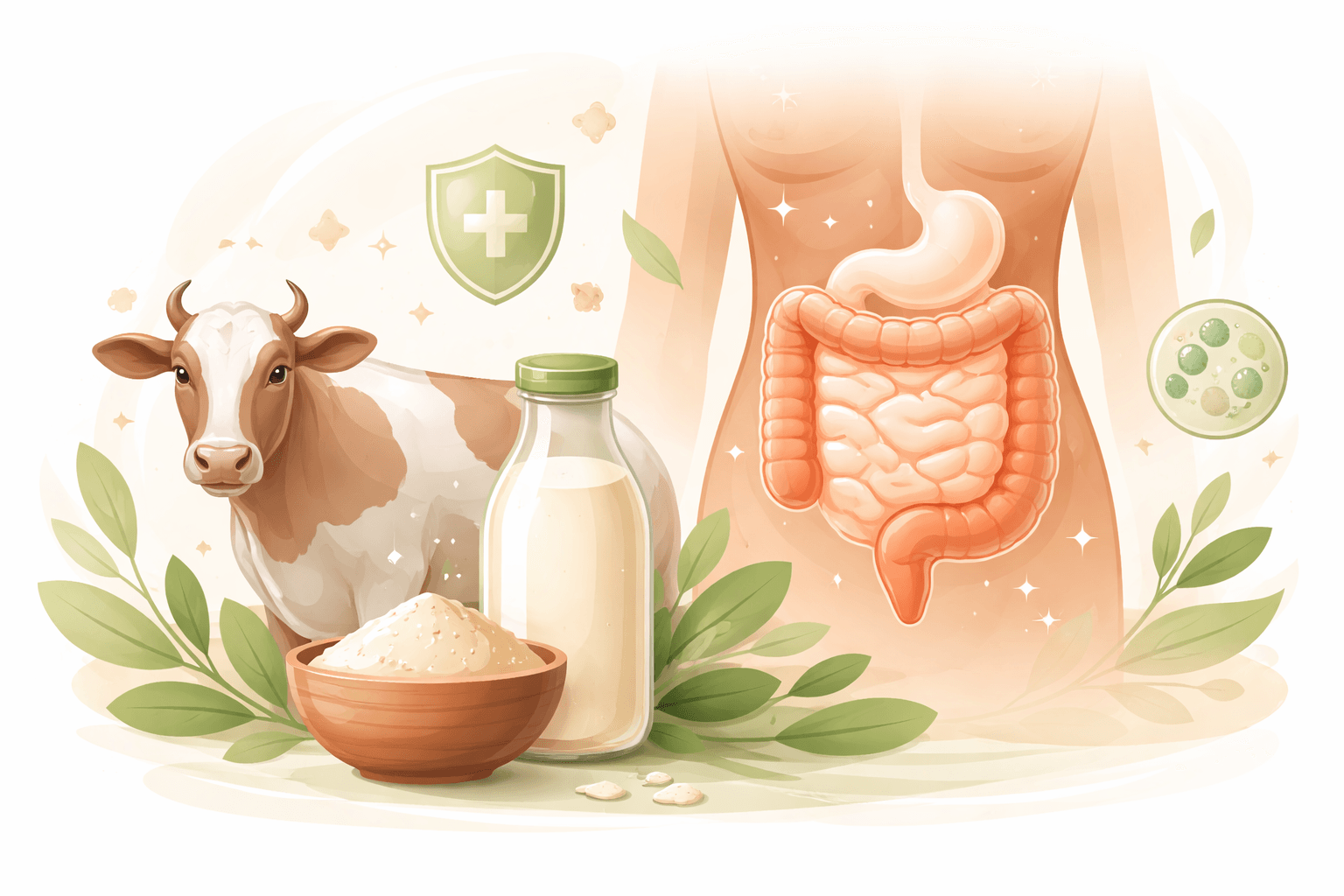
Bovine colostrum—the first milk produced after a cow gives birth—is rich in immunoglobulins, growth factors, and antimicrobial proteins. Beyond its role in newborn health, research suggests it may help maintain the gut barrier, especially under stressors like heavy exercise or nonsteroidal anti-inflammatory drug (NSAID) use. This article focuses on the long-tail question: Can bovine colostrum help with intestinal permeability (“leaky gut”)?
Importantly, “leaky gut” remains a debated umbrella term in conventional medicine. Increased intestinal permeability is measurable, often via the lactulose/mannitol (L/M) urine test, and is observed in conditions such as celiac disease and inflammatory bowel disease (IBD). Yet, whether permeability changes drive a wide array of symptoms is still under investigation. Colostrum research sits at this intersection—some rigorously studied use cases exist, while broader wellness claims are less settled.
A quick primer: Tight junctions, zonulin, and permeability
The intestinal lining is stitched together by tight junction proteins (for example, occludin and claudins). These regulate what passes from the gut into the bloodstream. Zonulin is one human protein that modulates tight junctions; higher zonulin activity is associated with looser junctions and greater permeability. Although zonulin science is advancing, routine “zonulin testing” and its interpretation remain controversial in general practice (Evidence: moderate for the biology; emerging for clinical testing utility).
How might bovine colostrum support the gut barrier?
Colostrum contains multiple bioactives that may influence the mucosal lining:
- Immunoglobulins (IgG, IgA): Bind pathogens and antigens, potentially reducing inflammatory hits to the barrier (Evidence: strong for antimicrobial binding; emerging for direct barrier effects in humans).
- Growth factors (IGF-1, TGF-β): May support epithelial repair and mucosal integrity in preclinical models (Evidence: moderate in animal/cell studies; emerging in human outcomes).
- Lactoferrin and lactoperoxidase: Broad antimicrobial and anti-biofilm effects; may reduce pathogen-driven barrier disruption (Evidence: moderate).
- Oligosaccharides and glycoproteins: May modulate the microbiome and pathogen adhesion (Evidence: emerging).
These mechanisms are plausible and supported in laboratory and animal models. Human data are most convincing where permeability is acutely stressed (e.g., NSAIDs, heat- or exercise-induced intestinal stress), rather than in generalized wellness contexts (Evidence: moderate overall).
What human studies show
1) NSAID-induced increases in permeability
NSAIDs can transiently loosen the intestinal barrier. Randomized, placebo-controlled trials in healthy adults report that bovine colostrum may blunt the NSAID-associated rise in L/M ratio, a common surrogate of permeability. In one trial, volunteers taking an NSAID had significantly smaller increases in urinary sugar permeability when pretreated with colostrum compared with placebo (Evidence: moderate; RCTs in small cohorts; consistent direction of effect).
What this means: In scenarios where NSAIDs are known to irritate the gut lining, colostrum may help maintain tight junction integrity as assessed by the L/M test. This does not establish colostrum as a treatment for NSAID injury, but suggests protective potential under controlled conditions.
2) Exercise- and heat-induced gut stress
Strenuous exercise, especially in heat, can draw blood away from the gut and transiently raise permeability. Several randomized trials in athletes and physically active adults suggest colostrum may attenuate exercise-associated markers of epithelial injury (e.g., intestinal fatty acid binding protein, I-FABP) and reduce rises in permeability indices (including L/M) during exertion (Evidence: moderate; multiple RCTs with mechanistic biomarkers).
What this means: For athletes facing gut discomfort or “gut leak” signals during heavy training, colostrum may help maintain barrier integrity under stress. Effects on performance and symptoms are variable and not consistently demonstrated across trials (Evidence: emerging for performance outcomes).
3) Infectious diarrhea and gut integrity
Pathogen-specific (hyperimmune) bovine colostrum preparations have been tested in travelers’ diarrhea and childhood infectious diarrhea. Systematic reviews and randomized trials report reduced stool frequency or duration for certain pathogens when the colostrum is enriched with antibodies against those organisms (Evidence: strong for pathogen-specific preparations reducing symptoms; indirect but plausible relevance to barrier preservation).
What this means: While these studies target infection control more than permeability per se, reducing pathogen burden and toxins likely lessens barrier disruption. General, non-hyperimmune colostrum shows more mixed results in infectious settings (Evidence: moderate to emerging).
4) IBD, IBS, and chronic conditions
Small pilot studies, including topical colostrum enemas in ulcerative colitis and oral colostrum in various chronic GI complaints, report symptomatic improvements in some participants, but robust, large-scale RCTs are lacking. Objective permeability endpoints have been inconsistently measured, and results are mixed (Evidence: emerging). Conventional guidelines do not endorse colostrum as a standard therapy for IBD or IBS.
How studies measure “leaky gut” in colostrum research
- Lactulose/mannitol (L/M) urinary test: A differential sugar absorption test that increases when tight junctions loosen. This is the most common primary outcome in colostrum RCTs (Evidence: strong for test validity as a permeability proxy; limitations include variability and confounding by motility and renal handling).
- Biomarkers of epithelial injury: I-FABP and zonulin are used in some trials. I-FABP tends to respond to acute epithelial damage from exercise/heat; zonulin findings are less consistent and assay variability is a known issue (Evidence: moderate for I-FABP; emerging for serum zonulin utility).
What conventional medicine accepts vs. what is debated
- Accepted: Intestinal permeability can increase transiently with stressors (NSAIDs, heat, intense exercise) and in certain diseases (celiac disease, IBD). L/M testing is a research tool; it is not widely used clinically outside research contexts (Evidence: strong).
- Debated: The idea that “leaky gut” alone drives broad, nonspecific symptoms. Routine commercial zonulin tests and general colostrum use for “leaky gut” lack universal endorsement (Evidence: emerging to moderate, depending on context).
Traditional perspectives
Colostrum has been revered across cultures for supporting newborn resilience. Traditional systems prize “first milk” for fortifying digestion and immunity—an idea that resonates with modern findings that colostrum contains antibodies, growth factors, and antimicrobial proteins. While historical uses were not framed in terms of tight junctions or zonulin, they align with a barrier-supportive lens (Evidence: traditional; modern mechanistic support is emerging-to-moderate in humans).
Safety and quality considerations
- Dairy sensitivity: Individuals with cow’s milk protein allergy should avoid colostrum; those with lactose intolerance may also react (Evidence: strong).
- Product variability: Composition varies by source and processing. Look for reputable manufacturers with third-party testing for contaminants and verification of bioactive content (Evidence: moderate).
- Drug interactions and conditions: Data are limited. People with chronic illnesses, immunocompromise, or on multiple medications should consult a clinician familiar with their history (Evidence: emerging).
- Sport considerations: While colostrum itself is not a prohibited substance, some athletes raise concerns about IGF-1–related implications and supplement contamination; third-party certification may reduce risk (Evidence: moderate).
Who might consider colostrum in discussion with a clinician
- Athletes experiencing GI distress related to heavy training or heat exposure (Evidence: moderate for permeability markers; emerging for symptoms/performance).
- Individuals who must intermittently use NSAIDs and are concerned about gut barrier effects (Evidence: moderate for blunting permeability changes in small RCTs).
- Those exploring supportive care during or after infectious diarrhea, noting strongest evidence exists for pathogen-targeted (hyperimmune) colostrum (Evidence: strong for certain pathogens; product-specific).
This is not medical advice. Colostrum is not a substitute for disease-specific treatments.
Key claims and evidence levels at a glance
- Colostrum may blunt NSAID- and exercise-induced increases in gut permeability as measured by L/M or epithelial injury markers (Evidence: moderate).
- Pathogen-specific colostrum can reduce severity/duration of some infectious diarrheas, likely helping preserve barrier function indirectly (Evidence: strong for select pathogens).
- Benefits in IBD/IBS or generalized “leaky gut” outside of stressor models remain uncertain (Evidence: emerging).
- Safety is generally favorable but contraindicated in milk allergy; product quality varies (Evidence: strong for allergy risk; moderate for quality concerns).
Bottom line
Bovine colostrum shows the most consistent human evidence in situations where the gut barrier is acutely stressed—such as heavy exercise or NSAID use—by attenuating rises in permeability markers. Hyperimmune colostrum also has solid support against specific pathogens, which may indirectly protect the barrier. For chronic, nonspecific “leaky gut” claims, evidence is preliminary. If you are considering colostrum for gut support, discuss it with a clinician, especially if you have milk sensitivities, chronic conditions, or take medications. As with all supplements, product quality and context matter, and expectations should be anchored to what clinical trials actually measured: changes in objective permeability and injury markers, not broad cures.