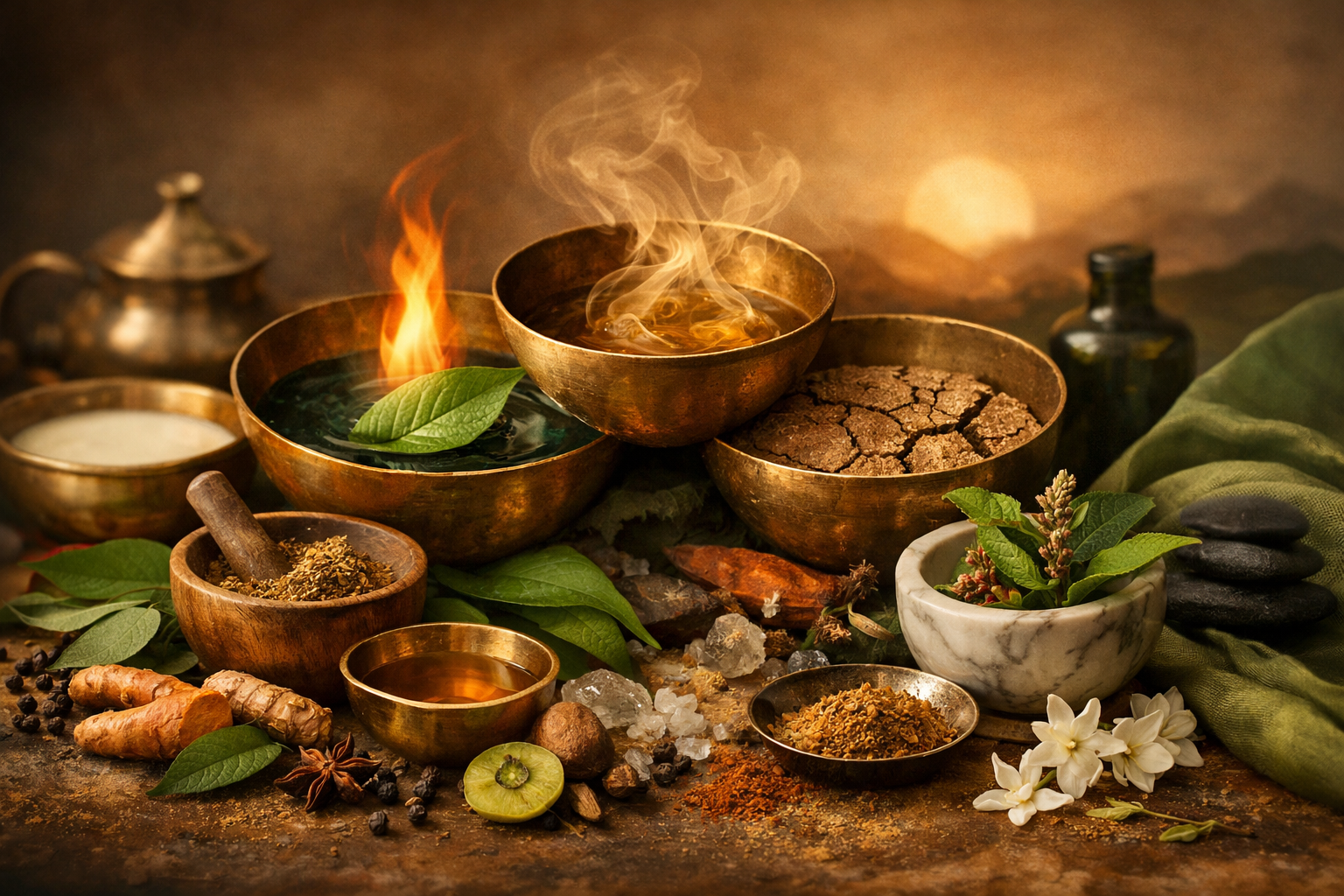
Ayurveda Explained: Principles, Doshas, Benefits & How to Start
Curious about Ayurveda? Learn its principles, doshas, daily routines, therapies, evidence, and safe ways to start and integrate with Western care.
·12 min read
This content is for informational purposes only and does not constitute medical advice. Always consult a qualified healthcare provider before starting, stopping, or changing any supplement or medication regimen.
If you’re curious about Ayurveda—what it is, how doshas work, and whether it can help you feel more balanced—you’re not alone. Ayurveda is an ancient health system that’s seeing renewed interest for stress, digestion, and overall wellbeing. This guide explains Ayurveda in clear terms, shares what the research says, and offers practical, safe ways to begin.
What Is Ayurveda? Origins, Core Philosophy, and Modern Relevance
Ayurveda (literally “knowledge of life”) is a holistic medical system from India dating back more than 2,000–3,000 years. Classical Ayurvedic texts such as the Charaka Samhita and Sushruta Samhita describe anatomy, pathology, surgery, pharmacology (including herbs and minerals), and a strong emphasis on prevention.
Core idea: health arises from balance—within the body, the mind, and our environment. Imbalance shows up as symptoms; restoring balance promotes resilience.
Individualization: no one-size-fits-all plan. Two people with the same symptom may get different recommendations based on their constitution (prakriti) and current state (vikriti).
Lifestyle first: daily routines, seasonal adjustments, food choices, sleep, and stress practices are considered the primary levers of health; herbs and procedures are used to support those basics.
Modern relevance: Many people turn to Ayurveda for chronic stress, digestive issues, skin concerns, menstrual health, and healthy aging. Integrative clinics increasingly collaborate with Ayurvedic practitioners for lifestyle and mind–body support. While elements of Ayurveda align with contemporary science (e.g., circadian rhythms, the gut–brain axis), others remain traditional concepts without direct biomedical equivalents.
Core Principles: The Five Elements, Prakriti, Vikriti, and the Concept of Balance
Ayurveda organizes nature into five elements (pancha mahabhuta):
Ether/Space: openness, expansion
Air: movement, dryness
Fire: transformation, heat
Water: cohesion, fluidity
Earth: solidity, stability
From these arise three organizing forces—doshas—that govern body and mind:
Vata (air + ether): movement, communication, nervous system activity
Prakriti: your baseline constitution (a blend of doshas present from birth)
Vikriti: your current state or imbalance (how your doshas are behaving right now)
Agni: digestive and metabolic “fire”; strong agni is linked to efficient digestion and energy
Ama: improperly digested residue/toxic load that can accumulate when agni is weak
Ojas: the end-product of good digestion and balanced living; associated with vitality and resilience
Balance in Ayurveda means keeping doshas in their optimal range for you. Stress, diet, climate, sleep disruption, and life changes can aggravate doshas. The goal is not to eliminate a dosha (impossible and undesirable), but to counter like-with-unlike: if there’s too much heat (pitta), apply cooling; too much dryness and movement (vata), add moisture and stability; too much heaviness (kapha), bring lightness and stimulation.
Doshas Explained: Vata, Pitta, Kapha—Characteristics and How to Tell Your Constitution
Most people are a mix of two primary doshas, with the third less prominent. Your prakriti is a tendency, not a diagnosis.
Vata-dominant tendencies: lighter build, dry skin, cold hands/feet, variable appetite, quick thinking/creativity, sensitive to stress, irregularity in sleep or digestion when imbalanced (constipation, anxiety, insomnia). Calms with warmth, routine, oils, grounding foods.
Pitta-dominant tendencies: medium build, warm body temperature, strong appetite, sharp intellect, drive/competitiveness. When imbalanced: irritability, heartburn, skin redness, overheating, loose stools. Calms with cooling foods, moderation, time in nature, soothing practices.
Kapha-dominant tendencies: sturdy build, smooth/oily skin, steady appetite, calm demeanor, excellent endurance and memory. When imbalanced: heaviness, sluggishness, congestion, water retention, low motivation. Benefits from stimulation, lighter foods, early rising, vigorous movement.
How to tell your constitution:
Self-observation: Consider lifelong traits rather than current symptoms alone.
Practitioner assessment: Traditional evaluation may include detailed health history; examination of pulse (nadi), tongue, skin, eyes; and discussion of digestion, sleep, and energy.
Online quizzes: Can offer a starting point, but they often mix up prakriti and vikriti. Use them as a conversation starter—not a definitive assessment.
Daily Life and Diet in Ayurveda: Dinacharya, Seasonal Routines, and Diet Tips by Dosha
Ayurveda emphasizes rhythm. Aligning with day–night and seasonal cycles helps keep doshas steady and supports agni.
Dinacharya (Daily Routine)
Wake near sunrise; expose eyes to morning light.
Hydrate with warm water; gentle stretching or yoga suited to your dosha.
Oral care: tongue scraping and brushing; some traditions include oil pulling (swishing oil) for oral hygiene.
Elimination time: a consistent morning bowel movement is considered a sign of healthy agni.
Abhyanga (self-massage with oil): sesame or almond oil for vata; coconut or sunflower for pitta; lighter oils or dry brushing for kapha. Short sessions (5–15 minutes) before a warm shower can be grounding.
Nasal care: a few drops of plain oil (e.g., sesame or ghee) at the nostrils may be suggested for dryness in some traditions; use caution and avoid if you have chronic sinus issues unless advised by a practitioner.
Main meal midday: digestion is typically stronger around solar noon.
Evening wind-down: screens off 1–2 hours before bed; light, early dinner; calming breathwork or meditation.
Late winter–spring (often kapha season): lighten the diet, favor bitter/pungent/astringent flavors, increase movement, support sinus health.
Summer (often pitta season): choose cooling, hydrating foods, reduce spicy/sour/alcoholic items, prioritize shade and rest during the hottest hours.
Diet Tips by Dosha
General food hygiene—fresh, minimally processed foods; mindful eating; and regular mealtimes—matters more than any single ingredient. Then, personalize:
For vata balance: warm, cooked, and moist foods; healthy fats (ghee, olive oil); grains like rice or oats; cooked root vegetables; gentle spices (ginger, cinnamon, cumin). Avoid excess raw, cold, dry, or irregular eating.
For pitta balance: cooling or room-temperature foods; ample vegetables; sweet/bitter/astringent flavors; herbs like cilantro, mint, fennel; fruits like melons and berries. Minimize excessive chili, alcohol, vinegar, fried foods.
For kapha balance: lighter, warming, and stimulating foods; legumes, lots of non-starchy vegetables, spices (ginger, black pepper, mustard seed); smaller dinners; avoid heavy, oily, and very sweet foods.
Mindful eating practices—sitting down to eat, chewing well, and avoiding heavy mental tasks during meals—are emphasized for all constitutions.
Common Ayurvedic Therapies and Practices: Oils, Herbs, Panchakarma, Yoga, and Meditation
Ayurveda uses layered interventions, starting with lifestyle and diet.
Ashwagandha (Withania somnifera): traditionally used for stress and sleep support; modern studies suggest it may reduce perceived stress and modestly lower cortisol (evidence: moderate).
Turmeric/Curcumin (Curcuma longa): used for inflammation and digestion; studies indicate potential benefits for osteoarthritis pain and metabolic health when well-absorbed formulations are used (evidence: moderate).
Triphala (blend of three fruits): traditionally used to support regularity and digestion (evidence: emerging).
Boswellia (Shallaki): used for joint comfort (evidence: moderate for osteoarthritis symptoms).
Tulsi/Holy basil, Guduchi (Tinospora cordifolia), Brahmi/Bacopa: traditionally used for immunity or cognition (evidence: emerging to moderate depending on outcome).
Oil therapies:
Abhyanga: warm oil massage to calm the nervous system and nourish tissues.
Shirodhara: steady stream of warm oil poured on the forehead for deep relaxation (specialized setting).
Nasya: medicated oil in the nasal passages (practitioner-guided; not for active infection).
Cleansing procedures (Panchakarma): a structured process that may include preparatory oiling and sweating, followed by targeted elimination strategies such as purgation (virechana), medicated enemas (basti), nasal therapies (nasya), therapeutic vomiting (vamana, rarely used outside specific indications), and, in some classical contexts, bloodletting (raktamokshana; uncommon today). Only pursue under trained supervision; not appropriate for everyone.
Yoga, breathwork, meditation: Although rooted in broader Indian traditions, these practices are commonly integrated in Ayurveda to regulate stress, improve sleep, and build resilience. Styles and techniques are chosen to balance your dosha (e.g., calming, slow practice for vata; cooling, moderate for pitta; invigorating for kapha).
For deeper dives on related practices, see: Yoga for Beginners, Meditation for Stress.
What the Research Says About Ayurveda
Ayurveda is a holistic system, and research is growing but uneven. Some components have stronger evidence than others.
Yoga and meditation: Strong evidence supports benefits for stress, anxiety, and quality of life; moderate evidence for blood pressure, chronic pain, and sleep. These mind–body practices are often included in Ayurvedic care.
Ashwagandha: Multiple small-to-medium randomized controlled trials (RCTs) suggest reductions in perceived stress and modest improvements in sleep quality and anxiety; a few show lowered morning cortisol (evidence: moderate). Doses and extracts vary across studies.
Curcumin (from turmeric): Systematic reviews indicate benefits for osteoarthritis pain and function, and potential support for metabolic markers; bioavailability is a key factor (evidence: moderate).
Boswellia: Several RCTs suggest reduced osteoarthritis pain and improved function (evidence: moderate).
Triphala: Early clinical studies suggest benefits for functional constipation and digestive comfort (evidence: emerging).
Abhyanga and oil therapies: Small trials and observational studies report improved relaxation, heart rate variability, and sleep quality (evidence: emerging).
Panchakarma: Limited studies report short-term changes in lipids and inflammatory markers after structured programs; clinical significance and long-term outcomes are unclear (evidence: emerging). Safety depends heavily on practitioner skill and patient selection.
Dosha/prakriti science: Preliminary research has explored correlations between constitutional types and genetic or metabolic markers, but no consensus clinical biomarkers exist yet (evidence: emerging). Dosha assessment remains a traditional, phenomenological tool.
Safety and quality concerns:
Heavy metals: Independent investigations have found some Ayurvedic products (often from certain traditions that include metals/minerals) contaminated with lead, mercury, or arsenic. Choose products with third-party testing (e.g., USP, NSF, or other reputable labs) and work with practitioners who prioritize quality control.
Herb–drug interactions: Natural does not equal risk-free. See safety notes below for common interactions and when to avoid.
Evidence, Safety, and Interactions: Risks, Herb–Drug Interactions, and Sourcing Concerns
Safety first—especially if you’re pregnant, nursing, have chronic conditions, or take prescription medications. Discuss any Ayurvedic herbs or procedures with your primary clinician.
Potential risks and interactions (not exhaustive):
Ashwagandha: May potentiate sedatives; can affect thyroid function tests; avoid in hyperthyroidism unless supervised; caution in autoimmune conditions (may stimulate the immune system).
Turmeric/Curcumin: May increase bleeding risk when combined with anticoagulants/antiplatelets; can aggravate gallbladder issues; high doses may cause GI upset.
Boswellia: May interact with anticoagulants; occasional GI side effects.
Guggul (Commiphora mukul): Traditionally used for lipids/thyroid; may interact with thyroid medications and statins; potential to induce liver enzymes; use with medical oversight.
Triphala: Laxative effect; can interact with certain meds via altered GI transit; long-term/high-dose use may cause dependency.
Licorice (Yashtimadhu): Can raise blood pressure and lower potassium at higher intakes or with certain preparations; avoid with diuretics that deplete potassium.
Bacopa/Brahmi: May enhance effects of sedatives; can cause GI symptoms.
Nasya and oil-in-nose practices: Risk of aspiration if done improperly; avoid with active sinus infections, bleeding disorders, or without guidance.
Panchakarma: Purging or emesis can cause dehydration, electrolyte imbalance, and medication disruption if poorly supervised. Not appropriate for pregnancy, frailty, uncontrolled chronic disease, or certain GI conditions.
Sourcing and quality:
Work with practitioners who disclose suppliers, use products tested for heavy metals/microbial contaminants, and can explain dosing and expected duration.
Prefer companies that provide certificates of analysis or third-party testing. Avoid unlabeled powders or home-made concentrates with unclear provenance.
Start low and go slow. Introduce one new herb at a time so you can track effects.
For deeper safety reading: Herb–Drug Interactions.
How to Start Safely: Choosing a Practitioner and Integrating with Western Care
Finding qualified guidance helps you personalize safely.
Credentials: In India, Ayurvedic physicians complete a Bachelor of Ayurvedic Medicine and Surgery (BAMS) and may have postgraduate training. Outside India, regulation varies. In the U.S., look for practitioners recognized by professional bodies such as the National Ayurvedic Medical Association (NAMA) with designations like Ayurvedic Health Counselor (AHC), Certified Ayurvedic Practitioner (CAP), or Ayurvedic Doctor (AD). Scope of practice differs by region; Ayurveda is typically a complementary, lifestyle-focused modality.
Questions to ask:
What is your training and how long have you practiced?
How do you determine my prakriti and vikriti?
How do you coordinate with my primary care or specialists?
Which herbs or therapies do you recommend first—and why?
How do you ensure product quality and test for contaminants?
What side effects should I watch for, and how will we monitor progress?
Integrating with Western care:
Share your full medication and supplement list with all providers.
Use Ayurveda to enhance fundamentals: sleep, nutrition, movement, stress skills.
Be cautious with intensive cleanses; medical conditions may require modification or avoidance.
Track simple metrics—sleep, energy, bowel habits, mood, pain scores—to gauge benefits or setbacks over 4–8 weeks.
If you need help building a team: Finding an Integrative Practitioner.
FAQ: Myths, Quick Dosha Tests, and Resources for Further Learning
Is Ayurveda just herbs? No. Herbs are one tool. Core Ayurveda focuses on daily routines, diet, sleep, movement, and mind–body balance.
Do online quizzes accurately tell my dosha? They can offer clues but aren’t definitive. A trained practitioner considers lifelong traits, current imbalances, and clinical signs.
Does Ayurveda require a vegetarian diet? Not necessarily. Food choices are individualized. Some people do well with carefully prepared animal proteins; others thrive plant-forward.
Are “detoxes” required? No. Panchakarma is a specialized medical process for selected cases. Many benefit simply from dietary cleanup, regular routines, and gentle practices.
Can Ayurveda replace my medications? No. Use Ayurveda to support lifestyle and symptom management while staying in dialogue with your healthcare team.
Is ghee necessary? It’s a traditional cooking fat and medicated carrier in Ayurveda but not mandatory for everyone—especially if you have lipid issues or dairy sensitivity.
Where can I learn more? Consider reputable organizations, academic centers, and government resources describing Ayurveda’s role in integrative care. You might also explore our deep dives: Ashwagandha Guide, Turmeric (Curcumin) Benefits, and Yoga for Back Pain.
Practical Takeaways
Ayurveda is a holistic, prevention-forward system that personalizes care by your constitution and current imbalances.
Start with rhythm: regular sleep/wake, a midday main meal, simple breathwork or meditation, and movement suited to your dosha.
Favor fresh, minimally processed foods; then fine-tune for vata/pitta/kapha tendencies.
If considering herbs, choose one change at a time, use third-party-tested products, and discuss interactions with your clinician.
Advanced therapies like panchakarma should be supervised by qualified practitioners and are not for everyone.
Evidence is strongest for mind–body practices and several specific herbs; other areas remain traditional or emerging.
Disclaimer
This guide is for educational purposes and does not replace personalized medical advice. Always consult a qualified healthcare professional before starting or stopping any treatment, herb, or therapy, especially if you are pregnant, nursing, have medical conditions, or take prescription medications.
This content is for informational purposes only and does not constitute medical advice. Always consult a qualified healthcare provider before starting, stopping, or changing any supplement or medication regimen.
What Is Ayurveda? An Evidence-Based Guide to Principles & Practices. If you’ve ever wondered “what is Ayurveda?” you’re not alone. Interest in this ancient healing system is rising worldwide, yet clear, evidence-informed explanations can be hard to find. This guide bridges traditional Ayurvedic wisdom with modern research so you can appreciate its philosophy, know wh
If you’re curious about ayurvedic medicine—what it is, how it works, where it helps, and where evidence is limited—this guide brings together both traditional teachings and modern research. Ayurvedic
Ayurvedic Diet. Dosha Diet, Balancing Diet. ## Overview
**Ayurvedic diet** refers to a traditional eating framework rooted in **Ayurveda**, the classical medical system of India that has been practiced for thousands of years. Rather than focusing only on calories, macronutrients, or disease-specific restrictions, this approach emphasizes **i
Stress Relief with Ayurveda: Dosha‑Based Techniques, Breathing, Diet & Herbal Support. Feeling wired, tired, or both — and wondering how to calm your system without losing your edge? This guide walks through stress relief techniques from Ayurveda, integrating traditional wisdom with what modern research suggests about breathwork, movement, diet, and herbs. You’ll find dosha‑specific t
Ayurveda. . ## Ayurveda: An Overview
**Ayurveda** is a traditional medical system that originated in South Asia, with roots extending back more than two millennia. The term is commonly translated as **"the knowledge of life"** and reflects a broad, whole-person framework that considers health to arise from the
How Ayurveda Treats Hormonal Imbalances: An Evidence‑Aware Guide to Dosha‑Based Care, Herbs, and Lifestyle. Many people search for how Ayurveda treats hormonal imbalances when facing irregular cycles, PMS, hot flashes, thyroid complaints, or stress‑related fatigue. Ayurveda offers a whole‑person framework that connects digestion, sleep, stress, and daily rhythm to hormone health. Modern research is beginn