

Epilepsy and Ketogenic Diet
The ketogenic diet (KD) is a high-fat, very low-carbohydrate nutrition therapy developed a century ago after clinicians observed that fasting could reduce seizures. Today, KD and its variants are considered established options for drug-resistant epilepsy, especially in children, and first-line therapy for specific metabolic epilepsies such as GLUT1 deficiency. Understanding how ketogenic metabolism relates to seizure control helps patients and families discuss realistic benefits, safety, and fit with their lifestyles. Mechanistically, ketone bodies (beta-hydroxybutyrate and acetoacetate) provide an alternative brain fuel that may stabilize neural networks. Preclinical studies show enhanced inhibitory GABA signaling, reduced excitatory glutamate release, improved mitochondrial biogenesis and ATP availability, activation of ATP-sensitive potassium channels and adenosine signaling, and anti-inflammatory effects including NLRP3 inflammasome suppression. Gut microbiome shifts under KD may also raise seizure thresholds in animal models. While human biomarker studies are more limited, the overall mechanistic picture is biologically plausible and increasingly mapped. Clinical evidence is strongest in pediatric drug-resistant epilepsy: randomized and controlled trials, summarized in Cochrane reviews and international guidelines, show several-fold higher odds of at least 50% seizure reduction versus usual care, with about 30–60% of children responding and 10–20% becoming seizure-free in observational cohorts. Adults can also benefit—particularly with less restrictive variants like the Modified Atkins Diet—though adult RCTs are fewer and adherence can be challenging. Certain syndromes (GLUT1 deficiency, pyruvate dehydrogenase deficiency) respond especially well, whereas KD is typically second-line for infantile spasms and useful in severe epilepsies such as Lennox–Gastaut. Safety and monitoring are essential. Early effects can include gastrointestinal upset, lethargy, hypoh
Updated August 8, 2026This content is for informational purposes only and does not constitute medical advice. Always consult a qualified healthcare provider before starting, stopping, or changing any supplement or medication regimen.
Medical Perspectives
Two Ways of Seeing Health

Western
scientific · clinical
Western medicine applies science, technology, and clinical experience to treat symptoms through testing, diagnosis, and targeted intervention.
Surgeons · Pharmaceuticals · Clinical trials · Diagnostics 
Eastern
traditional · alternative
Eastern medicine focuses on treating the body naturally by applying traditional knowledge practiced for thousands of years, emphasizing balance and whole-person wellness.
Acupuncture · Herbal medicine · Yoga · Meditation
Gold Bamboo presents both perspectives side-by-side so you can make informed decisions. We don't advocate for one over the other — your health choices are yours.
Two Ways of Seeing Health
Western
scientific · clinical
Western medicine applies science, technology, and clinical experience to treat symptoms through testing, diagnosis, and targeted intervention.
Eastern
traditional · alternative
Eastern medicine focuses on treating the body naturally by applying traditional knowledge practiced for thousands of years, emphasizing balance and whole-person wellness.
Gold Bamboo presents both perspectives side-by-side so you can make informed decisions. We don't advocate for one over the other — your health choices are yours.
Western Perspective
Western medicine views ketogenic dietary therapies (KDTs) as evidence-based, nonpharmacologic treatments that can reduce seizures when medications are insufficient. Pediatric data are robust, adult data are growing, and first-line use is standard for GLUT1 deficiency. KDTs require structured initiation, monitoring, and multidisciplinary support.
Key Insights
- Efficacy: In children with drug-resistant epilepsy, randomized and controlled trials show KDTs increase the likelihood of ≥50% seizure reduction several-fold over usual care; 10–20% may achieve seizure freedom in cohorts.
- Syndrome-specific utility: First-line for GLUT1 deficiency and helpful for pyruvate dehydrogenase deficiency; beneficial in Lennox–Gastaut and other severe epilepsies; typically second-line for infantile spasms.
- Variants: Classic KD and MCT KD show similar efficacy; Modified Atkins Diet (MAD) and Low Glycemic Index Treatment (LGIT) offer better flexibility with somewhat lower but meaningful efficacy, especially in adolescents/adults.
- Mechanisms: Converging preclinical evidence supports GABA–glutamate modulation, mitochondrial support, adenosine and KATP channel effects, anti-inflammatory actions, and microbiome-mediated pathways; human mechanistic data are emerging.
- Safety/monitoring: Dyslipidemia, nephrolithiasis, slowed growth, and bone health concerns warrant baseline screening and periodic labs; interactions with carbonic anhydrase–inhibiting antiseizure medications (e.g., topiramate, zonisamide) raise kidney stone risk.
Treatments
- Classic ketogenic diet (e.g., 4:1 fat to protein+carbohydrate)
- Medium-chain triglyceride (MCT) ketogenic diet
- Modified Atkins Diet (MAD)
- Low Glycemic Index Treatment (LGIT)
- Adjunctive approaches: antiseizure medications, epilepsy surgery, vagus nerve stimulation, responsive neurostimulation
Deep Dive
From a Western clinical perspective, ketogenic dietary therapies (KDTs) are established, guideline-endorsed treatments for epilepsy, particularl... From a Western clinical perspective, ketogenic dietary therapies (KDTs) are established, guideline-endorsed treatments for epilepsy, particularly when medications fail. The physiologic premise is to shift brain energetics from glucose toward ketone bodies—beta-hydroxybutyrate and acetoacetate—mimicking a fasting state without starvation. Preclinical work demonstrates a convergence of antiepileptic mechanisms: enhanced GABAergic inhibition, decreased glutamatergic excitation, improved mitochondrial biogenesis and bioenergetics, activation of ATP-sensitive potassium channels and adenosine pathways, and anti-inflammatory effects such as NLRP3 inflammasome inhibition. Emerging findings also implicate gut microbiota changes that may modulate neurotransmitter balance. Human mechanistic data are more limited but consistent with increased seizure thresholds under ketosis. Clinical evidence is strongest in children with drug-resistant epilepsy. Randomized and controlled trials, synthesized in Cochrane reviews, find that children on KDTs are several times more likely to achieve ≥50% seizure reduction than those on usual care. In large cohorts, roughly one-third to over one-half respond, and a meaningful minority become seizure-free. Specific epilepsies—GLUT1 deficiency and pyruvate dehydrogenase deficiency—have compelling pathophysiologic rationales and high response rates, supporting first-line use. In severe epilepsies such as Lennox–Gastaut syndrome, KDTs can reduce seizure burden and improve alertness. Adult data, while smaller, show that less restrictive approaches like the Modified Atkins Diet can yield clinically important reductions, though adherence can be difficult. Safety and monitoring are integral. Early effects may include gastrointestinal symptoms, lethargy, hypoglycemia, and acidosis. Over time, clinicians track dyslipidemia (often transient and modifiable), kidney stone risk (exacerbated by topiramate/zonisamide; reduced with potassium citrate), growth and bone health (with attention to vitamin D and minerals), and rare micronutrient deficiencies (e.g., selenium). Absolute contraindications include disorders of fatty acid oxidation and certain metabolic conditions. Programs typically obtain baseline and periodic labs (lipids, liver and renal function, bicarbonate, micronutrients) and monitor antiseizure medication levels as needed. Initiation can be inpatient or outpatient without fasting, supported by a dietitian and regular follow-up. Choice among variants balances efficacy and lifestyle: Classic KD and MCT KD have similar effectiveness; MAD and LGIT trade a modest efficacy decrement for improved flexibility, aiding teens and adults. Many centers judge benefit at around 2–3 months using seizure diaries and quality-of-life metrics; persistence beyond this depends on response and tolerability. Key research needs include adult randomized trials, long-term cardiometabolic outcomes, biomarkers to match patients to diet types, and translational work on microbiome and ketone signaling.
Sources
- Martin-McGill KJ et al. Cochrane Database Syst Rev. 2020;6:CD001903.
- Kossoff EH et al. Practice Committee of the International Ketogenic Diet Study Group. Epilepsia Open. 2018;3(2):175–192.
- Neal EG et al. Lancet Neurol. 2008;7(6):500–506.
- Kverneland M et al. Epilepsia. 2018;59(8):1567–1576.
- Olson CA et al. Cell. 2018;173(7):1728–1741.e13.
- Bergqvist AGC et al. Pediatrics. 2008;122(2):e334–e340.
- McNally MA et al. Pediatrics. 2009;124(2):e300–e304.
Eastern Perspective
Traditional systems have long linked fasting and specific dietary patterns to fewer seizures. While the modern ketogenic framework is Western, its core concept—altering metabolism to calm the nervous system—resonates with Eastern ideas of balancing the body’s energies and phlegm-wind disturbances. Integrative care may combine metabolic therapy with acupuncture, herbal nervines, and mind–body practices to address triggers like stress and sleep disruption.
Key Insights
- Historical continuity: Fasting as a seizure remedy appears in ancient Greco-Arabic and Ayurvedic texts, conceptually aligning with ketogenic metabolism induced by caloric restriction.
- TCM perspective: Epilepsy often framed as internal wind with phlegm obstruction; dietary guidance reduces phlegm-forming foods and supports spleen–kidney qi. Acupuncture is used to settle wind and harmonize channels.
- Ayurvedic perspective: Apasmara is managed with dietetic measures, ghrita (medicated ghee), medhya rasayana (nootropic tonics such as Bacopa), and routines that stabilize vata; these can conceptually complement fat-forward metabolic therapies.
- Evidence posture: Modern clinical evidence for acupuncture and Ayurvedic botanicals in epilepsy is limited; however, safety-conscious, individualized use alongside KDTs is explored in integrative practice.
- Practical integration: Mind–body approaches (yoga, meditation, sleep hygiene) may reduce stress-induced seizure susceptibility and support adherence to restrictive diets.
Treatments
- Supervised fasting/modified fasting states (conceptual antecedent to ketosis)
- Acupuncture for calming internal wind and improving sleep
- Dietary phlegm-reducing guidance (TCM) alongside ketogenic planning
- Ayurvedic medhya rasayana (e.g., Bacopa monnieri/Brahmi) and ghrita-based formulations
- Yoga and meditation for stress regulation
Deep Dive
Traditional and integrative frameworks interpret the ketogenic–epilepsy connection through the lens of dietary energetics and systemic balance. ... Traditional and integrative frameworks interpret the ketogenic–epilepsy connection through the lens of dietary energetics and systemic balance. Historically, fasting was recognized across cultures as a means to reduce seizures, paralleling modern ketosis induced by carbohydrate restriction. In Traditional Chinese Medicine (TCM), epilepsy is often attributed to internal wind and phlegm obstructing the clear orifices. Dietary therapy seeks to reduce phlegm-forming foods and support spleen–kidney function, while acupuncture aims to pacify wind and improve sleep and stress resilience—factors that can lower seizure susceptibility. Within Ayurveda, epilepsy (Apasmara) is linked to aggravated vata with influences of tamas and rajas. Therapies traditionally include diet regulation, ghrita (clarified butter) preparations, medhya rasayana (neurotonic herbs such as Brahmi/Bacopa), and daily routines that promote groundedness and stable digestion, conceptually consonant with fat-forward diets that provide steady fuel. Contemporary integrative practice often layers these approaches with KDTs. For example, acupuncture may be used to address insomnia, anxiety, and autonomic imbalance that can precipitate seizures or erode adherence to a restrictive diet. Ayurvedic and naturopathic nutrition counsel can help patients select whole-food, low-glycemic options, healthy fats, and spices that support digestion within a ketogenic framework. Mind–body disciplines—yoga, breathwork, and meditation—are frequently incorporated to modulate stress circuits and inflammatory tone. While rigorous randomized evidence for acupuncture and many botanicals in epilepsy remains limited, careful, individualized use under professional supervision can align with patients’ cultural values and enhance quality of life. Safety remains paramount in integrative settings. Traditional herbal formulas are evaluated for interactions with antiseizure medications and for suitability alongside high-fat intake. Practitioners monitor digestion, hydration, and constitution, adapting pace and food choices to mitigate common adverse effects such as constipation or fatigue. The shared goal is pragmatic: stabilize the nervous system by improving metabolic flexibility, sleep, and stress balance, while respecting the evidence base. As research clarifies how ketosis, inflammation, and the microbiome intersect, integrative models may help personalize dietary therapy by considering not only seizure counts but also the lived experience of patients and families.
Sources
- Cochrane Review: Acupuncture for epilepsy (Cheuk et al.), CD005062.
- Masino SA, Rho JM. Metabolism and Epilepsy. Cold Spring Harb Perspect Med. 2012.
- World Health Organization. Acupuncture: Review and Analysis of Reports on Controlled Clinical Trials, 2002.
- Traditional descriptions of fasting for seizures in historical medical texts (overviewed in Rho JM, Epilepsia. 2017)
Evidence Ratings
Ketogenic dietary therapies significantly increase the proportion of children with drug-resistant epilepsy achieving ≥50% seizure reduction compared with usual care.
Martin-McGill KJ et al. Cochrane Database Syst Rev. 2020;6:CD001903.
GLUT1 deficiency syndrome responds robustly to ketogenic therapy and KDTs are considered first-line treatment.
Kossoff EH et al. Epilepsia Open. 2018;3(2):175–192.
Modified Atkins Diet provides clinically meaningful seizure reduction in adults with drug-resistant focal epilepsy, though adherence varies.
Kverneland M et al. Epilepsia. 2018;59(8):1567–1576.
Ketogenic metabolism can enhance GABAergic tone, support mitochondrial function, and reduce neuroinflammation in preclinical models.
Masino SA, Rho JM. Cold Spring Harb Perspect Med. 2012; Olson CA et al. Cell. 2018.
Kidney stones occur more often on KDTs, with higher risk when combined with topiramate or zonisamide; potassium citrate can reduce this risk.
McNally MA et al. Pediatrics. 2009;124(2):e300–e304.
Children on long-term ketogenic therapy may experience slowed growth and reduced bone mineral density, warranting monitoring.
Bergqvist AGC et al. Pediatrics. 2008;122(2):e334–e340.
Classic KD and MCT KD show broadly similar efficacy for seizure control, with differing tolerability profiles.
Neal EG et al. Epilepsia. 2009;50(1):82–87.
Gut microbiome changes may contribute to seizure protection during ketogenic therapy.
Olson CA et al. Cell. 2018;173(7):1728–1741.e13.
Sources
- Martin-McGill KJ, Bresnahan R, Levy RG, Cooper PN. Ketogenic diets for drug-resistant epilepsy. Cochrane Database Syst Rev. 2020;6:CD001903.
- Kossoff EH, Zupec-Kania BA, Auvin S, et al. Optimal clinical management of children receiving dietary therapies for epilepsy: Updated recommendations of the International Ketogenic Diet Study Group. Epilepsia Open. 2018;3(2):175–192.
- Neal EG, Chaffe H, Schwartz RH, et al. The ketogenic diet for the treatment of childhood epilepsy: a randomised controlled trial. Lancet Neurol. 2008;7(6):500–506.
- Neal EG, Chaffe H, Gingell R, et al. The MCT ketogenic diet for children with epilepsy: a randomized trial. Epilepsia. 2009;50(1):82–87.
- Kverneland M, Molteberg E, Iversen PO, et al. Effect of Modified Atkins Diet in adults with drug-resistant focal epilepsy: a randomized clinical trial. Epilepsia. 2018;59(8):1567–1576.
- Olson CA, Vuong HE, Yano JM, et al. The gut microbiota mediates the anti-seizure effects of the ketogenic diet. Cell. 2018;173(7):1728–1741.e13.
- Bergqvist AGC, Schall JI, Stallings VA, Zemel BS. Progressive bone mineral content loss in children with intractable epilepsy treated with the ketogenic diet. Pediatrics. 2008;122(2):e334–e340.
- McNally MA, Pyzik PL, Rubenstein JE, Hamdy RF, Kossoff EH. Empiric use of potassium citrate reduces kidney-stone incidence with the ketogenic diet. Pediatrics. 2009;124(2):e300–e304.
- Masino SA, Rho JM. Mechanisms of ketogenic diet action. Cold Spring Harb Perspect Med. 2012;2(5):a009621.
- Freeman JM, Kossoff EH, Freeman JB, Kelly MT. The Ketogenic Diet: A Treatment for Epilepsy. 5th ed. Demos Medical; 2011.
Related Topics
Recommended Products
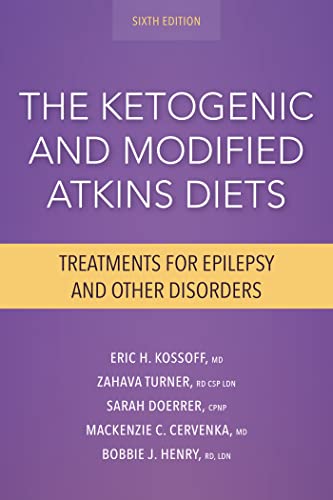
The Ketogenic and Modified Atkins Diets: Treatments for Epilepsy and Other Disorders: Kossoff MD, Eric, Turner RD CSP LDN, Zahava, Doerrer CPNP, Sarah, Cervenka MD, Mackenzie C., Barron RD LDN, Bobbie J.
by Eric Kossoff MD (Author), Zahava ... edition, The Ketogenic and Modified Atkins Diets is <strong>the established, authoritative book on these groundbreaking epilepsytreatments</strong>....

KETO-MOJO GK+ Bluetooth Glucose & Ketone Testing Kit + Free APP for Ketosis & Diabetes Support. 20 Blood Test Strips (10 Each), Meter, 20 Lancets, Lancing Device, and Control Solutions
CLINICAL-GRADE KETONE & GLUCOSE TESTING The GK+ Meter <strong>delivers fast, accurate readings for both ketones and glucose</strong>. Trusted by healthcare professionals and used in over 100 clini

Nature’s Way Organic MCT Oil, Brain and Body Fuel*, Liquid Coconut MCT Oil with C8 Caprylic & C10 Capric Acids, 14 g Medium Chain Triglycerides per Serving, Keto & Paleo Certified, Non-GMO, 16 Fl Oz
Organic MCT Oil <strong>provides brain and body fuel for your day</strong>.* Fuel your brain and body with 100% MCT Oil.* MCT Oil helps you feel full and is quickly absorbed and converted into energy,
Health Disclaimer
This content is for informational purposes only and does not constitute medical advice. Always consult a qualified healthcare provider before starting, stopping, or changing any supplement or medication regimen.