

Physical Therapy
Overview
Physical therapy is a rehabilitative health modality focused on restoring, maintaining, and improving movement, physical function, and quality of life. It commonly involves a combination of movement assessment, therapeutic exercise, manual techniques, education, functional training, and symptom-management strategies. Across healthcare systems, physical therapy is used in a wide range of settings, including orthopedic rehabilitation, neurology, cardiopulmonary care, geriatrics, pelvic health, sports medicine, and recovery after surgery or injury. It is also frequently incorporated into multidisciplinary care for chronic pain and disability.
At its core, physical therapy addresses how the body moves through daily life. Rather than focusing only on a diagnosis, it often evaluates strength, mobility, balance, coordination, endurance, posture, gait, and activity tolerance. This functional emphasis makes it relevant for people recovering from acute injuries as well as those living with longer-term conditions such as arthritis, stroke-related impairment, low back pain, vestibular disorders, or age-related deconditioning. Research suggests that in many musculoskeletal conditions, structured exercise and activity-based rehabilitation can improve function and reduce disability, even when pain does not disappear completely.
Physical therapy has become increasingly significant as health systems place more emphasis on nonpharmacologic care, prevention of disability, healthy aging, and recovery of independence. Studies indicate that targeted rehabilitation may reduce fall risk in older adults, support recovery after joint replacement, improve mobility after neurologic events, and help manage chronic pain without relying exclusively on medication. The field also plays an important role in patient education, helping individuals understand pacing, body mechanics, graded activity, and the relationship between movement and symptoms.
Although the specific methods vary by condition and practitioner training, physical therapy is generally best understood as a function-centered modality. Its benefits and limitations depend on the underlying health issue, the timing of intervention, the person’s overall health status, and the quality of the therapeutic program. As with any healthcare approach, evaluation by qualified professionals is important, particularly when symptoms are severe, progressive, unexplained, or associated with systemic illness.
Medical Perspectives
Two Ways of Seeing Health

Western
scientific · clinical
Western medicine applies science, technology, and clinical experience to treat symptoms through testing, diagnosis, and targeted intervention.

Eastern
traditional · alternative
Eastern medicine focuses on treating the body naturally by applying traditional knowledge practiced for thousands of years, emphasizing balance and whole-person wellness.
Gold Bamboo presents both perspectives side-by-side so you can make informed decisions. We don't advocate for one over the other — your health choices are yours.
Western Medicine Perspective
Western Medicine Perspective
In conventional medicine, physical therapy is regarded as an evidence-informed rehabilitation discipline that helps address impairment, activity limitation, and participation restriction. The western framework often draws on anatomy, biomechanics, neuroscience, exercise physiology, motor learning, and pain science. Physical therapists commonly assess joint range of motion, muscle performance, tissue irritability, movement patterns, neurologic status, balance, and function in daily tasks. Care plans may include therapeutic exercise, strength and conditioning, stretching, gait training, balance training, neuromuscular re-education, cardiopulmonary conditioning, manual therapy, and patient education.
For many musculoskeletal conditions, especially low back pain, osteoarthritis, neck pain, postoperative recovery, and some sports-related injuries, clinical guidelines often include physical therapy as part of first-line or core management. Evidence is especially strong for exercise-based rehabilitation in improving pain-related disability and function, though results vary by diagnosis and patient context. In neurologic rehabilitation, studies support targeted physical therapy for improving mobility, task performance, and fall prevention after conditions such as stroke, Parkinson disease, and vestibular dysfunction. In hospital and cardiopulmonary settings, early mobilization and supervised rehabilitation are also widely used to preserve function and reduce complications.
Conventional medicine also recognizes important limits. Physical therapy is not a single standardized intervention, and outcomes depend on diagnostic accuracy, adherence, timing, intensity, comorbidities, and therapist expertise. Some modalities historically used within physical therapy, such as passive electrotherapy or ultrasound for certain conditions, have weaker or more mixed evidence than active rehabilitation approaches. Current research increasingly emphasizes individualized exercise, self-management support, and functional recovery rather than passive treatment alone. People with red-flag symptoms, fractures, infection, vascular compromise, cancer-related concerns, or progressive neurologic deficits generally require broader medical evaluation alongside any rehabilitation plan.
Eastern & Traditional Perspective
Eastern/Traditional Medicine Perspective
From an eastern and traditional medicine standpoint, physical therapy overlaps with long-standing healing principles that view movement as medicine. While modern physical therapy developed within western biomedical systems, many traditional frameworks have long used guided movement, breath regulation, manual methods, and posture training to support recovery and vitality. In Traditional Chinese Medicine (TCM), impaired movement and pain may be understood through patterns involving stagnation of qi and blood, obstruction in the channels and collaterals, or weakness affecting the sinews, bones, kidneys, liver, or spleen systems. Practices such as therapeutic exercise, tai chi, qigong, tui na, and coordinated breathing with movement are traditionally used to promote circulation, balance, and functional ease.
In Ayurveda, physical rehabilitation may be interpreted through the balance of doshas, particularly the role of vata in movement, nerve function, and pain. Restricted mobility, weakness, instability, and chronic pain are often framed as expressions of disturbed movement principles within the body. Traditional approaches may incorporate gentle mobilization, yoga-based movement, massage, heat therapies, breathwork, and daily routine regulation to support resilience, coordination, and recovery. Naturopathic and integrative traditions similarly emphasize restoring mobility through exercise, hydrotherapy, posture work, and whole-person lifestyle support.
Research on traditional movement-based systems is growing, especially for tai chi, qigong, and yoga in balance, fall prevention, low back pain, and osteoarthritis. Findings are promising in some populations, although the evidence base is generally more variable than that for mainstream exercise rehabilitation. Within integrative care, these approaches are often viewed less as replacements for physical therapy and more as complementary methods that may support body awareness, confidence in movement, flexibility, and mind-body regulation. As with any rehabilitative practice, traditional approaches are best considered in the context of the individual’s diagnosis, functional limitations, and broader healthcare evaluation.
Related Topics
Rotator Cuff Injury
Rotator Cuff Injury — condition topic in the Gold Bamboo health ontology.
How They Relate
Rotator Cuff Injury & Physical Therapy
Rotator cuff injuries span tendon irritation to partial- or full-thickness tears of the supraspinatus, infraspinatus, subscapularis, or teres minor. Partial-thickness tears involve fraying or incom...
Physical Therapy & Rotator Cuff Tendonitis
Rotator cuff tendonitis (often termed rotator cuff tendinopathy or subacromial pain syndrome) involves irritation and microdegeneration of the rotator cuff tendons, most commonly the supraspinatus....
Supplements & Products
Recommended Products
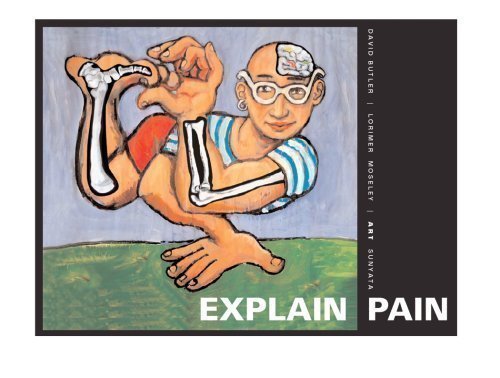
Explain Pain: Dr. David Butler, G. Lorimer Moseley
Written by two pain science experts with more than 60 years of combined experience in the pain field―in clinical, research and education roles―Explain Pain <strong>gives new and immediate hope to pain
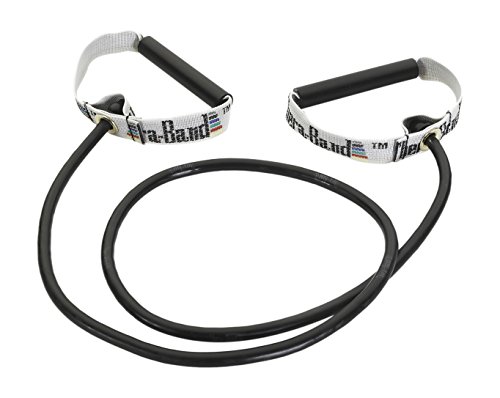
THERABAND Professional Latex Resistance Tubing with Handles For Upper-Body Exercise, Rehab and Conditioning, Soft Handles and Door Anchor, 48 Inch, Silver, Super Heavy, Advanced Level 2
Buy THERABAND Professional Latex Resistance Tubing with Handles For Upper-Body Exercise, Rehab and Conditioning, Soft Handles and Door Anchor, <strong>48 Inch, Silver, Super Heavy, Advanced Level 2: A
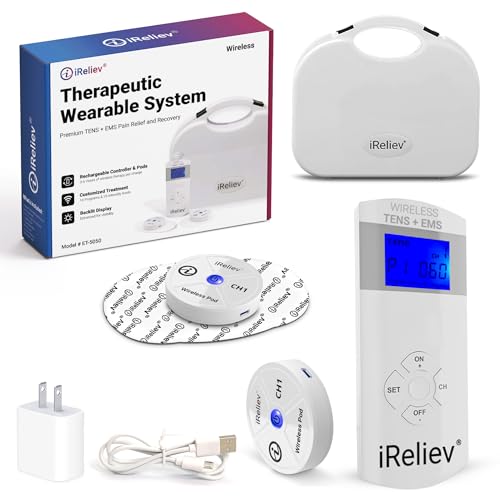
iReliev Wireless TENS + EMS Therapeutic Wearable System Wireless TENS Unit + Muscle Stimulator Combination for Pain Relief, Arthritis, Muscle Conditioning, Muscle Strength
iReliev TENS Unit + EMS Muscle Stimulator with 14 Therapy Modes, Premium Pain Relief and Recovery System, Rechargeable, Large Back Lit Display, Large and Small Electrode Pads
Evidence & Sources
Supported by multiple clinical trials and systematic reviews
- World Health Organization (WHO) Rehabilitation resources
- American Physical Therapy Association (APTA) clinical guidance
- Journal of Orthopaedic & Sports Physical Therapy
- Physical Therapy & Rehabilitation Journal
- Cochrane Reviews on exercise therapy and rehabilitation
- BMJ clinical reviews on musculoskeletal rehabilitation
- National Institute for Health and Care Excellence (NICE) guidelines
- National Center for Complementary and Integrative Health (NCCIH) resources on tai chi, qigong, and yoga
This content is for informational purposes only and does not constitute medical advice. Always consult a qualified healthcare provider before starting, stopping, or changing any supplement or medication regimen.