

Physical Therapy and Rotator Cuff Tendonitis
Rotator cuff tendonitis (often termed rotator cuff tendinopathy or subacromial pain syndrome) involves irritation and microdegeneration of the rotator cuff tendons, most commonly the supraspinatus. It differs from a rotator cuff tear: tendinopathy features painful, load‑sensitive tendon tissue without full discontinuity, whereas tears (partial- or full‑thickness) reflect structural failure and can cause weakness, night pain, and functional loss. Common contributors include repetitive overhead activity, age‑related tendon changes, scapular dyskinesis, poor posture, metabolic factors (e.g., diabetes), smoking, and sudden load spikes. Hallmark symptoms are lateral shoulder pain aggravated by overhead reach, lifting, or lying on the affected side, with painful arc and reduced strength. Important differentials and red flags include adhesive capsulitis (global loss of passive ROM), cervical radiculopathy (neck-related pain/paresthesia), biceps or AC joint pathology (anterior/superior pain), fracture or dislocation after trauma, infection (fever, systemic illness), and acute full‑thickness tear (sudden weakness after trauma)—these can change management and may warrant urgent imaging or referral. Physical therapy (PT) is a first‑line, evidence‑supported approach for rotator cuff tendonitis. Therapists assess shoulder and thoracic range of motion, rotator cuff and scapular strength and endurance, scapulohumeral rhythm, posture and movement patterns, pain provocation tests, and functional tasks relevant to work or sport. The primary aims are to reduce pain, restore mobility, progressively rebuild tendon and muscle capacity, correct biomechanics, and enable a safe return to daily function, work, and sport. Evidence‑informed PT typically includes therapeutic exercise emphasizing rotator cuff and scapular stabilizers; progressive loading (isometric to isotonic, including eccentric and heavy–slow resistance as tolerated); stretching for posterior capsule and pectoral tightness;
Updated September 8, 2026This content is for informational purposes only and does not constitute medical advice. Always consult a qualified healthcare provider before starting, stopping, or changing any supplement or medication regimen.
Overlapping Treatments
Therapeutic exercise (rotator cuff and scapular stabilizers)
Strong EvidenceCore PT intervention that structures graded loading and motor control to restore capacity.
Improves pain and function by enhancing tendon load tolerance and shoulder mechanics.
Symptom‑guided progression; excessive early loading can flare symptoms.
Progressive loading (isometrics → isotonic/eccentric → heavy–slow resistance)
Moderate EvidenceStandard PT loading continuum to rebuild strength and tendon resilience.
Reduces pain sensitivity and improves tendon remodeling and function.
Tailor to irritability; monitor for night pain and next‑day soreness.
Manual therapy (glenohumeral and thoracic mobilization, soft‑tissue techniques)
Moderate EvidenceAdjunct to reduce pain and facilitate movement before exercise.
Short‑term pain relief and ROM gains may improve exercise tolerance.
Benefits are adjunctive; effects typically short‑term.
Neuromuscular retraining (scapular control, proprioception)
Moderate EvidenceAddresses faulty movement patterns and muscle timing.
Improves scapulohumeral rhythm, reducing subacromial compression and pain.
Requires consistent practice; changes are gradual.
Education and activity modification
Strong EvidenceGuides pacing, ergonomics, and sleep/posture strategies to reduce flare‑ups.
Decreases provocative loading while maintaining activity to support healing.
Adherence strongly influences outcomes.
Taping or bracing (e.g., scapular or deltoid off‑loading)
Emerging ResearchShort‑term symptom modulation during rehab.
May reduce painful arc and allow exercise participation.
Benefits are typically temporary; technique‑dependent.
Dry needling or acupuncture (where within scope or via referral)
Moderate EvidencePain modulation tool integrated with exercise.
May offer short‑term pain relief and function gains when combined with rehab.
Not suitable for all; bleeding risk in anticoagulated patients.
Thermal/physical modalities (ice/heat; ultrasound/laser variable)
Emerging ResearchAdjunct for comfort and readiness to exercise.
May transiently reduce pain; limited effect on long‑term outcomes.
Do not replace active rehabilitation.
Medical Perspectives
Two Ways of Seeing Health

Western
scientific · clinical
Western medicine applies science, technology, and clinical experience to treat symptoms through testing, diagnosis, and targeted intervention.
Surgeons · Pharmaceuticals · Clinical trials · Diagnostics 
Eastern
traditional · alternative
Eastern medicine focuses on treating the body naturally by applying traditional knowledge practiced for thousands of years, emphasizing balance and whole-person wellness.
Acupuncture · Herbal medicine · Yoga · Meditation
Gold Bamboo presents both perspectives side-by-side so you can make informed decisions. We don't advocate for one over the other — your health choices are yours.
Two Ways of Seeing Health
Western
scientific · clinical
Western medicine applies science, technology, and clinical experience to treat symptoms through testing, diagnosis, and targeted intervention.
Eastern
traditional · alternative
Eastern medicine focuses on treating the body naturally by applying traditional knowledge practiced for thousands of years, emphasizing balance and whole-person wellness.
Gold Bamboo presents both perspectives side-by-side so you can make informed decisions. We don't advocate for one over the other — your health choices are yours.
Western Perspective
Western clinical medicine recognizes physical therapy as first‑line management for rotator cuff tendonitis/subacromial pain syndrome. The cornerstone is progressive, symptom‑guided exercise to improve tendon capacity and scapular mechanics, supported by education and targeted manual therapy. Imaging is reserved for suspected tears or poor response to care. Injections may provide short‑term relief but do not replace rehabilitation.
Key Insights
- Exercise‑based rehab improves pain and function versus minimal care, with effects comparable to or better than passive modalities.
- Scapular and rotator cuff strengthening plus posterior shoulder stretching address common impairments linked to pain.
- Manual therapy offers small, short‑term additive benefits when combined with exercise.
- Corticosteroid injections can reduce pain short‑term; long‑term outcomes depend on active rehab.
- Imaging (ultrasound/MRI) is indicated when red flags are present or when symptoms persist despite structured PT (typically 6–12 weeks).
Treatments
- Therapeutic exercise and progressive loading
- Manual joint/soft‑tissue mobilization as adjunct
- Neuromuscular and postural retraining
- Education, pacing, ergonomic modification
- Escalation: imaging, corticosteroid injection; surgical referral if tear or refractory
Deep Dive
From a western medical standpoint, rotator cuff tendonitis—now commonly termed rotator cuff tendinopathy or subacromial pain syndrome—is a load‑... From a western medical standpoint, rotator cuff tendonitis—now commonly termed rotator cuff tendinopathy or subacromial pain syndrome—is a load‑management problem superimposed on age‑related tendon biology and shoulder mechanics. Repetitive overhead activity, abrupt increases in load, and postural or scapular control deficits can increase subacromial compression and tensile stress on the supraspinatus and infraspinatus, sensitizing the tendon and surrounding tissues. Clinical examination prioritizes pain‑limited ranges, resisted testing of the cuff, scapular movement analysis, and exclusion of mimicking conditions such as adhesive capsulitis, cervical radiculopathy, or acromioclavicular and biceps pathology. Red flags—traumatic onset with marked weakness, systemic symptoms, or gross loss of passive motion—prompt earlier imaging and medical evaluation. Physical therapy is the primary nonoperative treatment. High‑quality evidence supports exercise‑based rehabilitation to reduce pain and improve function. Programs begin with symptom‑modulated loading—often isometrics within painless arcs—progressing to isotonic and eccentric or heavy–slow resistance as irritability declines. Emphasis is placed on scapular stabilizers (lower trapezius, serratus anterior) and rotator cuff endurance, with mobility work for the posterior capsule and thoracic spine. Manual therapy may facilitate short‑term pain relief and range to enable active work, while education guides activity modification, sleep positioning, and graded return to overhead tasks. Outcome measures such as SPADI, DASH, ASES, numeric pain ratings, and the Patient‑Specific Functional Scale track progress. Typical timelines include early pain reduction within 2–4 weeks, range gains by 4–8 weeks, and strength and functional restoration over 8–12+ weeks; chronic or high‑irritability cases may require 3–6 months. If symptoms plateau despite adherent, well‑progressed therapy over 6–12 weeks—or if a significant tear is suspected—ultrasound or MRI is reasonable, and subacromial corticosteroid injection may be considered for short‑term analgesia to facilitate ongoing rehab. Surgical referral is reserved for full‑thickness tears or refractory disability after comprehensive nonoperative care. Prognosis is generally favorable, with adherence, graded loading, and risk‑factor modification (e.g., smoking, metabolic health, ergonomic adjustments) strongly influencing outcomes.
Sources
- AAOS Clinical Practice Guideline: Management of Rotator Cuff Injuries (2019)
- Kuhn JE. Exercise in the treatment of rotator cuff impingement. JSES 2009
- Littlewood C et al. Exercise for rotator cuff tendinopathy: systematic reviews, 2015–2019
- Steuri R et al. Conservative interventions for rotator cuff tendinopathy. BMC Musculoskelet Disord 2017
- Cochrane Review: Subacromial corticosteroid injection for rotator cuff disease, 2015
- ACR Appropriateness Criteria: Shoulder Pain—Atraumatic/Traumatic, latest update
Eastern Perspective
Traditional East Asian medicine frames shoulder pain as a Bi syndrome—obstruction of qi and blood in meridians traversing the shoulder (Large Intestine, Small Intestine, Triple Burner, Gallbladder). Treatment aims to unblock stagnation and restore balanced movement. Practically, acupuncture, tuina (manual therapy), cupping, moxibustion, and therapeutic movement (qigong/daoyin) are combined. These approaches often align with PT goals: reduce pain, improve mobility, and retrain function. Ayurveda views shoulder tendon pain as a Vata aggravation in asthi/mamsa dhatus, addressed with warming oils, gentle mobilization, and gradual strengthening.
Key Insights
- Acupuncture and dry needling can reduce pain and improve short‑term function, especially when combined with exercise.
- Tuina and cupping parallel manual therapy by improving local circulation and reducing guarding.
- Qigong or yoga emphasize mindful, low‑load mobility and postural control consistent with graded exposure in rehab.
- Heat and topical herbal applications are used for stiffness; cooling approaches may be chosen for acute, hot presentations.
Treatments
- Acupuncture/dry needling alongside exercise
- Tuina and cupping as manual adjuncts
- Gentle qigong or yoga for mobility and posture
- Moxibustion or warming oil massage in chronic cold‑stiff patterns
Deep Dive
Eastern traditions conceptualize shoulder tendon pain through patterns rather than isolated tissue pathology. In Traditional Chinese Medicine, s... Eastern traditions conceptualize shoulder tendon pain through patterns rather than isolated tissue pathology. In Traditional Chinese Medicine, shoulder pain is often categorized as a Bi syndrome—stagnation of qi and blood in channels traversing the shoulder (Large Intestine, Small Intestine, Triple Burner, Gallbladder). External factors (wind‑cold‑damp) and internal imbalances (liver‑blood deficiency, qi stagnation) shape the presentation: stiff, achy pain aggravated by cold suggests cold‑dominant Bi; sharp, fixed pain suggests blood stasis. Treatment aims to disperse stagnation, warm and nourish tissues, and restore smooth movement. Acupuncture at local and channel points, sometimes with electro‑stimulation, is paired with tuina manual techniques and cupping to increase circulation and reduce guarding. Moxibustion or warming liniments are added for chronic, cold‑stiff patterns; gentle movement practices (qigong/daoyin) cultivate alignment, breath, and controlled mobility, which parallels neuromuscular retraining in physical therapy. Ayurveda frames tendinous shoulder pain as Vata aggravation within muscle and connective tissues, advocating warm oil massage (abhyanga), localized heat, gradual mobilization, and mindful strengthening to restore balance. While traditional theories differ from biomedical explanations, practical overlap is notable: both emphasize pain modulation, restoring mobility, and building capacity with graded exposure. Modern research suggests acupuncture and dry needling can reduce shoulder pain in the short term and may enhance function when integrated with exercise. Tuina and cupping provide hands‑on analgesia and relaxation akin to manual therapy. Mind‑body movement such as qigong or yoga supports posture, thoracic mobility, and scapular control. An integrative plan respects cultural preferences and blends evidence‑supported elements: acupuncture or dry needling for symptom relief; manual therapies (tuina or soft‑tissue work) to prepare tissues; and a structured strengthening and mobility program to create durable change. Clear communication among providers helps align pattern‑based care with load‑progression principles, keeping safety first—especially when red flags or suspected tears warrant imaging and orthopedic input.
Sources
- Sun Y et al. Acupuncture for shoulder pain: systematic reviews/meta‑analyses (2017–2021)
- Liu L et al. Dry needling for shoulder pain: systematic review/meta‑analysis, 2018–2020
- TCM classics on Bi syndrome; modern integrative shoulder pain texts
- Cramer H et al. Yoga for musculoskeletal pain: systematic reviews
Evidence Ratings
Exercise‑based physical therapy improves pain and function in rotator cuff tendonitis compared with minimal care.
Kuhn JE. J Shoulder Elbow Surg 2009; Littlewood C et al. systematic reviews 2015–2019
Adding manual therapy to exercise yields small short‑term benefits in pain and range of motion.
Steuri R et al. BMC Musculoskelet Disord 2017 (systematic review)
Progressive eccentric or heavy–slow resistance loading can benefit rotator cuff tendinopathy.
Littlewood C et al. Br J Sports Med 2015; Malliaras P et al. Sports Med 2013 (tendon rehab principles)
Subacromial corticosteroid injections provide short‑term pain relief but limited long‑term advantage without rehab.
Cochrane Review: Subacromial corticosteroid injection for rotator cuff disease, 2015
Acupuncture or dry needling can reduce shoulder pain short‑term when combined with exercise.
Sun Y et al. 2017–2021 meta‑analyses; Liu L et al. 2018–2020
Therapeutic ultrasound shows limited or uncertain benefit for rotator cuff tendonitis.
Robertson VJ et al. Phys Ther 2001; recent pragmatic reviews with low‑certainty findings
Imaging (US/MRI) is recommended when a tear is suspected or after inadequate improvement with structured PT.
AAOS Rotator Cuff Injuries CPG 2019; ACR Appropriateness Criteria Shoulder Pain
Sources
- AAOS. Management of Rotator Cuff Injuries. Clinical Practice Guideline. 2019.
- Kuhn JE. Exercise in the treatment of rotator cuff impingement: a systematic review. J Shoulder Elbow Surg. 2009.
- Littlewood C, Bateman M, Connor C et al. Rehabilitation for rotator cuff tendinopathy: systematic reviews/meta‑analyses 2015–2019.
- Steuri R, Sattelmayer M, Elsig S et al. Conservative interventions for rotator cuff tendinopathy: a systematic review. BMC Musculoskelet Disord. 2017.
- Cochrane Review. Subacromial corticosteroid injection for rotator cuff disease. 2015.
- American College of Radiology. ACR Appropriateness Criteria: Shoulder Pain. Latest update.
- Sun Y, et al. Acupuncture for shoulder pain: systematic reviews/meta‑analyses. 2017–2021.
- Liu L, et al. Dry needling for shoulder pain: systematic review/meta‑analysis. 2018–2020.
- Robertson VJ et al. The effect of ultrasound therapy on musculoskeletal conditions. Phys Ther. 2001.
- Kibler WB, Sciascia A. Scapular dyskinesis and its relation to shoulder pain. Br J Sports Med. 2010.
Related Topics
Recommended Products
Treat Your Own Shoulder: McKenzie, Robin
<strong>This patient handbook provides an easy-to-follow self-treatment plan to quickly and effectively diagnose, alleviate, treat and manage debilitating shoulder and related pains, even for the long

RangeMaster Classic Shoulder Pulley w/ Guide (Dual Language), Exercise Pulley for Physical Therapy, Shoulder Pain & Recovery, Metal Bracket (FSA/HSA)
THERAPY TOOL - <strong>Helps enhance the range of motion for people suffering from arthritis, tendonitis, frozen shoulder syndrome, rotator cuff injury, bursitis, and other impingement issues</strong>
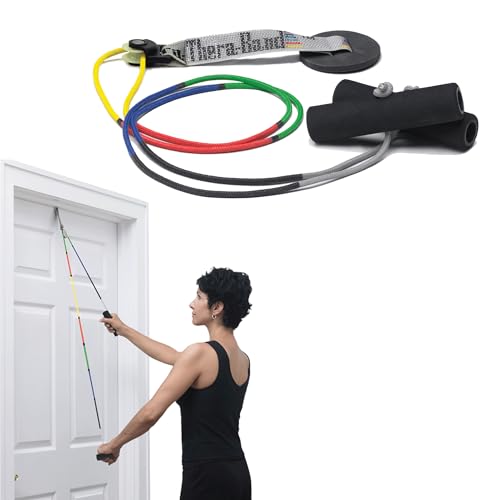
THERABAND Shoulder Pulley, Overhead Shoulder Pulley for Physical Therapy, Over the Door Pulley with Foam Handles and Color Coded Rope for Increasing Range of Motion, Overdoor System for Rehabilitation
Over the door shoulder pulley system with color-coded ropes specifically designed to assist patients undergoing shoulder rehab and physical therapy by providing immediate feedback on progress
Health Disclaimer
This content is for informational purposes only and does not constitute medical advice. Always consult a qualified healthcare provider before starting, stopping, or changing any supplement or medication regimen.