

Rotator Cuff Injury and Physical Therapy
Rotator cuff injuries span tendon irritation to partial- or full-thickness tears of the supraspinatus, infraspinatus, subscapularis, or teres minor. Partial-thickness tears involve fraying or incomplete disruption of tendon fibers, while full-thickness tears traverse the tendon, sometimes retracting from its attachment. Common causes include repetitive overhead activity, age-related degeneration, and acute trauma. Symptoms typically feature lateral shoulder pain (often worse at night), painful arc with elevation, and weakness in abduction or external rotation. Clinicians use history, examination (e.g., Jobe/empty can, external rotation lag, drop-arm), and imaging (ultrasound or MRI) to grade severity—an important step, because tear size, chronicity, and patient goals help direct physical therapy (PT) versus surgical pathways. Physical therapy is central across the continuum—acute, subacute, chronic, and post‑operative. In the acute phase, goals emphasize pain control, inflammation management, protected movement, and gentle range of motion (ROM). Subacute care advances to active-assisted and active ROM, scapular mechanics, and initiation of isometrics. Chronic-phase rehabilitation prioritizes progressive strengthening (especially external rotators and scapular stabilizers), neuromuscular control, and graded exposure to functional and sport/work tasks. After surgical repair, protocols typically begin with protected passive ROM, transition to active ROM, and then resistive strengthening when healing allows; timelines are individualized by tear size and surgeon guidance. Evidence-backed PT components include therapeutic exercise (ROM restoration and progressive loading), activity modification/education, and scapular and kinetic-chain training. Manual therapy can offer short-term pain relief when added to exercise, while routine therapeutic ultrasound adds little benefit. Adjuncts such as ice/heat or TENS may help symptoms; corticosteroid injection can provide short‑l
Updated September 8, 2026This content is for informational purposes only and does not constitute medical advice. Always consult a qualified healthcare provider before starting, stopping, or changing any supplement or medication regimen.
Overlapping Treatments
Therapeutic exercise (ROM, stretching, progressive strengthening)
Strong EvidenceImproves pain and function in rotator cuff–related shoulder pain; restores ROM; progressive loading supports tendon capacity
Core PT intervention aligning with graded exposure principles and objective progression
Progression should respect pain/irritability; avoid provocative end-range/overload early, and follow surgeon restrictions post‑repair
Scapular stabilization and kinetic‑chain training
Moderate EvidenceOptimizes scapulothoracic rhythm, reduces subacromial symptoms, supports overhead function
Addresses regional interdependence and motor control—key PT constructs
Emphasize technique and tolerance; integrate thoracic mobility as needed
Isometric and eccentric rotator cuff loading
Moderate EvidenceMay reduce pain via analgesic effects (isometrics) and improve tendon load capacity (eccentrics)
Fits PT load‑management frameworks for tendinopathy
Introduce eccentrics when irritability is low to moderate; delay high loads post‑repair until healing milestones are met
Manual therapy (glenohumeral and thoracic mobilization, soft‑tissue techniques)
Moderate EvidenceShort‑term pain relief and ROM gains; may facilitate exercise participation
Adjunct to exercise within PT toolbox
Effects often short‑term; prioritize active rehab; avoid aggressive techniques immediately post‑op
Activity modification and patient education
Strong EvidenceReduces mechanical aggravation (e.g., painful arcs/overhead load) and supports recovery
Enhances adherence and self‑efficacy—cornerstones of PT outcomes
Encourage temporary, not permanent, avoidance; plan graded return
Adjunctive modalities (ice/heat, TENS)
Emerging ResearchMay ease pain and muscle guarding to permit exercise
Symptom-modulating tools facilitating therapeutic dosing
Do not replace exercise; therapeutic ultrasound shows little added value for rotator cuff disease
Extracorporeal shockwave therapy (ESWT) for calcific tendinopathy
Moderate EvidenceImproves pain and function, particularly with calcific deposits
Selective PT-adjacent modality in some practices
Most benefit in calcific presentations; variable access and tolerance
Post‑operative protected motion and staged loading
Moderate EvidenceProtects repair while minimizing stiffness; supports safe recovery trajectory
Protocolized PT progression integrating tissue‑healing timelines
Timelines depend on tear size/quality and surgeon guidance; avoid premature resisted loading
Medical Perspectives
Two Ways of Seeing Health

Western
scientific · clinical
Western medicine applies science, technology, and clinical experience to treat symptoms through testing, diagnosis, and targeted intervention.
Surgeons · Pharmaceuticals · Clinical trials · Diagnostics 
Eastern
traditional · alternative
Eastern medicine focuses on treating the body naturally by applying traditional knowledge practiced for thousands of years, emphasizing balance and whole-person wellness.
Acupuncture · Herbal medicine · Yoga · Meditation
Gold Bamboo presents both perspectives side-by-side so you can make informed decisions. We don't advocate for one over the other — your health choices are yours.
Two Ways of Seeing Health
Western
scientific · clinical
Western medicine applies science, technology, and clinical experience to treat symptoms through testing, diagnosis, and targeted intervention.
Eastern
traditional · alternative
Eastern medicine focuses on treating the body naturally by applying traditional knowledge practiced for thousands of years, emphasizing balance and whole-person wellness.
Gold Bamboo presents both perspectives side-by-side so you can make informed decisions. We don't advocate for one over the other — your health choices are yours.
Western Perspective
Western medicine positions physical therapy as first‑line care for most atraumatic or degenerative rotator cuff tears and an essential component of post‑operative rehabilitation. Evidence supports exercise‑based programs to reduce pain, restore ROM, and improve function, with surgery reserved for specific indications (e.g., acute traumatic full‑thickness tears, significant weakness, or failed conservative care).
Key Insights
- Exercise therapy improves pain and disability in rotator cuff–related shoulder pain compared with minimal care
- For many nontraumatic small-to-medium tears, structured PT can achieve outcomes comparable to surgery over 1–5 years
- Corticosteroid injection offers short‑term relief but little long‑term advantage when combined with exercise
- Therapeutic ultrasound has minimal added benefit; manual therapy can add short‑term relief but should complement active rehab
- After repair, early protected motion may aid early ROM without increasing retear risk for small/medium tears
Treatments
- Therapeutic exercise with progressive loading
- Scapular/kinetic‑chain training
- Manual therapy as adjunct
- Activity modification and education
- Post‑operative staged protocols (passive to active to resisted)
Deep Dive
From a western clinical standpoint, rotator cuff injury describes a spectrum from tendinopathy and partial tears to full‑thickness disruptions o... From a western clinical standpoint, rotator cuff injury describes a spectrum from tendinopathy and partial tears to full‑thickness disruptions of one or more rotator cuff tendons. Diagnosis integrates history, physical examination, and imaging when needed: painful arc and Jobe/empty‑can weakness suggest supraspinatus involvement, while an external rotation lag or drop‑arm test may indicate a substantial tear. Severity and chronicity direct care. For many atraumatic or degenerative small‑to‑medium tears, high‑quality evidence supports starting with physical therapy. Exercise programs targeting shoulder range of motion, rotator cuff and scapular strength, and neuromuscular control produce meaningful improvements in pain and function compared with minimal care. Education and activity modification—temporarily reducing overhead load and night‑pain triggers—enable symptoms to settle while capacity is rebuilt. Adjuncts are selectively applied. Manual therapy can yield short‑term pain relief and facilitate exercise, though effects are generally modest and transient. Routine therapeutic ultrasound has little added value and should not displace active rehabilitation. Corticosteroid injection may reduce pain for several weeks, as shown in the GRASP trial, but does not change long‑term outcomes; if used, it is best positioned to help patients engage with exercise. In cases of acute traumatic full‑thickness tear with marked weakness, or when a trial of conservative care (often 6–12 weeks) fails, surgical consultation is appropriate. Post‑operative rehabilitation follows staged progressions: early protected passive motion to limit stiffness, advancement to active motion as healing allows, and later strengthening. Evidence suggests early protected motion can improve early range without higher retear risk in small/medium tears, but protocols are individualized based on tear size and tissue quality. Expected timelines vary. Many patients pursuing nonoperative PT see meaningful gains within 6–12 weeks and continue to improve over 3–6 months. After repair, slings commonly protect the shoulder for several weeks; active motion often begins by 4–8 weeks and strengthening by 8–12 weeks, with return to heavier work or overhead sport in 4–9 months depending on tear size and demands. Prognosis is influenced by tear size, age, tissue quality, metabolic comorbidities, and adherence to a progressive program.
Sources
- AAOS Clinical Practice Guideline: Management of Rotator Cuff Injuries (2019)
- Page MJ et al. Cochrane Review: Exercise for rotator cuff disease (2016)
- Kukkonen J et al. Randomized trials/nonoperative vs repair for nontraumatic supraspinatus tears (Acta Orthop 2014; JBJS 2019)
- Kuhn JE et al. MOON Shoulder: Nonoperative treatment outcomes (J Shoulder Elbow Surg 2013)
- GRASP Trial: Progressive exercise vs best‑practice advice ± corticosteroid (Lancet 2021)
- Sheps DM et al. Early vs delayed mobilization after repair (J Shoulder Elbow Surg 2019)
- Cochrane Review: Therapeutic ultrasound for rotator cuff disease (Robertson et al., 2001; updated reviews)
- Gerdesmeyer L et al. ESWT for calcific tendinitis (JAMA 2003)
Eastern Perspective
Traditional East Asian medicine groups many presentations of shoulder pain under Jian bi, often attributed to qi and blood stagnation or wind‑cold‑damp invasion, and emphasizes restoring flow and reducing local inflammation and guarding. Acupuncture, cupping, moxibustion, and Tui Na are commonly used alongside movement therapy and breathwork. In integrative care, these modalities may be paired with evidence‑based physical therapy to manage pain, facilitate ROM, and support adherence to exercise.
Key Insights
- Acupuncture may provide short‑term pain relief and functional gains in shoulder disorders, supporting participation in exercise
- Cupping and Tui Na aim to reduce myofascial tension and improve local circulation; evidence is emerging
- Mind‑body and gentle movement practices (e.g., yoga-based scapular control, breath coordination) may improve posture, proprioception, and symptom control
- Herbal liniments or topical preparations are traditionally used for localized pain and stiffness, though clinical evidence is limited
Treatments
- Acupuncture at local/adjacent points (e.g., LI15, SJ14, SI9–10)
- Cupping and Tui Na (manual techniques)
- Moxibustion for cold‑pattern stiffness
- Gentle yoga or qigong emphasizing scapular control and posture
Deep Dive
In Traditional Chinese Medicine (TCM), most rotator cuff–related shoulder pain is encompassed by Jian bi—painful obstruction of the shoulder—att... In Traditional Chinese Medicine (TCM), most rotator cuff–related shoulder pain is encompassed by Jian bi—painful obstruction of the shoulder—attributed to stagnation of qi and blood or invasion of wind‑cold‑damp that impedes local circulation. Treatment aims to disperse stagnation, warm the channels, and restore harmonious movement. Acupuncture at local and regional points (e.g., LI15, SJ14, SI9–10, LI14) and ashi points can reduce pain and muscle guarding, easing the pathway for range‑of‑motion and strengthening exercises. Modern trials and meta‑analyses of acupuncture for musculoskeletal pain, including shoulder conditions, report short‑term improvements in pain and function compared with sham or usual care, although study quality and heterogeneity vary. Cupping and Tui Na (manual therapy) are used to mobilize soft tissues and improve circulation around the scapula and posterior cuff, complementing Western manual therapy concepts. Moxibustion may be chosen when a cold pattern predominates, supporting tissue pliability prior to movement practice. Integrative approaches bridge these traditions by pairing symptom‑relieving modalities with graded exercise. For example, a course of acupuncture or cupping can lessen pain and allow better tolerance of therapeutic exercise and scapular retraining. Gentle yoga or qigong sequences emphasize posture, breath, thoracic mobility, and scapular control—elements that mirror kinetic‑chain and motor‑control strategies in physical therapy. Ayurvedic perspectives often frame shoulder pain as a vata imbalance; oil massage (abhyanga) and heat are used to soothe dryness and stiffness, serving as prelude to guided movement. Herbal liniments are traditionally applied for localized soreness, though rigorous clinical evidence is limited. Across eastern modalities, safety and individualization are emphasized. Practitioners assess constitution, pattern, and tolerance, and coordinate with rehabilitation providers. When red flags arise—sudden loss of shoulder power after trauma, progressive weakness, or failure to improve over several weeks—traditional practitioners commonly encourage biomedical imaging and orthopedic input. In this way, an integrative plan uses the strengths of each system: eastern modalities to modulate pain and enhance engagement, and western physical therapy to restore capacity and function through progressive loading.
Sources
- Vickers AJ et al. Acupuncture for chronic musculoskeletal pain: IPD meta‑analysis (J Pain 2018)
- Wang T et al. Systematic reviews of acupuncture for shoulder impingement/rotator cuff–related pain (various)
- WHO: Acupuncture indications and safety overviews
- Narrative reviews on TCM Jian bi approaches and integrative shoulder care
Evidence Ratings
Exercise‑based physical therapy improves pain and function in rotator cuff–related shoulder pain versus minimal care.
Page MJ et al. Exercise for rotator cuff disease. Cochrane Database Syst Rev. 2016.
For many nontraumatic small‑to‑medium tears, outcomes after structured PT are comparable to surgical repair over 1–5 years.
Kukkonen J et al. JBJS 2019; Acta Orthop 2014. MOON Shoulder cohort (Kuhn JE 2013).
Corticosteroid injection provides short‑term relief but no long‑term advantage when combined with exercise for rotator cuff–related pain.
GRASP Trial. Lancet. 2021.
Therapeutic ultrasound offers little to no additional benefit in rotator cuff disease.
Robertson VJ et al. Cochrane Review: Therapeutic ultrasound for shoulder disorders.
Early protected motion after rotator cuff repair can improve early ROM without higher retear risk for small/medium tears.
Sheps DM et al. J Shoulder Elbow Surg. 2019; supporting meta-analyses.
Acupuncture can reduce shoulder pain and improve short‑term function versus sham or usual care.
Vickers AJ et al. J Pain. 2018; shoulder-specific systematic reviews.
ESWT is effective for calcific rotator cuff tendinopathy.
Gerdesmeyer L et al. JAMA. 2003; subsequent systematic reviews.
Predictors of nonoperative failure include higher baseline pain/disability, low expectations, and smoking.
MOON Shoulder predictors studies (Dunn WR et al.; Keener JD et al.).
Sources
- American Academy of Orthopaedic Surgeons (AAOS). Clinical Practice Guideline: Management of Rotator Cuff Injuries. 2019.
- Page MJ, Green S, McBain B, et al. Exercise for rotator cuff disease. Cochrane Database Syst Rev. 2016.
- Kuhn JE, Dunn WR, Sanders R, et al. Effectiveness of PT in the nonoperative treatment of atraumatic full‑thickness RC tears (MOON). J Shoulder Elbow Surg. 2013.
- Kukkonen J, Joukainen A, Lehtinen J, et al. Treatment of non‑traumatic supraspinatus tears: RCT and 5‑year results. Acta Orthop. 2014; JBJS. 2019.
- Hopewell S, Keene DJ, et al. GRASP Trial: Progressive exercise vs advice ± corticosteroid. Lancet. 2021.
- Sheps DM, Silveira A, Beaupre L, et al. Early vs delayed mobilization after arthroscopic RC repair: RCT. J Shoulder Elbow Surg. 2019.
- Robertson VJ, Baker KG. A review of therapeutic ultrasound efficacy for musculoskeletal disorders; Cochrane reviews on shoulder ultrasound.
- Gerdesmeyer L, Wagenpfeil S, Haake M, et al. Extracorporeal shock wave therapy for calcific tendinitis: RCT. JAMA. 2003.
- Vickers AJ, Linde K, et al. Acupuncture for chronic pain: IPD meta‑analysis. J Pain. 2018.
- AAOS OrthoInfo: Rotator Cuff Tears—overview, symptoms, and treatments. Updated periodically.
Related Topics
Recommended Products
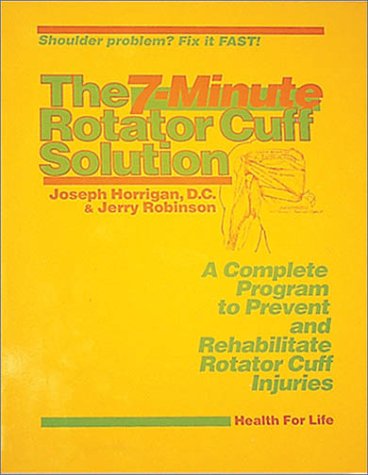
7 Minute Rotator Cuff Solution: Jerry Robinson, Joseph Horrigan
Drawing from the latest scientific research, The 7-Minute Rotator Cuff Solution offers a new approach to prevention unlike any every published. Created by Dr. Joseph Horrigan, <strong>director of the
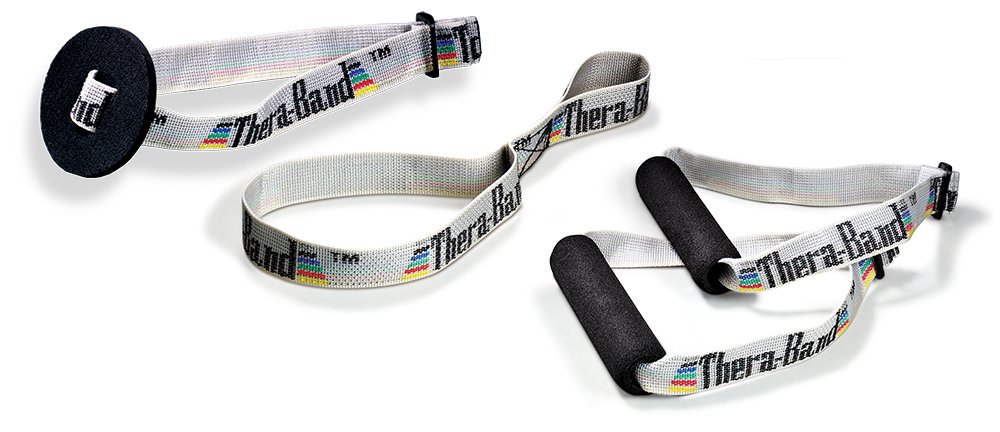
THERABAND Elastic Resistance Bands and Tubing Overdoor Accessories Kit, with Assist Strap, Soft Grip Handles, and Door Anchor for Overhead Shoulder Rehab, At
<strong>The TheraBand Accessories Kit includes an Assist Strap, Soft Grip Handles, and a Door Anchor that provide a versatile kit that can be used in combination with resistance bands and tubing</stro
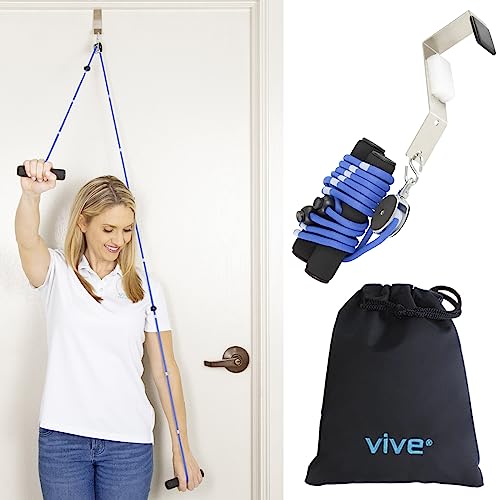
Vive Shoulder Pulley for Physical Therapy - Rotator Cuff ...
Invest in a durable shoulder pulley to elevate your physical therapy routine. Enhance flexibility, boost strength, and accelerate your rehabilitation progress.
Health Disclaimer
This content is for informational purposes only and does not constitute medical advice. Always consult a qualified healthcare provider before starting, stopping, or changing any supplement or medication regimen.